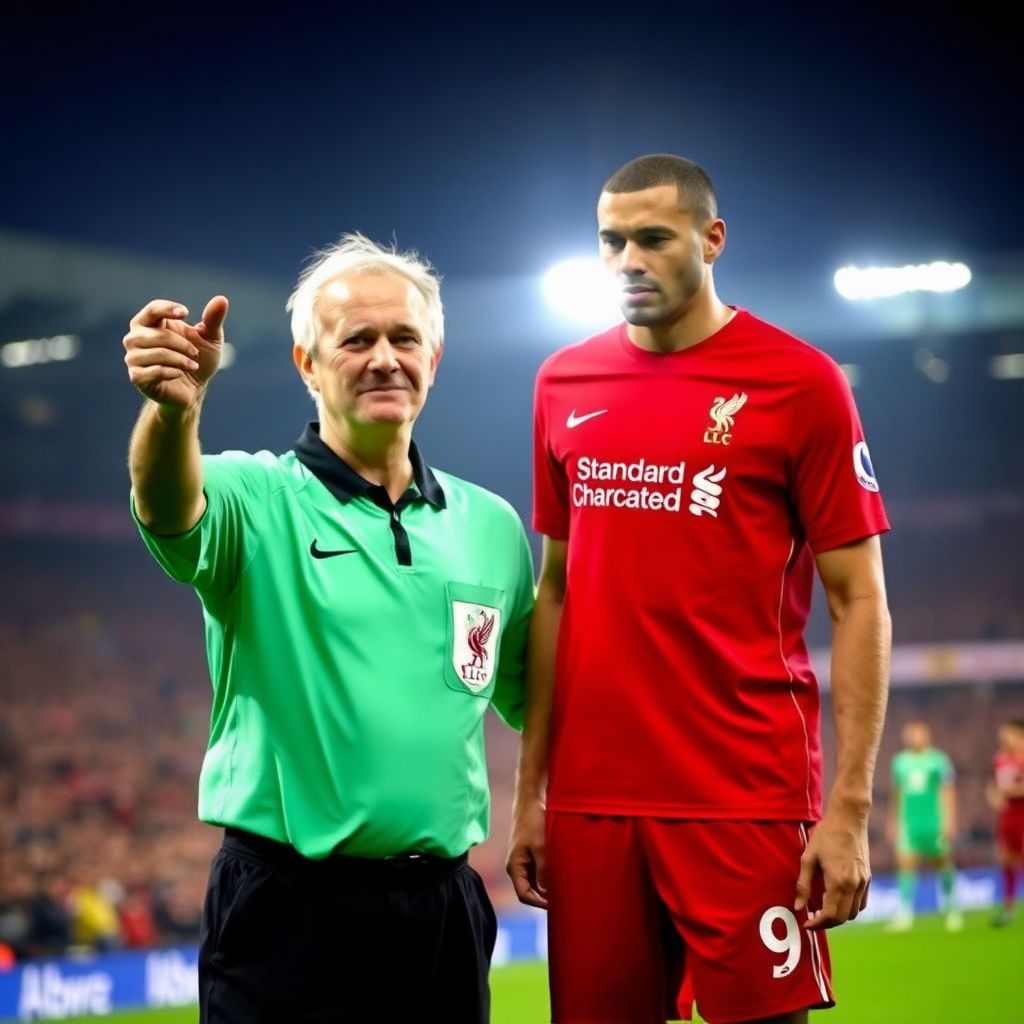
Referee Appointed for Liverpool vs Galatasaray Champions League Decider
UEFA has appointed elite Polish referee Szymon Marciniak to oversee the decisive Champions League Round of 16 second leg between Liverpool and Galatasaray at Anfield this Wednesday. The tie is finely poised, with the Turkish champions arriving on Merseyside defending a narrow 1-0 aggregate advantage, and the choice of match official underlines the magnitude of the occasion.
Marciniak is widely regarded as one of the foremost referees in modern football. His reputation was cemented by taking charge of the 2022 World Cup Final as well as the 2023 Champions League Final, two of the most demanding fixtures in the sport. UEFA’s decision to hand him this assignment reflects the expectation of a high-intensity contest, packed with emotional swings, tactical fouls, and possible flashpoints.
Full Officiating Team for Anfield
The Polish official will not be alone in managing what is likely to be a heated European night. He will be supported by an experienced and well-drilled officiating crew:
– Assistant referees: Tomasz Listkiewicz (Poland)
– Assistant referee: Adam Kupsik (Poland)
– Video Assistant Referee (VAR): Marco Di Bello (Italy)
Together, they will be responsible for handling not only the usual set of decisions on fouls, offsides and penalties, but also the added pressure that comes with a knockout tie at one of the most intimidating stadiums in Europe.
The presence of a dedicated VAR from another leading European nation adds another layer of security for major decisions, particularly around penalty shouts, potential red cards and marginal offside calls that could determine who advances to the quarter-finals.
Why UEFA Turned to Marciniak
By turning to Marciniak, UEFA is clearly prioritising experience and authority. He is known for a style that allows the game to flow, preferring not to whistle for every minor contact, yet he is equally known for stepping in decisively when the line is crossed. That balance is crucial in a fixture where both sides are expected to push the limits of physicality, especially with so much at stake.
In high-stakes European nights, the intensity of pressing, counter-pressing, and tactical fouling tends to rise sharply. Coaches and analysts often describe Marciniak as a “big-game referee” – someone who is not overwhelmed by noisy crowds or high-profile stars appealing for decisions. His ability to stay calm while making firm calls is precisely what UEFA will be counting on at Anfield.
Discipline Concerns for Liverpool
For Liverpool, the choice of referee adds an extra layer of tension to an already pressurised scenario. Several key players are walking a disciplinary tightrope. Virgil van Dijk, Ryan Gravenberch, and Curtis Jones each sit one yellow card away from suspension. Any caution for them in this showdown would see them miss the next Champions League match, should Liverpool overturn the deficit and progress.
Marciniak’s record suggests he will not be shy about booking players for persistent infringement, reckless challenges, or dissent. As a result, Liverpool’s leaders will need to carefully manage their aggression and emotions, particularly if the game becomes stretched or if decisions start to go against them. One mistimed tackle from Van Dijk, or a frustrated reaction from the midfield, could carry significant consequences beyond the 90 minutes.
From a tactical perspective, this may influence how Liverpool press and defend. Jurgen Klopp’s side is known for its intense high press and combative midfield. With Marciniak in charge, players may be encouraged to stay just on the right side of the law, avoiding needless challenges in midfield that could invite early bookings and affect how freely they can play later in the match.
Galatasaray’s Perspective: A Test of Nerves
For Galatasaray, the appointment of such a seasoned official could be seen as reassuring. They will arrive in England with a slender lead and the knowledge that they are likely to spend long periods defending deep against Liverpool’s waves of pressure. In that kind of scenario, decisions around penalty claims, marginal fouls in the box, and simulation become absolutely critical.
Marciniak’s experience in hostile atmospheres – from World Cup finals to high-voltage European knockout ties – means he is unlikely to be intimidated by the famous Anfield crowd or swayed by emotional appeals. Galatasaray will hope that his composure translates into consistent decision-making, especially when Liverpool’s forwards drive into the area and the home fans demand penalties.
The Turkish club will also be aware that time-wasting and game-management tactics are closely scrutinised in modern European football. Marciniak tends to clamp down on excessive delays and dissent, so Galatasaray’s players and coaching staff will need to manage the clock carefully without inviting unnecessary yellow cards that could pile on pressure late in the match.
How Marciniak’s Style Could Shape the Game
Marciniak’s “let-it-play” approach, combined with a readiness to punish clear infringements, very often creates open, high-tempo matches. Players quickly understand that soft falls will not be rewarded, but reckless tackles or cynical fouls will be penalised, sometimes with bookings. This dynamic can favour teams who thrive in transition and are willing to play at a high tempo.
Liverpool, backed by the Anfield crowd, may benefit from sustained periods of continuous play where they can maintain pressure, pick up second balls, and bombard the penalty area. At the same time, Galatasaray’s quick forwards and wingers could find space to counter-attack if the game becomes stretched and Liverpool commit numbers forward in search of goals.
Another key aspect will be Marciniak’s handling of early challenges. If he sets a strict tone in the opening minutes by issuing an early booking, players may become more cautious in duels. Conversely, if he allows a few robust tackles early on, it could set the stage for a fiercely contested, physical battle.
The Emotional Edge of a “Win or Out” Night
This second leg effectively carries a “win or out” scenario for Liverpool. Trailing 1-0 from the first leg, they must score at least once to stay alive in the tie, and likely more if Galatasaray find an away goal. In such situations, emotions run high, particularly in front of a passionate home crowd expecting another European comeback.
Managing that emotional volatility will be one of Marciniak’s biggest tasks. Coaches raging on the touchline, players crowding the referee after a contentious call, or tempers flaring in confrontations can quickly escalate. The Polish official has a track record of diffusing such flashpoints with a mixture of authority and communication, but he will need to be at his sharpest across the full 90 minutes – and potentially extra time.
Liverpool’s players know that Anfield’s famous atmosphere can be their biggest asset, but there is a fine line between channeling that energy and letting it tip into frustration. Every offside called, every foul given or not given, will be magnified by the context of the tie. The referee’s calmness and clarity will be crucial in preventing the match from spiralling.
Psychological Impact of a High-Profile Referee
The presence of a referee who has handled World Cup and Champions League finals brings an additional psychological dimension. Players tend to adjust their behaviour when they know they are under the watch of someone with this level of authority. The margin for trying to influence decisions through constant complaining or theatrical reactions is much narrower.
For younger players on both sides, stepping into a knockout tie overseen by an official of Marciniak’s stature can be both intimidating and inspiring. Some will see it as proof of the game’s importance and raise their level accordingly. Others may feel the pressure and play more conservatively, particularly if an early foul or booking puts them on edge.
Coaches, too, often adapt their touchline behaviour when dealing with top-level referees. The expectation is that a referee of this calibre will communicate clearly and explain key decisions where possible, which can help reduce some of the anger associated with controversial calls, even if it never fully removes it.
Set-Pieces, Penalties and Key Moments
In a tie as tight as this, one set-piece or a single penalty decision could decide who advances. Both sides are well aware of that reality. Liverpool’s aerial strength, led by Van Dijk, makes corners and free-kicks around the box a major weapon. Galatasaray, meanwhile, can be dangerous from their own dead-ball routines.
Marciniak’s positioning and line of sight during these moments will be critical. Grappling in the penalty area, subtle pushes, and shirt-pulling have become areas of intense scrutiny in modern refereeing. The VAR team, headed by Marco Di Bello, will be ready to intervene if the on-field decision appears clearly wrong, but the initial judgment still rests with the man in the middle.
Penalty appeals – whether for handball, clumsy challenges, or goalkeeper collisions – will be inevitable in a game of this significance. Marciniak’s track record suggests he does not rush to point to the spot, but when he is convinced, he does not hesitate, even under enormous pressure. Both sets of players will need to be precise in their decision-making inside the box, especially defenders challenged by quick turns and changes of direction.
The Stakes: Quarter-Final Place on the Line
Beyond the referee appointments and tactical nuances, the bottom line remains simple: the winner at Anfield moves on to the Champions League quarter-finals. For Liverpool, this match represents both a challenge and an opportunity to add another famous European night to the club’s rich history. For Galatasaray, it is a chance to claim a statement result on one of the biggest stages in world football and extend their journey in the competition.
In that context, UEFA’s decision to appoint Szymon Marciniak is a clear signal that the governing body expects a fiercely contested fixture that demands the highest level of refereeing. With both teams carrying hopes, fears, and huge expectations into Wednesday night, the man in the middle and his team will inevitably be under the spotlight from the first whistle to the last.
How they manage that pressure could be almost as decisive as the tactics, substitutions and finishing on display. One way or another, the referee’s performance is set to be a major talking point in a tie that promises drama, intensity, and possibly a late twist or two under the Anfield lights.