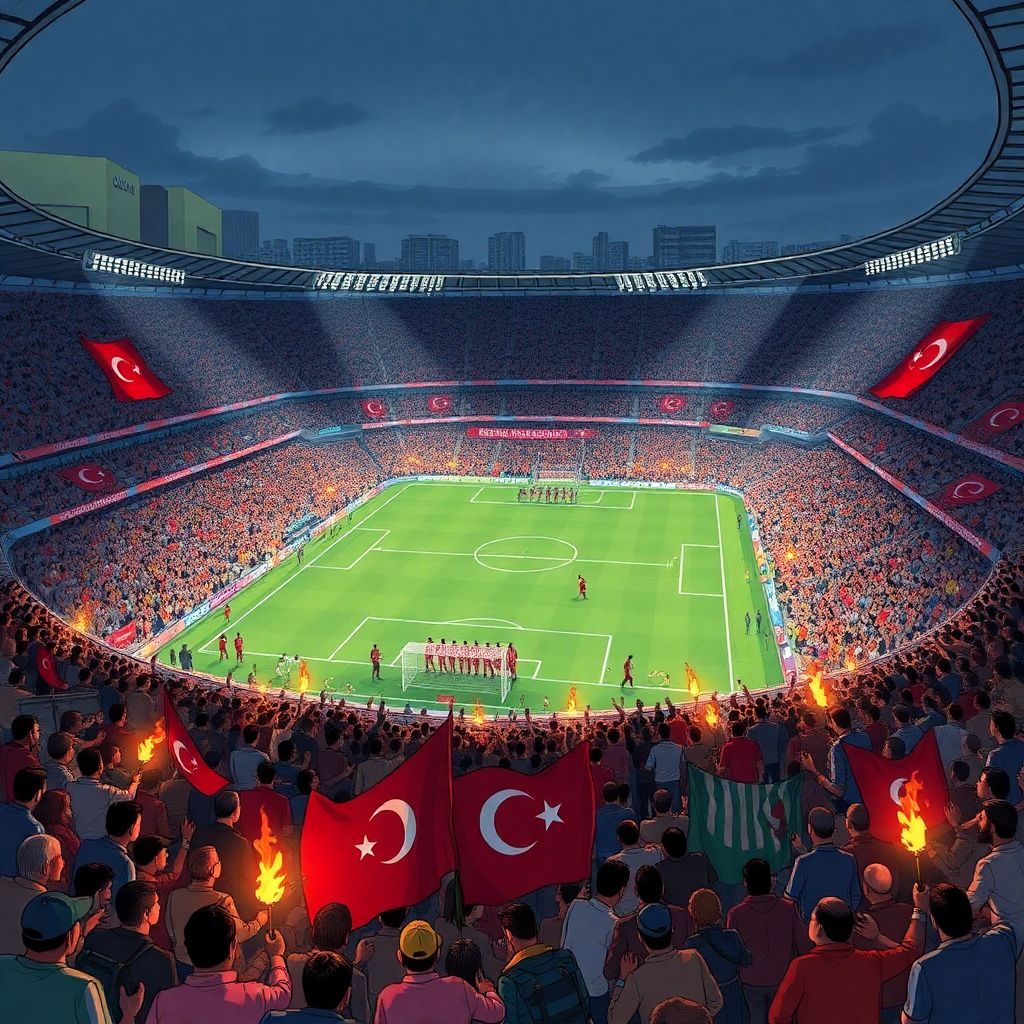
Sports and Politics in Turkey: Why a Match Is Never “Just a Match”
Turkey is one of those countries where football is woven into everyday life so tightly that a big game can reshape the mood of entire cities. When Galatasaray, Fenerbahçe или Beşiktaş play decisive Turkey football matches, streets empty, TV ratings spike, and social media turns into a roaring stadium. In this atmosphere, it’s almost inevitable that sports and politics start to overlap. Over the last three years, from 2021 to 2023, this overlap has become even more visible: from crowd slogans in stadiums to debates in parliament about fan cards, security measures and broadcasting rights. To understand why, we need to unpack how football clubs became more than just teams, and why each derby in Istanbul can feel like a national referendum on identity, power and belonging.
Key Terms: What We Actually Mean by “Sports and Politics”
Political Football vs. “Football Politics”
Before talking about Turkey, it helps to clarify vocabulary. By “politicization of sports” we mean the use of sport — especially football — for political goals: gaining popularity, signaling national power, or shaping public opinion. This is different from “football politics”, which is the internal power game inside clubs, leagues and federations: elections in the Turkish Football Federation (TFF), club board fights, or lobbying over stadium projects. In Turkey these two levels are tightly intertwined: decisions on broadcasting, security and even kick‑off times often reflect both government policy and club rivalries, turning what looks like sporting bureaucracy into a broader political process that fans feel directly in their wallets and weekend plans.
Derby, Ultras, Passolig: Mini Glossary
To follow Turkish debates, a few terms are essential. “Derby” usually refers to high‑tension local clashes like Galatasaray–Fenerbahçe, Fenerbahçe–Beşiktaş or Beşiktaş–Galatasaray, though in practice many fans use it for any emotionally loaded Turkey football matches. “Ultras” are the most organized and vocal fan groups, known for huge banners, choreographies and sometimes confrontational stances toward both club management and the government. “Passolig” is the electronic ticketing and ID card system introduced in 2014, formally for security and anti‑violence. In practice, it also created a centralized database of fans, which critics argue enables surveillance and limits spontaneous protest inside stadiums, turning access to matches into a regulated and politically sensitive privilege.
Stadium as a Political Stage
From Chants to Political Messages
In Turkey, stadiums often act as relatively uncensored spaces compared to traditional media. During tense political periods, fans have chanted slogans about corruption, freedom of expression or government policies, sometimes synchronizing across several stadiums in one league round. Between 2021 and 2023, human‑rights groups and local media repeatedly documented cases where political chants led to investigations, stadium bans or public warnings from officials. This pattern shows that authorities clearly perceive football crowds as a meaningful political audience. When tens of thousands of people sing something in unison, even for a few minutes, it becomes a visible signal that cannot be ignored in a polarized political environment.
Diagram: How a Match Turns into a Political Event
Imagine a layered process where an ordinary game gradually becomes political. A simple way to visualize it in text is:
Diagram 1 – Escalation from sport to politics
– Layer 1: Pure sport – teams, tactics, league standings.
– Layer 2: Identity – city pride, class background, secular vs. conservative culture.
– Layer 3: Media framing – “revenge match”, “historic night”, references to national issues.
– Layer 4: Collective expression – chants, banners, symbols about non‑sport topics.
– Layer 5: Official reaction – police presence, legal responses, political statements.
By the time we reach Layer 5, the match is no longer just entertainment. Decisions on whether to investigate fans, fine clubs, or block certain banners instantly transform a league fixture into a miniature test of political climate in Turkey.
Clubs as Carriers of Social Identity
Why Galatasaray, Fenerbahçe and Beşiktaş Feel Like “Parties”
In many Turkish neighborhoods, club allegiance is almost as strong as party allegiance, and sometimes much more emotional. Galatasaray, Fenerbahçe and Beşiktaş carry long‑standing stereotypes: educated elites vs. people of the streets, secular cosmopolitanism vs. nationalist conservatism, “European” outlook vs. “local” authenticity. Of course, reality is more mixed than the clichés, but the stereotypes still shape how fans talk about themselves and each other. That is why when people rush to buy tickets Galatasaray Fenerbahce derby Istanbul weeks in advance, they are not only preparing for a game; they are preparing to defend a social identity that feels almost political in its intensity.
Diagram: Overlapping Identities of a Turkish Football Fan
We can describe fan identity as several overlapping circles:
Diagram 2 – Identity circles
– Circle A: Football identity – club colors, favorite players, tactical preferences.
– Circle B: Local identity – neighborhood, city, region (like Kadıköy vs. Beşiktaş district).
– Circle C: Political and cultural identity – views on religion in public life, nationalism, democracy.
Where A, B and C overlap, you get a typical Turkish fan profile. For some, politics is faint in the background; for others, it is front and center. Surveys by academic researchers between 2021 and 2023 suggest that politically engaged young people are more likely to link club identity with broader cultural positions, for example seeing one club as more “secular and modern” and another as more “traditionalist”, even if players and officials constantly insist that the pitch should remain neutral ground.
Numbers Behind the Passion: Trends 2021–2023
Attendance and Viewership
Hard numbers help illustrate how big football’s public reach is. Official statistics on Turkish Super Lig attendance are fragmented, but multiple analyses of Passolig data show that after the pandemic dip, stadium attendance climbed noticeably in the 2021/22 and 2022/23 seasons. Major Istanbul derbies regularly attracted tens of thousands of spectators, with some matches approaching pre‑pandemic occupancy rates in the largest stadiums. At the same time, television and online viewership grew: broadcasters reported year‑on‑year increases in audience for top fixtures, reflecting both the rise of digital platforms and a stronger culture of watching from home or in cafes. This dual growth means that when a derby becomes politicized, its message travels through full stands and large screens simultaneously.
Fan Cards, Security and Sanctions
Another relevant set of numbers relates to sanctions. Public reports and press coverage suggest that between 2021 and 2023, thousands of individual stadium bans were issued annually in Turkey, for offenses ranging from flares and fighting to politically tinted chants. While the total number of registered Passolig cards runs into the millions, the number of active match‑going cardholders is smaller, yet still large enough that sanctions shape the behavior of entire groups. Over these three years, debates over whether the system reduces violence or mainly serves to monitor political dissent inside stadiums became more intense, particularly after high‑profile cases in which banners or songs led to disciplinary action that many fans viewed as disproportionate.
Economic Dimension: Tickets, Tours and Bars
Money is another way to see the weight of football in public life. Prices for big‑game tickets have steadily increased in the last three seasons, and demand for prestigious derbies has fueled a mini‑industry of Turkey football tour packages Istanbul derby aimed at foreign fans. Travel agencies promote weekend trips that combine hotel stays, guided city tours and guaranteed seats for a marquee match, showing how club rivalries are turned into exportable experiences. Domestically, match days are a vital revenue stream for hospitality. The best sports bars Istanbul to watch football report significant spikes in turnover whenever giants meet, and their screens double as spaces where political commentary naturally mixes with tactical analysis, creating a hybrid of public sphere and living room.
Broadcasting, Streaming and the New Information Battleground
From Traditional TV to Subscription Platforms
The growth of digital media changed how people consume football and political news at the same time. Instead of one or two national TV channels dominating the narrative, there are now numerous sports networks, YouTube channels and social‑media commentators. The competition around Turkish Super Lig live streaming subscription services turned broadcasting into both a commercial and political battlefield, with controversies surrounding bidding processes, pricing and access. For fans, a subscription is no longer just a way to watch goals; it is also a gatekeeping tool deciding who can follow debates in real time. As audiences fragment across platforms, politicians and clubs increasingly appear on fan podcasts and online talk shows, recognizing that these digital spaces are as influential as some mainstream talk programs.
Media Framing and Bias
How broadcasters frame a game can subtly steer political interpretation. When channels highlight crowd whistles during the national anthem, or focus repeatedly on a particular choreo in the stands, they send a message about what is important. Studies of Turkish sports coverage since 2021 have found a tendency to align with broader editorial lines: more government‑friendly outlets emphasize unity, stability and respect for authorities, while more critical ones highlight fan protests and controversies. This media environment ensures that even neutral viewers, who only wanted to enjoy a Saturday evening match, are exposed to layers of meaning that extend far beyond offside traps and possession stats.
Sports Betting, Regulation and Power
Betting as a Political and Economic Tool
Football is also tied to politics through gambling regulation and revenue flows. The phrase sports betting Turkey football matches may sound purely commercial, but who licenses betting operators, where proceeds go, and how strictly advertising is controlled are political decisions. In the past few years, Turkish authorities have continued to emphasize crackdowns on illegal betting while maintaining state‑linked structures that channel legal revenue into sport. Critics argue that this creates a dependency: clubs benefit from funds tied to a system that the government ultimately controls. In a context where many teams struggle financially, that dependency can translate into softer criticism of authorities or a preference for quiet negotiation over open confrontation.
Risk, Addiction and Public Health Debates
Another side of the betting discussion is social. Health experts note a rise in concerns about gambling addiction, especially among young men who follow football obsessively and treat live betting as part of the match‑day ritual. Policymakers have to juggle two goals: preventing harm and ensuring that tax and licensing revenue stays within formal channels. This creates constant tension between liberalizing access to satisfy demand and restricting it to protect vulnerable groups. Parliamentary discussions and media debates between 2021 and 2023 show that betting is rarely framed as a purely economic sector; it is loaded with moral, religious and social arguments that echo wider political divides in Turkish society.
Comparisons: How Turkey Differs from Europe and Latin America
Similarities with Southern Europe
In many ways, Turkey resembles Mediterranean football cultures like Italy and Greece. There, as in Turkey, football clubs historically mirror neighborhood loyalties, class identities and political leanings. Ultras often act as semi‑independent forces within stadiums, sometimes clashing with both police and club management. Yet there are differences. Turkey’s centralized fan‑ID system and strong state presence around major stadiums create a higher level of direct government contact with ordinary spectators than you usually find in, say, Spain. This makes any conflict between authorities and fan groups more asymmetrical, and raises the stakes whenever fans decide to use the terrace as a platform for protest or social commentary.
Parallels with Latin American “People’s Clubs”
Latin America, especially Argentina and Brazil, offers another comparison point. There too, big clubs are “people’s institutions” where politics, crime, community work and pure fandom coexist. Compared to those countries, Turkey has somewhat tighter formal control mechanisms but similarly intense emotional investment. For example, political parties in Brazil may court ultras; in Turkey, politicians show up at club congresses, pose with scarves, and publicly comment on referee decisions. The emotional tone around derbies — including security operations, road closures and media hysteria — can resemble South American superclásicos, illustrating that football states in different continents can end up using remarkably similar scripts when blending sport with power.
Match Day in Istanbul: Microcosm of the Country
From Streets to Stands
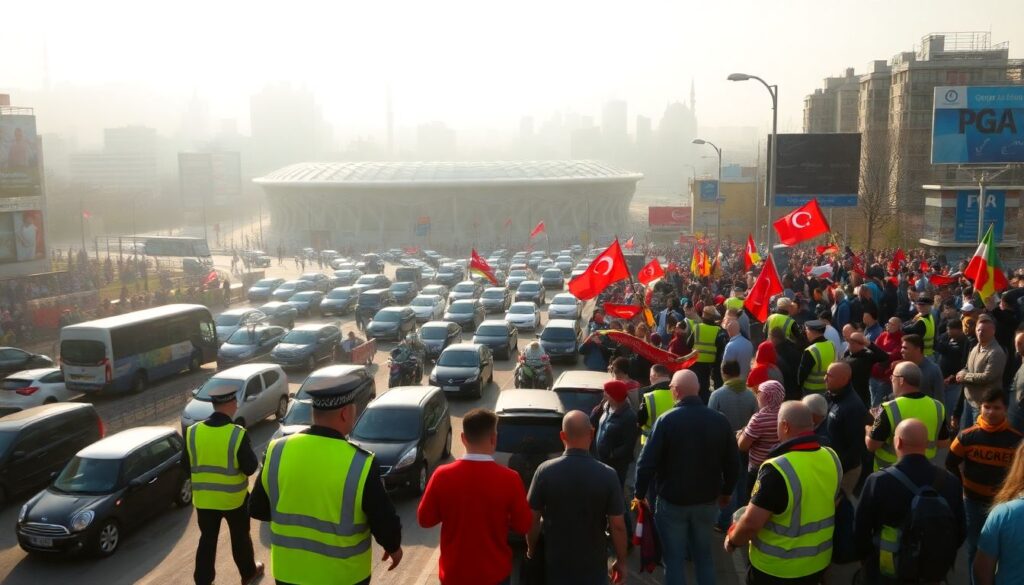
If you spend a full derby day in Istanbul, you can watch layers of social life line up like scenes in a documentary. Early in the morning, traffic around stadiums already becomes complicated, with police checkpoints and roadblocks. Street vendors selling scarves, flags and unofficial merchandise set up shop, and political discussions start long before kick‑off in minibuses and ferries. Many visitors coordinate Turkey football tour packages Istanbul derby so that they arrive in time to experience this ritual: lunch in a neighborhood meyhane or kebab place, pre‑match beers or tea, then a slow walk toward the stadium. By the time you pass security and electronic checks, the atmosphere is charged not just with anticipation of goals but also with unspoken expectation that the crowd might send some sort of message — supportive, angry, ironic — to the wider country.
Bars, Living Rooms and Parallel Public Spheres
Not everyone can or wants to attend in person. For many, match day is anchored in familiar places: home, a friend’s living room or a favorite bar. When people ask for the best sports bars Istanbul to watch football, they are often also asking for a compatible micro‑public: somewhere their style of cheering, jokes and political comments will fit in. In these spaces, the TV screen is central but not sufficient; the real experience lies in collective reactions. When a controversial VAR decision appears, conversations immediately expand into trust in institutions, fairness in society and what “justice” means — themes that go far beyond a single offside line. In this sense, every major match night creates parallel mini‑parliaments across the city, some smoky and loud, others quiet and family‑oriented, all contributing to how people interpret current events.
Looking Ahead: What the Next Few Years May Bring
Trends Emerging by 2023
By the end of 2023, several trends were clear. First, technological control — through fan IDs, cameras and data analytics — is getting stronger, which may discourage some forms of visible protest in stadiums but will likely push political expression into online fan communities and informal gatherings. Second, economic pressure on clubs is intensifying, making them more reliant on broadcasting, sponsorship and regulated activities like betting. Third, younger fans are deeply online: they consume highlight clips, memes and tactical breakdowns mixed with political commentary from the same influencers. Whether they attend matches or rely on legal and semi‑legal streams, their sense of belonging is shaped in a digital ecosystem where politics is never entirely separate from sport.
Possible Futures for the Sport–Politics Nexus
Several scenarios are possible. One is further “normalization”: clubs, authorities and broadcasters agree on unwritten rules that limit open confrontation, and football becomes a relatively safe entertainment zone, with occasional flare‑ups. Another is periodic escalation: whenever external political tensions rise, stadiums again become hotspots of dissent or nationalist mobilization. Much will depend on how inclusive institutions like the TFF and major clubs become, how transparent decisions on broadcasting and security are, and how honestly the risks of over‑regulation — including alienating younger fans — are acknowledged. What seems certain is that in Turkey, where identity questions run deep and football passion remains intense, the biggest games will keep acting as mirrors of society. Whether you follow through a Turkish Super Lig live streaming subscription at home, travel in person to a derby, or just check the score on your phone, you are always just one step away from a broader conversation about who holds power, who has a voice, and what kind of country fans want to live in.
Practical Takeaways for Fans, Visitors and Observers
If You’re Visiting Turkey for Football
For anyone planning to experience this unique mix of sport and politics firsthand, a few practical points help keep expectations realistic:
– Big matches involve heavy security; build extra time into your schedule and follow local guidance.
– Passolig or equivalent systems may be required, even for visitors, so check current rules before you buy tickets Galatasaray Fenerbahce derby Istanbul or any other high‑profile game.
– Be prepared for charged chants and banners; even if you don’t understand all the Turkish, the emotional temperature will be obvious.
If You’re Studying or Just Curious About the Topic
Observers — students, researchers, journalists — can treat Turkish football as a living laboratory for how culture and power interact. Useful angles include:
– Tracking how media headlines about matches change between sports pages and political columns.
– Comparing fan narratives on social media with official club statements after controversial events.
– Observing how different generations — parents, children, grandparents — talk about the same match in terms of pride, fear, or resistance.
Taken together, these perspectives show why, in Turkey, a 90‑minute game often feels like a compressed version of national debates. The scoreboard may only show goals, but in the stands, bars and streets, people keep a much longer mental tally of respect, recognition and voice — things that cannot be decided by a final whistle.