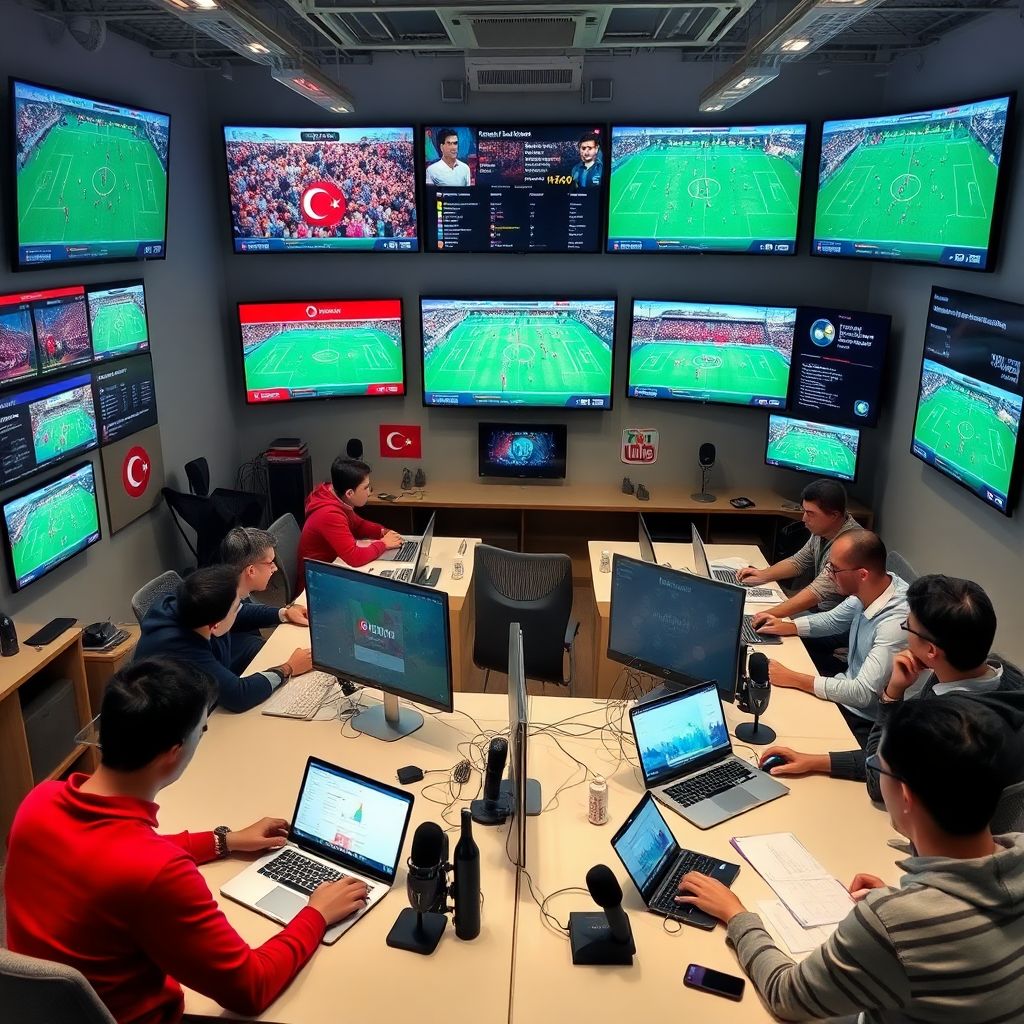
From Touchline to Timeline: What’s Really Changing in Turkish Sports Journalism
Sports journalism in Turkey is in the middle of a structural reboot. The old model of TV studios, print columns and next‑day match reports is being replaced by push notifications, short‑form video and long‑read tactical breakdowns.
But this isn’t just “more content on the internet.” It’s a full-scale transformation of workflows, business models and even what it means to be a sports reporter.
Цифры: как аудитория в Турции потребляет спортивные новости сейчас
If you want to understand why the industry is changing, you start with data, not buzzwords.
According to the Reuters Institute Digital News Report 2023, Turkey is one of the countries with the highest reliance on smartphones for news consumption; in many age groups, mobile usage for news is above 80%. That pattern directly affects online sports news sites in Turkey, which now design everything “mobile-first”: vertical video, short headlines, fast-loading pages, and push alerts tailored to match times.
A few key trends that media analysts and digital editors in Istanbul often highlight:
1. Real-time expectations. Fans don’t wait for the evening bulletin; they follow live text, xG graphs, and instant clips.
2. Algorithm pressure. Social platforms decide what is seen; editors optimize headlines, thumbnails and upload timing as carefully as they once chose front pages.
3. Fragmented loyalty. Users jump between club-specific channels, independent analysts, influencers, and legacy brands. “My team’s YouTube channel” can be more important than any single TV station.
Put simply, the timeline has become the new front page.
От «горячих новостей» к глубокой аналитике
For years, Turkish sports media competed on speed: who tweets the line-up first, who breaks the transfer rumor, who “confirms” the coach’s resignation. That still exists, of course, but it’s becoming a commodity.
Fans already get instant score updates from apps, live Turkish football news streaming platforms, and club push notifications. Being first is no longer enough; audiences want explanation and context.
Почему аналитика стала реальным конкурентным преимуществом

You can see the shift in the rise of data-driven content: heatmaps, passing networks, shot maps, and detailed xG breakdowns of Super Lig games. Younger fans expect the same analytical depth for Fenerbahçe or Galatasaray that they see for Premier League matches on global platforms.
Sports editors in Turkey talk about three core content layers:
1. Instant info – line-ups, goals, cards, injuries.
2. Short reaction – post-match player ratings, quick takes, 3–4 key stats.
3. Deep analysis – tactical breakdowns, salary cap context, financial fair play implications, transfer market strategy.
That third layer is where real differentiation happens. It’s also where newsrooms are hiring people with hybrid skills: video editing + tactical literacy, or data visualization + understanding of the Turkish Football Federation regulations.
Рынок труда: какие навыки ищут редакции и агентства

The phrase “sports journalist” in Turkey used to mean TV pundit, beat reporter or match commentator. Now the talent map is broader and messier.
Sports editors and HR managers who work with sports journalism jobs in Turkey consistently mention the same new requirements:
1. Multiplatform proficiency. Writing a game recap is basic; you also need to turn it into a 60‑second vertical video, a Twitter/X thread, and a podcast talking point.
2. Data literacy. Not full-scale data science, but enough to interpret advanced stats and translate them into clear, engaging narratives.
3. Audience insight. Understanding how content performs in YouTube analytics, Google Analytics, or TikTok dashboards, and adjusting formats accordingly.
4. Basic production skills. Good audio, clean cuts, clear graphics – the minimum standard has gone way up.
This is why many working journalists advise students to treat sports journalism courses online Turkey as a starting point, not an endpoint. The courses are useful for fundamentals—ethics, interviewing, news judgment—but you also need self-driven upskilling in areas like video storytelling, social media strategy and football analytics.
Советы экспертов для тех, кто входит в профессию
Editors and senior reporters from Istanbul and Ankara usually repeat a common set of recommendations when they speak to students and interns:
1. Narrow your niche early.
Don’t try to be “the sports guy.” Pick a lane: tactical analysis, youth academies, women’s football, basketball analytics, or the business side of clubs. Depth beats generic commentary.
2. Build a visible portfolio.
Start publishing on Medium, YouTube, Substack, or smaller online sports news sites in Turkey. When a newsroom looks at your CV, they want proof that you can deliver consistently, not just a diploma.
3. Learn tools, not only theory.
Get comfortable with basic video editors (Premiere, CapCut), audio tools, and simple graphics software. Many entry-level sports journalism jobs in Turkey now involve content packaging, not just writing.
4. Understand the business model.
Know how ad revenue, sponsorship, and affiliate deals work. Editors say young reporters who grasp the economic realities are better at pitching viable projects.
5. Maintain credibility in a rumor-driven ecosystem.
Turkish sports discourse is heavily rumor-centric. Experts repeatedly insist: verify, attribute, and be transparent. Reputation is the only long-term asset you control.
Экономика цифрового спортивного контента в Турции
Behind the scenes, this is an economic story as much as an editorial one. Traditional TV rights for big fixtures still bring in serious money, but the growth is now in digital—short clips, highlight rights, branded content, and influencer collaborations.
Digital sports media agencies in Turkey occupy a crucial middle layer. They:
– Manage social channels for clubs and federations
– Produce branded series for sponsors (e.g., behind-the-scenes training camp episodes)
– Handle programmatic ad sales and campaign optimization for sports portals
For independent outlets, the revenue puzzle usually combines:
– Display ads and programmatic – still a base layer, but CPMs are volatile
– Sponsorship and branded formats – “presented by” analysis shows, podcast integrations
– Subscription or membership models – particularly for long-form analysis and insider reporting
– Event tie-ins – watch parties, live podcasts during derbies, fan meet-ups
In practice, this means editors must think like product managers. Every new vertical—say, a weekly long-form column on the financial health of Süper Lig clubs—needs a monetization hypothesis. Will it bring loyal readers who sign up for memberships? Will it justify a brand partnership? Or is it a pure prestige project?
Риски и узкие места
The economic pressure creates a few structural risks:
– Clickbait inflation. When pageviews drive ad revenue, there’s a temptation to oversell transfer rumors or recycle unverified stories.
– Sponsor dependence. When a betting company or big brand pays for a show, editorial independence can become blurry, especially in a football culture as intense as Turkey’s.
– Platform vulnerability. Many outlets depend excessively on algorithmic traffic from YouTube or social platforms; a single change in recommendation logic can damage reach overnight.
Experts who consult for media houses in Istanbul often argue that the only way out is brand-based loyalty: building communities that actively seek out your content, not just stumble upon it in their feed.
Трансформация форматов: от прямых эфиров к «умным» стори-теллингам
If you compare sports talk shows from ten years ago to today, the surface looks similar: debates, arguments, controversial referee decisions. But the production logic is different.
Modern shows are built for clippability. Producers think in segments that can be cut into 30–90 second pieces and pushed to social platforms the moment the words are spoken. That’s why timing, on-screen graphics, and lower thirds are engineered for the replay, not just the live broadcast.
At the same time, new long-form formats are emerging:
– In-depth documentaries about fan culture, club politics, and regional derbies
– Analytics-heavy breakdowns using tracking data and slow-motion replays
– Player- and coach-led content, where athletes host their own shows or vlogs
For live coverage, sports desks are now integrated with live Turkish football news streaming platforms. Instead of just sending a reporter to the stadium, newsrooms produce multi-layer live experiences: video + live blog + instant polls + tactical graphics. The match becomes a real-time digital product, not just an event to summarize after the whistle.
Как это меняет рабочий день журналиста
A typical match day for a digital sports reporter in Turkey might now include:
1. Pre-match data research (Form, xG trends, wage structures, injury clusters).
2. Preparing pre-scheduled posts and graphics for key scenarios.
3. Live commentary across multiple platforms (site, app, social).
4. Immediate short reaction video from a mixed zone or mobile studio.
5. A deeper analytical piece or podcast recorded the next day, once tracking data and advanced stats are fully available.
It’s less “write one article” and more “manage a continuous content stream.”
Прогнозы развития: что ждёт турецкую спортивную журналистику к 2030 году
Forward-looking executives in Turkish media circles are fairly aligned on a few trajectories.
First, personalization. As recommendation engines get smarter, fans will increasingly see customized sports feeds: their clubs, preferred leagues, favorite analysts. Sports platforms that can segment and serve the right mix of breaking news, tactical breakdowns and transfer market coverage will win attention.
Second, data as baseline. By 2030, using metrics like expected goals, possession value models, and detailed pressing stats will likely be as normal in Turkish coverage as they already are in some European markets. This will demand more analysts, not just classic commentators.
Third, creator–newsroom hybrids. Many young journalists in Turkey are already building personal brands on YouTube and social media. The likely future is a hybrid model: individual creators working under the umbrella of large outlets, with revenue-sharing or co-production agreements.
Fourth, education catching up. Universities and training centers are slowly updating curricula, but there is still a gap. Experts predict rapid growth in modular programs and micro-credentials—essentially, more targeted sports journalism courses online Turkey that focus on analytics, sports business, and digital production.
Finally, more cross-border content. Turkish clubs have global diasporic fanbases, and international interest in the Süper Lig is slowly rising. Bilingual or English-language sports verticals targeting global audiences are already being tested, especially around European competition matches.
Влияние на индустрию в целом
The ripple effects go beyond journalism itself:
– Clubs are acting like media companies, hiring in-house producers, analysts and social media specialists.
– Leagues and federations are rethinking rights packages to include short-form and digital highlight rights, not just classical TV rights.
– Brands are shifting budgets from traditional sponsorship signage to integrated content projects, betting that well-produced digital shows or docu-series create deeper engagement.
In practical terms, this forces everyone in the ecosystem to raise their standards. Lazy commentary and low-production content no longer cut it when fans can instantly switch to a more polished option.
Практические выводы для редакций и начинающих журналистов
To wrap it up, the transition from breaking news to deep analysis in Turkey’s sports media is not a trend you can ignore or “wait out.” It’s systemic.
For newsrooms, experts consistently push three strategic recommendations:
1. Invest in people who can interpret complexity.
Tactical specialists, data-literate reporters, and journalists who understand the financial side of football create content that algorithmic feeds can’t auto-generate.
2. Build a brand that can survive platform shifts.
Yes, you need to optimize for algorithms, but the long game is direct audience relationships—newsletters, apps, communities, membership programs.
3. Protect editorial integrity in a high-pressure environment.
Between sponsor demands, intense fan bases and wild rumor cycles, credibility is fragile. Clear guidelines on verification, corrections and sponsorship disclosure are not a luxury; they’re the core of long-term viability.
For individuals planning a career in this space, the expert-level message is straightforward:
Treat yourself as a media startup. Acquire technical skills, understand the economic side, develop a clear niche, and keep sharpening your analytical edge. Turkey’s sports media is not shrinking; it’s being reconfigured. Those who can move from mere “breaking” to meaningful, data-informed, accessible analysis will be the ones shaping the conversation in the next decade.