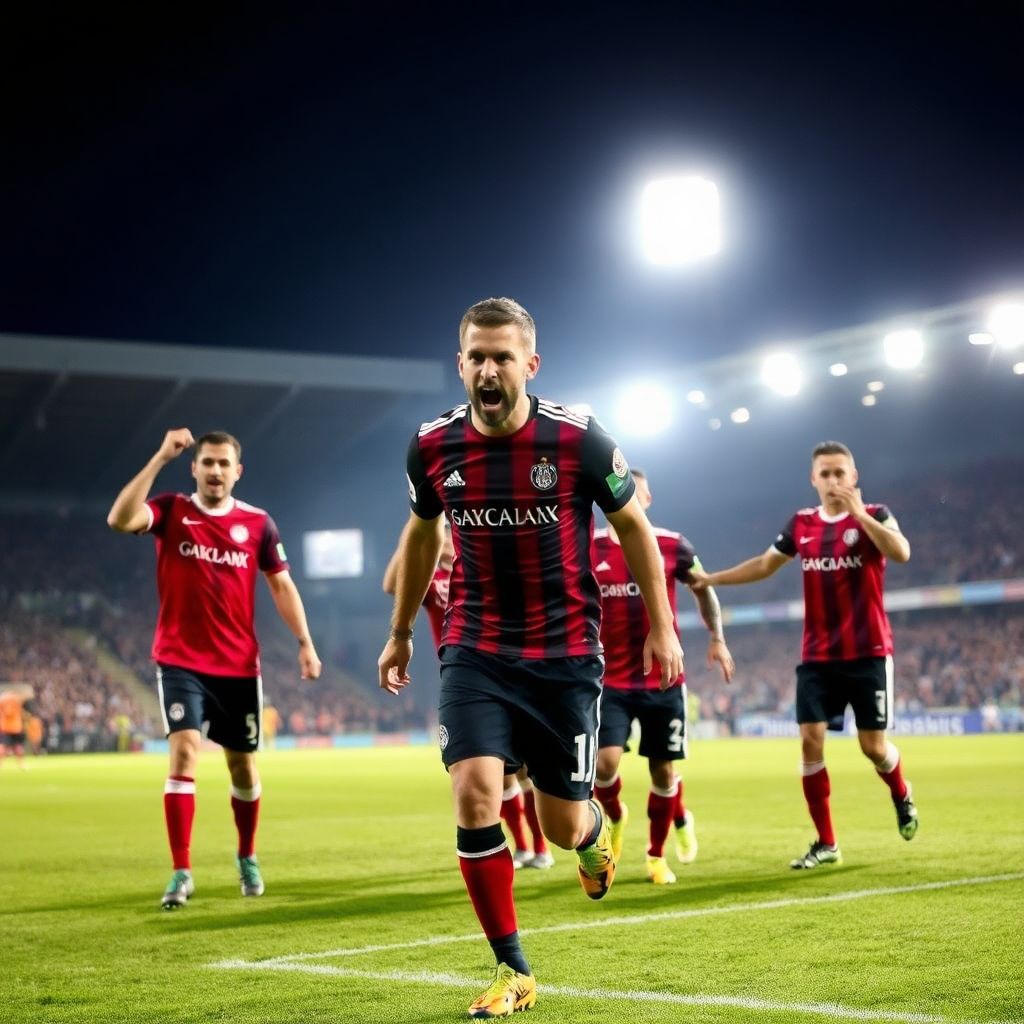
“I Was Pretty Angry”: Szoboszlai Tears Into Liverpool Display Before High-Stakes Galatasaray Return
Dominik Szoboszlai has delivered a ruthless verdict on Liverpool’s 1-0 defeat to Galatasaray in the Champions League, admitting he left Istanbul seething at both the result and the level of performance.
The Hungarian playmaker, one of the club’s marquee midfield signings, did not attempt to sugar-coat what happened at RAMS Park, where Liverpool laboured for long spells before being undone by a Mario Lemina header. The loss leaves Arne Slot’s team needing a turnaround at Anfield to keep their European campaign alive.
“We Didn’t Play Like Liverpool”
Speaking to the club’s official media, Szoboszlai made it clear that the frustration went much deeper than simply trailing 1-0 on aggregate.
“I was pretty angry after the game,” he admitted. “It wasn’t just the result. We didn’t play the way we should – and the way we know we can. We’ve shown many times that we’re capable of competing with and beating any team in Europe or in the Premier League.”
Liverpool never truly found their rhythm in Istanbul. Their usually slick passing game looked disjointed, transitions were slower than usual, and the intensity that defines their best nights in Europe rarely surfaced. In a stadium famed for its hostility, Galatasaray thrived on the chaos, while the Reds struggled to impose themselves.
Szoboszlai’s assessment amounted to a damning verdict: the “top level” required in the Champions League was missing. In a competition where small margins decide seasons, Liverpool fell well short of their own standards.
Focus Turns to a Defining Week
Despite the disappointment, the midfielder’s gaze has already shifted towards what he described as a potentially defining week for the club. Liverpool face a crucial domestic test against Tottenham on Sunday before hosting Galatasaray in the return leg at Anfield on Wednesday.
“I can’t wait for it,” Szoboszlai said, already targeting redemption on home turf. The message was clear: there will be no time for sulking, only for responding.
The coming days could shape the narrative of Liverpool’s entire campaign. A strong result against Spurs would steady the league campaign, while a convincing European fightback would restore belief that this team still has the mentality for big occasions. Fail in either, and the criticism already circling the squad and manager will only grow louder.
Slot Under Scrutiny
Szoboszlai’s anger reflects a broader unease around the team’s direction. Arne Slot, brought in with a reputation for front-foot, attacking football, is already under the microscope after tactical decisions in Istanbul raised eyebrows.
Former Liverpool winger Jermaine Pennant was particularly scathing, questioning why Slot chose not to unleash 17-year-old attacking prospect Rio Ngumoha when chasing the game. With Liverpool desperately in need of spark and unpredictability late on, the youngster remained on the bench, a decision that many felt symbolised a lack of boldness at a crucial moment.
The result and performance have intensified a sense that Slot is still searching for the right balance and identity at Liverpool. While his philosophy is built on structure and control, critics argue that this iteration of the team is missing the ruthlessness and emotional edge that once made them a nightmare for opponents in Europe.
Players Also in the Firing Line
It isn’t just the manager absorbing the flak. Several players have found themselves under heavy criticism, with defender Ibrahima Konaté singled out after a particularly shaky display in Istanbul.
Under relentless pressure from Galatasaray’s attack and the ferocious Turkish crowd, Konaté never appeared fully comfortable. Errors in positioning and decision-making led to a barrage of complaints online, with some fans likening his movement to “Bambi on ice” in such an intense environment.
For a centre-back expected to be a pillar of stability, such scrutiny stings. But it also underlines a wider issue: key figures are not playing at their peak, and that vulnerability is being exposed in Europe’s elite competition.
A Season on the Brink
Behind the scenes, the message from the club hierarchy is said to be one of continued – if cautious – backing for Slot “for the time being.” Yet the context is unforgiving. Liverpool are fighting on two fronts:
– attempting to overturn a first-leg deficit to reach the Champions League quarter-finals
– and battling domestically for a top-four finish to secure a return to the competition in the 2026/27 season.
Club legend Jamie Carragher has already hinted at the stakes. In his view, Liverpool may still be slight favourites to progress at Anfield, but if they crash out in the last 16 and fail to secure Champions League qualification through the league, the season will be widely regarded as a failure.
Should that scenario unfold, questions over Slot’s long-term future in the Anfield dugout would be unavoidable. A club of Liverpool’s size does not tolerate prolonged stagnation, especially after a decade spent rebuilding its reputation among Europe’s elite.
What Went Wrong in Istanbul?
Beyond emotion and soundbites, there were clear tactical and psychological problems in the first leg. Liverpool’s midfield struggled to control the tempo, leaving the defence more exposed than usual and reducing the supply line to their forwards.
Galatasaray exploited the spaces cleverly, pressing aggressively when Liverpool attempted to play out from the back and then retreating into a compact shape when the visitors crossed the halfway line. This forced Liverpool wide and into predictable crossing patterns, where the home side’s defence largely coped comfortably.
In addition, Liverpool’s usual counter-press looked fragmented. When they lost the ball high up the pitch, the immediate swarm to win it back rarely materialised, allowing Galatasaray to break or calm the game down. For a team built on intensity, that absence was glaring.
What Must Change at Anfield?
If Liverpool are to rescue the tie, several elements will have to improve dramatically in the return leg:
1. Tempo and aggression in midfield – Szoboszlai and his colleagues will need to set the tone from the first whistle. Quick ball circulation, forward runs from deep, and coordinated pressing will be vital to pin Galatasaray back.
2. Smarter use of width – Instead of predictable high crosses, Liverpool will require more varied patterns: cut-backs from the byline, underlapping runs from midfield, and low, driven deliveries that force defensive decisions.
3. Clinical finishing – Chances may still be limited against a stubborn opponent. The attacking line cannot afford a wasteful night; early goals would completely change the tie’s psychology.
4. Bravery from the bench – If Slot is to quieten doubts, he may need to be more daring with his substitutions, including giving minutes to younger or less-established attackers if the game demands unpredictability.
Psychological Battle as Important as Tactical One
The mental side of this decider cannot be underestimated. Szoboszlai’s comments hint at a dressing room that was hurt and embarrassed by how events unfolded in Turkey. That sense of wounded pride can either drag a team down or fuel a response.
Anfield’s atmosphere will play its part. On famous European nights, the stadium has often acted like an additional player, lifting intensity levels and unsettling visiting teams. Liverpool will hope to harness that energy without allowing frustration to creep in if an early breakthrough doesn’t arrive.
Senior figures such as Virgil van Dijk, Szoboszlai and Alisson will be crucial in managing emotions on the pitch – maintaining urgency while preventing panic. One mistake at the back could turn a comeback mission into an impossible task.
Szoboszlai’s Role in the Response
For Szoboszlai personally, this tie offers an opportunity to stamp his authority on Liverpool’s new era. He was recruited to be a difference-maker in big games, a midfielder capable of scoring from distance, threading decisive passes and pressing with ferocity.
His anger in the aftermath of the first leg suggests he feels a personal responsibility to help lead the reaction. A dominant display from the Hungarian – combining creativity with work rate – could go a long way toward changing the narrative around both the team and the manager.
If Liverpool are to turn this around, they will need the version of Szoboszlai that overwhelmed opponents earlier in the season, not the frustrated figure forced to chase shadows in Istanbul.
Reputation, Identity and the Stakes of the Second Leg
Liverpool’s modern identity has been built on memorable comebacks and nights where logic and probability seemed to bend at Anfield. That history raises expectations for every European home tie: fans do not just hope for a response; they almost demand one.
This time, though, the stakes extend beyond simple progression to the next round. The performance against Galatasaray will be viewed as a barometer of where this Liverpool side truly stands in its post-rebuild phase. Is it merely a team in transition, or one already capable of living up to the club’s lofty ambitions?
Szoboszlai’s brutally honest reaction has framed the challenge clearly. The first leg was not good enough. The return in front of a “wall of red” has to be different – in intensity, in bravery, and in outcome – or the questions surrounding this team and its manager will only grow louder.