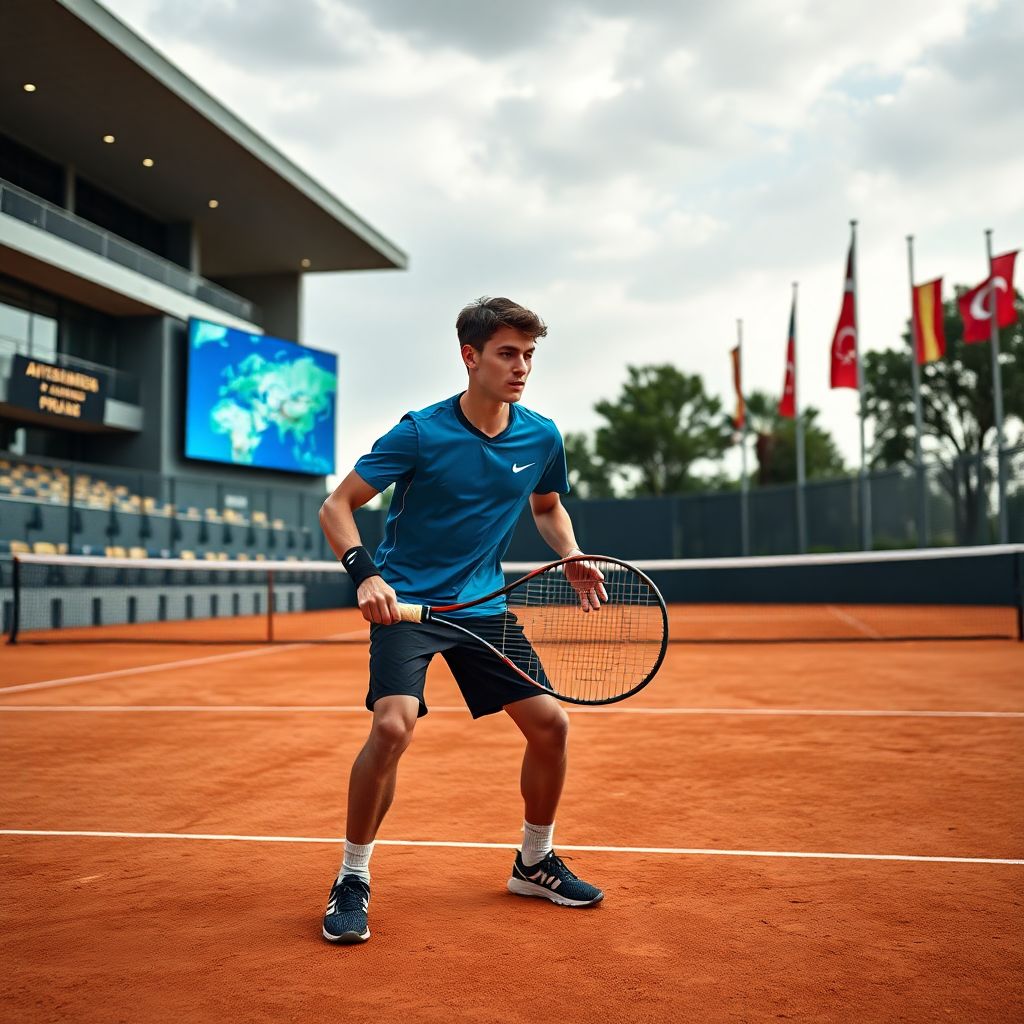
Turkey can produce a Grand Slam champion, but only if systemic mistakes are fixed fast: fragmented coaching standards, late specialization without athletic base, weak competition calendars, and short-term funding. With coordinated academies, evidence-based training, and smarter use of international events, a Turkish player reaching second week of Slams becomes realistic.
What the Evidence Actually Shows
- Talent exists across Turkish age groups, but transition from juniors to pros is the weakest link, not the early stages.
- The density and quality of competition matter more than the total number of courts or players.
- Stable, long‑term coach-player projects outperform frequent coach changes and “quick fix” technical overhauls.
- International exposure via ITF/Challenger events and turkey tennis training programs for international players is essential for closing the gap.
- Best-performing pathways combine strong local basics with seasonal blocks in stronger tennis nations, not permanent relocation.
- Recreation-focused tennis holidays and resorts in turkey help participation, but need links to performance pathways to impact elite results.
Common Myths About Turkish Tennis Debunked
The first obstacle to a Grand Slam champion from Turkey is not talent, but persistent myths that shape bad decisions. These myths affect parents, coaches, clubs and even local federations, leading to wasted years and burned-out athletes.
Myth 1: “If a junior dominates nationally, they are on track for Grand Slam level.” In reality, national dominance in a limited field often hides gaps in physicality, tactical diversity and mental resilience. The fix: benchmark against international peers early, not only against domestic opponents.
Myth 2: “We need more courts, not better programs.” Building courts without structured pathways, qualified staff and performance culture simply creates more casual play. What matters is how courts are used: periodized training, competitive match play, physical preparation and recovery systems.
Myth 3: “Sending a player abroad for a few weeks solves everything.” Short trips to European academies can even create confusion if there is no integration with the home coach. The solution is a clear plan: shared periodization, agreed technical priorities and communication between local and foreign coaches.
Myth 4: “Any strong ex‑player can be a high‑performance coach.” Playing and coaching are different skills. Without education in long‑term athlete development, injury prevention, and match analytics, even talented ex‑players may overtrain or mismanage growth phases. Structured professional tennis coaching turkey must prioritize coach education, not only player training.
Historical Development of Tennis in Turkey
Understanding where Turkish tennis comes from helps explain current strengths and weaknesses, and where a future Grand Slam champion might emerge.
- Introduction as an elite pastime. Tennis began mainly in urban clubs, connected to diplomatic and expatriate communities, making it relatively exclusive and socially narrow.
- Gradual club expansion. As cities expanded, more multi‑sport clubs added tennis courts, increasing access but not yet creating a high‑performance system.
- Federation‑driven growth. National initiatives focused on youth tournaments and basic coach education, building a broader participation base without a robust performance pathway.
- Rise of private academies. In recent years, tennis academies in turkey have become more visible, especially in resort areas and big cities, offering more intensive programs for ambitious players.
- Tourism and camp model. Tennis holidays and resorts in turkey attracted foreign players and coaches, which indirectly raised practice standards through imported expertise and joint camps.
- First international breakthroughs. A few players achieved noticeable results on the professional tours, proving that local conditions can produce world‑class level with the right guidance.
- Shift toward structured pathways. Current trends push towards clearer progression from mini‑tennis to junior ITF, then Futures/Challengers, but gaps remain at the transition to full‑time pro careers.
Current Talent Pipeline: Academies, Coaching and Youth Programs
The modern Turkish talent pipeline is a mix of club systems, private academies, school programs and federation support. Misalignment between these layers is one of the main reasons talented juniors stall before the pro level.
-
Local club foundations.
Most children start in multi‑sport clubs. Common mistakes here include low training frequency, technical shortcuts for “quick wins”, and almost no structured physical literacy. Prevention: set minimal weekly load standards and basic movement skills targets for each age group.
-
Private academies and intensive blocks.
Many of the best tennis camps in turkey for juniors offer short high‑intensity weeks. The risk is “camp high, home low”: great training followed by long periods of underload. Prevention: integrate camp plans into a yearly schedule agreed with the home coach.
-
Performance‑oriented academies.
Top domestic academies offering professional tennis coaching turkey often combine on‑court work with fitness and mental training. Typical error: copying foreign programs blindly without adapting to the athlete’s growth stage or academic obligations. Prevention: individual periodization and honest workload monitoring.
-
School and university programs.
Schools sometimes support training but frequently overload athletes with schedules and exams. Mistake: trying to maintain full academic excellence and full‑time tennis simultaneously during key development windows. Prevention: flexible schooling or adjusted loads during crucial training blocks and competition phases.
-
International exposure pathways.
Turkey tennis training programs for international players, along with joint camps with visiting teams, expose local athletes to higher standards. Error: treating these encounters as isolated events instead of learning opportunities. Prevention: systematic video analysis and clear learning goals from each international block.
-
Federation junior squads.
Federation support can help with travel, coaching and sports science. Mistake: selecting only early physical maturers and ignoring later‑developing players. Prevention: multi‑year tracking systems and selection based on progress curves, not only current size and power.
Infrastructure and Competition: Courts, Tournaments and Funding
Infrastructure is often blamed for the lack of a Grand Slam champion from Turkey, but the picture is more nuanced. The quality and strategic use of resources are more important than raw quantities.
Structural Advantages for Elite Development
- Geographic position allows relatively short travel times to European junior and professional circuits.
- Climate supports extensive outdoor training blocks and clay‑court work for much of the year.
- Resort regions host international events and tennis holidays and resorts in turkey, creating opportunities for sparring with foreign players and coaches.
- Growing number of tennis academies in turkey offers variety in coaching styles and training philosophies.
- Domestic tournaments, including age‑group events, give early competitive exposure and ranking motivation.
- Some private sponsors and clubs are increasingly open to co‑funding promising talents alongside families and federations.
Constraints and Common Systemic Mistakes
- Competition calendars with long gaps or over‑clustered periods, leading either to rust or chronic fatigue.
- Over‑reliance on home events instead of planned exposure to higher‑standard international draws.
- Short‑term funding that covers trips for one good season but disappears when results dip or injuries occur.
- Insufficient sports science support (screenings, load management, nutrition), especially outside major cities.
- Uneven coaching standards, with limited continuous education and little sharing of best practices between regions.
- Parents making isolated decisions about calendars, camps and coaching changes without an integrated long‑term plan.
Case Studies: Promising Turkish Players and Their Trajectories
Looking at the paths of successful and stalled Turkish players reveals repeated errors that can be corrected relatively quickly.
-
Early “star junior” with burnout at 18.
Pattern: fast improvement, many national titles, overloaded schedule, constant travel, then injury and loss of motivation. Mistakes: no off‑seasons, no multi‑year planning, too many surfaces and climates in short periods. Prevention: clearly defined rest blocks and capped tournament counts per age group.
-
Technically gifted but physically underprepared player.
Pattern: beautiful strokes, strong in practice, collapsing in three‑set matches or long tournaments. Mistakes: fitness treated as a side activity; no progressive strength program; poor recovery habits. Prevention: integrate physical training as a core part of weekly load with measurable targets.
-
Perpetual “academy hopper”.
Pattern: frequent moves between the best tennis camps in turkey for juniors and foreign academies, searching for a magic solution. Mistakes: no long‑term relationship with a lead coach, constant technical changes disrupting confidence. Prevention: appoint a primary coach responsible for the global plan and limit major technical overhauls.
-
Late bloomer with stable upward curve.
Pattern: modest early results, then steady ranking improvements as physical maturity arrives. Success factor: patient families and coaches, realistic goal setting, incremental exposure to higher levels. Lesson: avoid writing off players purely on early junior results.
-
Tourist‑to‑competitor pathway.
Pattern: child starts during family tennis holidays and resorts in turkey, later joins a local club, then a performance academy. Mistakes: staying in “holiday” mode too long, weak competitive mindset. Prevention: early shift to structured training if clear motivation and potential are visible.
-
International training hybrid.
Pattern: player trains mainly in a strong domestic academy, with seasonal blocks in Europe using turkey tennis training programs for international players. Success factor: close coordination between home and foreign coaches, shared data, and aligned goals. Lesson: hybrid pathways can match or beat full relocation when managed well.
Barriers to a Grand Slam Winner and Realistic Timelines
Reaching Grand Slam champion level from Turkey requires solving multiple interconnected problems rather than waiting for a “miracle talent”. The good news: many barriers are process‑related and can be changed within years, even if results at Grand Slam level will naturally take longer.
Main barriers to address
- Fragmented pathway from starter to pro, with unclear handovers between clubs, academies and federation programs.
- Inconsistent training volumes and quality, especially in growth‑sensitive years (roughly 11-17).
- Insufficient exposure to truly elite competition before attempting full‑time professional schedules.
- Economic pressure on families leading to rushed decisions, early specialization in doubles, or early exit to regular careers.
- Coach education gaps in periodization, injury prevention and performance analysis.
Quick‑win prevention checklist for common mistakes
- Define one lead coach responsible for the long‑term plan; others (fitness, mental, visiting coaches) must align with it.
- Limit the number of tournaments per year with clear goals (development, ranking, testing new patterns) for each event.
- Schedule at least one formal off‑season block focused on physical development and technical refinement, with minimal competition.
- Use international tournaments not only for results but as data collection: chart patterns, serve percentages, rally lengths and mental lapses.
- Invest in regular physical screenings and simple monitoring (sleep, soreness, motivation) to adjust loads before injuries appear.
- Keep academic and family decisions aligned with tennis goals; avoid last‑minute calendar changes driven by fear or comparison with rivals.
Mini‑scenario: realistic path to a Grand Slam contender
Imagine a 10‑year‑old starting in a city club, moving at 12-13 into a performance program at one of the stronger tennis academies in turkey. The family commits to a coordinated plan: steady training, targeted international events, and seasonal work with foreign experts. By late teens, the player has consistent results on junior tours, then gradually builds ranking through ITF and Challenger events. Within a long, well‑managed cycle, a Turkish player reaching Grand Slam second weeks and, eventually, title contention becomes a realistic, not fantastical, outcome.
Practical Questions Coaches, Players and Federations Ask
At what age should a Turkish player start thinking seriously about a pro career?
The intention can be serious from around 12-14, but final decisions should wait until 16-18, when international results and physical development are clearer. Before that, the focus should be on broad skills, athletic base and love for competition.
Is it necessary to move abroad permanently to become a Grand Slam contender?
No. A hybrid model works well: strong home base plus planned training blocks abroad and foreign competition. The key is coordination and quality, not permanent relocation. Poorly structured moves abroad can even slow development.
How can small clubs in Turkey contribute to a future Grand Slam champion?
Small clubs can focus on excellent basics: good technique, fun competition, and fundamental movement skills. Their role is to identify motivated, improving players early and connect them to higher‑level programs and academies when appropriate.
What should parents avoid if their child is progressing quickly?
Avoid rushing into adult‑style schedules, over‑competing, and frequently changing coaches or academies. Keep school, rest and social life in balance, and evaluate progress over seasons, not weeks. Emotional stability often matters as much as training hours.
How can Turkish coaches quickly upgrade their methods?
Coaches should invest in continuous education: attend seminars, collaborate with international experts, and systematically film and analyze matches. Sharing best practices between clubs and regions can raise standards faster than isolated individual efforts.
What is the best use of short stays at foreign academies?
Short stays should have clear goals: specific technical or tactical focuses, exposure to stronger sparring, or testing physical benchmarks. After returning, the home coach should integrate the lessons into regular training, not treat the trip as an isolated experience.
Do tennis holidays and resorts in turkey help elite development at all?
Indirectly, yes. They increase participation and attract foreign expertise. For elite development, clubs and academies should turn this tourism into structured joint camps, joint events and knowledge exchange instead of keeping it as purely recreational.