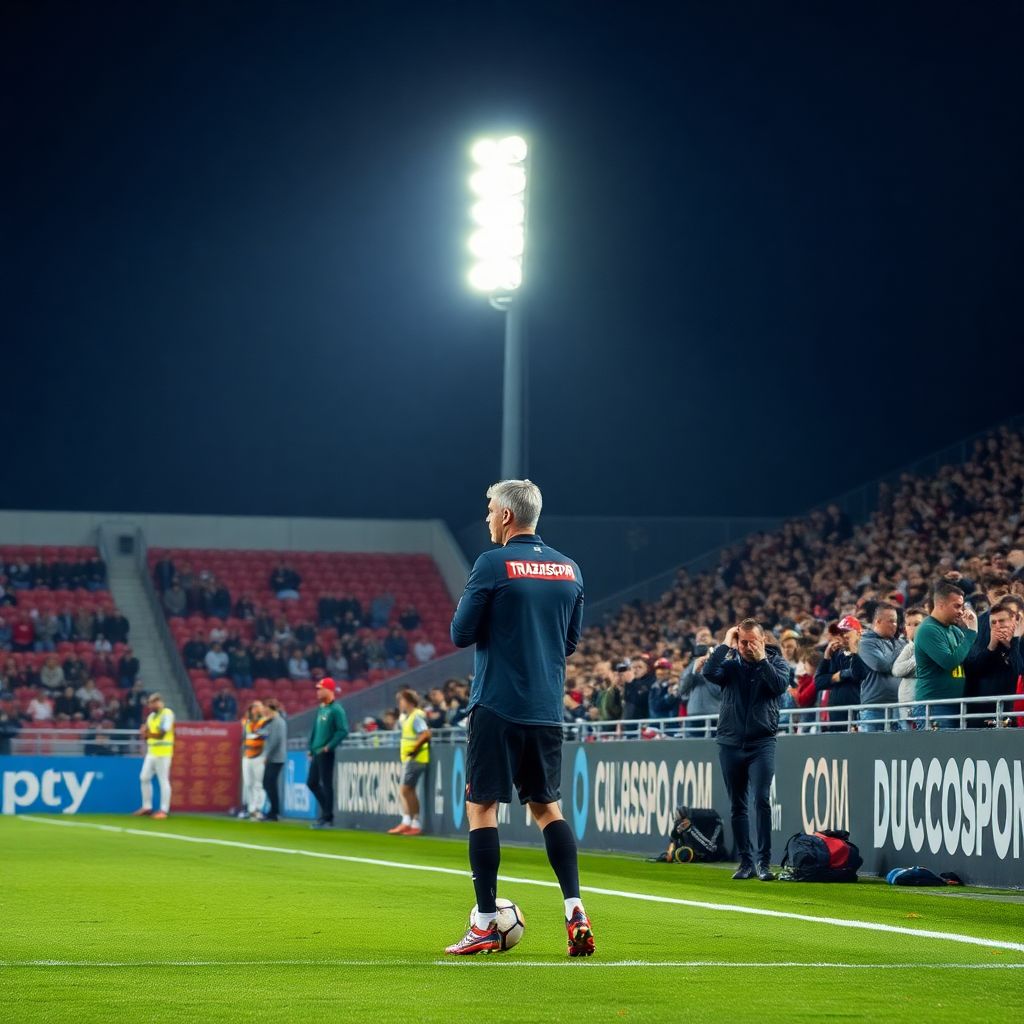
Trabzonspor Weighing Bold Goalkeeping Shake-Up Amid Onana Crisis
Andre Onana’s turbulent spell in Turkey is rapidly turning into another defining low point in his career, with growing indications that Trabzonspor are seriously considering a drastic change between the posts. The Manchester United loanee, brought in to add experience and stability, is instead at the heart of a debate that could reshape the club’s season and his own future.
The Cameroon international arrived in the Turkish top flight seeking a reset after a rocky time in England. Having first lost his starting place at Manchester United to Altay Bayindir and then slipping even further down the hierarchy following the arrival of Senne Lammens, a move to the Trendyol Süper Lig looked like a chance to rebuild confidence away from the unforgiving Premier League spotlight.
That fresh start has not materialised. Instead, Onana appears to be battling the same inconsistency and high-profile errors that overshadowed his time at Old Trafford. The promise that accompanied his arrival in Trabzon has given way to anxiety in the stands and visible frustration within the squad.
A Season Sliding Out of Control
The numbers underline the scale of the problem. Across 18 league appearances, the 29-year-old has registered just four clean sheets. Even more worrying, he has conceded in nine of his last ten games, suggesting a sustained downturn rather than a brief dip in form.
The defining moment came in the high-pressure clash against Fenerbahce. In a game that demanded composure and authority from an experienced goalkeeper, Onana conceded three goals from the only three shots on target he faced. For supporters, it was a brutal illustration of their worst fears: when needed most, their high-profile keeper looked vulnerable, not reassuring.
Local coverage has described Onana as being at the centre of an escalating storm, with his performances dragging the club toward what is being framed as a full-blown sporting crisis. For a team with ambitions of pushing higher in the table, such instability at the back is unsustainable.
Tekke’s Ultimatum: Last Chance or Turning Point?
Head coach Fatih Tekke has been forced to step in directly. Behind closed doors at the training ground, he is understood to have held a one-on-one meeting with Onana, delivering a blunt message: it is time to regroup, reset and show the level expected of a first-choice goalkeeper.
Publicly, Tekke has struck a conciliatory tone. He is said to have reassured Onana that the club still believes in him, emphasising that every player endures periods of bad luck and loss of form. Privately, however, the mood is harder and more pragmatic. The patience of the technical staff is not limitless, and performances described internally as “unrecognisable” cannot continue without consequences.
If results and displays do not improve, the coaching team is prepared to drop the Manchester United loanee and turn to the reserves. It would be a bold, politically loaded move: benching one of the biggest names in the squad signals that reputation and past achievements no longer guarantee a place in the starting eleven.
The Financial Trap Around Onana
Complicating matters further is the economic reality of the deal. Trabzonspor president Ertuğrul Doğan has openly acknowledged that Onana’s salary is at a level that makes a permanent transfer highly unlikely under current conditions. The goalkeeper is essentially a short-term, high-cost solution who is currently not delivering high-level performances.
For Trabzonspor, any decision to drop him carries both sporting and financial implications. Leaving such a well-paid loanee on the bench is far from ideal, yet continuing with him purely because of his contract could undermine the team’s results and dressing-room dynamics.
This situation reverberates back to Manchester. Onana does not appear to feature in manager Ruben Amorim’s long-term plans. Unless something changes dramatically, the likelihood is that he returns to England in the summer with his reputation diminished and market value depressed. United then face a harsh reality: moving on a keeper once considered among Europe’s best, now struggling to justify his wage level and transfer fee.
How Onana’s Style Became a Double-Edged Sword
Onana built his reputation on being a modern, ball-playing goalkeeper-comfortable with the ball at his feet, proactive in starting attacks, and willing to play high off his line. At Ajax and during Inter’s run to the Champions League final, this approach looked like an asset that set him apart.
In England and now in Turkey, that same style has become a risk. Errors in distribution, misjudged passes, and positional gambles have drawn criticism and eroded trust. When a goalkeeper’s confidence dips, the aggressive, front-foot style that once defined him can quickly start to look reckless rather than brave.
At Trabzonspor, the defensive unit is still adapting to his tendencies. Centre-backs must hold a higher line to compress space, full-backs need to be braver stepping forward, and midfielders must present short passing options in tight areas. When that collective synchronisation breaks down even slightly, Onana is left exposed-and his mistakes become more visible and more costly.
Dressing-Room and Tactical Repercussions
The goalkeeper’s struggles inevitably affect more than just statistics. Defenders become hesitant, unsure whether to play back to their keeper under pressure or clear their lines early. That uncertainty can ripple through the team, disrupting buildup play and encouraging a more conservative, long-ball approach that does not suit every player.
Tekke and his staff now have to decide whether to modify their tactical approach to better protect Onana or to commit to a more traditional, risk-averse goalkeeper who offers less on the ball but more perceived stability. Each path has consequences: redesigning the system mid-season is difficult, while replacing the number one could unsettle the dressing room and further damage Onana’s confidence.
The situation also tests leadership within the squad. Senior players must balance honesty and accountability with support, ensuring that criticism does not cross the line into blame. A fractured relationship between the backline and the goalkeeper can be fatal to any ambitions of climbing the table.
What It Would Mean to Bench a High-Profile Loanee
If Trabzonspor ultimately decide to remove Onana from the starting lineup, it will be read as more than a simple technical choice. It would represent a shift in club strategy: a statement that form and performance take priority over name recognition and salary.
Such a decision could actually strengthen Tekke’s authority. Players would see that no one is undroppable, potentially increasing internal competition and sharpening standards. On the other hand, if handled poorly, it could alienate Onana and create an awkward atmosphere around a player who is still present daily at training but no longer central to the project.
For Onana himself, being benched again so soon after losing his place at Manchester United would be a serious psychological blow. Two setbacks in quick succession at major clubs raise difficult questions about his trajectory and whether he can recapture the level that once made him one of the most sought-after goalkeepers in Europe.
Manchester United’s Growing Dilemma
Back in Manchester, club decision-makers are confronted with a complex equation. Onana was signed to be a long-term solution, a cornerstone of a more progressive, possession-based style. Instead, his uncertain first season and loan move have transformed him into an asset that is hard to reintegrate and even harder to sell on favourable terms.
If he returns with further damage to his confidence, United must decide whether to give him another chance to compete for the number one spot or to accept a loss and push for a transfer. In a market where top clubs usually seek either young prospects or fully in-form, reliable performers, a high-earning goalkeeper coming off multiple disappointing campaigns is not an easy sell.
There is also the issue of optics and dressing-room management. Bringing back a goalkeeper who has publicly struggled elsewhere could send a mixed message to current squad members, especially if a new manager is trying to stamp his identity on the team.
What Onana Must Do to Rescue His Season
Despite the bleak outlook, the situation is not irreversible. Goalkeepers often experience dramatic swings in perception based on a handful of key games. A sequence of strong, error-free performances, especially in high-pressure fixtures, could quickly alter the narrative.
For Onana, the pathway back begins with the basics: improved shot-stopping consistency, better decision-making under pressure, and more restrained risk-taking when playing out from the back. Simplifying his game temporarily-fewer ambitious passes, more direct clearances when necessary-could help restore stability and trust.
Mental resilience will be just as important. Blocking out external noise, leaning on the support network around him, and working closely with the goalkeeping coach to address technical flaws are critical steps. If he can transform the coach’s ultimatum into motivation rather than pressure, this low point could still become a turning moment rather than the start of a decline.
The Stakes for All Parties
The next weeks could define the outcome of this loan for everyone involved. For Trabzonspor, deciding whether to persist with Onana or pivot to a backup keeper will influence not only their defensive record but also the broader direction of Tekke’s project. For Manchester United, every appearance Onana makes in Turkey either preserves or further reduces his resale value.
For the player himself, this period may prove to be the most important of his career. He is fighting not just to keep his place in the team, but to demonstrate that the qualities that made him a standout at the highest level have not disappeared, merely been clouded by a prolonged slump in form.
Whether the “radical decision” ends up being a firm show of faith or a decisive benching, the clock is ticking. Trabzonspor cannot afford endless patience, and Onana cannot afford another failed chapter. The way he responds now will determine whether his story is one of comeback or continued decline.