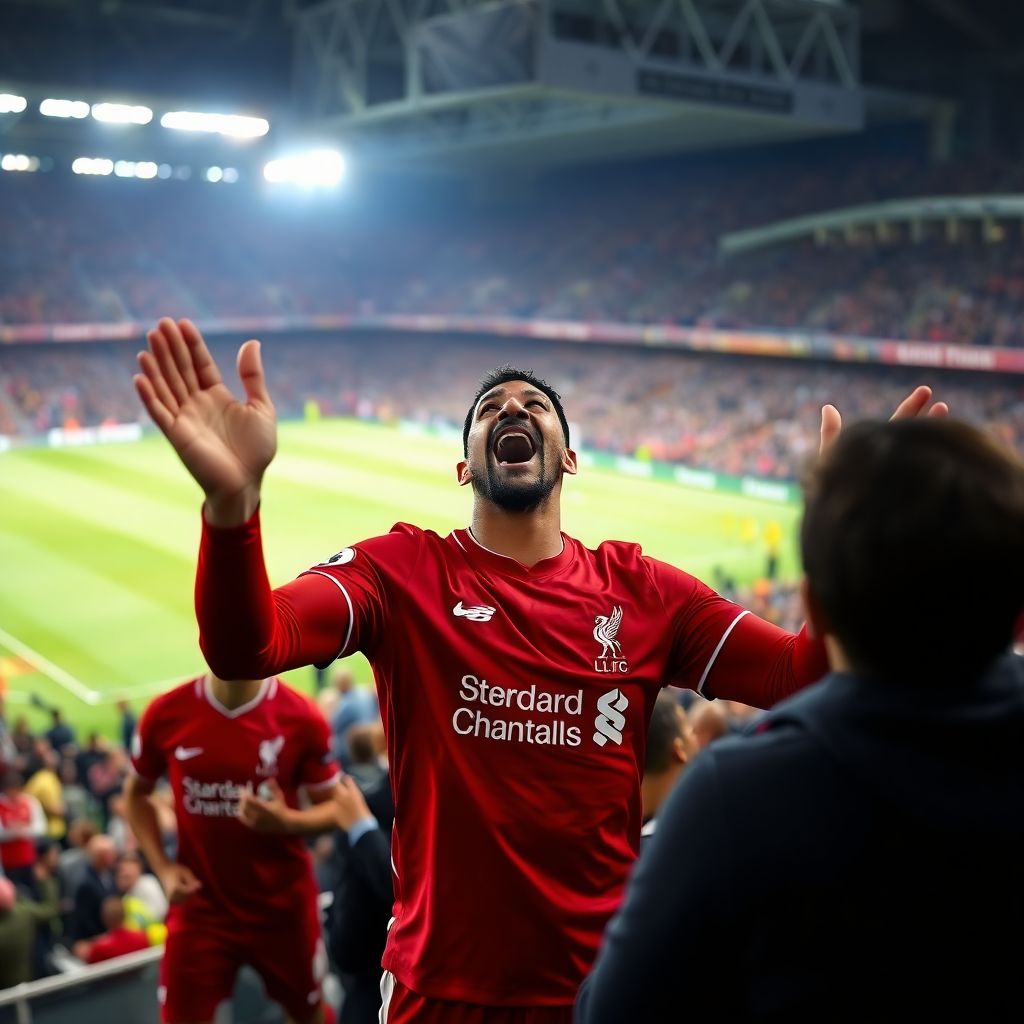
“We Have to Earn It”: Van Dijk Demands Liverpool Show Fight in Galatasaray Second Leg
Virgil van Dijk has thrown down a clear challenge to his Liverpool teammates, insisting that a place in the Champions League quarter-finals will only be secured if the team proves it deserves it on the pitch. Speaking after a 1-0 defeat to Galatasaray in Istanbul, the captain underlined that nothing about this tie will be handed to Liverpool – they must, in his words, “earn the right” to go through.
Mario Lemina’s seventh-minute header at a raucous RAMS Park ultimately separated the sides, leaving Liverpool with a narrow but dangerous deficit heading into the return leg at Anfield. The scoreline keeps the tie finely balanced, yet Van Dijk’s tone made it clear he was far from satisfied with the performance.
“We Have to Deserve It”: Van Dijk’s Message to the Squad
The Dutch defender did not hide behind excuses. He repeatedly stressed that progressing in Europe is not about reputation or past achievements, but about intensity, discipline, and mentality over 90 minutes.
“We have to fight; we have to deserve it,” Van Dijk said after the final whistle. “Next week is the decider. Yes, we’re at home, but that doesn’t guarantee anything. We must show we want to go through in the way we play, defend, and attack. You have to earn that right in every duel and every second ball.”
For Van Dijk, the problem is not that Liverpool lack quality, but that they have not consistently matched that quality with the necessary edge and focus. His comments were as much a warning as a motivation: talent alone will not beat a stubborn Galatasaray side that has already shown it can exploit Liverpool’s mistakes.
Inconsistency and Costly Mistakes
One of the captain’s main frustrations was the recurring theme of inconsistency in Arne Slot’s team. Liverpool have delivered high-energy, dominant displays in some matches, only to look passive or disjointed in others.
“In some games, we’ve shown that battle,” he admitted. “In others, we’ve lacked it. That’s why we’ve been inconsistent, unfortunately. If we want to progress, we definitely have to show that fighting spirit on Wednesday.”
In Istanbul, that inconsistency appeared within the 90 minutes themselves. Liverpool began with promise, looked capable of silencing the crowd, but then allowed concentration levels to drop. Misplaced passes and poor decision-making in dangerous zones invited Galatasaray onto them and handed the hosts exactly the type of game they wanted: transitions, chaos, and counterattacks.
Van Dijk was careful not to publicly single out teammates, but he did acknowledge the nature of the goals and chances conceded. The issue, he suggested, was not structural collapse, but lapses from individuals at key moments.
Missed Chances and Fine Margins
For all the criticism, Liverpool did enough in patches to suggest this tie is still very much alive. Van Dijk felt that an early breakthrough for the visitors could have completely transformed the atmosphere.
“We started well and perhaps should have scored,” he noted. “That would have changed the atmosphere in the stadium.”
Failing to take those early opportunities gave Galatasaray belief and allowed the crowd to grow louder with every Liverpool misstep. Once behind, Liverpool never fully regained control, and their lack of ruthlessness in front of goal was mirrored by a lack of ruthlessness in both boxes overall.
Crucially, Van Dijk highlighted that Galatasaray’s winner did not come from a flowing move, but from a dead-ball situation. “We didn’t give away many big chances,” he said, “but we conceded from a set-piece, which shows we still have work to do. However, at 1-0 down, everything is still to play for.”
Set-Piece Focus and Defensive Discipline
That single detail – conceding from a set-piece – will not be lost on Liverpool’s coaching staff. In knockout football, where margins are razor-thin, concentration at restarts often decides entire campaigns. Van Dijk’s reference to this was a reminder that Liverpool’s problems are not unsolvable; they are, at least in part, about focus, communication, and organisation.
Before the second leg, Liverpool will likely drill defensive set-pieces and second-ball reactions. Van Dijk’s emphasis on “every challenge and every second-ball fight” hints at an awareness that Galatasaray thrive on loose balls and broken play. Winning those micro-battles can tilt the entire rhythm of the game.
If Liverpool tighten up their marking, stay alert to blocks and runs, and reduce the number of cheap free-kicks conceded near their box, they can deny Galatasaray the kind of simple route to goal that decided the first leg.
The Anfield Factor – But No Room for Complacency
The return fixture swings the stage back to Anfield, a stadium famous for European comebacks and high-pressure nights. Van Dijk is counting on that environment to play a major role, especially with Galatasaray supporters banned from the away section.
“Those are the main things: being together in our house with our fans. Hopefully, we can make it an amazing evening,” he concluded.
However, beneath the reference to Anfield’s power is a clear warning: the stadium amplifies performances, it does not replace them. If Liverpool start flat or sloppy, no atmosphere will fully rescue them. Van Dijk’s insistence on “earning” the result is a direct challenge to anyone tempted to rely on history or mystique instead of hard work.
What Liverpool Must Change in the Second Leg
To turn this tie around, Liverpool will need clear improvements in three key areas: intensity without the ball, control in possession, and clinical finishing.
1. Intensity and pressing
Liverpool’s press in Istanbul was effective in short bursts, but it lacked the sustained aggression associated with their best performances. At Anfield, they must press as a unit, close down passing lanes, and suffocate Galatasaray’s build-up from the first whistle. Forwards and midfielders will need to set the tone, with Van Dijk leading a high, compact defensive line behind them.
2. Ball security and decision-making
The first leg exposed how dangerous Galatasaray can be when they are gifted possession in advanced areas. Liverpool must cut out cheap turnovers, especially in the middle third. Smarter choices under pressure, simplified passing at times, and better support angles for the man on the ball can limit Galatasaray’s counter-attacking chances.
3. Cutting edge in the final third
Early chances in Istanbul were wasted, and in knockout football that hesitation can be fatal. In the second leg, there will likely be spells where Liverpool enjoy dominance. They cannot afford to let those periods pass without testing the goalkeeper regularly. Sharper movement in the box, quicker combinations in the channels, and more decisive finishing will be essential.
Psychological Battle: Turning Frustration into Fuel
Beyond tactics, Van Dijk’s comments reveal the psychological dimension of this tie. He repeatedly referenced “fight,” “battle,” and “deserve,” pointing to a mental standard he feels has not always been met this season.
Liverpool must use the frustration from the first leg as fuel rather than a burden. The players know they underperformed in key moments; the challenge now is to respond instead of dwell. A fast, aggressive start at Anfield can not only unsettle Galatasaray but also heal some of the doubt created in Istanbul.
That response will also be a test of leadership. Van Dijk, as captain, will be expected to marshal the back line, demand communication, and set the emotional temperature – calm when necessary, ruthless when the time is right to push.
Galatasaray’s Threat: Pace, Directness, and Resilience
Van Dijk acknowledged that Galatasaray have the “pace and directness to hurt you” when you make mistakes. That warning should shape Liverpool’s approach. Any reckless commitment of full-backs forward, any lazy pass across midfield, can be punished by quick transitions.
Galatasaray have already shown they can defend a lead with discipline and spring forward with speed. They are unlikely to come to Anfield just to sit in a deep block; instead, they may look to exploit the spaces Liverpool naturally leave when chasing the game. That makes Liverpool’s rest defence – the structure behind the ball when attacking – absolutely crucial.
Using the Crowd the Right Way
The Anfield crowd will come expecting a fightback, and Van Dijk clearly wants the players to feed off that noise. But there is also a risk: if Liverpool become over-emotional, they may lose patience, force passes, or commit bodies forward too early, opening doors for counters.
The ideal scenario is a controlled fury: relentless intensity without panic. The crowd can provide the energy, but the team must provide the composure. Recognising when to accelerate and when to recycle the ball will determine whether the pressure feels suffocating for Galatasaray or self-destructive for Liverpool.
A Defining Night for Slot’s Liverpool
This tie is more than just a route to the quarter-finals; it is a test of character for Arne Slot’s Liverpool. Van Dijk’s talk of inconsistency and missing fight touches on broader questions about identity and standards under the new regime.
Overturning a 1-0 deficit at home is not an impossible task. On paper, Liverpool have the quality, squad depth, and home advantage to do it. But what Van Dijk is demanding goes beyond the paper analysis: he wants a performance that reflects the club’s European heritage and sets a benchmark for the rest of the season.
If Liverpool bring the aggression, concentration, and unity their captain is calling for, the narrative can shift from a disappointing night in Istanbul to another memorable Anfield comeback. If they do not, Van Dijk’s warning – that you must “earn the right” to play in the latter stages of the Champions League – will sound even louder in the aftermath.