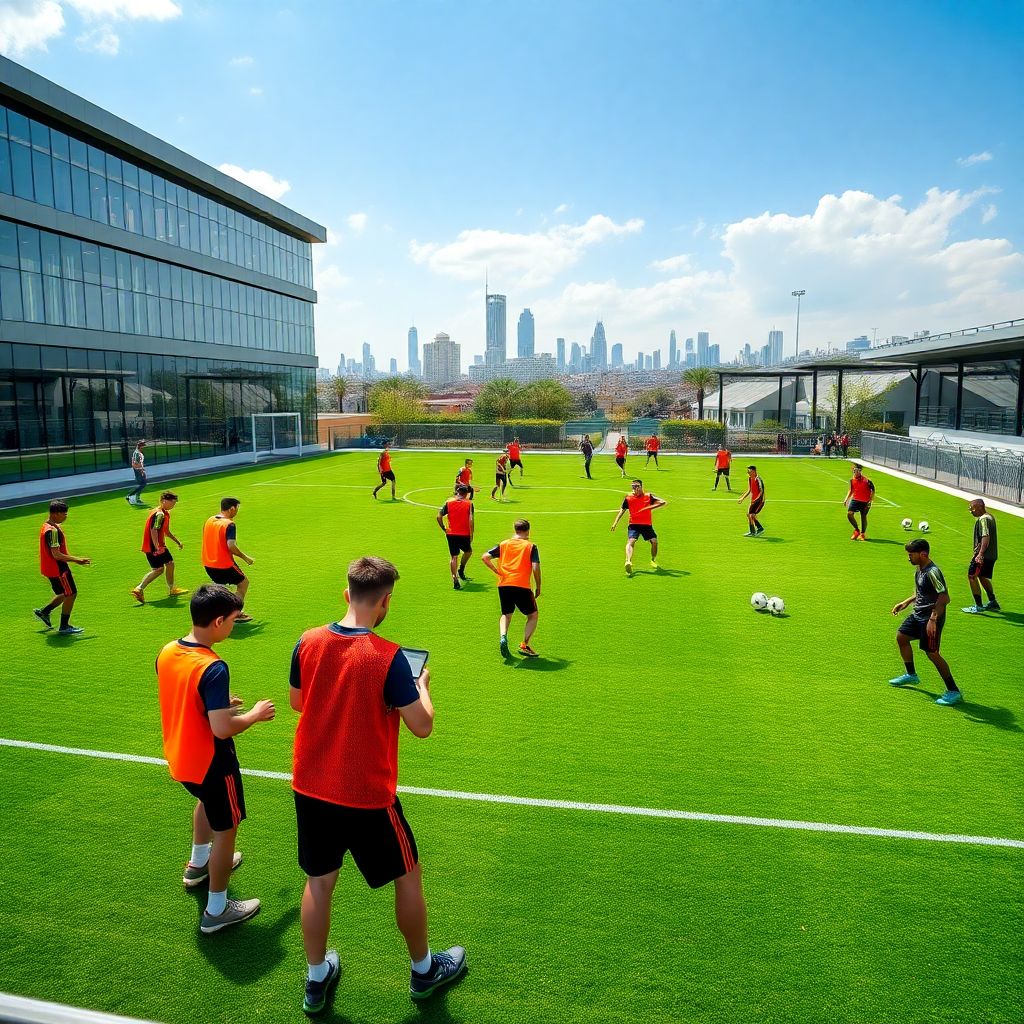
Historical context: how Turkish academies actually evolved
If you look back, youth development in Turkey grew out of club fan culture rather than long‑term planning. In the 80s and 90s, big Istanbul clubs ran “youth teams” mostly as a cheap player pool, not as structured schools. Compared to Europe’s best football schools, there was less focus on science, data, or individual pathways. Things shifted after the 2002 World Cup and the rise of foreign scouts in Istanbul; suddenly clubs realised that a strong academy could be a revenue stream, not just a cost centre.
By the 2010s, federation rules on home‑grown players and UEFA licensing pushed teams to formalise youth setups. Dedicated training centres, sports science staff and analytics slowly appeared. Today, the best football academies in Turkey still vary massively in quality, but the gap with mid‑tier European setups has narrowed. The missing link is not talent, but consistency: clear methodology, coach education and long‑term funding, especially outside the big metropolitan areas.
Core principles: what has to change to reach European level
Modern Turkish academies that want to compete need to copy less and localise more. A simple clone of La Masia will fail if you ignore Turkish schooling, family dynamics and street‑football culture. Technically, the principles are clear: position‑specific training from early teens, evidence‑based load management, integrated mental coaching, and objective data for selection. Yet many clubs still treat trials as one‑day lotteries instead of a multi‑week diagnostic process with repeat testing.
A big blind spot is individual periodisation. Youngsters often play for school, amateur teams and club academy at the same time, with zero coordination. A serious solution is shared digital load‑tracking between stakeholders, so the academy can adjust intensity in real time. This looks “overkill” at U13, but it’s how injuries are prevented and development curves stabilise. If Turkey wants to match Europe’s best football schools, this kind of infrastructure has to become standard, not elite luxury.
Non‑standard ideas for training models
One unconventional move is to treat the academy as a tech startup. You test hypotheses, kill what doesn’t work fast, and document everything. Instead of another generic “elite group”, build micro‑labs: for example, a “pressing lab” where selected players work only on high‑intensity defensive actions for 6‑week cycles, with GPS and video metrics. At the same time, introduce “failure quotas”, where players are encouraged to try high‑risk actions in specific drills, rated on decision quality rather than outcome.
Another underused tool in Turkey is mixed‑age cell training. Rather than rigid U14/U15 squads, create cells built around tactical roles: ball‑progressors, final‑third creators, high‑line defenders. A 14‑year‑old can train with a 17‑year‑old if they share cognitive profiles and positional demands. This accelerates learning and mirrors real first‑team dynamics. European benchmarks already do this informally; Turkish setups could formalise it and turn it into a clear competitive edge.
From trials to daily work: how selection really should look
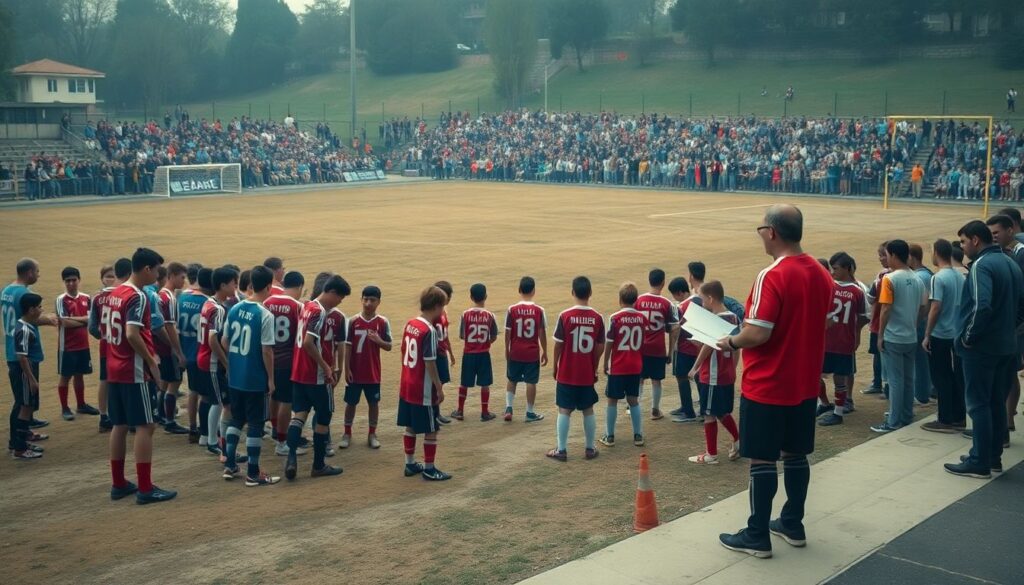
turkey youth football academy trials tend to be overcrowded, rushed and emotionally brutal. Kids travel for hours, get 20 minutes on a bad pitch, and one coach decides their future. That format filters for physical maturity and luck, not long‑term potential. A more rational system would combine open days with pre‑trial video scouting, simple motor tests (sprint, agility, jump), plus a follow‑up training micro‑cycle to see learning speed and coachability, not just current output.
To enroll in football academy in turkey in a smarter way, clubs could partner with regional schools and local coaches as “talent spotters”, feeding video clips into a central platform. Machine‑learning tools can pre‑tag events; humans then decide. This doesn’t replace human eyes, but it makes sure shy or late‑maturing players actually get noticed. In parallel, transparent feedback after trials—short written reports with 2‑3 action points—would turn rejection into a development guide, not a dead end.
Economics and accessibility: who pays for all this?
The cost of football academy training in turkey is wildly inconsistent. Big clubs often subsidise tuition but then add hidden costs: transport, kits, extra clinics. Smaller private academies may charge full price, locking out lower‑income families. To move closer to Europe’s best football academies, Turkey needs hybrid models: federation‑backed vouchers for low‑income kids, municipal support for facilities, and performance‑based solidarity payments when a youngster signs pro, partially redirected to his early coaches.
Another angle is to monetise data and content, not just transfer fees. Academies can run paid online tactical classrooms, sell anonymised performance datasets to universities, or co‑develop products with sports‑tech startups. Revenue from these side projects can cross‑subsidise scholarships. This is an unconventional route, but it reduces dependence on a single “big transfer” and makes long‑term planning possible. For parents, clear pricing tiers and published scholarship criteria would make the ecosystem more trustworthy and predictable.
Foreign players: can Turkey become a regional hub?
Professional soccer academies in turkey for foreigners are still a niche, but the potential is huge. Time zone, climate and relatively low living costs are advantages. The bottleneck is structure: visas, schooling in English, and clear bridges to professional contracts. An academy that offers integrated language support, remote schooling options, and transparent trial agreements with local pro clubs can position itself as a regional development centre for the Middle East, CIS countries and North Africa.
To avoid becoming “football tourism”, foreign‑oriented academies should introduce strict entry filters and personalised development plans. That means publishing objective benchmarks—speed, endurance, technical skills—and updating parents with quarterly analytics reports, not just highlights. If done right, Turkey could host satellite squads for bigger European clubs, combining local coaching with shared methodology. This would raise standards for domestic players too, because training intensity and competition for places would naturally increase.
Practical tips for parents and players
When choosing among the best football academies in turkey, parents often chase brand names and Instagram feeds. A more systematic approach is useful: visit training sessions unannounced, ask how they handle injuries and school coordination, and request sample development reports. If an academy cannot show how they track progress beyond “he’s talented”, it’s a red flag, regardless of trophies. Also check coach turnover; constant staff changes usually mean no stable methodology.
Players themselves should treat the academy as one component, not the whole environment. Self‑training plans, sleep hygiene and nutrition matter as much as the logo on the shirt. Before signing, ask specific questions: “How many minutes did your last three U17 centre‑backs play with the first team?”, “What’s your policy on dual registration with local amateur clubs?” Direct, concrete answers are a better indicator of seriousness than glossy marketing videos or one famous graduate from 15 years ago.
- Watch 2–3 full training sessions, not just matches; observe how much time is spent on the ball, decision‑making and position‑specific work.
- Ask to see their long‑term curriculum by age group; vague replies like “we develop complete players” suggest there is no real plan.
- Clarify travel and time demands to avoid burnout; if school performance collapses, long‑term football chances usually do too.
Success stories and implementation examples
Several Turkish clubs have quietly modernised their academies by borrowing ideas from Europe but tuning them to local realities. Some now run integrated psycho‑social units: sports psychologists sit in on training, tag behavioural patterns and feed notes to coaches. Others have invested in tracking technology at youth level, using GPS to model individual development curves instead of comparing kids only to their teammates. This science‑heavy approach used to be rare; now it’s spreading beyond the traditional giants.
There are also interesting collaborations between universities and academies, where sports science departments treat youth squads as living laboratories. Students run research on sprint mechanics, decision‑making under fatigue, or growth‑related injury risk, while the academy gets up‑to‑date knowledge practically for free. This kind of ecosystem is what you see around Europe’s best football schools. If Turkey scales it nationally, the average level will rise—especially in smaller cities where both universities and clubs need each other’s resources.
- Joint talent ID camps run by multiple clubs to reduce duplicate scouting costs and widen the net.
- Regional “rotation programs” where top prospects train one week per month with a partner club’s higher age group.
- Shared analytics hubs providing video breakdowns and reports to several academies in the same region.
Common myths about Turkish youth academies
One popular myth is that Turkish youngsters lack discipline compared to Europeans. In reality, the issue is structural: inconsistent rules, soft enforcement, and adults sending mixed signals. When academies set clear codes of conduct, enforce them fairly, and explain the rationale, behaviour improves quickly. Another myth claims that you “must” move to Europe as a teenager to become elite. This ignores logistics, education, and the high dropout rate of early migrants who never adapt off the pitch.
There’s also the belief that facilities alone define quality. Shiny pitches and modern gyms help, but methodology, coach education and feedback loops matter more. A modest complex with strong process can outperform a luxurious but chaotic academy. Finally, some parents think that once a child is inside a club, the path to pro football is almost guaranteed. Even in Europe’s best football schools, conversion rates are low. The realistic goal is to maximise the child’s ceiling, not to buy a professional contract.
Can Turkey really compete with Europe’s best?
Turkey already produces technically gifted players who succeed abroad; the raw material is not in question. What will decide whether Turkish systems can compete with the best football academies is execution: consistent methodology across age groups, data‑driven decision‑making, and smarter economics. If clubs treat academies as strategic assets rather than cost centres, and if families become more informed and demanding, the gap can shrink significantly within a decade.
The unconventional edge for Turkey may come from flexibility. European giants are often slow to change; Turkish clubs can move faster with mixed‑age training cells, startup‑style experimentation and regional university partnerships. Combine that with better‑structured trials, more transparent pathways, and inclusive funding models, and Turkish youth academies won’t just imitate Europe’s best football schools—they’ll offer a different, arguably more adaptable, version of elite development.