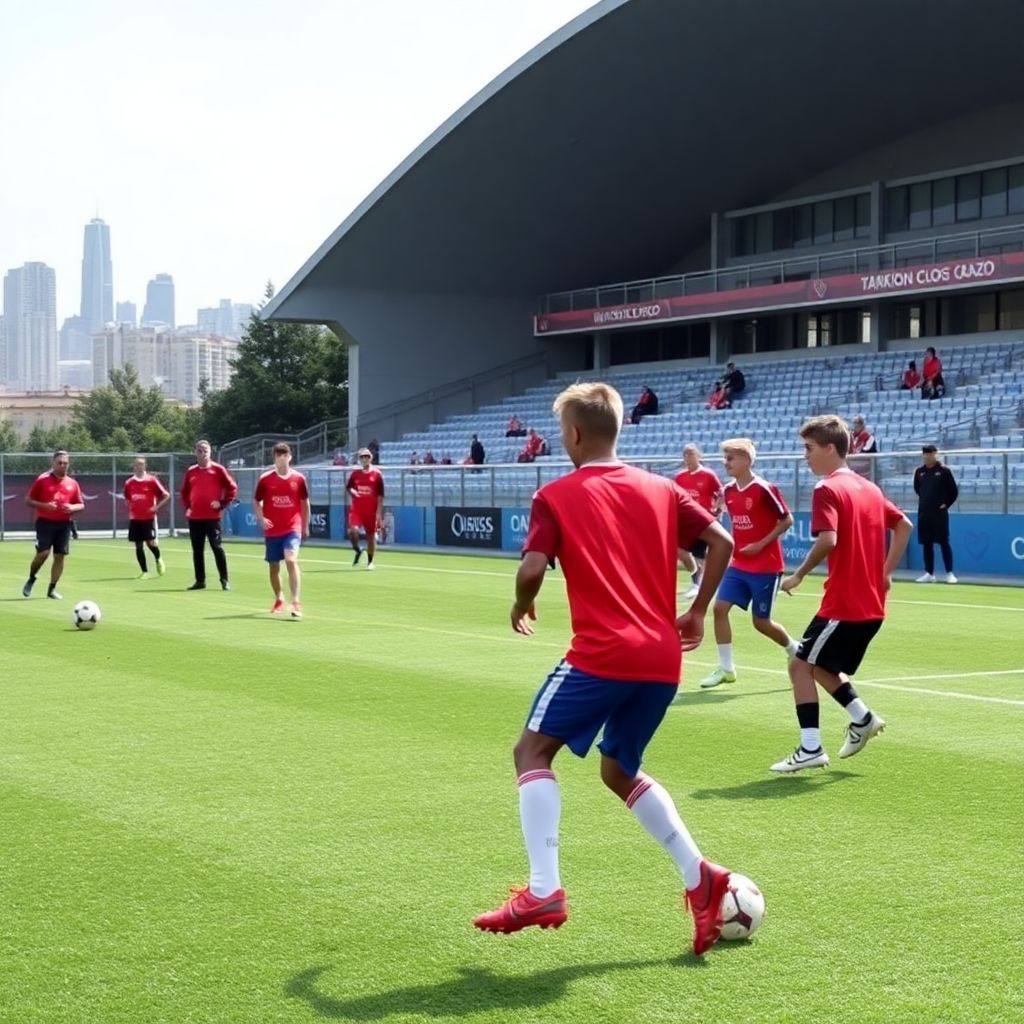
Youth football academies in Turkey are structured club-run and private programs that develop players from childhood to early adulthood through technical, tactical, physical and psychological training. They combine schooling, competition and scouting to feed professional clubs, creating clear pathways for talented Turkish and foreign youth to reach Super Lig and European levels.
Myths Debunked: What Truly Shapes Talent in Turkish Youth Academies
- Myth: Talent alone is enough. Reality: Consistent training habits and coachability usually decide who progresses, not just early talent.
- Myth: Only Istanbul giants matter. Reality: Regional clubs increasingly develop and sell players, creating more entry points for youth.
- Myth: Foreigners are not welcome. Reality: The best youth football academies in Turkey for foreigners actively recruit international players who raise training standards.
- Myth: Academies are just fitness and drills. Reality: Modern curricula mix game intelligence, video analysis and sports psychology with ball work.
- Myth: Paying guarantees a contract. Reality: The cost of professional football academies in Turkey covers services; professional deals still depend on performance.
- Myth: One failed trial ends your dream. Reality: Players often attend multiple Turkish football academy trials 2025 style over several seasons before being selected.
Historical Roots: How Turkey’s Club System Formed Modern Academy Practices
Youth football academies in Turkey for youth players grew out of big club amateur sections that informally gathered local boys for training and weekend matches. Over time, these initiatives turned into structured pipelines feeding first teams, especially in Istanbul, Ankara and Izmir, then across Anatolia.
Today, an academy in Turkey usually refers to a multi-age system, often from under-8 to under-19, directly connected to a professional or ambitious semi-professional club. These systems offer regular training, league and tournament play, plus in-house scouting that tracks progress toward a possible professional contract.
A key shift was treating youth development as a long-term investment instead of a short-term expense. Clubs began formalising enrollment in Turkish youth football academies, introducing medical screening, standard training loads by age, and closer cooperation with schools so talented players could study and train without burning out.
Private academies have also entered the picture. Some act as feeders to big clubs; others specialise in preparing players for selection days and Turkish football academy trials 2025 and beyond. While quality varies, the strongest private centres copy professional club methods and maintain links to scouts and agents.
Common Misconceptions About Turkish Academies and the Data That Refutes Them
- Myth: Only early-maturing players succeed. In reality, coaches know late developers often catch up in their mid-teens. Many clubs keep technically strong but physically smaller players as long-term projects, using physical conditioning plans to bridge the gap.
- Myth: Academies ignore education. Most serious clubs expect school attendance and design training blocks around exam calendars. Boarding academies frequently partner with nearby schools, and players who fall behind academically risk reduced playing time or removal from dorms.
- Myth: Scouts only pick players from big cities. Regional tournaments, school competitions and national federation festivals give Anatolian players increased visibility. Clubs use local scouts, weekend talent days and video submissions to reach beyond the major urban centres.
- Myth: Foreign players block Turkish talent. For foreigners, strict visa and registration rules naturally limit numbers, while federation rules still push clubs to prioritise domestic players, particularly in youth competitions. Foreigners who do enter usually raise training intensity, which benefits local teammates.
- Myth: Once you join, your place is secure. Serious academies review squads at least annually. Players can be promoted, loaned to partner clubs, or released if they stagnate. This constant evaluation keeps standards high and emphasises ongoing development.
- Myth: A famous badge guarantees development. Although big clubs offer visibility, some smaller or mid-table clubs provide more playing time and individual attention, which can be better for growth between ages 15 and 19.
Scouting and Selection: Objective Criteria and Where Bias Creeps In

Selection into academies is built on observation of repeatable behaviours, not one-off tricks. Scouts and coaches look for specific markers in real games and structured trials, though human bias can influence borderline decisions.
Scenario 1: Open Trials at Professional Clubs
Many clubs host scheduled selection days similar to Turkish football academy trials 2025, usually grouped by birth year. Coaches rate players on first touch, body shape when receiving, decision speed, physical coordination and attitude. Objective scoring sheets help, but crowd pressure can still lead to overrating flashy dribblers.
Scenario 2: School and Amateur Club Scouting
Scouts regularly watch school tournaments and amateur leagues. Here, context matters: they note the role, teammates’ level and pitch quality before judging. A player who reads the game well in a weaker team may be preferred to a star in a dominant side.
Scenario 3: Regional and Federation Events
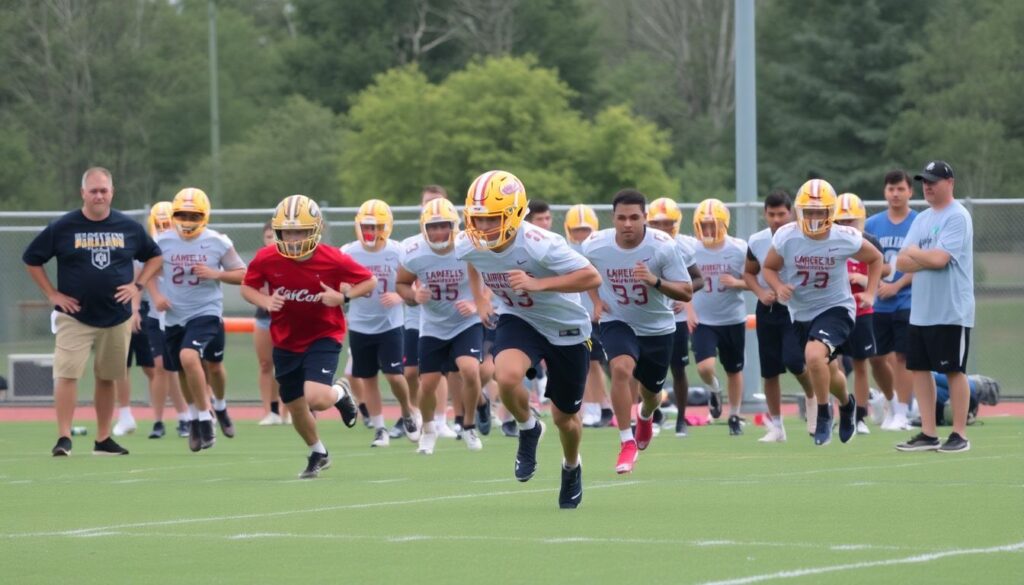
Regional selection camps and federation-organised festivals gather better players in one place. This reduces noise from poor pitches or unbalanced opponents. Objective drills measure sprinting, agility, ball control and small-sided game impact, but past reputation can bias expectations if scouts already know certain names.
Scenario 4: Video-Based and Recommendation Scouting
Some families send highlight clips; coaches increasingly ask for full match footage instead. Trusted recommendations from known grassroots coaches carry weight, but good academies still require in-person assessment before offering a place.
Scenario 5: Ongoing Internal Evaluation
Selection does not end once a player signs. Coaches track training data, match minutes and growth, adjusting squads mid-season. This internal competition encourages consistent performance but can favour mentally stronger players who handle pressure better.
Coaching Frameworks: Technical, Tactical and Psychological Curriculum
Modern Turkish academies structure their coaching across three pillars: what players can do with the ball, how they understand the game, and how they manage their minds and bodies under pressure. Each age group has clear objectives, typically reviewed every season.
Core Strengths of Current Coaching Models
- Technical progression by age band: Younger ages focus on ball mastery and 1v1, while older groups work on first touch under pressure, passing through lines and finishing from realistic situations.
- Tactical game models: Clubs establish a preferred style and teach principles such as pressing triggers, compactness, and build-up patterns so that academy teams mirror the first team.
- Integrated physical development: Conditioning is embedded in ball work. Speed, agility and strength progress in a way that respects growth stages instead of copying adult gym programs.
- Match analysis and feedback: Video sessions, individual feedback meetings and clear role descriptions help players understand what is expected in their position.
- Psychological skill-building: Simple routines for focus, confidence after mistakes and handling selection decisions are increasingly taught, especially from under-15 upward.
Limitations and Ongoing Challenges in Coaching

- Inconsistent coach education: Not every region has equally licensed coaches, and some still rely on outdated training methods with too much running and too few decisions.
- Overemphasis on results: Youth teams sometimes chase league trophies instead of long-term development, leading to risk-averse styles that limit creativity.
- Uneven psychological support: Access to dedicated sports psychologists is still limited mainly to bigger clubs and top age groups.
- Variation in facilities: Pitch quality, lighting and indoor alternatives differ significantly between leading metropolitan clubs and smaller provincial academies.
- Transition gaps: Moving from under-19 to senior football remains a fragile stage; some technical and tactical work does not fully prepare players for the intensity of top-tier games.
Support Systems: Facilities, Sports Science, Education and Financial Models
Support structures around training often separate the strongest academies from the rest. Families should look beyond nice social media posts and ask concrete questions about schooling, medical cover and long-term planning.
- Myth of the perfect campus: A well-decorated complex does not guarantee qualified physios, nutrition guidance or recovery plans. Ask who actually delivers sports science support and how often.
- Hidden costs and promises: Be cautious when the cost of professional football academies in Turkey is packaged with vague guarantees about future transfers. No reputable academy can promise a professional contract in advance.
- Education as an afterthought: Some smaller private centres neglect school schedules, leading to fatigue and academic problems. Serious setups coordinate training around exams and provide study time.
- Overloading players: Combining club training, school teams and private extra sessions easily leads to overuse injuries, particularly around growth spurts, if no adult monitors total workload.
- Family involvement myths: Both extreme behaviours damage progress: total absence leaves the child without support, while constant sideline coaching and pressure undermine the player-coach relationship.
Professional Pathways: Contracts, Loans, Domestic Promotion and Overseas Moves
The pathway from youth academy to professional contract in Turkey rarely runs in a straight line. Most players progress through overlapping stages, with periods of rapid advancement and moments of stagnation or lateral movement.
Consider a typical pathway for a talented teenager at a top regional club:
- Academy integration: The player joins the under-13 squad and gradually earns a starting role, receives clear individual objectives and improves both technically and tactically.
- Youth national exposure: Consistent performances lead to regional selection and occasional youth national team call-ups, increasing visibility to bigger clubs and agents.
- Professional contract: Around late teens, the club offers a first professional deal with structured training and match bonuses, plus a clear plan for the next two to three seasons.
- Loan to smaller club: To gain senior minutes, the player joins a lower-division side on loan, adjusting to adult physicality while staying under the parent club’s monitoring.
- First-team integration: Good loan performances earn pre-season with the parent club, then gradual minutes in domestic league and cup matches.
- Overseas interest: If the player adapts quickly, foreign clubs may approach with proposals, often starting with modest moves to leagues that match current level rather than directly to the biggest competitions.
Throughout this journey, strong communication between player, family, academy staff and agent (where involved) is essential. Each contract or loan decision should prioritise match experience and development over short-term financial gain or prestige.
Quick Practical Advice for Navigating Turkish Youth Academies
- Clarify your objective: Decide whether you want a development-focused environment, maximum match minutes, or the fastest route to professional exposure before comparing football academies in Turkey for youth players.
- Research trial windows: Check club websites and federation announcements for upcoming Turkish football academy trials 2025 and beyond; avoid agencies that claim exclusive access without clear club confirmation.
- Check daily schedule: Ask for a sample weekly plan showing training times, school arrangements, transport and recovery; this reveals how sustainable life will be for the player.
- Understand total costs: When discussing the cost of professional football academies in Turkey, include tuition, accommodation, food, transport, kit and medical care to assess the real financial impact.
- Evaluate coaching quality: Ask about coach licences, experience with your age group and how feedback is delivered; sit in on a session if possible to see how coaches interact with players.
- Plan enrollment steps: For enrollment in Turkish youth football academies, prepare academic records, medical documents, proof of age and, for foreigners, visa information well in advance of try-outs.
- Monitor progress every season: At least once a year, review whether the player is improving, enjoying football and getting competitive minutes; be ready to change environment if development stalls.
Practical Concerns Young Players and Parents Typically Raise
What is the ideal age to join a Turkish youth academy?
Many players start structured training between ages eight and twelve, but late starters can still progress if they train consistently. Focus less on a perfect starting age and more on finding age-appropriate coaching and a realistic level of competition.
How difficult is it to balance school and academy football?
Balancing both is challenging but manageable when the academy coordinates with schools and protects study time. Families should monitor sleep, homework load and travel time to ensure the player is not constantly exhausted.
Can foreign players realistically enter Turkish academies?
Yes, some club and private setups actively recruit foreigners, especially in major cities. However, families must consider visa rules, language adjustment and living arrangements, and should only work with academies offering clear legal and educational support.
What should we expect at a typical trial day?
Trials usually include a short warm-up, basic technical drills and several small-sided games. Coaches look for decision-making, intensity and attitude, so players should focus on simple, effective actions rather than forced tricks.
Is joining a famous club always better than a smaller one?
Famous clubs provide visibility but often have larger squads and more competition for minutes. A smaller or mid-table club can sometimes offer more playing time and individual attention, which may be better for development during key teenage years.
How do we know if it is time to change academies?
If a player is not improving, receives little feedback, and rarely plays despite consistent effort, it may be time to look elsewhere. Any move should be planned carefully to avoid mid-season instability and lost school time.
What role should parents play on match days?
Parents help most by supporting calmly, respecting coaches and avoiding tactical instructions from the touchline. After games, ask questions that invite reflection rather than criticising mistakes or comparing the child to teammates.