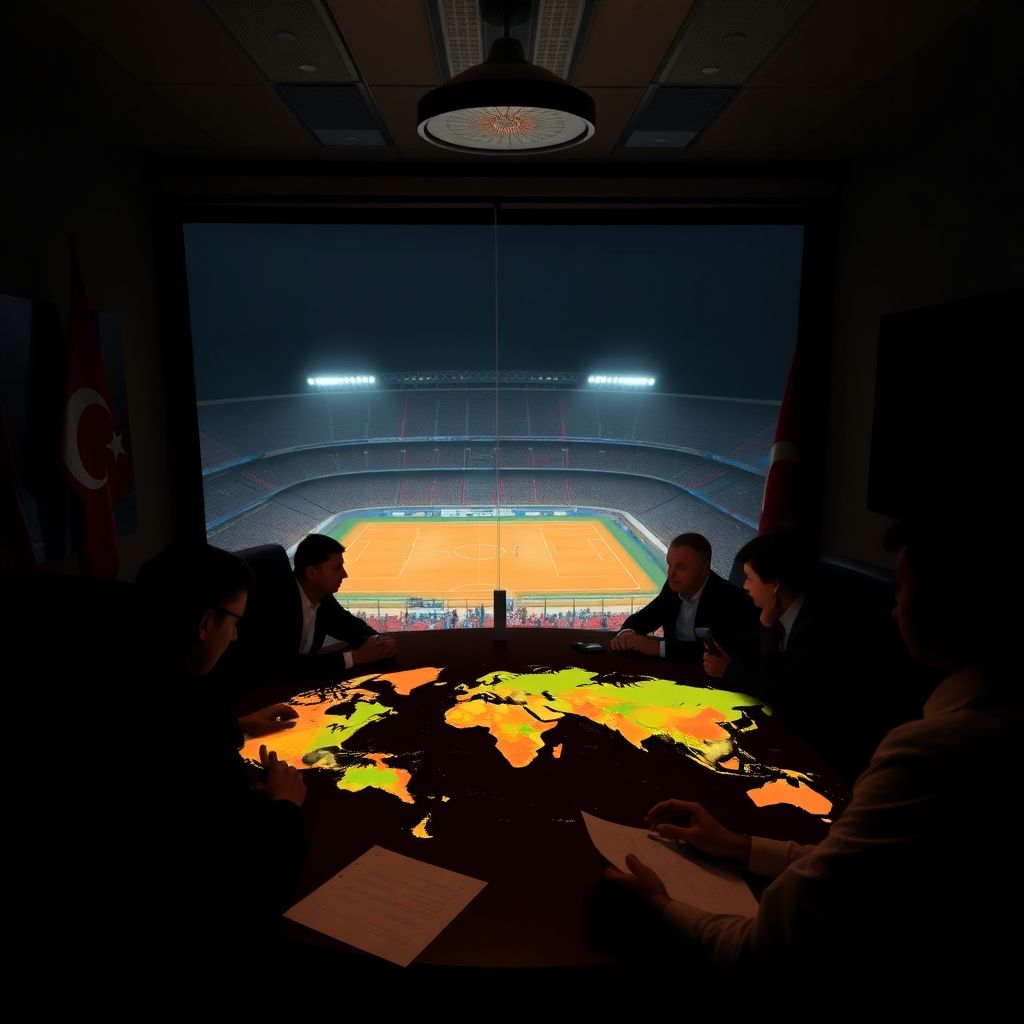
Global sports politics shape Turkish clubs through sanctions, federation disputes, broadcast battles, and shifting sponsorship rules. Safe steps include mapping risk exposures, diversifying revenues beyond a single country or bloc, strengthening compliance, and keeping dialogue open with federations. Limits remain: clubs cannot override state policy, UEFA rules, or international sanctions frameworks.
Executive summary for decision-makers
- Separate political noise from binding decisions by FIFA, UEFA and the Turkish Football Federation (TFF); monitor official circulars, not only Turkish football clubs news headlines.
- Map how sanctions, trade restrictions and banking rules touch agents, players, sponsors and payment routes before signing any deal.
- Rebalance revenue so no single country, broadcaster or state-linked sponsor can threaten club stability if relations deteriorate.
- Use contract clauses on force majeure, sanctions, and regulatory changes as your main legal safety net.
- Establish a standing risk group including finance, legal and sporting directors to review the sports politics impact on Turkish football every season.
Geopolitical drivers reshaping Turkish club finances
Global sports politics and Turkish leagues are now tightly connected. Diplomatic tensions, security incidents, and human-rights debates quickly translate into visa issues, travel warnings, broadcast interruptions, or pressure on state-owned sponsors. For clubs, geopolitics is no longer background noise; it is a direct financial risk category.
For Turkish sides, geography amplifies this exposure. The leagues sit between European, Middle Eastern and Eurasian spheres of influence. Shifts in alliances affect tourism flows, hospitality revenues on matchdays, sponsorship appetite, and cross-border broadcasting. This explains why so many Turkey football federation latest news items reference both sport and diplomacy.
Club executives should treat these trends as structural rather than temporary. Instead of waiting for the next crisis, build scenarios where a neighbour’s league becomes sanctioned, a primary sponsor loses access to international banking, or a travel advisory hits ticket sales from certain markets. Then, adjust budgets and squad planning accordingly.
- Identify top five geopolitical risks for your club (sanctions, travel, banking, security, federation disputes).
- Link each risk to concrete revenue lines: tickets, broadcasting, player sales, sponsorship.
- Run annual stress tests on cash flow assuming a temporary loss of one key foreign market.
- Report geopolitical risk analysis to the board together with normal financial reporting.
Sanctions, trade measures and impacts on player transfers
Sanctions and trade measures affect Turkish clubs mainly through the transfer market, even when Turkey itself is not directly targeted. Restrictions can hit counterpart clubs, player nationalities, agents, banks or payment currencies. Safe behaviour starts with systematic checks before committing to any transfer or image-rights deal.
- Player and agent screening: Verify whether a player, agent, intermediary company or former club is subject to any international sanctions list or travel ban. Use reputable databases and keep evidence of your checks.
- Banking and payment channels: Even when people are clear, the bank or payment routes may not be. Routing transfer fees or signing bonuses through banks exposed to sanctions can delay or block transactions.
- Contract currencies and clauses: Trade issues can make some currencies hard to move. Including flexible currency and sanctions-compliance clauses helps both sides adapt if regulations change after signing.
- Work permits and visas: Political tensions can translate into slower or refused visas for certain nationalities or partner clubs’ staff. Build longer lead times and alternatives into transfer planning.
- Indirect exposure via third-party ownership structures: Complex ownership (investment funds, multi-club groups) may involve entities from higher-risk jurisdictions, raising red flags for UEFA decisions affecting Turkish clubs on integrity grounds.
- Integrate a formal sanctions and KYC checklist into every transfer and major commercial deal.
- Confirm all banks in the payment chain comply with current sanctions frameworks before signing.
- Add clear sanctions-compliance and renegotiation clauses into standard player and sponsorship contracts.
- Train sporting directors and agents you work with on basic sanctions and trade-risk red flags.
Broadcasting rights, soft power and changing revenue flows
Broadcast deals are now tools of soft power. Governments, state-aligned media groups and regional blocs use rights to project influence, reward allies or penalise rivals. For Turkish clubs, this means that politics can shift who is willing to pay, and how long those deals remain stable.
One scenario is a foreign broadcaster losing political support or regulatory approval to beam Turkish league matches into a key market. Another is a rival league gaining privileged access to a region where Turkish clubs previously dominated viewership. In both cases, rights values and international exposure can move quickly.
Clubs should also consider how content regulation debates, disinformation concerns and competition law can affect streaming platforms. A global platform under regulatory pressure in one country might limit its investment there, indirectly affecting Turkish football clubs news visibility and highlight packages.
- Regional rebundling of rights: Rights once sold country-by-country are rebundled regionally, making Turkish clubs more dependent on a smaller set of political decisions in key hubs.
- Shift to digital platforms: Digital-only deals can bypass some traditional political constraints but introduce new dependence on tech-regulation and platform policies.
- Governmental influence on domestic tenders: State priorities can shape tender conditions, favoring certain bidders and affecting revenue and editorial control.
- Crisis-driven blackouts: Diplomatic incidents may trigger short-term blackouts or boycotts, reducing both income and fan engagement abroad.
- Push the league and TFF for diversified broadcasting partnerships across regions and platforms.
- Negotiate contractual protections if blackouts or regulatory bans cut distribution in specific territories.
- Invest in club-controlled digital channels to reduce full dependence on external broadcasters.
- Track regulatory debates that may constrain key streaming partners in your target markets.
Tensions between international federations and Turkish governance
Relations between FIFA, UEFA and Turkish authorities periodically tighten around issues like disciplinary decisions, match-fixing concerns, governance reforms or human-rights debates. These tensions rarely start at club level, but clubs feel the impact through licensing rules, competition access and disciplinary risk.
Safe navigation starts with understanding where federation authority is absolute and where there is room for national discretion. Clubs must respect non-negotiable competition rules while constructively engaging TFF on how international guidance is implemented locally.
Potential benefits for clubs
- External governance pressure can accelerate domestic reforms on transparency and financial control.
- Clearer, harmonised rules reduce uncertainty in areas like youth development, training compensation and financial reporting.
- Dialogue with UEFA can open technical assistance and development programmes for academies and infrastructure.
- Alignment with international standards can strengthen club credibility with foreign sponsors and investors.
Key constraints and risks
- Non-compliance with federation rules can result in bans from European competitions or limits on hosting matches.
- Individual clubs have limited leverage in disputes between federations and the state, yet they carry competitive and financial consequences.
- Public political commentary from club officials can be viewed as interference, risking disciplinary measures.
- Rapid rule changes may outpace clubs’ internal capacity to adapt reporting systems and governance practices.
- Assign one board member to oversee federation-relations and regulatory compliance.
- Align club statutes and governance codes with UEFA and FIFA guidance where feasible.
- Coordinate public communications with legal counsel during periods of federation-government tension.
- Participate actively in club associations that mediate between TFF and individual teams.
Sponsorship, state-linked ownership and regulatory exposure
Many Turkish clubs rely on sponsors or owners linked to state institutions, municipalities or state-influenced companies. This can be beneficial for stability and infrastructure, but it also imports political and regulatory risk directly into the club’s balance sheet.
Mistakes often arise when executives assume that state-linked backing is immune to international scrutiny. In reality, if a sponsor faces allegations abroad or enters a sanctions regime, clubs can be caught in crossfire. Another common error is signing long-term deals without exit routes when policies or regulations change.
- Over-reliance on a single state-linked sponsor: Concentrating shirt, stadium and academy naming rights in one politically exposed group increases vulnerability to political change.
- Underestimating reputational spillover: Sponsors under investigation abroad can damage club reputation, even when contracts remain legal.
- Weak contract protections: Missing clauses on regulatory change, reputational risk and early termination leave clubs locked into problematic partnerships.
- Ignoring competition and state-aid rules: Excessive or non-transparent public support may attract attention from competition authorities or federations.
- Myth of unlimited state backing: Assuming public entities will always fill budget gaps discourages prudent financial planning and cost control.
- Cap revenue share from any single state-linked sponsor and seek private diversification.
- Embed reputational and regulatory-change clauses into all major sponsorship and naming-rights contracts.
- Request transparency on sponsor ownership and governance before signing long-term agreements.
- Regularly review sponsorship portfolio against evolving international sanctions and compliance standards.
Scenario planning: operational and strategic responses for clubs
Scenario planning converts abstract political risk into concrete decisions. It allows executives to answer a simple question: “If this specific thing happens, what do we do in the first 72 hours, and how do we adapt over the next season?” This approach keeps reactions calm and pre-agreed.
Consider a mini-scenario: an unexpected diplomatic crisis triggers travel restrictions between Turkey and a key European country. Within days, an away UEFA fixture involving a Turkish club becomes uncertain, broadcasters renegotiate logistics, and fans face refund demands. This directly links UEFA decisions affecting Turkish clubs to breaking political news.
A structured response could look like a simple decision ladder:
IF travel restrictions appear in official sources
  THEN activate crisis group (CEO, sporting director, legal, security)
    IF UEFA relocates or delays match
      THEN update budgets for travel, ticketing, broadcasting
      AND launch targeted communication to fans and sponsors
    ELSE
      Maintain full operational readiness and daily check-ins
This style of planning should also cover scenarios where foreign sponsors pause payments, where a regional broadcaster loses rights due to political pressure, or where new federation rules affect squad registration. The same logic applies to domestic crises that suddenly dominate Turkey football federation latest news coverage.
- Build three to five concrete geopolitical scenarios and write short response playbooks for each.
- Test scenarios annually with tabletop exercises involving all key departments.
- Connect scenario triggers to specific, reliable information sources, not rumours or social media.
- Update budget plans and contract templates based on lessons from each scenario exercise.
End-of-article self-check for club leadership
- We maintain an up-to-date map of geopolitical, sanctions and federation risks relevant to our club.
- All major contracts (players, sponsors, broadcasters) include sanctions, regulatory-change and force-majeure clauses.
- Our revenue is diversified by region, sponsor type and broadcaster, reducing exposure to any single political shock.
- We run regular scenario exercises linking global sports politics and Turkish leagues to concrete operational responses.
- Board and executives follow verified Turkish football clubs news and official federation channels, not only informal commentary.
Practical questions from club executives
How often should we review geopolitical and sanctions risk?
Review at least once per season, and additionally whenever a major political or regulatory event touches a country where you have players, sponsors, broadcasting or banking partners. Tie the review to your annual budgeting and transfer-planning cycles.
Which information sources should we rely on for regulatory changes?

Prioritise official communications from FIFA, UEFA, TFF, government ministries and your banking partners. Use mainstream media and Turkey football federation latest news coverage to identify issues, but confirm decisions only via primary documents and legal counsel.
What is a safe first step if a sponsor becomes politically controversial?

Activate your legal and communications teams, review contract clauses on reputational and regulatory risk, and open a calm, documented dialogue with the sponsor. Avoid public comments until you have a clear understanding of legal exposure and possible exit or restructuring paths.
Can we comment publicly on sensitive UEFA or TFF decisions?
You can express positions, but do it carefully and professionally. Coordinate statements with legal advisors, avoid attacking the integrity of institutions, and focus on procedural clarity. Remember that sports politics impact on Turkish football often brings disciplinary scrutiny for inflammatory remarks.
How do we protect transfer activity during volatile periods?
Use shorter payment schedules, robust sanctions and force-majeure clauses, and multiple banking routes. Screen counterparties thoroughly and build more time into visa and travel arrangements. Keep at least one alternative transfer target in each key position to avoid last-minute panic if deals collapse.
What internal structure works best to manage these risks?
Create a small cross-functional risk group including finance, legal, sporting and communications leaders. Meet on a scheduled basis, and more often when global sports politics and Turkish leagues appear in the news. Ensure this group reports directly to the board.
How can smaller clubs with fewer resources still respond effectively?
Focus on low-cost actions: standard contract clauses, basic sanctions checks using reliable public tools, and closer coordination with league and federation officials. Share expertise with peer clubs and rely on league-level guidance where possible.