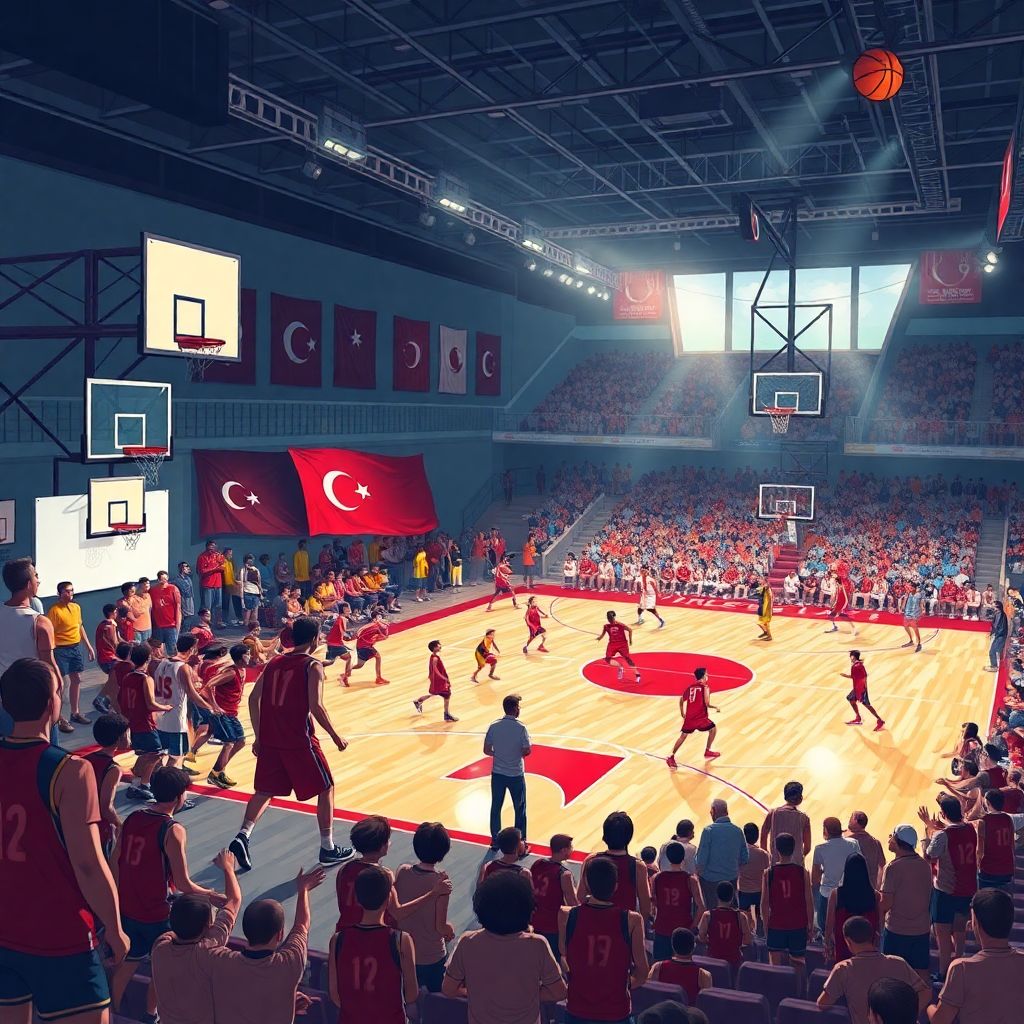
Turkey wasn’t supposed to be a basketball powerhouse. For years, most fans outside Europe barely knew the local league existed. Then suddenly NBA box scores started filling up with Turkish names, while EuroLeague contenders like Anadolu Efes and Fenerbahçe turned into regulars in Final Fours. What looked like a “surprise boom” is actually the result of a long, structured shift: money redirected into youth systems, smarter scouting, and a league that quietly sharpened players until they were ready for the jump from BSL to NBA.
Below is a step‑by‑step look at how Turkey turned itself into a hidden talent factory — plus very practical notes on what beginners consistently get wrong, whether they’re young players, new scouts, or just fans trying to understand what’s happening behind the scenes.
Step 1: Understand Why Turkey Became a Talent Magnet
From domestic league to export pipeline
On the surface, the story starts with a simple fact: Turkish clubs realized that importing expensive veterans is a short‑term thrill, while building and selling talent is a long‑term business model. In the 2000s, money from big sponsors and booming football clubs pushed basketball onto TV and into mainstream sports culture. That attention forced teams to professionalize: better practice facilities, more specialized coaches, and deeper benches. Over time, the turkish basketball league nba prospects label became real, not just marketing. NBA scouts stopped flying to Istanbul just for EuroLeague stars; they came to watch 17‑year‑olds playing rotation minutes against hardened American and Serbian pros.
The crucial part here is environment. Turkey offers something the NCAA can’t: teenagers playing real professional basketball early, with promotion–relegation pressure and fan expectations that feel closer to football than to college sports. That unique mix — high‑intensity games, tactical European coaching, and a league willing to risk minutes on young players — made BSL a perfect “stress test” environment for prospects. If you can handle a road game in Izmir or Bursa with flares in the stands and veterans trying to expose you on every possession, stepping into an NBA regular season suddenly doesn’t feel so terrifying anymore.
Step 2: Trace the Path from Local Courts to the NBA
How a Turkish prospect actually grows up

To see how the system works in practice, imagine a 12‑year‑old in Istanbul who is tall, coordinated, and obsessed with basketball. Instead of just joining a school team, he’s likely to be seen by a scout from a major club or a specialized turkey basketball academy for young players. From there, the pathway looks almost industrial: U14 and U16 leagues, national youth tournaments, international junior competitions, and summer camps with NBA and EuroLeague branding. By 16–17, if he’s serious, he’s already practicing with a pro team, often guarding foreign veterans in scrimmages and playing lower‑league or cup games for real minutes.
This early exposure to the professional rhythm — double practices, video sessions, tactical walk‑throughs, and strict physical programs — is where bsl turkey basketball talent development really differentiates itself. Instead of a soft transition from junior to senior level, young players get thrown into physical, tactical basketball fast. The ones who survive and adapt pick up European spacing concepts, defensive versatility, and pick‑and‑roll reads that NBA coaches love. That’s why when people talk about the best turkish basketball players in nba today, they almost always mention how “polished” their feel for the game was before they ever set foot in the States.
Why the NBA started to pay attention
NBA front offices didn’t suddenly become sentimental about Europe; they followed value. Rookie contracts and cost‑controlled young talent are gold under the salary cap. Turkish prospects started checking three crucial boxes at once: good size for position, real game experience against adults, and tactical versatility. When a 19‑year‑old has already guarded EuroLeague pick‑and‑rolls, handled hostile crowds, and learned to survive without being the primary scorer, he becomes a safer investment than a highlight‑only college freshman.
Another subtle factor: Turkish clubs became more open to negotiating reasonable buyouts. That reduced friction between BSL and NBA, making it easier for teams to draft‑and‑stash or bring players over quickly. As general managers compared risk profiles, the question stopped being “Is this kid from Turkey for real?” and turned into “Can we afford to let another team steal him while we hesitate?” That mentality shift cemented Turkey’s role in the global basketball ecosystem, not as a curiosity but as a recurring source of pro‑ready contributors.
Step 3: Learn How the Club System Actually Builds Players
Youth development as a coordinated machine
From the outside, youth development looks simple: find tall kids, teach them to shoot, hope one becomes a star. In Turkey, the process is far more systematic. Big clubs run multiple youth teams at each age bracket, with separate positional work, shooting coaches, strength trainers, and sometimes even sports psychologists. The training week is designed like a miniature version of a pro schedule: skill days, physical days, tactical days, and controlled scrimmages. The goal isn’t just to add skills but to prepare teenagers to survive in an unforgiving professional hierarchy where coaches trust only what consistently works.
What makes this structure powerful is the feedback loop. Young players don’t stay isolated in junior leagues; they’re constantly pulled up to practice with the senior team, then sent back down with clear corrections. A 17‑year‑old might spend the morning getting destroyed by an ex‑NBA forward in the post and the afternoon drilling specific counters for that abuse. Over months, that repetition creates players who are not only technically sound but mentally conditioned to handle role changes, benchings, and tactical discipline — traits that translate very directly into rotation roles in the NBA.
Integration of foreign influence without losing identity
Another underrated move by Turkish clubs has been their willingness to import expertise without copying blindly. Many coaching staffs mix local coaches who understand Turkish mentality, fan culture, and federation rules with foreign assistants experienced in the NBA or top European leagues. This hybrid staff shapes a style that is neither purely American nor traditionally Balkan. You see spread pick‑and‑roll actions next to old‑school post usage, aggressive switching combined with conservative drop coverages, all taught to the same 15‑year‑old prospects.
This variety in tactical education is a big part of why turkish basketball league nba prospects adapt quickly when they cross the Atlantic. They’ve already been forced to think the game in multiple “languages”: slow, half‑court structured sets for international tournaments, and faster, transition‑heavy play when clubs chase entertainment value. For an NBA coach, that means less time spent “un‑teaching” bad habits and more time enhancing strengths. For the player, it means arriving in training camp with a toolkit that fits multiple systems instead of only one rigid style.
Step 4: How to Scout Turkish Talent Without Fooling Yourself
Reading the numbers and the context
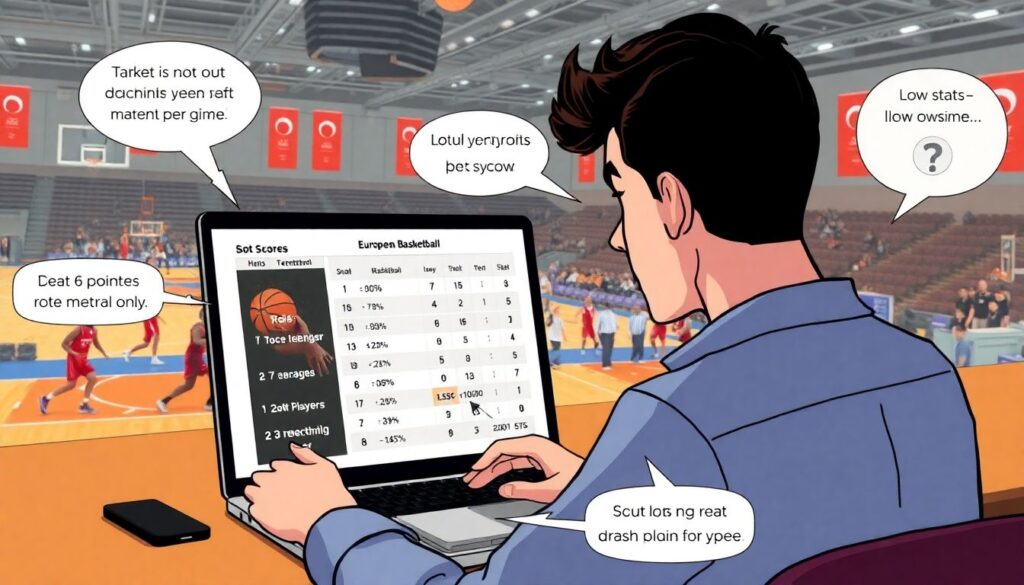
A frequent problem for new scouts and analysts is misreading European stats. Someone googles how to scout european basketball talent in turkey, pulls up box scores, sees a teenager averaging 6 points and 3 rebounds, and immediately writes him off as “role player material only.” This is a classic beginner mistake. In BSL, minutes are earned in tiny pieces, and roles are extremely strict. A 19‑year‑old might play 12 minutes but be asked to do nothing except defend, rebound, and set screens. If he follows the game plan, that’s a success internally, even if his box score looks empty.
So when evaluating prospects, context becomes non‑negotiable. Who are his teammates? Is he fighting with established imports for usage? Does the coach trust him in crunch‑time defensive possessions even if he never touches the ball on offense? Video becomes more important than numbers: body language after mistakes, defensive communication, and decision speed in pick‑and‑roll matter more than raw scoring totals. The advanced scouts who’ve adjusted to this reality are the ones consistently identifying undervalued Turkish prospects before they suddenly “explode” in bigger roles.
Common scouting errors in the Turkish context
A big trap is overreacting to one EuroLeague showcase game or youth tournament. A kid drops 25 in an U18 event, and suddenly every report forgets six months of quiet, disciplined role play in BSL. Another rookie mistake is judging work ethic purely from public appearances. In Turkey, some players are more reserved with media but obsessive in the gym, while others are charismatic interviews who cut corners in conditioning sessions. If you rely on surface impressions, you’ll constantly mis-evaluate character.
New scouts also underestimate cultural adaptation. Some prospects are perfectly suited to stay in Europe for several extra years, developing into high‑usage EuroLeague stars instead of marginal NBA rotation pieces. Labeling every young standout as “NBA or bust” is lazy analysis. The best evaluators in Turkey learn to separate NBA ceiling from EuroLeague value, understanding that the league is producing two different types of elite players, not a single one‑size‑fits‑all profile. That nuance is what separates professional scouting from highlight‑driven fandom.
Step 5: Frequent Mistakes Beginners Make (And How to Avoid Them)
Mistakes young Turkish players keep repeating
For young players coming up in this system, the most common error is chasing exposure instead of development. Teens jump from club to club looking for more shots, more social media highlights, or a “better” agent promising NBA looks. In reality, constant movement breaks continuity with coaches, delays physical progress, and often leaves players stuck on benches in bigger clubs. The ones who eventually break through usually spend a few years grinding through the same system, learning refined footwork, defensive concepts, and strength basics before worrying about the draft.
Another recurring issue is over‑identifying with one archetype. Because the best turkish basketball players in nba tend to be versatile and tall, many kids convince themselves they’re future stretch bigs or point forwards without actually mastering specialist skills. They float around the perimeter, avoid contact, and skip boring drills like closeouts or screening angles. Coaches at the top level, however, trust players who bring one elite, repeatable thing to the floor — whether it’s rim protection, catch‑and‑shoot accuracy, or point‑of‑attack defense. Young players who spread themselves thin in the name of “versatility” often end up average at everything, trusted at nothing.
Mistakes foreign scouts and coaches stepping into Turkey make
For newcomers trying to work around BSL, one major mistake is assuming the league’s reputation equals weak competition. Some coaches bring in American rookies expecting “easy” minutes and quickly realize that mid‑table Turkish teams are stacked with physical, experienced guards and bigs who know every trick in the book. Underestimating local veterans leads to poor roster building and misused lineups where promising youngsters are thrown into roles they’re not ready for, only to be labeled disappointments when they struggle.
Another misstep is ignoring language and communication barriers. Even if young players speak decent English, tactical nuances, defensive coverages, and subtle coaching feedback are still processed more efficiently in their native tongue. Staffs that refuse to adapt — no translators in practice, no dual‑language video sessions — usually end up mis‑communicating expectations. That confusion bleeds into performances and can unfairly damage a player’s reputation among foreign coaches who never actually reached him clearly in the first place.
Step 6: Practical Tips for New Players, Fans, and Scouts
For aspiring players inside or outside Turkey
If you’re a young player dreaming of using Turkey as a springboard, start by copying the mindset, not just the destination. Study how Turkish prospects embrace physicality early: they lift, they run, and they accept that defense is often their first ticket to the court. Focus on one or two “hard skills” that translate everywhere: reliable shooting mechanics, pick‑and‑roll decision‑making, or consistent defensive intensity. Then, when opportunities to train or trial with a pro system arise, you already look like someone who fits the BSL rhythm, not a raw project asking for special treatment.
Patience is another underrated weapon. The Turkish pathway rarely turns a 17‑year‑old into a star overnight. Even highly touted players might spend seasons as deep rotation pieces before their breakout. That doesn’t mean they’re stuck; it means the system expects development to be layered and cumulative. If you can accept smaller roles at first while quietly winning over coaches with effort, communication, and reliability, you’ll often jump the line once injuries or schedule congestion create unexpected minutes. Those “random” chances usually fall to the most prepared, not the loudest.
For fans and analysts trying to understand the pipeline
If you’re just watching from the outside, one way to really appreciate the Turkish system is to follow a player across three stages: youth tournaments, BSL rotation minutes, and any eventual NBA or EuroLeague move. Notice how his shot selection, defensive posture, and decision speed evolve more than his raw stat lines. Instead of asking “Why doesn’t this 19‑year‑old average 20 points yet?”, ask whether he reads the game faster at 21 than he did at 18. That curve is usually a better indicator of future success than any single breakout scoring game.
Keep an eye as well on how clubs deploy their youngsters. Some organizations are known for aggressively trusting youth even in big games; others protect them behind veterans. Understanding those patterns will help you judge whether a quiet stat line means a timid player or just a conservative system. Over a few seasons, you’ll start recognizing which teams are true engines of bsl turkey basketball talent development and which simply benefit from signing already‑made stars trained elsewhere. That lens makes following the league a lot more interesting than just reading transfer rumors.
Step 7: Where This “Hidden Factory” Goes Next
The future of Turkey as a global basketball hub
Looking ahead, the main question isn’t whether Turkey will keep producing talent, but what form that talent will take. With more data, better sports science, and deeper global scouting networks, the competition for prospects will only intensify. Turkey’s advantage is that it already has a functioning ladder from playgrounds to BSL to EuroLeague and NBA. As long as clubs keep investing in infrastructure, coaching education, and youth competitions, the pipeline should remain strong, even if individual generations fluctuate in star power.
However, the margin for error is shrinking. If Turkish teams drift back into short‑term thinking — overspending on aging imports, cutting youth minutes, or neglecting domestic coaching development — the “factory” can slow down quickly. On the other hand, if they double down on what made them special in the first place — tough game environments, fearless use of teenagers, and a realistic partnership with NBA front offices — Turkey can remain one of the most reliable sources of pro‑ready players in the world. For anyone paying close attention, the country stopped being a “hidden” factory some time ago; the only people still surprised are those who only check in during the draft.