
Advanced analytics in Turkey are changing how coaches design tactics, pick line‑ups and manage load in both Süper Lig football and BSL basketball. Using event, tracking and spatial data, staffs shift from intuition‑only decisions to repeatable processes for pressing, spacing, rotations, set‑plays, scouting and long‑term squad building, while still respecting coaching context.
Executive summary: how analytics alter tactics in Turkish basketball and football
- Tracking and event data highlight where Turkish teams actually create advantages: line‑breaking passes, packing, pressing efficiency and spacing, not only possession or shot counts.
- In BSL, spatial maps and rotation models optimise pick‑and‑roll coverage, closeouts and bench usage across domestic league and European schedules.
- Metrics such as xG, field tilt and pressing intensity transform match plans from generic (“play high”) into opponent‑specific scripts grounded in data.
- Workload analytics reduce soft‑tissue risk and support smarter rotation decisions instead of reactive squad changes after injuries appear.
- Structured data pipelines support scouting, academy evaluation and transfers, replacing highlight‑driven choices with role‑based profiles and multi‑season evidence.
- Clubs can start small using sports analytics software Turkey vendors or a sports data consulting company Turkey, then grow internal teams and governance.
How tracking and event data reshape on-ball tactics in Turkish football
For Süper Lig and 1. Lig clubs, on‑ball tactics are now strongly informed by event and tracking data: every pass, duel, run and press is tagged and contextualised.
This approach suits:
- Clubs with clear game models (possession, direct, high‑press, mid‑block) who want to test if behaviour on the pitch really matches the idea.
- Staffs willing to review video with data overlays and adjust training drills accordingly.
- Analysts or external football data analytics services Turkey partners who can manage cleaning, coding and reporting.
Typical on‑ball tactical questions answered with tracking + event data:
- How often do we break opposition midfield lines, and through which zones or players?
- Does our high press actually start where we think (average defensive action height, PPDA, press triggers)?
- Which passing patterns before shots are most productive (cut‑backs, crosses, through balls) for our profile of forwards?
- How compact are our lines just before conceded shots, especially against top Süper Lig opponents?
Cases where deep analytics may not be the right investment yet:
- Clubs changing head coaches every few months, with no stable game model to track over time.
- Teams without minimum video infrastructure or GPS/optical tracking access, where even basic coding is inconsistent.
- Amateur or semi‑pro sides lacking time to turn reports into training content; simple video feedback may bring more value.
- Organisations treating analytics as “proof for management” rather than a coaching tool; this creates mistrust and no tactical impact.
For professional clubs, a pragmatic path is to start with a core set of metrics and visuals that coaches intuitively understand, then add complexity gradually.
Spatial analytics and rotation strategies in Turkish basketball (BSL)
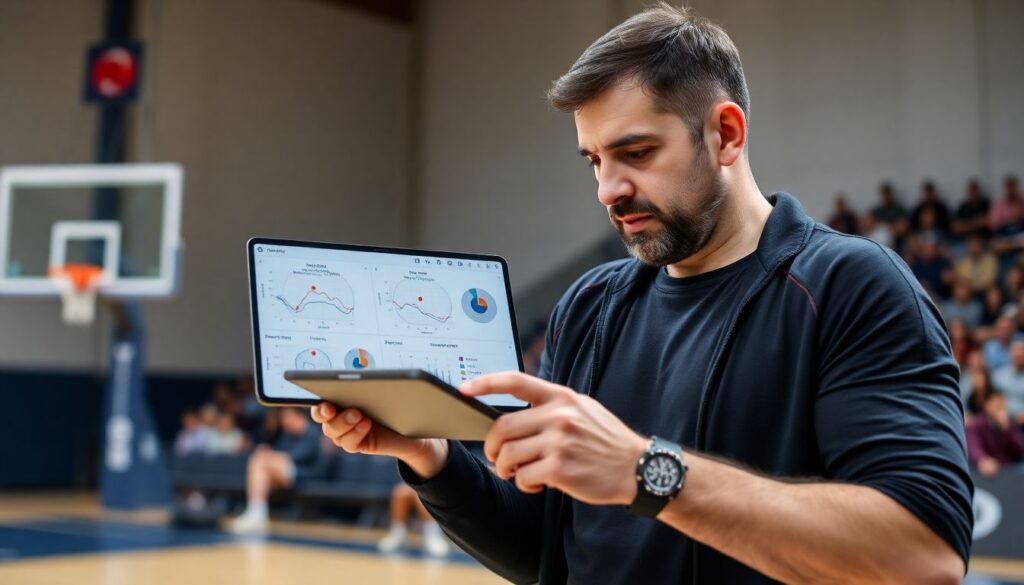
In BSL, basketball performance analytics tools Turkey help coaches understand spacing, shot quality and rotation effectiveness across dense domestic and European calendars.
Essential inputs and infrastructure
- Event and tracking data
- Play‑by‑play: shots, assists, turnovers, fouls, play types (PnR, post‑up, isolation, handoff).
- Shot locations: coordinates, defender distance, time on shot clock.
- Player tracking (if available): XY positions, speed, distance, closeout paths.
- Video linked to data
- Tagging software where each event (3PA, roll, short roll, skip pass) opens the exact clip.
- Custom playlists for “good shot, bad process” and “bad shot, good process” discussions.
- Rosters and schedule data
- Minutes, travel, back‑to‑back games, domestic vs European fixtures.
- Position tags (ball‑handler, wing, big, stretch big) to analyse role combinations.
Tools and services typically used in Turkey
- Local or regional providers of sports analytics software Turkey that integrate play‑by‑play, shot charts and lineup data.
- Basketball performance analytics tools Turkey tailored for BSL, offering possession‑based stats, spacing maps and pick‑and‑roll breakdowns.
- Specialist sports data consulting company Turkey options to design custom dashboards or decision‑support models for rotations and load.
- Cloud or on‑premise databases if you want to buy football and basketball statistics database Turkey and combine it with your own coding.
Core spatial and rotation questions
- Where do we create our best 3PA quality (corner vs above‑the‑break) and with which lineups?
- How far do defenders help off strong shooters, and can we punish over‑help with skip passes?
- Which five‑man units balance spacing, rebounding and defence for key BSL opponents?
- When are we over‑relying on a star ball‑handler and losing efficiency late in games?
Using xG, packing, and pressing metrics to refine match plans
This section walks through a safe, step‑by‑step workflow to build match plans with advanced metrics while keeping decisions understandable for coaches and players.
Risks and limitations before you start
- Metrics such as xG or packing do not know tactical intentions; always cross‑check with video and coaching notes.
- Small samples (few matches) can mislead; avoid major tactical overhauls from one game's numbers.
- Supplier definitions vary (e.g., pressing intensity), so document how each metric is calculated.
- Do not use analytics to blame players; focus on problems and solutions, not personal attacks.
- Protect sensitive data access and explain privacy rules around GPS and physical metrics to the squad.
- Define your game model and key questions
Start by writing the non‑negotiables of your playing style (pressing height, build‑up risk, attacking width). From there, define 3-5 tactical questions for the upcoming match.- Example questions: “Can we force them wide and limit central xG?”, “Which passing lanes do they use most to reach their 10?”
- Agree with staff which metrics could answer each question (xG, packing, final‑third entries, PPDA, high turnovers).
- Collect, clean and align data with video
Gather event data, xG values and pressing metrics from your provider or internal system, plus 3-6 recent matches of the opponent and your own team.- Check for missing or obviously wrong events (e.g., shots from impossible locations) and correct where possible.
- Ensure every event links to video so coaches can review context in one click.
- Analyse xG and chance creation patterns
Use xG to evaluate not just how many shots occurred, but where and how high‑quality chances came from.- For your team: identify the 2-3 most repeatable attacking patterns with strong xG pay‑off (cut‑backs, far‑post crosses, central through balls).
- For the opponent: locate zones where they allow high xG chances and which runs or passes cause problems.
- Measure packing and progression under pressure
Packing counts how many opponents are taken out of the game by a pass, dribble or carry.- Find players who consistently break lines and against which structures (4‑2‑3‑1, 3‑4‑3, low block) they are most effective.
- Map areas where your build‑up gets stuck with low packing values, or where the opponent struggles when pressed.
- Diagnose pressing and rest‑defence metrics
Evaluate where and how efficiently your team regains the ball.- Track PPDA, high regains, counter‑pressing success and average defensive action height across recent Süper Lig matches.
- Relate these values to conceded xG from counters to see if an aggressive press leaves your rest‑defence too exposed.
- Turn insights into concrete match‑plan rules
Translate analytics into 5-10 simple rules players can execute, never into raw numbers.- Examples: “Target third‑man runs behind their right‑back after switches” or “Press their 6 on his first touch, but allow passes to full‑backs.”
- Link each rule to 1-2 short video playlists for team meetings and individual briefings.
- Review outcomes and update models safely
After the match, compare actual behaviours and outcomes with your plan using the same metrics.- Check if xG, packing and pressing metrics moved in the intended direction.
- Log what worked and what failed into a shared knowledge base so future plans benefit from past experiments.
Comparative view: traditional vs analytics-driven tactical metrics
| Area | Traditional approach | Analytics‑driven approach |
|---|---|---|
| Attacking evaluation | Shots, goals, possession percentage | xG, xG per possession, shot quality by zone and pattern |
| Build‑up effectiveness | Pass completion rate, “we kept the ball well” | Packing, progression to final third, line‑breaking pass counts |
| Pressing strength | Subjective “we pressed high” observations | PPDA, high regains, defensive action height, press success by zone |
| Defensive compactness | Goals conceded, clearances, tackles | Conceded xG, shot distance, spacing between lines at key moments |
| Rotation impact | Plus/minus, points and goals for top players only | Lineup‑level efficiency, load indicators, on/off impact of different units |
Workload monitoring, injury risk and rotation policies for optimal availability
Use this checklist to verify whether your load‑management and rotation system is working safely and effectively for your squad.
- Internal and external load (e.g., minutes, distance, intensity) are tracked consistently in both games and training, with basic thresholds defined by staff.
- Medical, fitness, coaching and analytics departments review a shared load dashboard at least once per microcycle.
- Rotation decisions are documented with clear reasons (tactical, fatigue, medical risk, opponent profile), not only based on “feeling tired”.
- Back‑to‑back fixtures, long travel or extreme weather conditions trigger predefined adjustment rules to training volume and minutes.
- Return‑to‑play protocols are standardised; players do not skip progression steps because of short‑term result pressure.
- Historical data on soft‑tissue injuries is reviewed to identify patterns (positions, periods of season, types of training load).
- Key performance indicators (speed, jump height, repeat sprint ability) are monitored so players return not only pain‑free but near their baseline.
- Players understand what is being tracked, why, and how privacy is protected; consent procedures follow club policy and regulations.
- Rotation effects on team performance are analysed at lineup level, preventing over‑resting crucial connectors or over‑playing veterans.
- Communication around rest decisions is transparent to avoid the perception of punishment when players are strategically rotated.
Data-driven scouting, youth development and transfer decision workflows
Advanced data can greatly improve scouting and development, but certain recurring mistakes reduce its value or even create risk.
- Overrating metrics from leagues with very different intensity or style without proper context and video checks.
- Chasing standout single‑season numbers instead of multi‑season performance and development trajectory.
- Ignoring role and tactical fit, expecting a player to reproduce stats in a completely different system and position.
- Relying on public highlight videos and social media hype instead of full‑match analysis linked to trustworthy data.
- Using complex indexes or composite scores that neither scouts nor coaches fully understand or trust.
- Neglecting off‑ball contributions (pressing, positioning, screening) that are harder to measure but vital in modern tactics.
- Failing to integrate academy data into first‑team planning; youth players are evaluated once, then forgotten.
- Not separating potential from readiness; young players with promising indicators are thrown into roles they cannot yet handle.
- Running parallel, unconnected databases for scouts, analysts and coaches instead of one shared, well‑maintained platform.
- Letting transfers be driven by last‑minute panic rather than an ongoing, data‑informed long list and short list process.
Practical integration: tools, staff roles, data governance and change management
There is no single best way to integrate analytics; different club realities in Turkey push toward different solutions.
- Lean model using external services
Smaller clubs can work mainly with a football data analytics services Turkey provider or a sports data consulting company Turkey for reports before and after matches.- Pros: low fixed cost, access to expertise and tools without full‑time hires.
- Best when: you are starting out, budgets are tight and you mainly need opponent analysis and basic load monitoring.
- Hybrid model with in‑house analyst and external tools
Employ one or two analysts who manage relationships with data providers and maintain club‑specific dashboards.- Pros: closer collaboration with coaches, custom metrics aligned with your game model.
- Best when: you want to standardise playing style across age groups and refine tactics week‑to‑week.
- Fully integrated data department
Bigger Süper Lig and BSL organisations may build teams across performance, scouting and medical analytics, plus engineers to handle databases.- Pros: deep insight across all verticals, competitive edge in recruitment and game strategy.
- Best when: you can buy football and basketball statistics database Turkey at scale and have long‑term leadership commitment.
- Low‑tech, process‑first approach
Even without heavy software, clubs can standardise video coding, simple spreadsheets and coach‑friendly reports.- Pros: minimal cost, quick to implement, easier cultural adoption.
- Best when: infrastructure or budgets are limited, but staff are motivated to change how they review games.
Whichever model you choose, define access rights, data quality standards and feedback routines so information flows safely and consistently from analysts to coaches and players.
Practical questions coaches and analysts ask about implementation
How much data do we really need to start using analytics tactically?
You can start with a few recent matches of your own team and key opponents, plus basic xG, passing and pressing metrics. The critical factor is linking data to video and focusing on a small number of clear tactical questions, not on collecting everything at once.
Should we prioritise football or basketball analytics if we share staff across both sports?
Prioritise the team where competitive pressure, available data and staff openness to change are highest. Build one or two successful case studies there, then reuse structures, templates and communication methods for the other sport.
How do we avoid overcomplicating information for players?
Translate every metric into simple rules or pictures: 2-3 bullet points per line, plus short clips. Use numbers mainly for staff discussions and planning, while players see space, timing and behaviour, not raw statistics.
What if our head coach is sceptical about analytics?
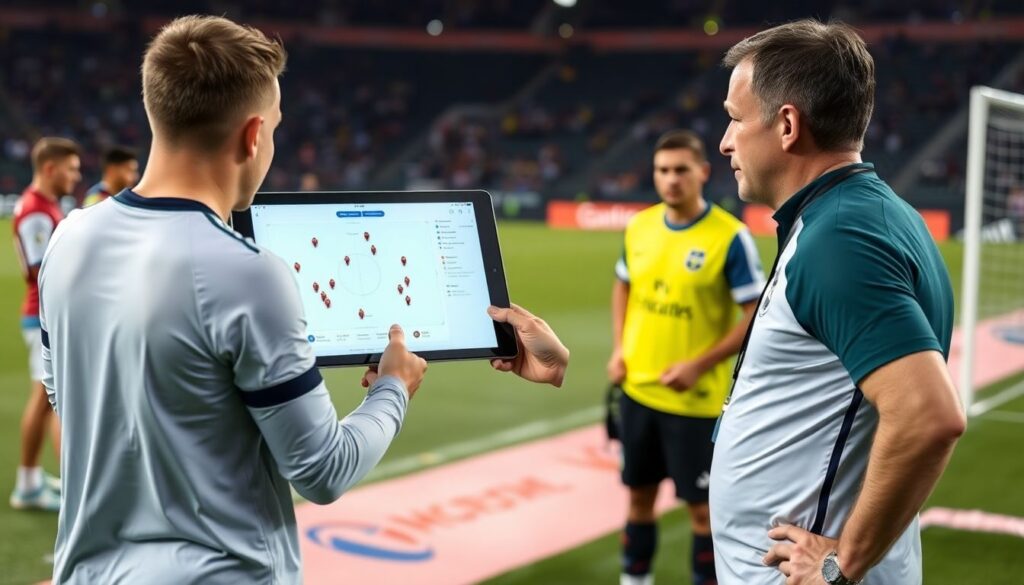
Start by answering their own questions faster and more clearly using data and video, without pushing new metrics. Demonstrate value in small, practical ways (set‑piece tweaks, substitution timing) and let trust grow from successful examples.
How do we choose between different sports analytics software Turkey providers?
Test how easily coaches can access clips and key metrics, how flexible reports are, and whether local support understands Süper Lig and BSL realities. Favour tools that integrate football and basketball if your club needs both, and confirm data definitions before signing.
Is it necessary to have a full‑time data engineer at club level?
Only large organisations with multiple data sources and custom models usually need in‑house engineering. Many Turkish clubs can operate effectively using external platforms plus one or two analysts who are comfortable with basic scripting and database use.
How can we measure whether analytics are actually improving results?
Define a small set of target behaviours and indicators (e.g., central xG conceded, high‑quality chances created, rotation balance) and track them over several months. Combine this with qualitative staff reviews and avoid judging the project on a few random game outcomes.