
Major European clubs scout talent in Turkey by combining video pre-screening, live match reports, data analytics and trusted local networks across Süper Lig, 1. Lig and elite academies. They track contract data, release clauses and Turkey football transfers news to time bids, minimising risk while accessing undervalued, high-upside players.
Scout briefing: essential checklist
- Clarify which positions and age profiles you target in the Turkish football transfer market before watching any games.
- Map priority leagues, cup competitions and youth tournaments in football scouting Turkey, with a realistic travel/video plan.
- Define minimum physical, technical and psychological benchmarks for each role.
- Combine tracking data and event data with live reports; never sign on data alone.
- Keep an updated spreadsheet of contracts, release clauses and agents for shortlisted players.
- Use at least one trusted local contact per region (Istanbul, Aegean, Anatolia, Southeast) to verify background information.
- Set internal “stop rules” (injury history, character issues, price cap) to avoid emotional overpaying during Turkey football transfers news hype.
Why Turkey Matters: market dynamics and talent pools
Turkey sits between European and Asian markets, so major clubs treat it as a bridge: physically robust players, passionate football culture, and relatively affordable transfer fees compared with top-five leagues. European clubs scouting Turkish players see a mix of ready Süper Lig starters and exportable U21 prospects.
This market fits clubs that:
- Can tolerate some adaptation risk in exchange for upside and resale potential.
- Have patience with tactical and cultural transition from Turkish football to their own league.
- Possess solid medical and psychological support to help players relocate and settle abroad.
It is usually not ideal when:
- You need instant, low-risk starters with top-tier league experience and minimal adaptation time.
- Your playing style relies heavily on very strict positional play and complex pressing triggers that differ strongly from most Turkish setups.
- Your scouting budget is too small to combine live scouting, video platforms and local intel; cutting corners raises error risk.
For clubs targeting the best Turkish football talents 2025 and beyond, Turkey is especially attractive at U17-U21 level, where UEFA youth competitions and national youth teams reveal players before they become too expensive.
Mapping competitions: which Turkish matches scouts prioritize
To mirror how major clubs operate, you need a clear competition map before building your schedule.
Core senior competitions:
- Süper Lig: Top-level benchmark for physicality, atmosphere and decision-making under pressure. Priority for immediate first-team profiles.
- 1. Lig: Key for finding undervalued, late-developing players and physically strong role players (full-backs, holding midfielders, target forwards).
- Turkish Cup: Mixes divisions; big clubs rotate squads, which lets you see young players against stronger opposition.
Youth and development focus:
- U19 Elite League and U17 competitions: Prime hunting ground for future exports; follow especially the academies of Istanbul giants and strong provincial clubs.
- Youth UEFA competitions: When Turkish clubs qualify, these matches show how prospects cope with different tactical and physical demands.
What you will need to cover these effectively:
- Access to a professional video platform (or club-level feed) covering all Süper Lig and most 1. Lig matches.
- Travel budget and basic Turkish logistics knowledge (stadium access rules, accreditation, matchday security routines).
- Reliable, legal data feeds (tracking and event data) for cross-checking impressions.
- Local contacts to alert you to late schedule changes, behind-closed-doors friendlies and regional youth tournaments.
Major clubs use a hybrid model: heavy video scouting for broad coverage and targeted live visits for high-priority fixtures, especially derbies and top-of-table clashes where intensity is closest to European competitions.
Player profiling: physical, technical and psychological metrics
The following step-by-step process mirrors best practice among European clubs scouting Turkish players and can be implemented safely by any professional or semi-professional setup.
-
Define positional profile and role
Before opening any game, write down exactly what you are looking for in each position and role (for example, ball-playing centre-back, box-to-box midfielder, inverted winger).
- Clarify age range, preferred foot, and minimum height or speed requirements only if truly essential.
- Align with your head coach on tactical principles (build-up style, pressing height, defensive line depth).
-
Run video pre-screening across Turkish leagues
Use video platforms to filter the pool in the Turkish football transfer market before travelling. Focus on 4-6 full matches per player rather than highlight compilations.
- Include at least one away game, one high-pressure match (derby, relegation fight, title race) and one cup match if available.
- Log timestamps for key actions to re-watch later with colleagues or coaches.
-
Assess physical profile and durability
Look beyond body type and measure how physical tools translate to game impact and long-term reliability.
- Check repeated sprint ability, recovery between high-intensity runs and involvement in the last 15 minutes.
- Note injury history from public reports, club announcements and Turkey football transfers news archives.
- Flag recurring muscle injuries or long layoffs as red flags that require medical verification.
-
Evaluate core technical skills under pressure
Focus on techniques that are central to the role, especially when pressed or fatigued.
- For defenders: first touch under pressure, tackling control, aerial timing, line-breaking passes.
- For midfielders: scanning before receiving, one-touch solutions, tempo control, resistance to pressing.
- For attackers: movement off the ball, first touch direction, finishing variety, decisions in tight spaces.
-
Judge decision-making and game intelligence
Game IQ often separates exportable talents from domestic-level players, especially when projecting to a stronger league.
- Observe positioning between lines, anticipation of second balls and awareness of team-mates.
- Track how quickly a player adapts when opponents change shape or pressing scheme.
- Note whether the player solves problems with simple, efficient decisions or always chooses risky options.
-
Screen psychological traits and professionalism
In Turkish stadiums with intense atmospheres, emotional control and resilience are crucial indicators for European moves.
- Watch reactions to refereeing decisions, provocation, substitution and coaching feedback.
- Check consistency of effort in defensive transitions and off-ball work, even when the team is losing.
- Use local contacts to understand training habits, punctuality and lifestyle patterns.
-
Validate with live scouting and cross-checks
Never finalize a high-cost recommendation based solely on video and data; always add at least one live observation.
- From the stand, pay attention to communication, body language and tactical instructions from the bench.
- Compare live impressions with data benchmarks and earlier notes; update the report objectively.
- Discuss the player with at least two independent scouts to reduce personal bias.
Fast-track mode: compressed evaluation flow
When time is short during transfer season, major clubs use a simplified, but still safe, process.
- Filter candidates via data and video to 3-5 options per position from Süper Lig and 1. Lig.
- Watch two full high-intensity matches per player, focusing on role-specific actions and mentality.
- Schedule one live viewing of top targets, ideally in a high-stakes match, and update risk rating.
- Run quick background checks with trusted local contacts on injuries, character and contract details.
- Present a ranked short list with clear pros, cons and price limits before entering negotiations.
Data tools and analytics European clubs deploy in Turkey
Use this practical checklist to validate whether your data and analytics setup is close to what major clubs use for football scouting Turkey.
- You track both event data (passes, shots, duels) and at least basic physical metrics (distance, sprints, high-intensity runs).
- Your analysts maintain position-specific dashboards comparing Turkish players to your current squad and league averages.
- Every scouting report includes objective data snapshots, not just descriptive text.
- You regularly review outliers in the Turkish football transfer market (overperforming xG, pressing volume, ball progression) to discover hidden value.
- You treat small-sample hot streaks with caution, seeking at least one full season of consistent performance where possible.
- You combine match footage with freeze-frames and data overlays to explain key decisions to coaches.
- You log each viewed match and data pull in a central system so staff can see the full history of evaluation.
- You track contract length and age curves to anticipate when a player might be both affordable and ready to move.
- Your club monitors Turkey football transfers news not only for rumours but to update valuation benchmarks by position.
- You have a clear rulebook for when data forces you to re-open or close a case on a player.
Logistics and networks: building ties with clubs, agents and academies
Strong local networks are as important as good reports. These are common mistakes to avoid when operating in Turkey.
- Relying only on one city or region, instead of spreading contacts between Istanbul, Ankara, Izmir and key Anatolian hubs.
- Speaking exclusively with high-profile agents and ignoring smaller intermediaries who may control regional markets.
- Visiting only big derbies and ignoring low-profile matches where the best Turkish football talents 2025 may debut quietly.
- Failing to learn basic Turkish greetings and etiquette, which can harm trust in meetings with club officials.
- Not coordinating with your legal department about local regulations on third-party involvement and representation.
- Over-promising trial opportunities or friendly matches to local clubs and then not following through.
- Sharing too much internal information about your needs, which can quickly leak across the Turkish football ecosystem.
- Ignoring youth coaches and academy directors, who often know which players have the mentality to succeed abroad.
- Assuming that one positive experience with an agent or fixer guarantees future deals will be equally smooth.
- Travelling without a clear plan of which staff to meet and which games to watch, wasting limited scouting days.
Negotiation triggers: valuation, contracts, release clauses and timing
When the ideal target is unavailable or overpriced, successful clubs switch to alternative routes instead of forcing a bad deal.
- Loan with option or obligation to buy: Useful when you doubt immediate adaptation from Turkish football but want to secure upside. Structure clear performance triggers and price corridors.
- Sign earlier from youth setups: Target younger prospects before they become Süper Lig regulars; this suits clubs with strong development environments and patience for gradual integration.
- Bridge signing from another secondary market: If competition for a Turkish target is intense, look for similar profiles in neighbouring leagues with lower visibility but comparable physical and tactical demands.
- Delay main target and secure short-term cover: When the selling club blocks a move mid-season, sign a short-contract replacement and revisit the primary target in the next window.
Common recruitment dilemmas and short solutions
How many live games should I watch before recommending a Turkish player?
Aim for at least one live game after several full-match videos. For expensive signings, push to two or three live observations, ideally in different contexts (home, away, high pressure), and combine views from more than one scout.
Is it safe to rely mainly on data for Turkish league players?
Data is essential but not sufficient. Use it to filter candidates and spot trends, then confirm conclusions with video and live impressions. Stadium atmosphere, communication and emotional control rarely show fully in numbers.
How do I judge whether a Süper Lig star will adapt to a top-five European league?
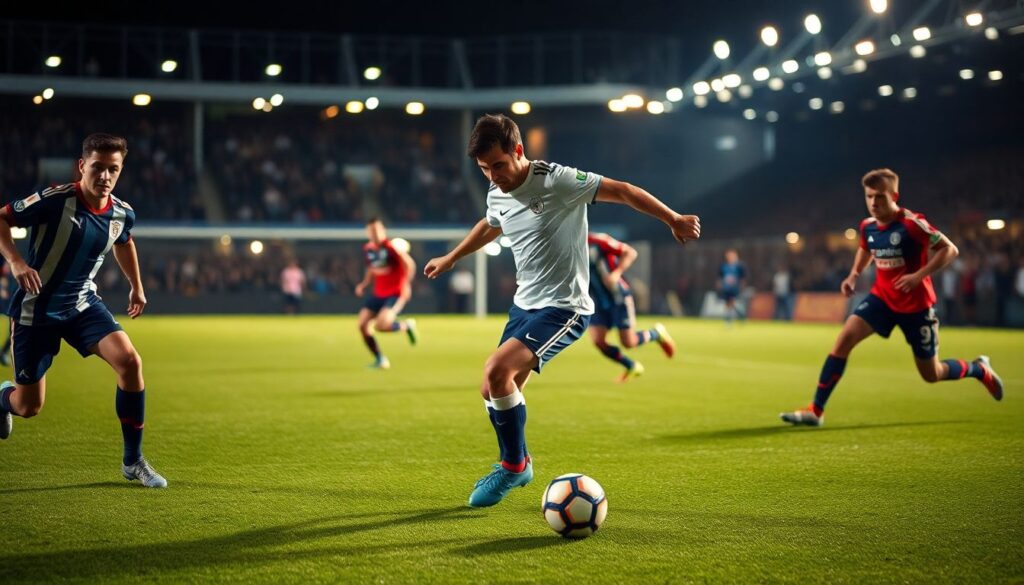
Focus on game tempo, decision-making speed and performance in European competitions or high-intensity domestic matches. If a player excels when space and time are reduced, adaptation chances rise significantly.
What is the best period in the season to scout in Turkey?
The middle third of the season usually gives the clearest performance picture: fitness stabilises, tactical patterns are clear and pressure increases. Late-season relegation battles and title races also reveal mentality and resilience.
How can a smaller club compete with big clubs for Turkish talents?
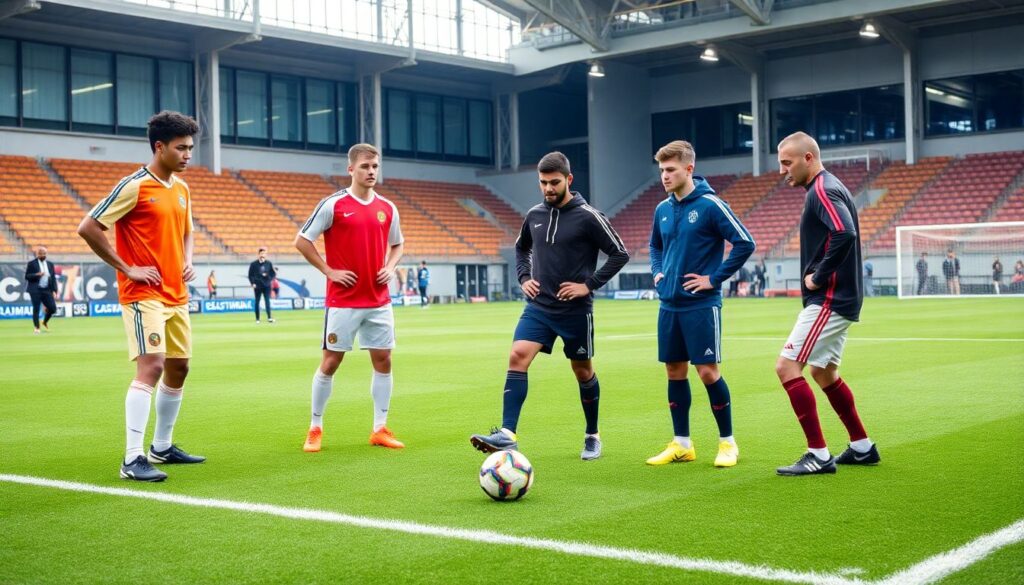
Offer a clearer development pathway, earlier playing time and a stable environment. Target players just before they become widely known, leveraging quick decisions and strong relationships with agents and academies.
Should I prioritise Süper Lig or 1. Lig for value signings?
Süper Lig provides safer reads on level but higher prices. 1. Lig can be more cost-effective for physical roles and late developers, but requires stronger scouting to separate future top-level players from domestic-only profiles.
How early should I start tracking a player I might want in 2025?
Begin at least one full season in advance. For candidates to be among the best Turkish football talents 2025, log their progress now at U19/U21 and early senior minutes, updating your assessment every three to four months.