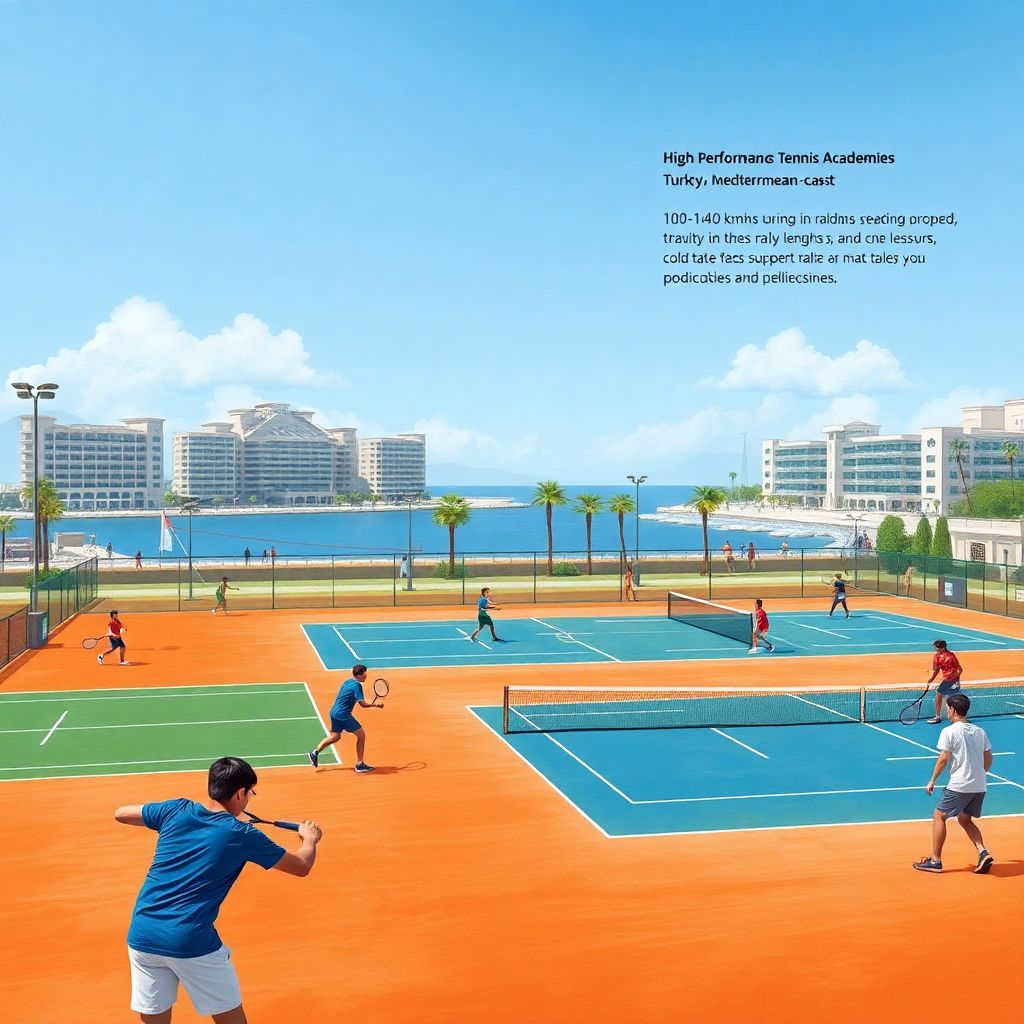
Context: Why Turkey Is Suddenly on the Tennis Map
Turkey has quietly built a dense network of courts and coaches over the last 15–20 years. According to national federation data, the number of registered players jumped from roughly 5–7k in early 2000s to over 60k today, with more than 250 indoor courts concentrated in Istanbul, Antalya and Izmir. Add to this a booming tourism industry and you get a natural breeding ground for tennis academies in turkey that can run all year thanks to mild winters and low court maintenance costs.
From Holiday Destination to High-Performance Hub
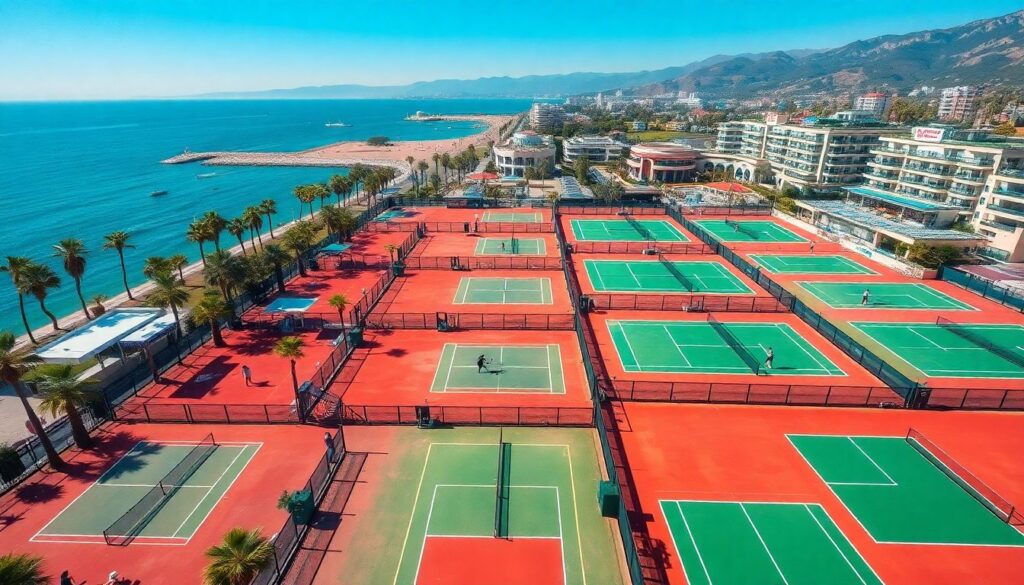
Most people still associate the Turkish coast with resorts, not with high‑intensity tennis. Yet the same hotel infrastructure that feeds mass tourism now supports turkey tennis training camps for European juniors escaping winter. Large resorts in Antalya re‑purposed football pitches and unused land into hard and clay complexes, hosting ITF junior events back‑to‑back with pre‑season blocks. This hybrid model — part tourism, part performance — is Turkey’s real strategic weapon if managed with long‑term planning instead of pure short‑term profit.
Technical Block: What an Elite Pathway Actually Requires
An actual Grand Slam pathway is brutally specific:
1. Top‑100 ITF juniors by 17–18
2. 120–150 pro matches by age 20
3. Annual budget: €120k–€250k for travel, staff and sports science
4. Multidisciplinary team: head coach, fitness coach, physio, mental coach, data analyst
Right now only a handful of Turkish players hit point 2, and almost none meet point 3 consistently. The gap is less about talent and more about stable funding and evidence‑based periodisation from 12 to 22 years old.
Case Studies: What Turkey Is Doing Right (and Wrong)
Look at players like Çağla Büyükakçay and İpek Soylu: they cracked top‑100 in singles/doubles, mostly built on domestic ITF events and wild cards into WTA Istanbul. On the men’s side, Cem İlkel hovered near top‑150, again with decent support but not a full “Grand Slam project”. The pattern is clear: Turkey can create solid tour‑level athletes, but the transition from good Challenger player to second‑week‑of‑Slam contender demands an upgrade in daily training intensity, analytics, and international sparring partners that is still patchy.
What the Best Academies Already Offer
The best tennis academy in turkey today typically runs 25–30 on‑court hours per week, plus 8–10 hours of strength & conditioning, with video tracking and basic match charting for U14 and above. Leading facilities in Istanbul and Antalya import coaches with ATP/WTA tour experience and run integrated schedules: red‑clay blocks in spring, hard‑court blocks before US and Australian swings. Where they lag is often in recovery infrastructure: cold tubs, HRV‑based load monitoring, sleep labs and on‑site medical teams are still exception, not rule, outside a few flagship centres.
Technical Block: Training Load and Environment Design
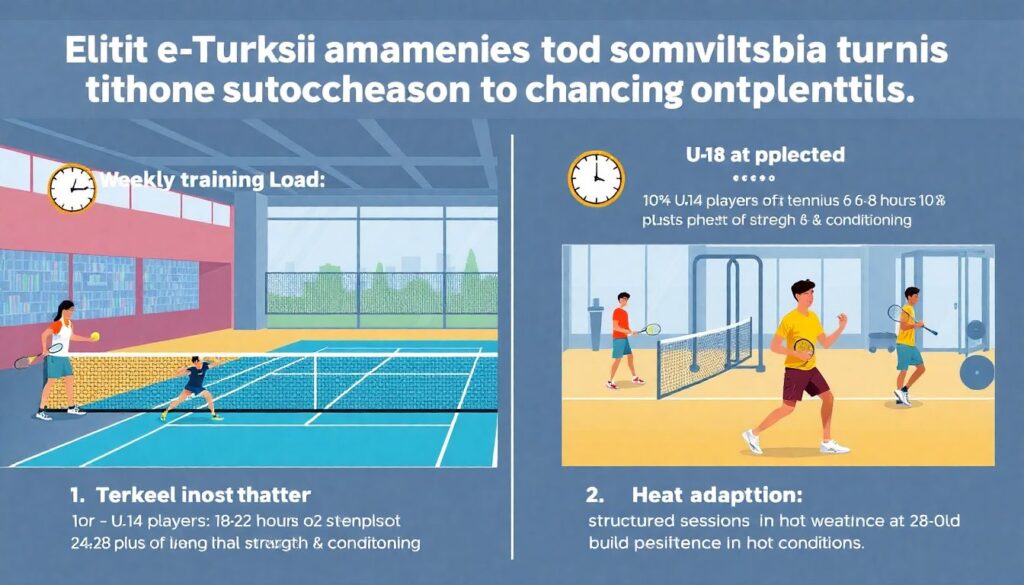
To turn a strong junior into a Slam threat, Turkish academies should hard‑wire the following parameters into their systems:
– Weekly load: 18–22 hours tennis + 6–8 hours S&C for U14, rising to 24–28 + 10–12 by U18
– Heat adaptation: structured sessions at 28–32°C to build “hot‑conditions resilience” for Australia and US summer
– Surface ratio: at least 40% clay, 60% hard to match tour distribution
– Data: routine use of tracking (Hawk‑Eye‑style or portable systems) to quantify rally length, depth, serve+1 patterns
Non‑Standard Idea #1: Turn Tourism into a Funding Engine
Here’s where Turkey can play a card no one else has. Imagine tennis academy holiday packages turkey redesigned as micro‑funding tools for elite juniors. Recreational players book a week by the sea, hit two hours a day with academy coaches, and pay a small “performance surcharge” (say €20–30 per day) that goes into a transparent talent fund. With 5k–10k guests per year, a single complex could raise €150k–€300k — enough to fully sponsor 3–5 high‑potential teenagers with travel, physio and sports‑science support, without relying solely on federation budgets.
Non‑Standard Idea #2: Seasonal “Super Camps” for Europe
Turkey already hosts plenty of turkey tennis training camps, but most are medium‑intensity and tourist‑driven. The next step is a series of four‑week “super camps” aligned with the pro calendar: Australian swing prep in December–January, clay swing block in March, grass‑transition camp in May, US hard‑court prep in July. Invite top U16–U18s from Europe, cap groups at 8 players per squad, and use Turkish pros and foreign experts jointly. This opens constant high‑level sparring for Turkish juniors at home, avoiding the cost of endless travel while still simulating tour‑level intensity.
Professional Coaching: Where the Real Leverage Is
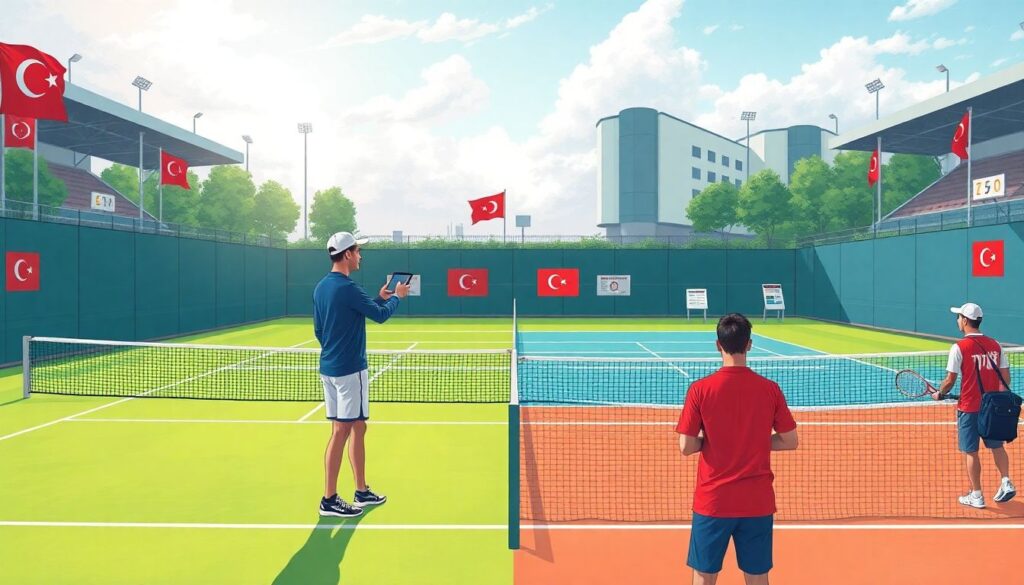
The presence of professional tennis coaching turkey is improving, but depth is still an issue. A few academies employ coaches with direct Grand Slam experience, yet many programs are run by ex‑good‑juniors without strong education in biomechanics, motor learning or match analytics. Upskilling this layer could bring the biggest ROI. Subsidised ITF High‑Performance courses, shared sports‑science staff across multiple clubs, and mentorship programs with established European academies would raise the coaching “floor” rapidly, so that even mid‑tier kids get elite‑level methodology instead of random drills.
Technical Block: Metrics for “Grand Slam Readiness”
To move from slogans to reality, Turkish academies should track hard indicators:
– By 16: top‑150 ITF, average forehand speed 110–120 km/h (girls) and 130–140 km/h (boys), repeated sprint ability test in top 15% for age
– By 18: 60+ pro matches played, serve over 175 km/h (boys) / 160 km/h (girls), 70%+ first‑serve games held on hard courts in national‑level competition
– By 21: at least one Slam qualifying win, 25+ weeks per year on foreign tournaments, injury‑time <8 weeks per season
Can Turkey Actually Deliver a Grand Slam Champion?
On raw ingredients — climate, facilities, cost base and geographic position between Europe and Asia — the answer is yes, Turkey can absolutely build a Slam contender. The missing links are systemic: targeted funding, data‑driven planning and consistent exposure to top‑50 level intensity from mid‑teens onward. If the ecosystem evolves from “nice place to train and vacation” to “laboratory for high‑performance tennis” — using tools like performance‑linked holiday products and high‑density international super camps — the first genuinely home‑grown Turkish Grand Slam champion becomes a question of timing, not possibility.