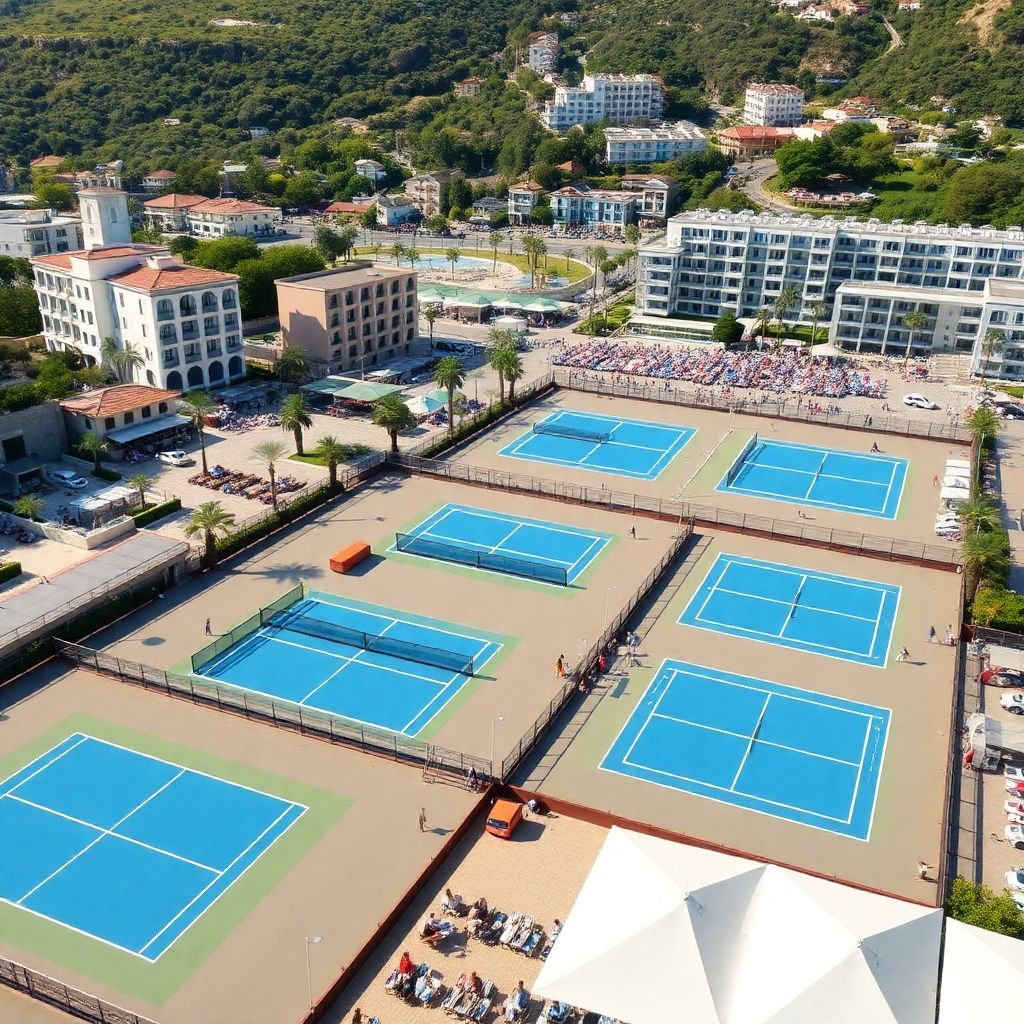
Turkey is becoming a tennis tourism hotspot because it combines dense coastal resort clusters, flexible event-friendly hotels, and improving federation support. Organizers get bundled accommodation, courts, and logistics at competitive costs, while players enjoy warm-weather training and easy access. Main risks: over-reliance on resort formats, seasonal crowding, and regulatory complexity for larger international events.
Snapshot: Turkey’s Tennis Tourism at a Glance
- Turkey offers a rare mix of resort-based court clusters and city clubs, giving organizers multiple formats for tournaments and training weeks.
- All-inclusive coastal properties reduce logistics friction, especially for junior circuits and group-based tennis holidays in Turkey.
- Event calendars are expanding, with more international tennis tournaments in Turkey 2025 targeting both pros and strong amateurs.
- Compared with many EU destinations, Turkey still balances lower costs with improving infrastructure and airline connectivity.
- Key implementation risks: uneven venue standards, legal nuances for prize money events, and dependence on tourism seasons.
Infrastructure and Venues: Mapping Turkey’s Tournament Facilities
Tennis tourism in Turkey rests on a three-pillar venue structure: coastal resorts with court clusters, urban clubs in major cities, and federation-linked national centers. For international tournaments, each pillar offers different trade-offs in convenience, control, and financial risk.
Coastal properties marketed as tennis resorts Turkey all inclusive concentrate clay and hard courts next to rooms, restaurants, and beaches. This format is easy to implement for camp-style events and amateur circuits: one contract, one operations team, predictable per-head pricing. Risks include dependence on hotel policies, limited seating for spectators, and seasonal availability.
City-based clubs in Istanbul, Antalya, Ankara, and Izmir suit more formal events and qualifiers linked to tours. They usually offer better spectator capacity, stronger officiating networks, and easier media access. However, organizers must stitch together accommodation, transport, and catering from separate suppliers, which raises operational complexity and sometimes costs.
National or regional centers, often co-managed with the Turkish Tennis Federation, balance both worlds: tournament-ready courts plus some on-site facilities, yet not as “closed” as resort campuses. For higher-level international tennis tournaments in Turkey 2025 and beyond, these centers are attractive but require early booking and stricter compliance with federation standards.
- Clarify early whether you need a closed resort campus or an open urban venue for your event format.
- Audit court numbers, surfaces, and lighting against your draw sizes and scheduling model.
- Align with federation or city authorities as soon as prize money, ranking points, or big crowds are in play.
Economic Drivers: How Events Fuel Local and National Growth
- Resort occupancy and shoulder seasons. Tennis training camps in Turkey fill rooms in spring and autumn when classic sun-and-sea tourism slows. Resorts gain more stable occupancy, while organizers secure better pricing and time on court.
- Spending beyond the hotel. Even at the best tennis hotels in Turkey, players and families spend on transfers, shopping, excursions, and medical or physiotherapy services in the local area. This diversifies tourism revenue and supports service jobs.
- Event-linked infrastructure upgrades. To win bids, municipalities and hotels upgrade courts, lighting, gyms, and Wi‑Fi. Unlike temporary event builds, these assets keep serving domestic players, local clubs, and future tournaments.
- Brand positioning for destinations. Cities and regions use international tournaments and tennis holidays in Turkey campaigns to reposition themselves as active-sport hubs, attracting repeat guests and new airlines or routes.
- Knowledge transfer and workforce skills. Frequent tournaments train a local ecosystem: officials, ball kids, event managers, stringers, and fitness coaches. This lowers costs and risk for the next organizer.
- Map who benefits economically from your event (resort, city, federation) before you negotiate terms.
- Leverage shoulder seasons to secure better rates and higher venue flexibility.
- Frame proposals to authorities around long-term infrastructure and skills, not just event week revenues.
Regulatory and Organizational Landscape for International Tours
Turkey’s tennis ecosystem combines national regulations, federation rules, and international tour requirements. For organizers used to EU markets, the legal and tax environment feels familiar in many areas but still demands local expertise, especially when paying foreign players and staff.
Scenario 1: Amateur and corporate events at resorts. These rely mainly on commercial contracts with hotels and local agencies. Regulatory risk is relatively low: insurance, safety, and basic permits are the main items. This is the easiest entry point for foreign organizers testing tennis tourism concepts.
Scenario 2: Junior circuits and development tours. Once ranking points or federation recognition are involved, organizers coordinate with the Turkish Tennis Federation for sanctioning, officiating levels, anti-doping, and scheduling. Compliance is manageable but demands earlier planning and clearer documentation than pure leisure events.
Scenario 3: Professional prize money tournaments. Here, international tour rules (ITF, Challenger, WTA, ATP, or regional circuits) come on top of national law. Organizers must handle player contracts, withholdings, anti-doping, integrity codes, media rights, and sometimes government co-funding. Risk and complexity rise sharply, but so does marketing impact.
Scenario 4: Hybrid formats inside tennis resorts Turkey all inclusive properties. Many organizers now blend open tournaments, social events, and training camps in one week. This blurs lines between tourism and sport. The approach is attractive for participants, yet it requires clear terms in participant waivers, marketing claims, and prize structures.
- Decide your event level first, then map which regulations and federations apply.
- Engage a local legal or tax advisor before advertising prize money or appearance fees.
- Keep written confirmation from the federation for any sanctioned or points-bearing event.
Player Experience: Accommodation, Travel and Training Logistics
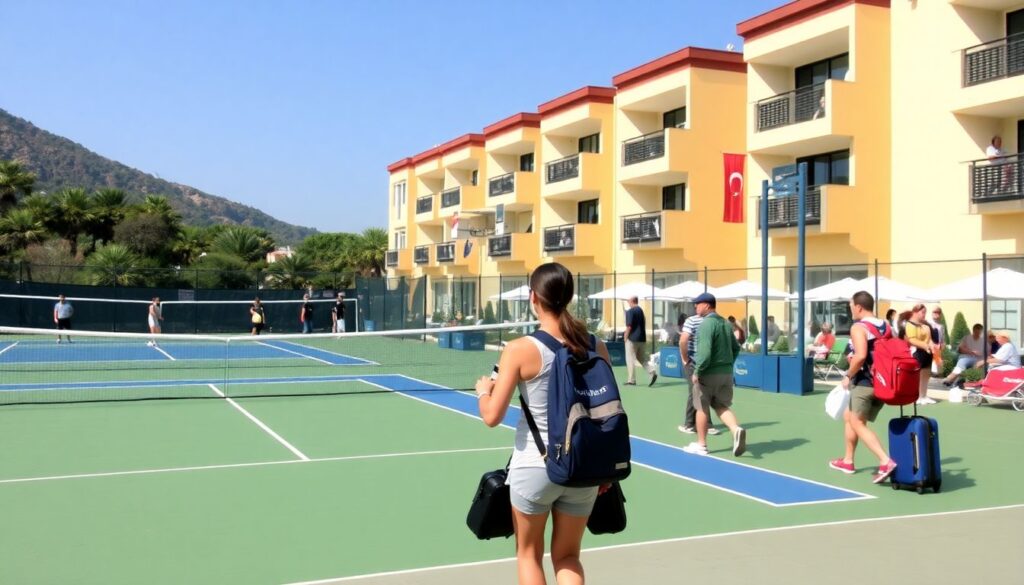
From the player’s point of view, tennis tourism works only if logistics are simple and predictable. Turkey has a strong advantage here: major airports like Antalya and Istanbul connect to key European hubs, and many tennis resorts package transfers, meals, and court time into a single contract.
However, the same resort-first model can limit choice. Some players prefer independent apartments, city life, or quieter training centers away from big entertainment complexes. Organizers must balance convenience against personalization and ensure that the event schedule, transport, and practice court booking systems are clear from day one.
Advantages for players and teams
- Short airport transfers from hubs to coastal clusters, especially for tennis holidays in Turkey during peak charter seasons.
- On-site gyms, spas, recovery zones, and often physio services inside the best tennis hotels in Turkey.
- Predictable budgets thanks to all-inclusive food and non-alcoholic drinks, simplifying cost planning for junior teams.
- High practice-court density in tennis training camps in Turkey, enabling structured blocks for groups and private coaching.
Limitations and risks to watch
- Seasonal overload of courts, leading to late-night or early-morning matches if scheduling is weak.
- Potential mismatch between resort entertainment culture and the focus needs of high-performance players.
- Variable Wi‑Fi, noise levels, and room standards between properties, even within the same region.
- Travel disruptions during busy holiday periods, requiring flexible arrival and departure windows.
- Survey your players on their preferred accommodation style before locking in a resort or city hotel.
- Publish clear practice and match scheduling rules to avoid conflicts over court access.
- Plan arrival days with buffers for travel delays, especially for knock-out tournaments with tight draws.
Marketing and Fan Engagement: Building International Appeal
Marketing tennis tourism in Turkey often follows two main approaches: selling “training weather and courts” to players, and selling “sun, sea, and sport” to families. Each is easy to implement but carries its own risks if not aligned with the event level and target audience.
- Over-reliance on generic resort imagery. Many campaigns for tennis holidays in Turkey look alike: beach photos, a couple of courts, all-inclusive buffets. This makes it hard to stand out and to signal seriousness for competitive players.
- Underselling the sport side for serious events. When marketing high-level tournaments like international tennis tournaments in Turkey 2025, organizers sometimes hide behind generic tourism visuals and forget to showcase draws, ranking points, and player lists.
- Confusion between “camp” and “tournament” offers. Guests may expect guaranteed matches when signing up for what is actually a training camp, or vice versa. This erodes trust and complicates repeat sales.
- Limited community and fan activation. Urban tournaments sometimes fail to connect with local clubs, schools, and universities. Without these, stands stay half-full and sponsors see less value.
- Myth that all-inclusive always solves engagement. Some assume that putting everyone into tennis resorts Turkey all inclusive automatically creates a vibrant atmosphere. In reality, engagement still needs structured side events, clinics, and social formats.
- Segment your audience clearly: high-performance players, families, or corporate groups, and tailor visuals accordingly.
- Describe formats precisely in marketing (camp, tournament, mixed) and spell out what is guaranteed.
- Partner with local clubs and schools early to secure spectators, volunteers, and ball kids.
Sustainability and Legacy: Long-term Impacts on Turkish Tennis
For Turkey, the real value of tennis tourism appears when events leave lasting benefits: better courts, educated staff, and pathways for local juniors. Organizers who design for legacy strengthen their own business by making venues more capable and attractive for future editions.
Consider a simple repeatable model for a coastal event:
{
  "year_1": "import coaches and officials, train local staff, run small draw",
  "year_2": "expand draw, promote local wildcard entries, improve seating",
  "year_3": "increase tour level, formalize academy partnership, add junior festival",
  "ongoing": "share data with federation; co-plan calendar slots"
}
This approach distributes risk: in early years, you test demand with smaller fields and limited grandstand builds. As the venue team grows more capable, you scale up marketing and tour category. Over time, the region gains a reputation that benefits both tennis training camps in Turkey and regular tourism.
- Design your event plan with at least a three-year horizon at each venue.
- Include local coach and official training in your annual budget.
- Track and review legacy metrics: court upgrades, local participation, and repeat bookings.
Final Self-Check for Organizers Considering Turkey
- Have you matched your event level (camp, amateur, pro) with the right type of Turkish venue and regulatory path?
- Can your budget handle separate suppliers, or do you need the simplicity of all-inclusive tennis resorts?
- Is your marketing clear about who the event is for and what is guaranteed on court?
- Do you have a local partner for legal, tax, and federation coordination?
- Have you defined at least one legacy goal for the venue and local tennis community?
Practical Questions from Tournament Organizers and Players
Is Turkey better suited for training camps or official tournaments?
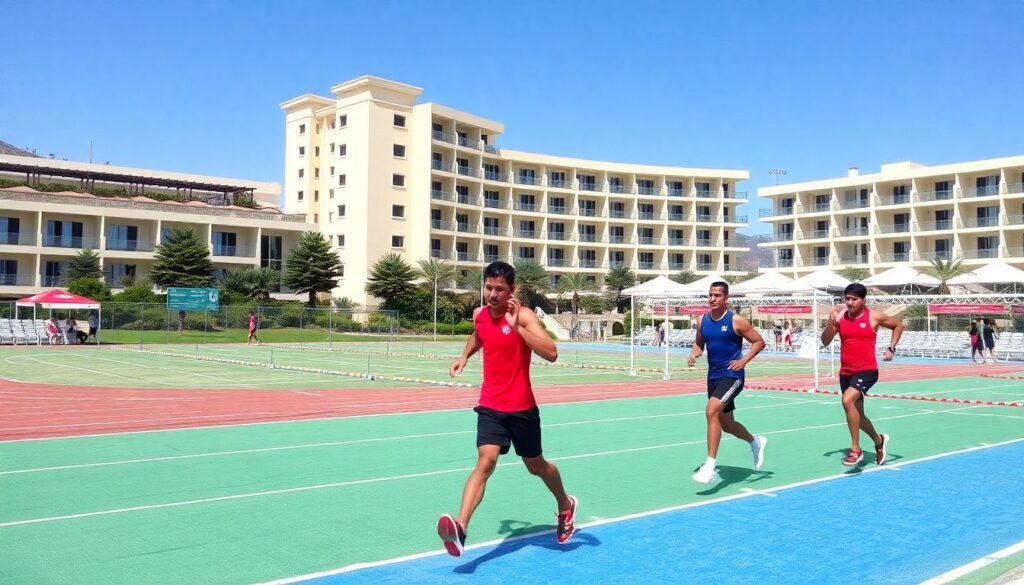
Turkey is strong for both, but easier for training camps and amateur events because resort-based packages reduce logistics risk. Official tour events demand more federation coordination and compliance but benefit from growing expertise and infrastructure.
How far in advance should I book venues in Turkey for a new event?
For resort-based camps, one season ahead is often enough. For larger tournaments or any international tennis tournaments in Turkey 2025 with ranking points, plan at least a year ahead and block provisional dates with the federation early.
Do all-inclusive tennis resorts limit sponsorship and on-site branding?
Policies differ. Some tennis resorts Turkey all inclusive allow extensive sponsor branding, while others protect their own brand and F&B revenue. Clarify rights for banners, activations, and hospitality suites in your initial contract.
Are coastal venues too hot in summer for competitive play?
Mid-summer can be challenging for long matches, especially on clay. Most serious events now focus on spring and autumn windows, with schedules that prioritize morning and evening play and strong hydration protocols.
Can smaller academies from Europe realistically host events in Turkey?
Yes, if they partner with local operators for ground logistics and compliance. Starting with modest draw sizes at flexible resorts reduces financial exposure and allows time to learn the local market.
How do players usually combine holidays and competition weeks?
Many book back-to-back weeks: one as a lighter training or family week, another as a tournament. Turkey’s best tennis hotels in Turkey and nearby beaches make it easy for non-playing family members to enjoy the stay.
Is language a barrier for international participants?
In main tennis areas and hotels, staff usually speak English and often German or Russian. For technical matters like regulations or contracts, working with a bilingual local partner or agency is still recommended.