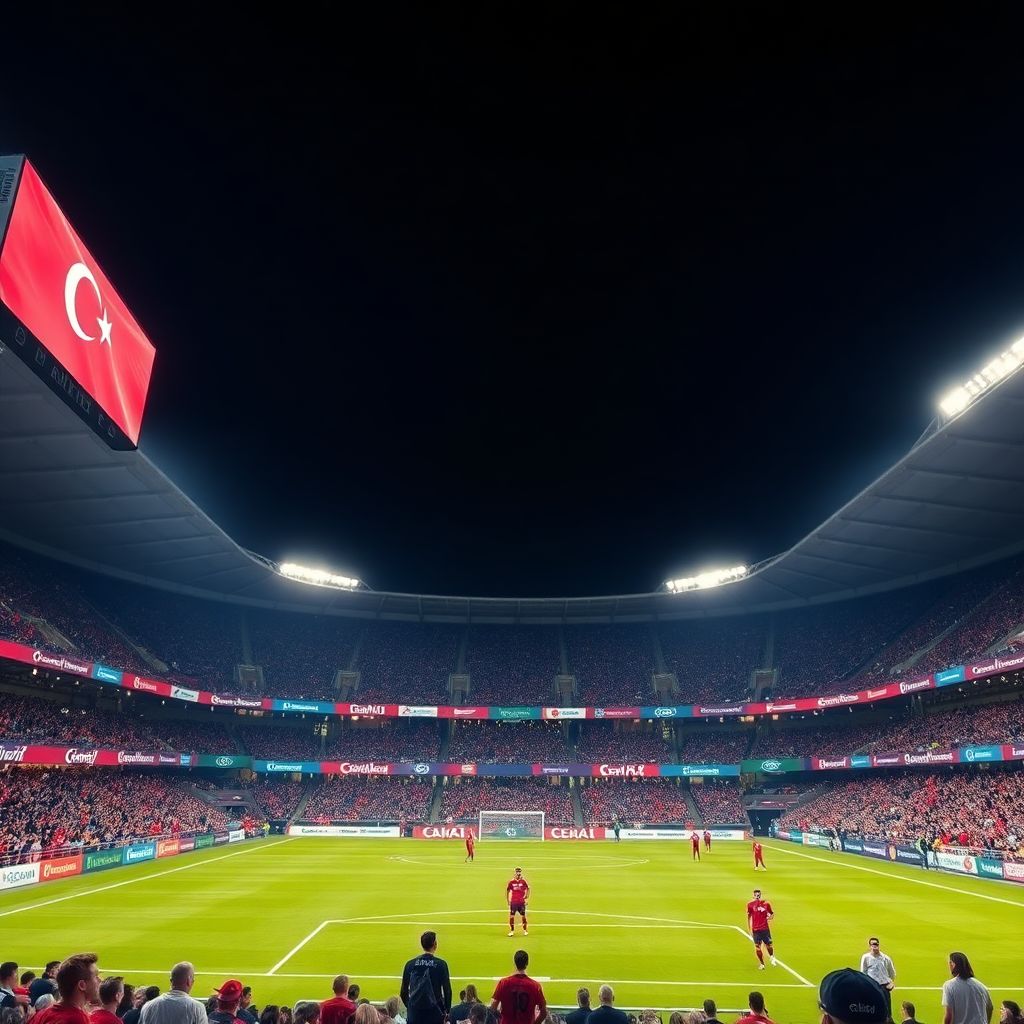
The business of football in Turkey rests on three pillars: TV rights, sponsorships and fan-driven income. TV and Super Lig broadcasting rights packages bring scale but high dependency risk. Sponsorships are more flexible yet relationship-sensitive. Fan power is slowest to monetise but ultimately the most resilient and controllable revenue source.
Executive summary for stakeholders
- The turkish football tv rights market is still the dominant source of central income but is volatile at renewal cycles.
- Sponsorship deals in turkish football are easier to scale club-by-club, yet can be fragile when results or regulations change.
- Fan engagement-led income is harder to build, but structurally lowers commercial risk over time.
- Package design, minimum guarantees and currency exposure define most broadcast-related risk for Turkish clubs.
- Governance and regulatory rules in Turkey materially affect sponsorship inventory and TV sales strategy.
- Clubs that align digital, stadium and media strategies gain leverage in negotiations with broadcasters and brands.
Current TV rights landscape in Turkey
The turkish football tv rights market is structured around collective selling of top-division matches, primarily the Süper Lig, complemented by domestic cups and some lower-league content. Centralised selling gives the league bargaining power and ensures a baseline income for all participating clubs.
Super Lig broadcasting rights packages typically separate live rights, highlights, near-live clips and international distribution. Broadcasters then commercialise these rights via subscriptions, advertising and sublicensing. Digital-only packages, mobile clips and social media formats are increasingly part of the negotiations, even if linear TV still dominates reach.
For clubs, central TV money is relatively easy to implement: they do not manage production or direct sales. Revenue is received via league distributions according to pre-agreed formulas. However, this convenience comes with dependency risk: a weak auction, currency issues or broadcaster instability can quickly hit club budgets.
From a risk perspective, TV rights income is highly sensitive to: national economic conditions; the competitive intensity of bidders; regulatory restrictions on foreign ownership or media concentration; and match-fixing or integrity concerns that affect the league brand. Clubs with higher fan bases can partly offset this via stronger other revenue streams, but smaller clubs remain heavily exposed.
| Revenue type | Implementation effort for clubs | Key risk profile | Typical control level |
|---|---|---|---|
| TV / central media rights | Low (managed by league and broadcasters) | High dependency on auction results and broadcasters | Low – collective decisions and contracts define outcomes |
| Sponsorship / commercial partners | Medium (sales, activation, reporting) | Medium – brand, performance and regulatory exposure | Medium to high – club can adjust portfolio and terms |
| Matchday & fan-driven income | High (stadium ops, fan engagement, digital) | Lower long-term risk, but sensitive to sporting results | High – controlled mainly by club strategy and service quality |
Implementation vs risk trade-off for TV rights: easy cash flow and low operational effort, but high strategic risk if the overall media market weakens. Clubs should treat TV rights as baseline income, not as the main growth engine.
- Map current and next TV cycle contract durations against your medium-term budget.
- Stress-test finances for at least one weaker rights auction scenario.
- Use strong seasons to invest TV money into fan and digital assets, not only transfers.
Sponsorship models and principal revenue streams
Sponsorship deals in turkish football cover shirt-front and back, sleeve, training kit, stadium naming rights, category exclusivity, and regional partnerships. Compared with TV, these deals are more granular: each club can build its own commercial ecosystem, independent from central league contracts.
In practical terms, sponsorship is a medium-effort, medium-risk revenue channel. Implementation requires commercial staff, legal support and activation capabilities, but does not depend on league-level auctions. The main risks lie in brand misalignment, on-pitch underperformance, regulatory advertising limits and late payments by partners.
Key sponsorship-related revenue streams include:
- Principal shirt sponsorships – usually the highest-value asset, strongly linked to TV exposure and European competition participation.
- Stadium and stand naming rights – longer-term deals that stabilise income but reduce flexibility if underpriced.
- Official supplier contracts – kit, equipment, airline, automotive and financial services agreements that blend cash and value-in-kind.
- Category and regional partners – more niche deals that monetise specific fan segments and geographies.
- Digital and content sponsorships – branding of social media series, club apps and streaming shows.
- Event and grassroots programmes – clinics, regional tournaments and CSR activations powered by sponsors.
From an ease-of-implementation perspective, smaller inventory (such as digital content or training kit) can be sold and delivered quickly, with relatively low risk. Big naming rights or main shirt deals are harder to close and carry more reputational and legal exposure if relationships fail.
Compared with TV rights, sponsorship is less binary: a single failed deal hurts, but a diversified portfolio smooths risk. Clubs in Turkey should design a tiered sponsorship structure, connect it to clear Turkey football club sponsorship opportunities, and protect strategic partners with exclusivity where justified by value.
- Audit existing sponsorship inventory and define at least three pricing tiers.
- Limit contract lengths for high-uncertainty categories; favour flexibility over maximum short-term cash.
- Invest in activation capabilities so sponsors see measurable fan impact, not only logo exposure.
How broadcast negotiations set valuations
Broadcast negotiations start from the value of audience attention: number of fans, their spending power and their engagement level across TV, digital and social platforms. In Turkey, this is shaped by the strength of rival entertainment products, competition from international leagues and macroeconomic conditions.
In collective bargaining for media rights, the league and its advisor design super lig broadcasting rights packages that appeal to different bidders. Packages might separate live matches, near-live clips, digital streaming, betting rights and international sales. The structure chosen directly affects competition, implementation complexity and long-term risk for all parties.
Typical valuation and negotiation scenarios include:
- Single-buyer, all-rights package – easiest to implement for the league; high counterparty risk if the broadcaster underperforms or seeks renegotiation.
- Multi-buyer, segmented packages – more complex to coordinate, but spreads risk and can stimulate innovation across platforms.
- Domestic vs international split – domestic broadcaster focuses on local reach; separate agents or platforms handle global distribution and Turkish diaspora audiences.
- Guaranteed minimum vs revenue share – guarantees offer budget security, while revenue shares add upside but require transparency and more sophisticated auditing.
- Hybrid TV-plus-digital tenders – linear broadcasters partner with OTT platforms, leading to more options for fans but more complex measurement and reporting.
For clubs, ease of implementation is highest when the league secures a long-term, stable contract with clear distribution rules. Risk rises when deals are short-term, heavily variable or dependent on new, untested platforms. However, shorter cycles can also let the league capture upside if audience metrics improve quickly.
- Advocate within league structures for diversified buyer bases rather than single-broadcaster dependence.
- Request transparent, simple distribution formulas to reduce budgeting uncertainty.
- Encourage inclusion of digital-rights KPIs that reward clubs actively growing their audiences.
Regulatory framework and league governance effects
The regulatory environment in Turkey influences what can be sold, how long it can be sold for and under which conditions. Media, competition, gambling and advertising regulations all shape the business of football. League governance rules then determine revenue-sharing, central vs individual rights and financial controls on clubs.
On the positive side, strong governance and clear rules reduce contractual disputes, support integrity and create a stable platform for long-term investments by broadcasters and sponsors. Financial regulations, if well designed, lower default risk and make clubs more credible counterparties in major deals.
However, regulations can also restrict lucrative categories (for example, certain betting or alcohol brands), limit shirt sponsor inventory or impose blackout rules on free-to-air broadcasts. Sudden rule changes introduce implementation risk, forcing re-negotiation of contracts or cancellation of campaigns.
Governance and regulation: main benefits
- More predictable environment for multi-year TV and sponsorship contracts.
- Higher trust among investors, fans and international partners.
- Clear frameworks for resolving disputes and monitoring compliance.
- Encouragement of sustainable club finances and transparency.
Governance and regulation: main constraints and risks
- Potential loss of high-paying sponsors in restricted categories.
- Reduced flexibility to experiment with new broadcasting or streaming formats.
- Complex approval processes that slow down deal-making.
- Regulatory uncertainty around emerging technologies and digital assets.
For clubs and leagues, the ease-of-implementation trade-off is clear: stricter rules need more compliance effort but reduce legal and reputational risk. Looser rules make rapid innovation easier but can backfire if scandals or financial instability emerge.
- Map all existing sponsorship and media contracts against current regulations and renewal timelines.
- Engage proactively with regulators to explain industry realities and propose practical rules.
- Design internal compliance checklists before signing new high-risk category partners.
Fan engagement metrics and commercial consequences
Fan engagement is the real engine behind long-term business value. Broadcasters and sponsors pay for access to passionate, attentive fan bases. Strong turkish football fan engagement strategies convert that passion into predictable revenue streams across ticketing, merchandise, memberships and digital products.
Core metrics include attendance, season ticket retention, average spend per fan, social media reach, content watch time and conversion rates into paid products. These metrics underpin commercial valuations more credibly than short-term league positions, especially for investors and international partners who look for stability.
Common mistakes and myths around fan engagement in Turkey and elsewhere include:
- Over-focusing on match-day only – assuming stadium atmosphere alone drives value, while under-investing in digital and off-season interaction.
- Chasing follower counts – prioritising raw social numbers over engagement quality, segmentation and monetisation potential.
- Ignoring language and diaspora – missing content opportunities for Turkish-speaking audiences abroad and multilingual fans inside Turkey.
- Short-term ticket discounting – using aggressive price cuts that damage long-term willingness to pay and membership value.
- Fragmented data – keeping ticketing, online store and media analytics separate, making it hard to prove value to sponsors.
From an implementation perspective, building robust engagement measurement requires investment in CRM tools, analytics staff and content production. This is harder at the start than signing a TV cheque or a shirt sponsor. Yet once built, it reduces risk: diversified, loyal fans can cushion revenue shocks from weaker TV cycles or sponsor exits.
- Define a small, consistent engagement KPI set shared across ticketing, digital and commercial teams.
- Integrate basic fan data sources (ticketing, e-commerce, memberships) into one view.
- Use engagement evidence in negotiations with broadcasters and sponsors to justify higher valuations.
Digital platforms, streaming opportunities and monetisation
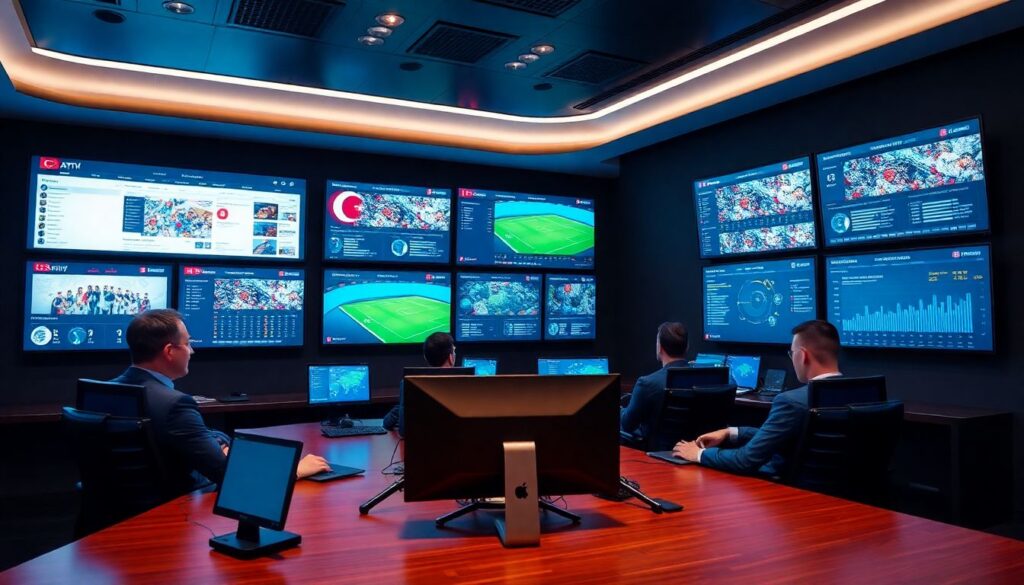
Digital platforms open a new layer of flexibility and control for Turkish clubs and the league. Beyond central media deals, clubs can run their own OTT services, premium content tiers or membership programmes, provided these do not conflict with exclusive broadcast agreements.
In practical terms, digital streaming is medium-to-high in implementation effort: it requires technology partners, stable infrastructure, content planning and customer support. Risk lies in over-investing before demand is proven, or in breaching existing TV contracts. Yet the upside is more direct fan relationships and new monetisation routes, such as targeted advertising, micro-payments and international subscriptions.
A simplified mini-case for Turkey-based digital strategy could look like this:
// Pseudo-roadmap for a mid-table Turkish club
Year 1: Launch bilingual YouTube content; test paid behind-the-scenes series.
Year 2: Build fan app; integrate ticketing, store and content in one login.
Year 3: Introduce low-priced international pass for pre-season and friendlies.
Year 4: Negotiate inclusion of club-produced shows in central media packages.
Compared with TV and traditional sponsorship, digital models offer higher long-term control and lower counterparty risk but demand persistence. Early pilots should be small, with clear metrics and cost caps. Over time, these assets will support broader Turkey football club sponsorship opportunities and attract partners interested in addressable, data-driven audiences.
- Audit current digital rights to confirm what you can and cannot stream independently.
- Start with low-risk formats (interviews, archives, shoulder content) before live matches.
- Align digital plans with potential partners, including broadcasters, to avoid conflicts.
Self-checklist for Turkish football business strategies
- Is TV money treated as baseline income while growth plans focus on controllable, fan-driven revenues?
- Does the sponsorship portfolio balance easy-to-execute small deals with a few strategic anchors?
- Are regulatory constraints and governance rules fully mapped into commercial planning?
- Do fan engagement metrics directly inform broadcasting and sponsorship valuations?
- Is there a phased, realistic roadmap for digital and streaming development?
Practical clarifications for clubs and investors
How important are TV rights compared with other revenues in Turkey?
TV rights remain the single largest central revenue source, especially for smaller clubs. However, dependence on one stream is risky, so strategically mature clubs try to grow sponsorship, matchday and digital income to rebalance their portfolios.
Are sponsorship deals easier to implement than new broadcast contracts?
For individual clubs, yes. Sponsorships can be negotiated independently and tailored to local conditions, while broadcast contracts are collective and complex. The trade-off is that big TV deals deliver scale, whereas most sponsorships require ongoing activation work.
What makes a club attractive in media-rights negotiations?
Large, engaged fan bases, strong derby audiences, consistent participation in European competitions and professional governance all increase club attractiveness. Solid fan data and digital reach figures can further strengthen a club's indirect influence on league-wide media valuations.
How do regulations in Turkey affect sponsorship categories?
Advertising and sector-specific rules may limit or condition deals in areas such as betting, alcohol or certain financial products. Clubs should check each potential category against current regulations and ensure contracts include clauses addressing possible rule changes.
Which fan engagement initiatives usually deliver the best commercial return?
Season ticket programmes with clear benefits, well-run membership schemes and integrated digital platforms that connect ticketing, retail and content typically perform best over time. Isolated campaigns without data capture or follow-up tend to underperform.
Can smaller Turkish clubs realistically monetise digital platforms?
Yes, but with focused, low-cost strategies: local-language content, community storytelling and targeted partnerships. Instead of trying to copy big-club OTT models, smaller clubs should prioritise simple formats and sponsorship-linked content.
How should investors assess risk when entering Turkish football?
Investors should evaluate broadcast contract duration, league governance quality, club debt levels, fan engagement strength and the realism of commercial projections. Diversified revenue and transparent governance usually signal lower long-term risk.