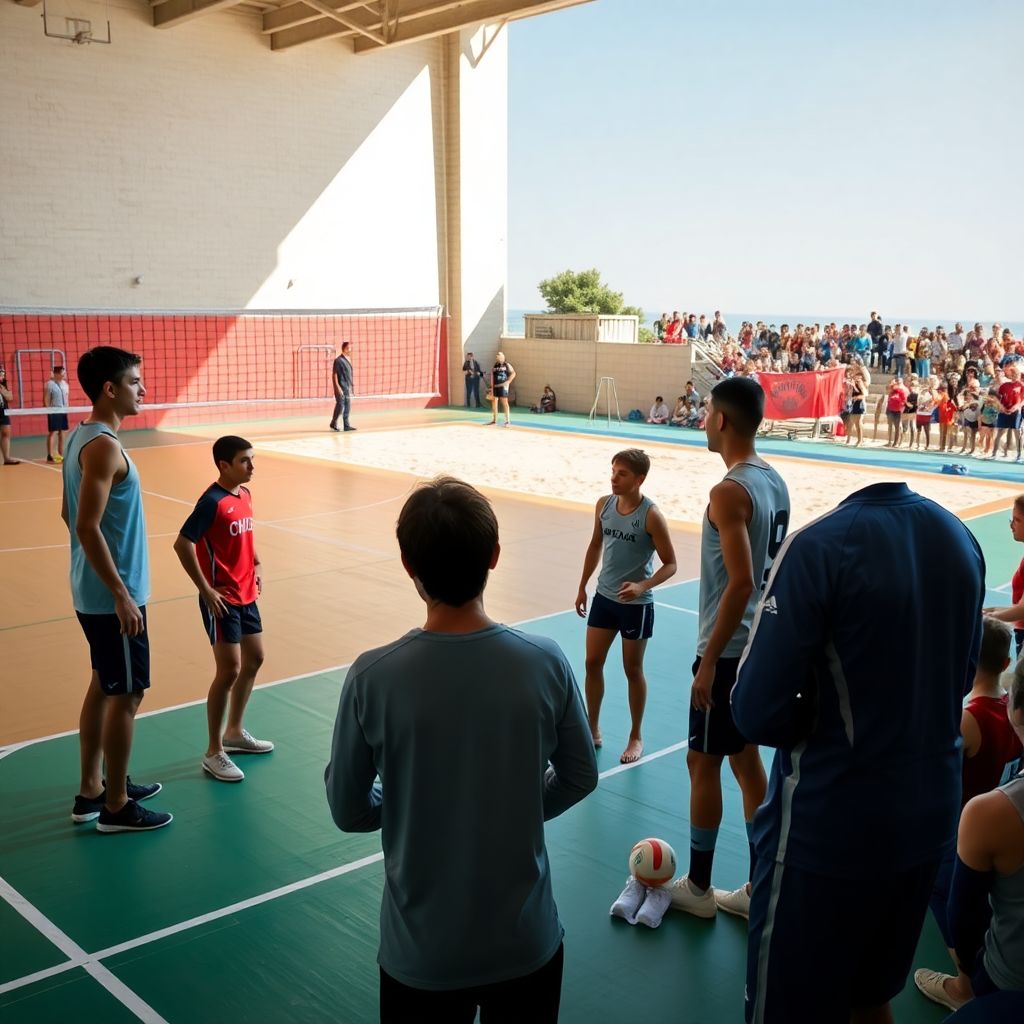
Volleyball culture in Turkey grew by blending informal beach play with structured indoor systems, supported by clubs, schools, and federations. Safe development means gradual training, qualified coaching, and realistic expectations about facilities, costs, and competition. Limitations remain in equal regional access, coach education, and sustainable pathways from junior levels to professional careers.
Core Trends Shaping Turkey’s Volleyball Culture
- Parallel growth of coastal beach volleyball and urban indoor leagues, feeding interest into each other.
- Rising role of schools, universities, and professional indoor volleyball clubs in Turkey as development hubs.
- Strong visibility of the women’s game, reshaping gender norms in team sports.
- Commercialization through media, sponsors, and tourism-linked events on major beaches.
- Expansion of structured volleyball training programs in Istanbul and other big cities.
- Emerging ecosystem of volleyball camps in Turkey and junior academies, but with uneven quality.
Historical Pathways: How Volleyball Arrived and Took Root in Turkey
Volleyball in Turkey emerged through schools, universities, and multi-sport clubs that adopted international team sports. Over time, it shifted from a recreational physical education activity into a performance-oriented discipline with organized leagues, officiating standards, and national-team structures.
The culture evolved on two main tracks. First, indoor volleyball developed inside educational institutions and professional multi-sport organizations. Second, informal beach play along the Aegean and Mediterranean coasts helped normalize volleyball as a social pastime, especially in touristic regions. Together, these tracks supported a continuum from casual play to serious training.
A modern feature of this pathway is the rise of specialized environments such as volleyball camps in Turkey and the best volleyball academies in Turkey for juniors. These entities bridge the gap between school PE classes and federated competition, although quality, safety standards, and coaching expertise vary significantly across providers and regions.
Safe orientation checklist for understanding Turkey’s volleyball roots
- Map volleyball opportunities in your city from schools to clubs, instead of relying only on national-level narratives.
- When considering a camp or academy, check its connection to recognized clubs or local federations.
- Start with development-focused environments before aiming at high-pressure elite programs.
Coastal Momentum: The Emergence and Popularity of Beach Volleyball
Beach volleyball in Turkey grew around tourist beaches and coastal towns, where soft sand and mild seasons encourage outdoor play. This form of the game is lighter in infrastructure than indoor volleyball and often serves as an easy, low-barrier entry point for young people and visitors.
- Tourism-driven exposure: Resorts and public beaches install courts to entertain guests. Many locals first touch a volleyball in these informal games, which can later lead to club or school participation.
- Event-based visibility: Organized beach events and local circuits provide spectacle and a festival atmosphere. Interest around turkey beach volleyball tournaments 2024 tickets demonstrates how tourism, sport, and entertainment merge in major coastal venues.
- Skill transfer to indoor: Beach volleyball requires ball control, stamina, and decision-making under changing weather conditions. Players who transition indoors bring enhanced reading of the game and improved defensive skills.
- Lower structural barriers: One or two courts on sand can host many informal matches with minimal equipment. This contrasts with indoor halls that demand specific flooring, lighting, and subsidies.
- Seasonal limitations and injury risks: Intense sun, heat, and uneven sand surfaces can cause overuse injuries, especially when players lack basic conditioning, hydration habits, or warm-up routines.
- Pathway gaps: Not every region with active beach play offers parallel indoor pathways. Players may struggle to find structured winter programs or professional guidance once the tourist season ends.
Practical checklist for safe beach-to-indoor progress
- Limit long sessions under strong sun; prioritize hydration, hats, sunglasses, and sunscreen.
- Use beach play for technical and physical development, but seek indoor programs for year-round, structured training.
- Before purchasing turkey beach volleyball tournaments 2024 tickets or similar event passes, check whether side-clinics or youth sessions are available for safe, coached participation.
Institutional Growth: Leagues, Clubs, and Talent Development Systems
As volleyball gained popularity, federations and municipalities structured competition into local, regional, and national leagues. Professional indoor volleyball clubs in Turkey anchor this system, providing training environments, medical support, and competitive schedules that smaller community teams cannot easily sustain.
Development now operates through layered pathways: school and municipal teams, university squads, semi-professional leagues, and elite club systems. Volleyball training programs in Istanbul and other large cities act as hubs, but smaller towns frequently rely on a few multi-sport clubs or passionate PE teachers, which limits consistent talent identification and retention.
- School-based competition: Primary and secondary schools run local leagues, offering initial match experience with modest travel demands and relatively safe physical loads.
- Club-centered training: Professional indoor volleyball clubs in Turkey operate youth sections, where athletes receive more frequent training, position specialization, and sports science support.
- University and amateur leagues: These platforms keep late starters and student-athletes in the sport, offering structured yet less commercial competition.
- Private academies and camps: The best volleyball academies in Turkey for juniors advertise advanced methods and international exposure. Without oversight, however, they may overtrain young athletes or oversell professional dreams.
- Urban concentration: Volleyball training programs in Istanbul typically have better access to halls, staff, and sparring partners, creating a gap with less-resourced regions.
- Transition bottlenecks: Many juniors struggle to move from youth squads into stable adult careers because roster spots, scholarships, and long-term financial planning are limited.
Checklist for choosing safe development structures
- Prioritize programs that cap weekly training loads for juniors and insist on medical screening.
- Ask clubs or academies for clear pathways: where do their players go after junior age categories?
- Favor environments that combine school or university education with volleyball, instead of promising only sport-based futures.
Women’s Game as Catalyst: Social Change, Successes, and Challenges
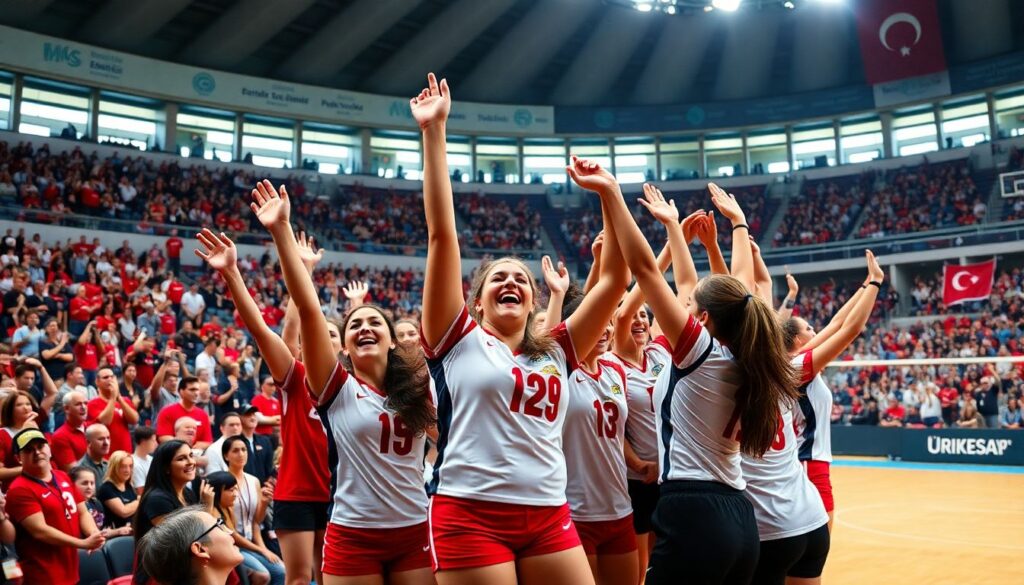
Women’s volleyball in Turkey has become a central driver of popularity and social change. High-level domestic and international performances offer strong role models, normalize women’s participation in competitive sport, and attract sponsors interested in positive, team-based branding.
At the same time, unequal facility access, social expectations in some communities, and uneven media coverage still create constraints. Safe growth requires mindful load management for young girls, protection from harassment, and realistic communication about the emotional and financial pressures of elite sport.
Benefits and positive dynamics of the women’s game
- Expanded visibility for women athletes, showing girls that competitive team sport is a respected life option.
- Club and academy interest in recruiting girls, which increases the number and diversity of volleyball camps in Turkey.
- Community pride around successful women’s teams, helping shift attitudes about travel, late training sessions, and investment in female sport.
- Safer team environments when federations and clubs adopt clear codes of conduct and appoint trained safeguarding officers.
Limitations, risks, and structural barriers for women
- Conservative attitudes in some areas limiting travel, mixed-gender environments, or sport clothing, which narrows the talent pool.
- Risk of early specialization and overtraining, especially where best volleyball academies in Turkey for juniors market aggressive schedules to ambitious families.
- Media focus on appearances rather than performance, which can distort self-image and sponsorship expectations.
- Limited post-career planning, leading to financial insecurity or abrupt transitions when playing days end.
Checklist for supporting safe women’s participation
- Choose clubs and schools with explicit safeguarding policies and female staff in visible roles.
- Encourage multi-sport participation for young girls before intensive volleyball specialization.
- Discuss educational and alternative career planning early, not only when injuries or non-selection occur.
Built Environment and Policy: Facilities, Funding, and Grassroots Access
Courts, halls, and sand fields determine who can play and at what level. In Turkey, metropolitan areas enjoy more indoor arenas, while coastal zones rely heavily on beach courts. Policy decisions by municipalities, ministries, and federations strongly influence whether volleyball is accessible beyond major cities and tourist centers.
Misunderstandings about facilities and funding often limit safe, inclusive growth. Communities may over-invest in a single showpiece arena instead of multiple modest courts, or expect that elite events alone will automatically create local participation booms. Clarifying these myths helps stakeholders design realistic, sustainable environments.
- Myth: “One world-class arena is enough for a city.” In reality, many simple school or community courts do more for participation than one elite venue that only a few clubs use.
- Myth: “Beach courts are maintenance-free.” Safe sand depth, regular raking, and boundary checks are essential to reduce ankle and knee injuries.
- Myth: “Equipment is the main cost.” Coaching education, hall time, and transport are often bigger barriers than nets and balls.
- Myth: “Urban programs can be copy-pasted anywhere.” Volleyball training programs in Istanbul rely on dense populations and public transport; rural areas need adapted formats and schedules.
- Myth: “Big tournaments automatically grow grassroots.” Without parallel school campaigns or open clinics, spectators remain passive fans rather than new participants.
Checklist for safer, more inclusive facility planning
- Prioritize multiple, modest-quality courts across neighborhoods over a single elite complex.
- Budget for coach education, maintenance, and transport subsidies, not only for construction.
- Link any major event or tournament to free community clinics and school outreach.
Visibility and Economy: Media, Sponsorships, and Fan Communities
Media coverage, streaming, ticketing, and sponsorships create an economic layer around volleyball that influences which teams and events thrive. Turkey’s combination of indoor club competition and vibrant beach circuits attracts both local brands and tourism-oriented sponsors, especially when events are staged in visually appealing coastal venues.
A typical example is a coastal tournament that bundles matches, concerts, fan zones, and youth clinics. Fans might purchase turkey beach volleyball tournaments 2024 tickets not only for elite games but also for the surrounding festival experience. Well-managed events invest part of the revenue back into junior programs, camps, or infrastructure, while poorly planned ones focus only on short-term profit.
Fan communities sustain interest between seasons through supporter groups, social media content, and volunteer activities. Safe, healthy growth depends on respectful fan behavior, transparent ticket pricing, and protecting young athletes from excessive pressure or online harassment.
Checklist for ethical and sustainable volleyball consumption
- Support clubs and events that visibly reinvest income into youth programs and facilities.
- When following players online, avoid sharing personal information or amplifying abusive commentary.
- As a parent or coach, treat tournaments as learning environments, not career-defining verdicts for juniors.
Self-Check: Are You Approaching Turkish Volleyball Culture Safely?
- Can you explain the difference between casual beach play, structured school leagues, and professional environments in Turkey?
- Do you verify coaching credentials and training loads before joining volleyball camps in Turkey or city-based academies?
- Have you considered regional gaps in access and adjusted expectations if you live outside major hubs like Istanbul?
- Are you aware of specific risks for women and juniors, and do you check for safeguarding policies where you train?
- When engaging as a fan, do you prioritize events and clubs that invest back into grassroots volleyball?
Practical Questions About the Evolution of Volleyball in Turkey
How did volleyball become popular in Turkey without a long historical tradition?
Volleyball spread through schools, universities, and multi-sport clubs that adopted global team sports. Over time, visible national teams, televised club matches, and the growth of beach events along tourist coasts turned it into a mainstream option for both recreation and performance sport.
What is the safest way for a junior player to enter Turkey’s volleyball system?
The safest entry is through school teams or community clubs with age-appropriate training and clear communication with parents. From there, families can selectively explore the best volleyball academies in Turkey for juniors that prioritize health checks, sensible workloads, and academic balance.
Are volleyball training programs in Istanbul necessary for reaching professional level?
They are not strictly necessary but can be helpful because of better access to facilities, sparring partners, and competition. Players from other regions can still progress if their coaches plan smart tournament schedules and use occasional camps or clinics to supplement local training.
How should families evaluate volleyball camps in Turkey for safety and quality?
Families should review coach qualifications, medical support, daily schedules, and rest periods. Safe camps provide written policies on injuries, hydration, and heat management, and they avoid promising guaranteed professional careers or unrealistic scouting exposure.
What are realistic expectations when joining professional indoor volleyball clubs in Turkey?
Realistic expectations include gradual role growth, intense competition for roster spots, and the need to manage education or work alongside sport. Clubs can provide structure and visibility, but they cannot guarantee long careers or national-team selection.
Do beach volleyball events meaningfully support indoor volleyball development?
They can support development when organizers run youth clinics, coach education sessions, or partnerships with local clubs alongside the event. If they focus only on entertainment and tourism, their impact on indoor participation remains limited.
What limitations should policymakers consider when planning new volleyball facilities?
Policymakers must consider ongoing maintenance, coach availability, and transport access, not just construction. Without operational budgets and local capacity-building, new courts or arenas risk being underused or unsafe over the long term.