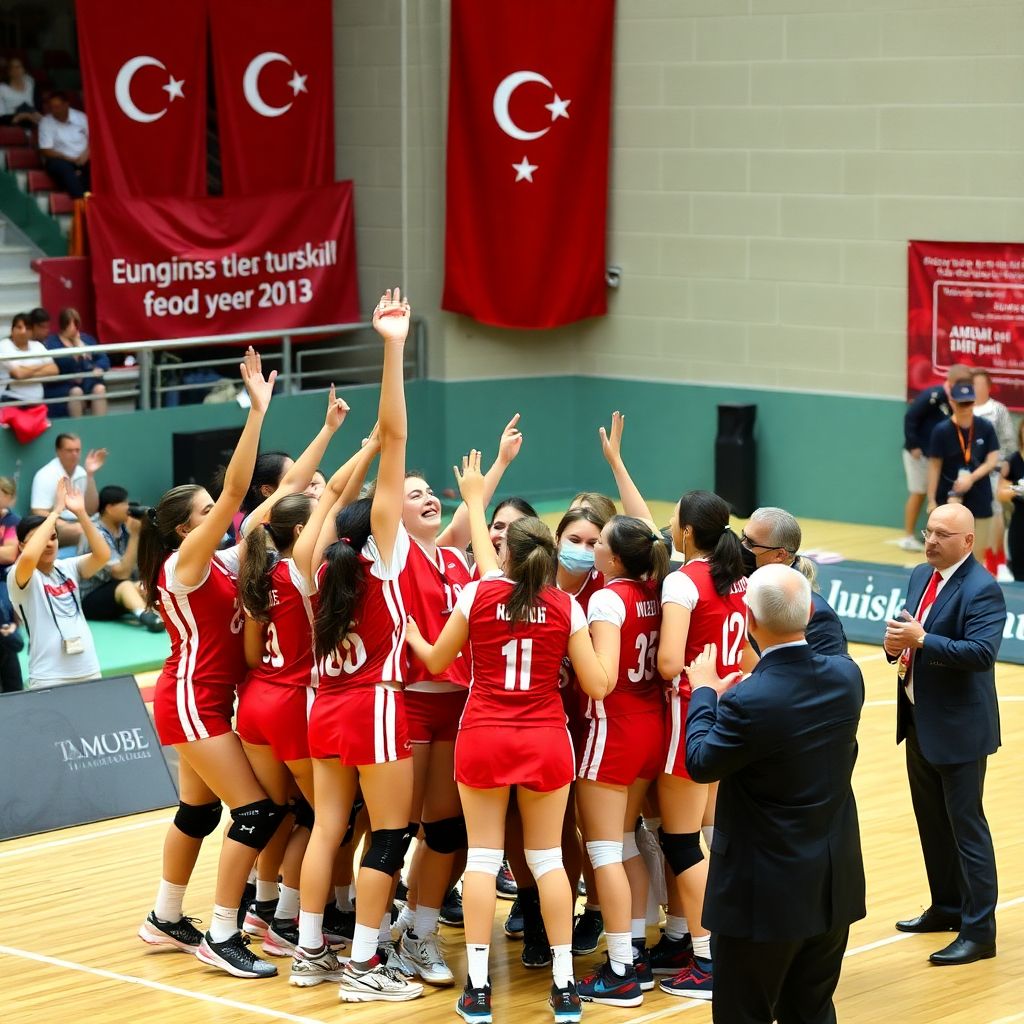
Turkey’s women’s volleyball dominance comes from a long club tradition, state and corporate-backed academies, high-intensity coaching, and a deep, competitive league. The model is powerful but risky: it depends on big sponsors, early talent selection, and constant international benchmarking, which other countries must adapt carefully to their own budgets and player pools.
Core Drivers of Turkey’s Women’s Volleyball Success
- Historic Istanbul clubs investing consistently in women’s teams.
- Integrated youth academies feeding professional rosters from early ages.
- Modern coaching methods, with global tactics localized for Sultanlar Ligi.
- Strong finance via sponsors, especially banks and corporations.
- Clear player pathways from junior leagues to top European clubs.
- Dense domestic competition and high match-level standards nationwide.
Historical Roots and the Rise of Elite Clubs
Women’s volleyball dominance in Turkey is built on multi-sport clubs that treated women’s teams as strategic projects, not side activities. Clubs like VakifBank and Eczacıbaşı invested early in facilities, coaching, and travel, turning Istanbul into a stable hub that attracts both local and foreign talent.
Over time, the women’s teams became flagships: they brought European trophies, media visibility, and brand prestige. That prestige now feeds an entire ecosystem, from fans buying vakifbank women’s volleyball merchandise to broadcasters competing for rights and platforms promoting eczacibasi vitra women’s volleyball streaming to international audiences.
The domestic league, branded as Sultanlar Ligi, grew around these elite clubs. Demand for turkish women’s volleyball league tickets increased as match quality rose, which in turn justified higher budgets for players and coaches. The feedback loop is simple: better clubs produce better matches, which attract more fans and sponsors.
This historical evolution matters for other countries because it shows a path: start with a few anchor clubs willing to invest for a decade, then build the league and youth systems around them. The Turkish experience also shows the risk of over-concentration if only a handful of clubs remain financially dominant.
Youth Academies and Early Talent Identification
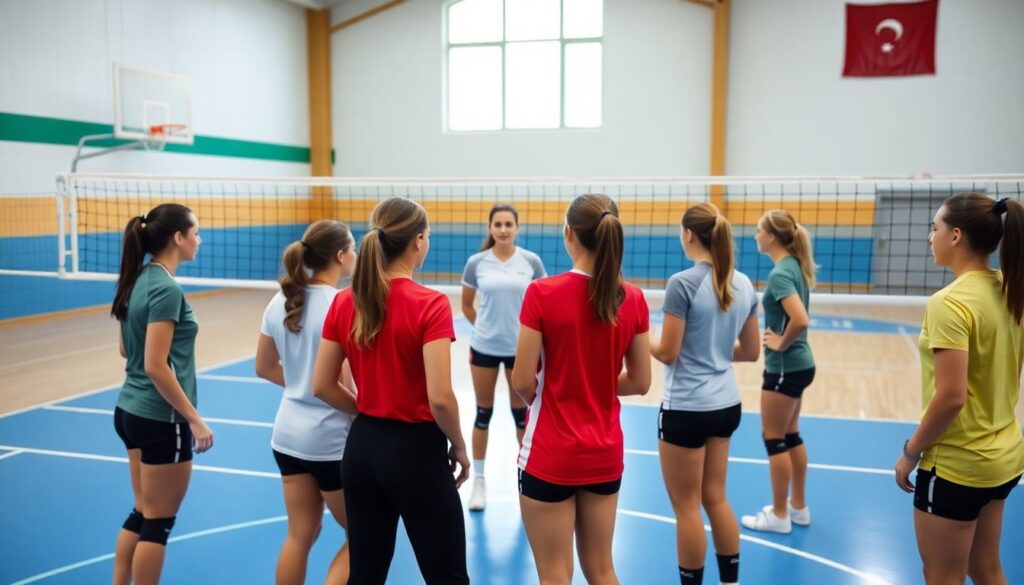
The academy system is the engine behind Turkey’s steady supply of top players. It formalises every step from a girl’s first contact with the sport to becoming a professional middle blocker or setter in Sultanlar Ligi, with clear standards and roles for each stakeholder.
- School and community outreach: Clubs run clinics in schools and municipalities, using open days and short camps to identify tall, coordinated, motivated girls. Many turkey women’s volleyball club training camps are structured as scouting events rather than just holiday activities.
- Physical and positional profiling: From early teens, players are screened for height, reach, jump potential, mobility, and game understanding. Coaches guide them toward positions (opposite, middle, libero) that match long-term physical projections, not just short-term results.
- Tiered academy levels: Academies run U13, U15, U17, and U19 squads with promotion/relegation between squads. Training volume, tactical complexity, and sports science support intensify at each tier, giving a predictable development ladder.
- Centralized technical curriculum: Clubs maintain written technical standards: serving progressions, defensive systems, and offensive patterns by age. This limits “coach lottery” risk and makes player movement between coaches and age groups smoother.
- Data-informed scouting and tracking: Match video, simple performance metrics, and injury logs are used to monitor development. Youth staff regularly compare a player’s progress against internal benchmarks and previous academy generations.
- Education and welfare integration: Agreements with schools and universities, plus transport and basic welfare support, reduce family resistance to high training volume and frequent travel, especially in major hubs like Istanbul and Ankara.
These mechanisms differ in ease and risk. Outreach and basic camps are low-cost and easy to replicate with minimal infrastructure. By contrast, systematic profiling and multi-tier academies demand long-term funding and organizational discipline, and carry the risk of early selection bias if criteria are too rigid.
Coaching Philosophy, Training Methods and Tactical Trends
Coaching in top Turkish women’s clubs blends international expertise with local specifics. Many head coaches and assistants have worked abroad; they import ideas, then adapt them to the Turkish player profile, match tempo, and federation rules. Several recurring application scenarios illustrate this philosophy.
- Serve-receive pressure in domestic league play: In Sultanlar Ligi, serve toughness is a clear separator between title contenders and mid-table teams. Training blocks emphasize jump float and hybrid serves, reception patterns, and out-of-system offense. This is easier to copy than big-budget roster building, but still demands quality servers and specialists.
- System training for European competitions: When preparing for CEV Champions League or Club World Championship, Turkish clubs simulate foreign playing styles in practice: faster Italian offenses, taller Russian blocks, or Brazilian defensive coverage. The risk is overloading players with multiple systems, but the reward is tactical flexibility on the biggest stages.
- Role clarity for star imports: Many elite foreigners join leading Turkish clubs. Training systems are designed so star scorers get clear patterns and set distributions, while local players focus on serve-receive, defense, and team structure. This approach is implementable elsewhere if clubs accept that not every player must be a primary scorer.
- Sports science and load management: GPS, jump-counting, and individualized conditioning are standard in top programs. Coaches coordinate with medical and performance staff to balance high-intensity sessions with recovery. The risk for smaller clubs is partial adoption: using intense drills without proper monitoring can raise injury rates.
- Progressive decision-making drills: Turkish coaches increasingly favour game-like scenarios over isolated technique. Small-sided games, scoring constraints, and time pressure build reading of the block and court vision. This method is low-cost and relatively easy to adopt, but it requires coach education to design effective constraints.
- Scouting-driven game plans: Detailed opponent analysis informs serving targets, block schemes, and substitution plans. Staff use video platforms and shared databases to prepare “if-then” plans for rotations. The main risk is overcomplication if staff overload players with information rather than clear priorities.
These coaching approaches are generally easier to implement than the financial model: they rely more on know-how than on money. However, they do require coordinated staff, time for planning, and a club culture that accepts long-term development over short-term scoreline chasing.
Finance Models: Sponsorship, M&A and Club Sustainability
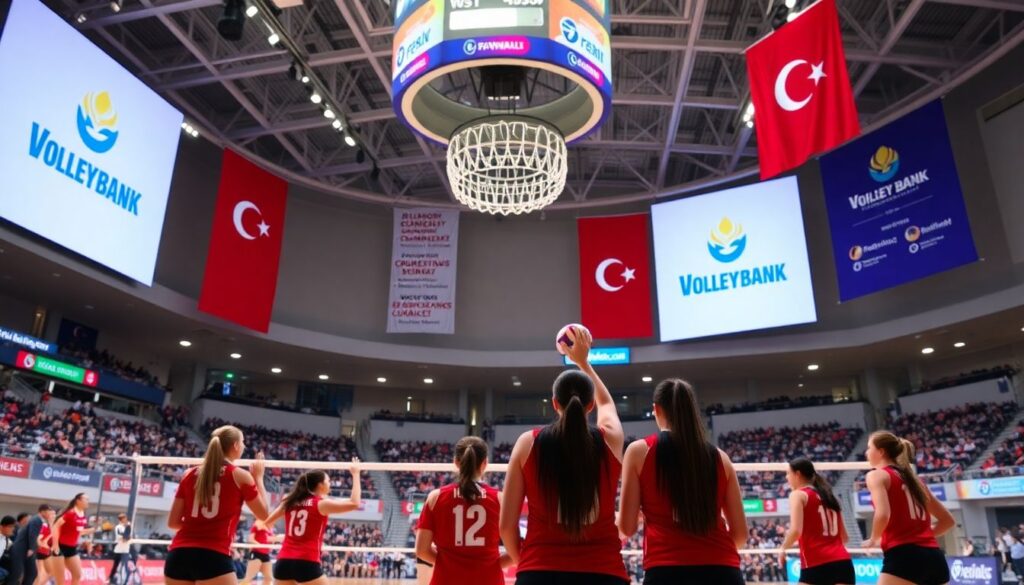
Financial architecture is where Turkish women’s volleyball is both most advanced and hardest to copy. Many leading clubs rely on deep-pocket sponsors (banks, large industrial groups) and municipal or institutional support. This provides the resources for top salaries, facilities, staff, and extensive travel calendars.
At the same time, the money model introduces specific risks. Dependence on one or two core sponsors makes clubs vulnerable to economic shifts or rebranding decisions. The growing popularity of sultanlar ligi women’s volleyball betting odds and media rights deals brings additional revenue, but also requires strict integrity and compliance structures to avoid conflicts.
Advantages of Turkey’s finance approach
- Big-club stability: Anchor clubs can commit multi-year contracts to players and coaches, reducing churn and creating better planning horizons.
- World-class staffing: Budgets allow hiring specialist coaches, analysts, medical staff, and mental-performance coaches, raising daily standards.
- International competitiveness: High payrolls and travel budgets support rosters that can contend for European and global titles.
- Marketing and fan experience: Investment in venues, media production, and fan engagement boosts demand for turkish women’s volleyball league tickets and merchandise.
- Grassroots spillover: Corporate-backed clubs can afford wide outreach programs, youth leagues, and scholarships, expanding the player base.
Limitations and risk factors in the model
- Dependency on a few sponsors: If a title sponsor changes strategy, a club can lose a large portion of its budget overnight.
- Cost inflation for smaller clubs: Top-club spending can push salaries up across the league, creating pressure on mid- and lower-table teams.
- Competitive imbalance: Persistent financial gaps may lead to predictable title races, making some matches less attractive for neutrals.
- Regulatory and integrity exposure: Growing links with media and betting markets require strong governance to mitigate match-fixing or conflict-of-interest risks.
- Complexity of mergers and acquisitions: When companies merge or rebrand, club names, colors, and even home cities may change, which can alienate long-time fans.
For countries looking to replicate the Turkish path, a moderated version of this finance model is usually safer: diversify sponsors, set league-level financial rules, and phase investment growth so that clubs build capacity without relying on a single benefactor.
Player Pathways: From Domestic Leagues to International Markets
Turkey’s system creates visible, attractive pathways: a talented player can progress from school sport to a major academy, to Sultanlar Ligi, then to top European or Asian clubs and national team duty. However, certain recurring mistakes and myths can damage careers and destabilize clubs if left unchecked.
- Mistake: chasing early transfers abroad
Some young players and agents treat any foreign offer as automatically better. In reality, leaving a structured Turkish program too early can reduce quality of training and match play. A crowded foreign roster or weak league may slow development. - Myth: only Istanbul clubs matter
The narrative that only a few Istanbul giants produce elite players ignores strong regional clubs and university programs. Over-concentration on “brand-name” academies can cause local talent to relocate too soon, disrupting education and family support. - Mistake: undervaluing role players
Obsession with being a primary scorer leads some players to reject roles as defensive specialists or serving subs. Turkish clubs that succeed internationally often rely on specialists; other systems that copy the model should make non-star roles prestigious and clearly defined. - Myth: betting markets reflect real quality
While sultanlar ligi women’s volleyball betting odds incorporate some performance data, they are not a reliable measure of a player’s long-term potential or a club’s development quality. Using odds as a scouting shortcut is both risky and ethically questionable. - Mistake: ignoring dual-career planning
Many players underestimate education and post-career planning, assuming professional incomes will last indefinitely. Turkish clubs increasingly link with universities; copying systems abroad should include clear academic and vocational pathways. - Myth: streaming visibility equals success
Good eczacibasi vitra women’s volleyball streaming numbers help with sponsorships, but they do not replace daily training quality. Over-focusing on social media presence can distract young athletes from fundamentals.
Domestic Competition Structure and Match-Level Standards
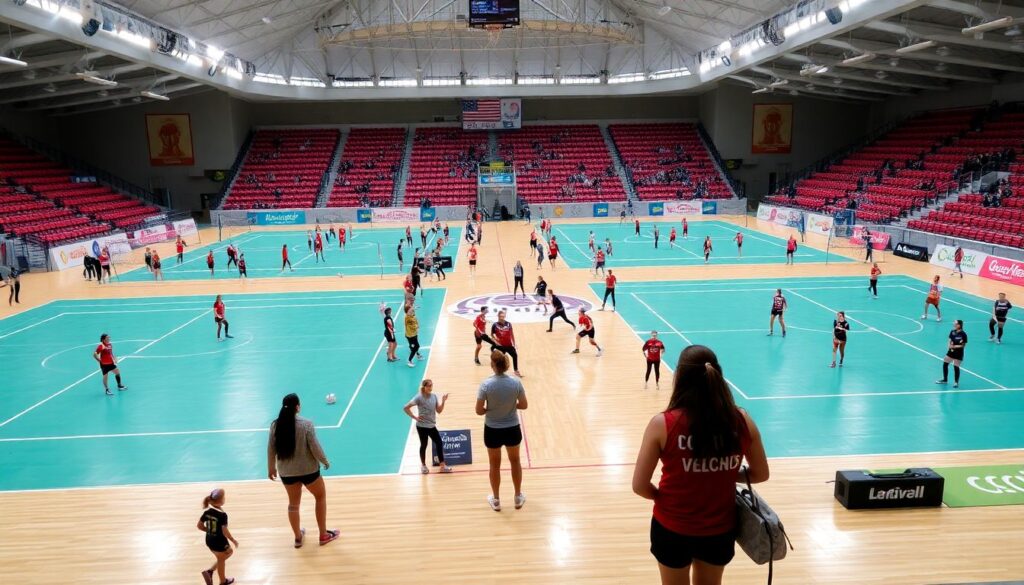
The competitive structure around women’s volleyball in Turkey is layered but coherent. Local leagues feed regional competitions; national youth championships connect to club academies; and Sultanlar Ligi sits at the top with promotion-relegation links below. The result is many meaningful matches at different levels every season.
Consider a simplified season scenario for a mid-table club:
- The senior team competes in Sultanlar Ligi, facing top clubs home and away.
- Youth teams play in age-group national leagues with playoffs that coincide with school holidays.
- Academy prospects occasionally train with the senior squad, especially during lighter fixtures.
- Streaming of selected matches and local TV coverage provide video for analysis and talent scouting.
In pseudo-structure, the club’s season planning can be summarized as:
for each week in season:
    plan senior matches (Sultanlar Ligi + cups)
    schedule academy sessions (technical + physical)
    assign 1-3 academy players to senior training
    review video from previous matches (all levels)
    adjust tactical focus based on opponent profile
This structure is relatively easy to copy at a basic level: any federation can connect youth leagues to a top division and align calendars. The higher-risk, harder-to-copy part is sustaining high match-level standards: enough strong clubs, quality coaching, and media coverage to maintain intensity every week and justify fan interest in both live attendance and streaming.
Concise Practical Answers on Replicating the Model
Which parts of Turkey’s model are easiest to copy?
Coach education, game-like training methods, and basic academy structures are easiest. They mostly require organized planning, not large budgets. Federations can start with shared technical curricula and aligned competition calendars before attempting big sponsorship deals.
How should smaller countries start with youth academies?
Begin with regional hubs instead of many small academies. Focus on clear age groups, simple physical profiling, and basic welfare support. As results and participation grow, add more tiers and specialized staff.
Are big corporate sponsors essential for success?
They accelerate progress but are not the only path. A diversified base of medium sponsors, municipalities, and educational partners is safer. Copy the discipline of multi-year planning from Turkish clubs, not necessarily their exact budget size.
What is the main risk in early talent selection?
Over-reliance on height and short-term results can exclude late developers. Keep multiple entry points into the system and review selection criteria regularly, combining physical data with technical and psychological evaluation.
How can leagues raise match standards without huge budgets?
Concentrate talent into fewer, stronger teams; standardize coaching education; and invest in video analysis and scouting. Even low-cost streaming can raise tactical demands and accountability for coaches and players.
Should clubs use betting and odds data in decisions?
It is better to avoid relying on betting data. Internal statistics, video, and physical testing give cleaner, more relevant information without the integrity risks associated with gambling markets.
How important is international competition for club growth?
Continental tournaments are powerful catalysts: they expose clubs to different styles and attract sponsors. However, entering too early without depth and preparation can damage confidence; build domestic strength first, then expand into Europe or other regions.