
Women’s volleyball in Turkey is driven by a dense club ecosystem, early talent identification, stable sponsorship, and modern coaching tightly linked to the national team. Even with limited resources, smaller clubs and schools can copy key principles: structured training, clear competitive pathways, strategic partnerships and low-cost data-informed coaching habits.
Core drivers behind Turkey’s women’s volleyball rise
- Deep club culture connecting schools, academies and professional teams in one pathway.
- Systematic talent identification starting from primary school age groups.
- Sponsorship-backed financial models that prioritise stability over short-term glory.
- Integration of sports science into daily training, even in basic, low-cost forms.
- Competitive league architecture that guarantees tough matches for young talents.
- Close coordination between leading clubs and the national team in selection and planning.
- Strong fan engagement, from turkey womens volleyball league tickets to streaming and merchandise.
Historical evolution: from grassroots to national prominence
Women’s volleyball in Turkey can be understood as an ecosystem rather than just a league. It covers school competitions, local clubs, professional teams, university programmes and the national squad, all increasingly aligned around a shared idea: develop technically strong, mentally resilient players capable of competing internationally.
Historically, the game grew from school and community gyms, often supported by municipalities and educational institutions. Over time, multi-sport clubs and corporate-backed teams invested in women’s volleyball as a flagship sport, turning domestic rivalries into high-level laboratories where Turkish and foreign players improved side by side.
Today, the phrase “hidden engine” describes how these structures quietly power visible success. While fans focus on a VakifBank Eczacibasi Fenerbahce women volleyball live stream or packed derbies, the real engine is the steady production of young athletes, coaches and analysts moving through well-defined layers of competition.
For other regions, the lesson is not to copy the exact Turkish model, but to adopt its logic: build from available local structures, link them in a clear pathway, and ensure that every level-from a school gym to a professional court-serves long-term player development.
Club infrastructure and the talent identification pipeline
In the Turkish context, club infrastructure means the full environment that surrounds a player: training halls, coaching staff, medical support, academic cooperation and direct links to competitions. The talent pipeline is the sequence through which a girl moves from beginner to elite: school → local club → academy → pro team → national squad.
This pipeline works through several reinforced mechanisms:
- School-club partnerships – PE teachers and local coaches share information about promising girls, inviting them to club try-outs and weekend skill sessions.
- Age-group teams in most clubs – U12, U14, U16, U18 squads train with similar methodology, making transitions between age categories smoother for players.
- Professional clubs running academies – Big names sponsor satellite academies in different districts, widening the search radius beyond major city centres.
- Regional and national tournaments – Youth championships act as talent showcases; scouts track players across several seasons, not just one event.
- Shared training philosophy – Many clubs teach similar technical fundamentals (serve-receive quality, blocking discipline), so players adapt quickly when transferring.
- Educational support – Study-friendly schedules and agreements with schools or universities keep girls in the sport instead of forcing them to choose between volleyball and education.
- Graduated responsibility – Older academy players occasionally train with senior squads, accelerating their readiness for professional minutes.
For lower-resource environments, an “infrastructure” does not require multiple gyms or full-time staff. A single reliable venue, a basic weekly schedule, cooperation with nearby schools and a clear progression of age groups can form an effective pipeline if consistently maintained.
Financing the game: sponsorship, wages and sustainable models
Financially, Turkish women’s volleyball relies on a mix of club budgets, sponsorships, modest ticketing, broadcasting and, increasingly, digital engagement. Instead of chasing one big revenue source, clubs stack multiple smaller but predictable streams that collectively fund coaching staff, player wages, travel and basic sports science support.
- Corporate and institutional sponsors – Many top clubs are backed by banks, universities or large brands. These partnerships prioritise brand visibility and community impact, making women’s volleyball a strategic marketing platform.
- Matchday and fan income – Revenue from turkey womens volleyball league tickets is rarely the biggest line item, but it signals local support, justifies facility investment and helps cover operational costs.
- Media rights and live streaming – Domestic and international audiences tune in to a VakifBank Eczacibasi Fenerbahce women volleyball live stream, which supports sponsorship value and motivates platforms to invest in broadcast quality.
- Merchandise and club identity – Fans who search for a turkey womens volleyball jersey buy online are investing not only in clothing but in the club’s story and identity, creating recurring, emotionally anchored revenue.
- Travel and competition partnerships – Collaborations, including turkish airlines euroleague women volleyball tours packages, can bundle flights, tickets and experiences, opening extra marketing budgets and tourism-related support.
- Balanced wage structures – Clubs that succeed long term tend to avoid extreme salary spikes, instead investing steadily in youth programmes, assistant coaches and medical staff.
In low-budget contexts, the same principles apply at a smaller scale: secure one or two long-term local sponsors, build a simple season ticket model, sell basic but consistent merchandise, and align with regional travel or education partners to reduce costs rather than chasing unrealistic revenue.
Mini-scenarios for adapting the Turkish model with limited resources
Scenario 1: Small-town club with one gym – Partner with two local schools for talent ID, run mixed-age evening practices, offer a simple annual pass instead of per-match turkey womens volleyball league tickets, and sell low-cost scarves or training shirts at school events.
Scenario 2: University-based programme – Use student coaches and sports science interns, stream matches on free platforms to mirror the visibility of a VakifBank Eczacibasi Fenerbahce women volleyball live stream and attract small sponsors, while offering academic scholarships as a non-cash “wage”.
Scenario 3: Regional development centre – Position your gym as one of the best volleyball academies for girls in Turkey’s region-level sense: schedule periodic open trials, provide coaches’ clinics for surrounding schools, and negotiate discounted transport with local companies instead of paying full travel fees.
Modern coaching, sports science and player development practices
Modern coaching in Turkish women’s volleyball blends technical repetition with tactical understanding, sports psychology and individualised physical preparation. Even clubs without large budgets adapt core sports science principles-monitoring training loads, tracking simple performance indicators and adjusting practice intensity over the season.
To evaluate these methods, it is useful to separate advantages from practical constraints.
Advantages of current coaching and sports science trends
- Structured skill progression, where each age group focuses on specific technical and tactical milestones.
- Use of video review-sometimes just a tablet or phone-to give immediate visual feedback to players.
- Integration of strength and conditioning to support jump height, speed and injury prevention.
- Emphasis on mental skills: resilience after errors, communication under pressure and role clarity.
- Data-informed decision-making in rotations, substitutions and opponent scouting, even using simple tally charts.
- Closer cooperation between head coaches, assistants, analysts and medical staff in planning weekly workloads.
Limitations and realistic workarounds in resource-limited clubs
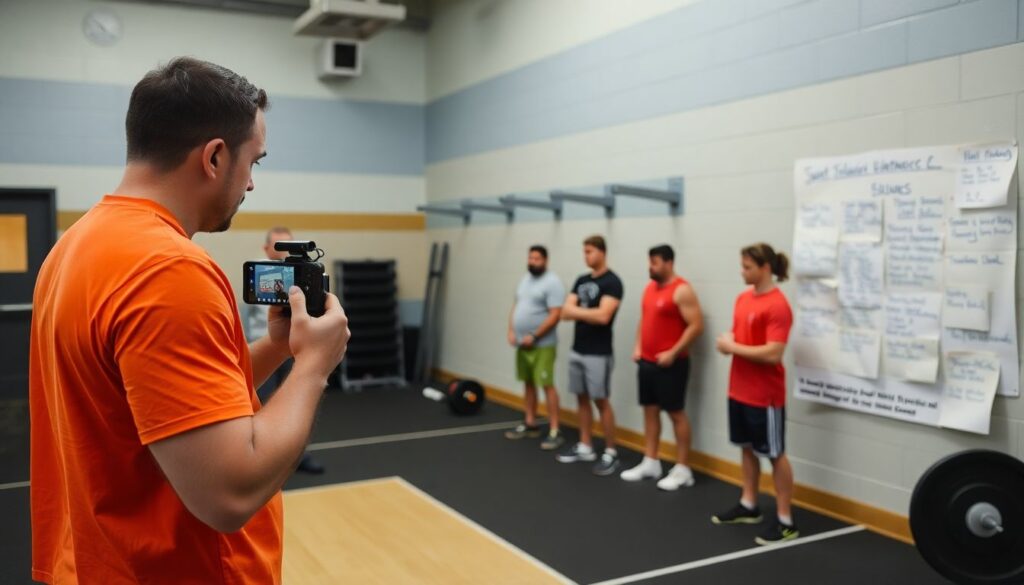
- Lack of specialist staff can be mitigated by cross-training coaches in basic strength work and injury prevention.
- Limited technology can be replaced by phone-based video and simple spreadsheets instead of advanced analytics systems.
- Tight facility schedules require planning short, high-quality sessions instead of long, unfocused practices.
- Access to sports medicine may be restricted; simple screening routines and recovery education become critical.
- Youth players juggling school and volleyball need flexible training windows and homework-friendly practice structures.
Competitive architecture: league format, youth competitions and promotion
Competitive architecture describes how leagues, cups and youth events are arranged to test players at the right difficulty level. In Turkey, women’s volleyball benefits from multiple tiers of senior leagues plus regular age-group competitions, ensuring that promising players face challenges appropriate to their development stage.
Misunderstandings about this architecture can lead to strategic mistakes elsewhere.
- Myth: More matches always mean better development – Without structured rest and training blocks, extra fixtures can cause fatigue and stagnation instead of growth.
- Myth: Only the top league matters – Lower divisions and youth tournaments are crucial laboratories where players learn to lead, not just to survive.
- Mistake: Overloading young stars – Giving a teenager full minutes in both senior and youth competitions without load management increases injury risk and burnout.
- Mistake: Ignoring local rivalries – Regional derbies and school competitions can attract fans comparable in passion to professional games, feeding the pathway with motivation and visibility.
- Myth: Promotion is the only success metric – For development-focused clubs, gradually producing players for higher-level teams can be a more sustainable goal than immediate promotion.
- Mistake: No clear off-season plan – A poorly used off-season wastes a chance to build strength, fix technique and experiment with new systems in low-pressure settings.
For administrators with limited means, prioritising well-organised, recurring local tournaments may deliver more value than chasing a place in distant, expensive competitions.
Translating club success to the national team: strategy and selection
The power of Turkish women’s volleyball lies in how club success feeds the national team. Selection goes beyond picking the best scorers; it’s about blending complementary skills, roles and personalities developed in different club systems into one coherent tactical identity at international level.
In practice, national-team staff monitor club seasons closely, noting not just statistics but also how players respond in high-pressure matches, how they communicate, and whether their club roles align with potential national-team responsibilities. Regular training camps and friendly matches act as a bridge where players adjust from club systems to national systems.
Below is a simplified “pseudo-algorithm” that reflects how this translation can work, even for smaller countries learning from Turkey’s example:
1. Define national-team game model (tempo, serve pressure, block-defence style).
2. Map club players to model roles (primary receiver, transition attacker, serving specialist, etc.).
3. Track players all season for:
   - Consistency in role execution
   - Response to pressure in key matches
   - Health and training load status
4. Invite slightly more players than needed to camp, including at least one prospect per position.
5. Use camp and friendly games to test:
   - On-court chemistry between key combinations
   - Adaptability to tactical adjustments
6. Finalise squad not only on current form, but on role balance and future development needs.
7. Maintain feedback loop with clubs:
   - Share physical and tactical profiles
   - Align on load management for key athletes.
Even with fewer resources, federations can adopt the same logic by designating a small pool of priority clubs, sharing basic data templates with them and scheduling regular communication on player progress instead of relying on last-minute selection before major tournaments.
Practical answers for coaches, administrators and analysts
How can a small club start a talent pipeline with just one court?
Limit age groups to two or three bands, coordinate with nearby schools for referrals, and run short, focused sessions four to five days per week. Use simple criteria-effort, basic coordination, attendance-to select players for more advanced training.
What is the most realistic first step in sports science for low-budget teams?
Begin with consistent monitoring: record training attendance, session intensity and any pain or injury notes. This basic log helps adjust workload and is more impactful early on than expensive devices or complex testing.
How should we prioritise spending: foreign players, local stars or youth development?
For long-term impact, channel a fixed share of the budget into youth and coaching quality, then selectively add experienced players who can mentor younger teammates. Avoid signings that consume funds without clearly improving training standards.
How can we attract sponsors if our matches are not on television?
Stream games online using simple equipment, highlight community impact and girls’ participation, and offer sponsors integrated visibility-on jerseys, social media and local events-rather than promising large broadcast audiences.
What can schools do to support women’s volleyball without extra funding?
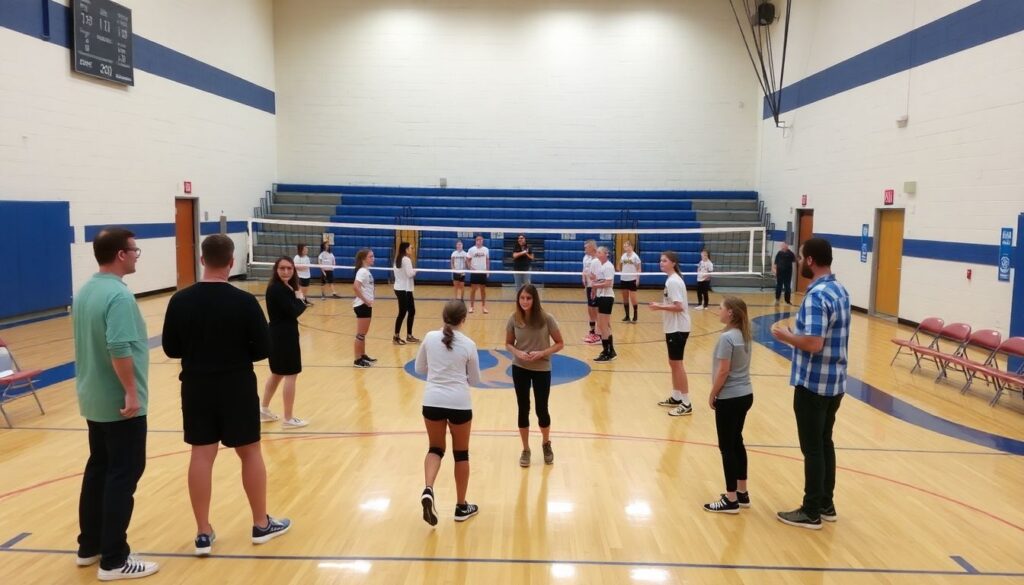
Adjust PE curricula to include volleyball fundamentals, grant gym time for local clubs, and recognise student-athletes’ achievements publicly. These steps cost little but strengthen the link between education and sport.
How do we keep teenage girls from dropping out of volleyball?
Provide flexible training schedules around exams, foster a supportive team culture, and maintain clear communication with parents about education and sport. Offering leadership roles or mentorship to older players also reinforces their sense of purpose.
How can analysts add value if they lack advanced statistics software?
Track a few key indicators manually-serve errors, reception quality, side-out success in specific rotations-and share concise, actionable summaries with coaches. Depth of insight often depends more on focus than on technology.