Why Surfaces Change Everything for Turkish Players
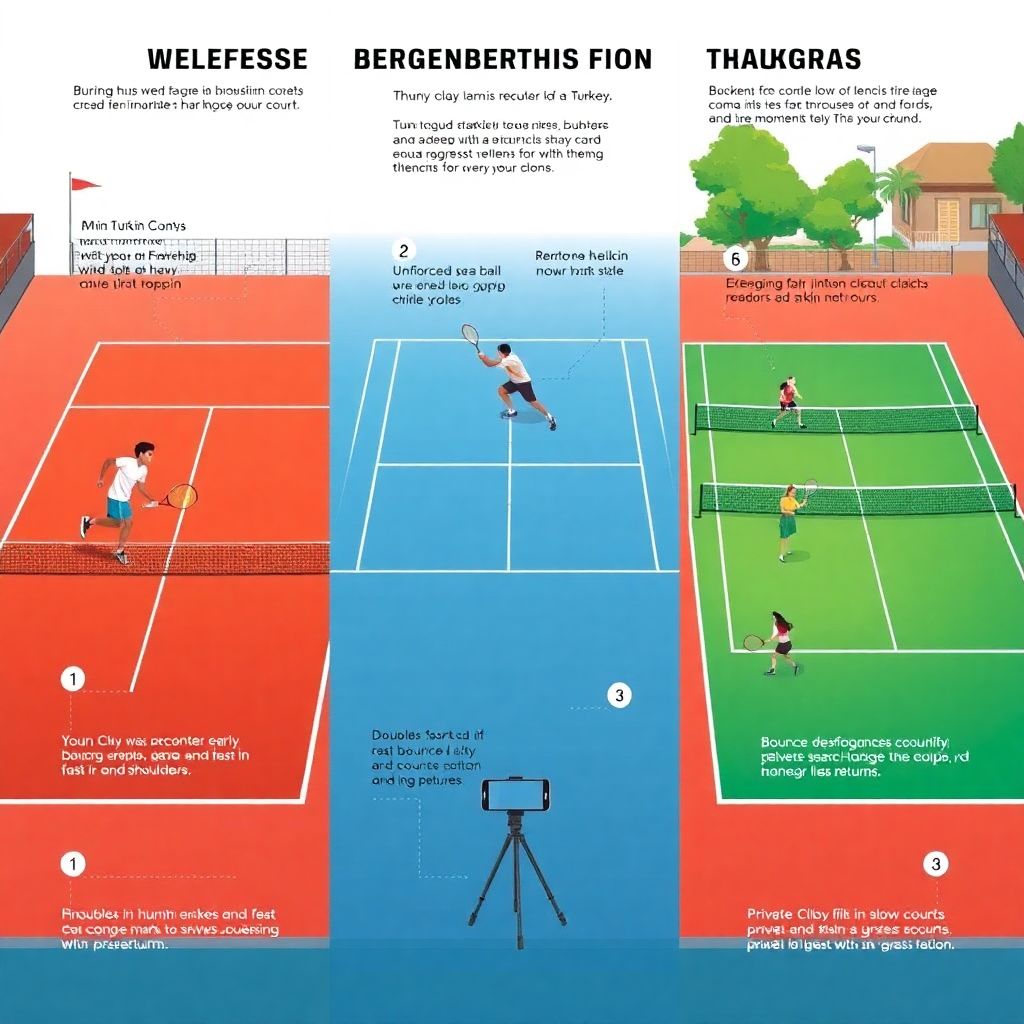
Clay, grass, and hard courts aren’t just different colours under your feet; they change ball speed, bounce height, and even how your body gets tired. In Turkey, where summer heat, coastal humidity and indoor winters mix, players learn early that one game style won’t survive on every surface. Clay rewards patience and spin, hard courts highlight timing and first‑strike tennis, while grass demands lightning reactions and low, skidding shots. The pros who rise fastest here are usually those who treat each surface as a separate “language” they consciously learn to speak.
Inspiring Stories: From Local Club to Global Calendar
Many young Turkish players start on slow municipal clay, then suddenly face a blazing fast hard court in Antalya or an improvised grass court abroad. One junior from Izmir tells how he lost three tournaments in a row after switching surfaces. Instead of blaming “bad luck”, he filmed every match, tracked unforced errors by bounce height, and discovered he mistimed anything above his shoulder on hard. Six weeks of specific drills later, he reached two finals in a row. His secret wasn’t talent; it was curiosity and brutal honesty about what each surface exposed.
Clay vs Hard: Training Like a Scientist
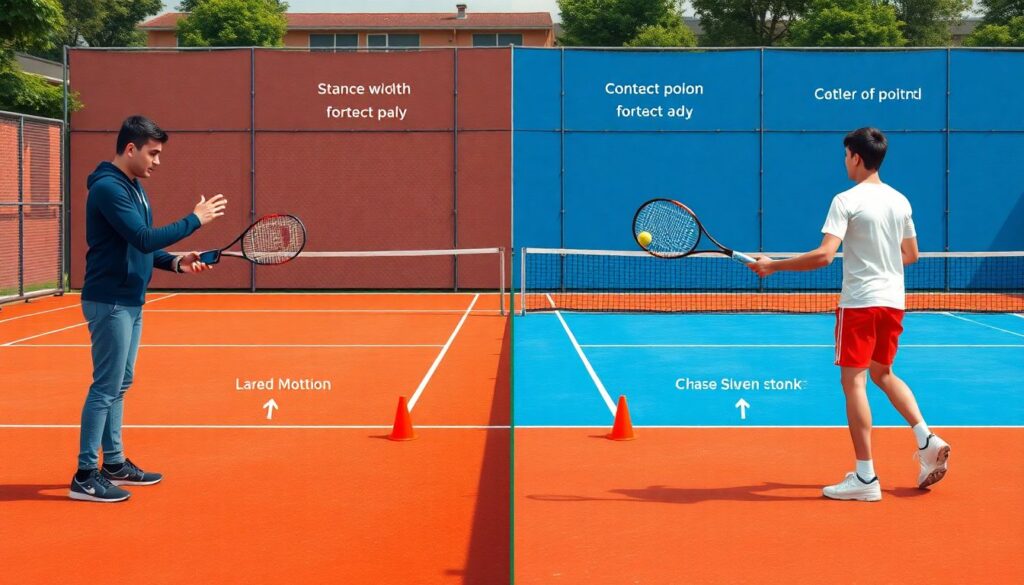
The best Turkish coaches treat clay vs hard court as a lab experiment. They tweak one variable at a time: stance width, racket head speed, or contact point. Players use slow‑motion video on a phone, marking where the ball lands and how high it bounces with cones or chalk. In this mini‑“research project” approach, every session answers a concrete question, like “Can I keep my balance when sliding into a wide forehand?” That’s why clay vs hard court tennis academies in Turkey increasingly integrate biomechanics workshops instead of just endless rallying.
– Track how many balls you hit *on the rise* vs *falling* on each surface
– Log unforced errors by shot type: drive, moonball, slice, drop shot
– Note fatigue: legs vs lower back vs shoulder after each session
Grass Courts: Rare, But A Secret Weapon
Grass courts in Turkey are limited, yet that scarcity can become a competitive edge. Players who occasionally train on grass develop razor‑sharp split steps, compact swings and a love for finishing points at the net. One Istanbul doubles team rented a tiny private grass court twice a month before a European swing. They rehearsed only three patterns: serve‑volley, chip‑charge and low slice returns. Results? They didn’t magically win every match, but tie‑break stats flipped: from losing most of them to winning two out of three. Grass forced them to make faster decisions everywhere else too.
Gear Hacks: Using Equipment to “Edit” the Surface
Adapting isn’t just about footwork; it’s also about smart gear choices. On gritty clay, players tweak string tension up a notch for control and choose shoes with deeper herringbone patterns; on hot outdoor hard courts, they look for cushioning and cooling fabrics. When searching for the best tennis shoes for clay grass hard courts, Turkish players often pick hybrid‑sole models, then *customize* grip with strategic sole scuffing or even sandpaper on overly slick new shoes. The goal isn’t one perfect setup, but a small toolkit that lets you quietly “edit” the surface to your style.
– Keep two string setups: spin‑friendly for clay, tighter control for fast hard
– Use a slightly heavier overgrip on humid coastal days to prevent slips
– Rotate insoles: cushioned for hard, lighter and thinner for clay feel
Courts and Cities: Thinking Beyond Your Local Club
There’s a hidden advantage in how Turkey’s geography mixes climates. Coastal resorts build fast hard courts for tourism; inland cities still favour classic red clay; a few elite clubs experiment with grass or artificial turf. Ambitious players don’t just ask “Where can I train?” but “Where can I change surfaces often?” Some even call tennis court builders near me hard clay grass specialists to understand how local weather, sub‑base and maintenance speed up or slow down the court. Knowing *why* a surface plays the way it does helps you adjust tactics before the warm‑up is over.
Successful Projects: Multi‑Surface Thinking in Action
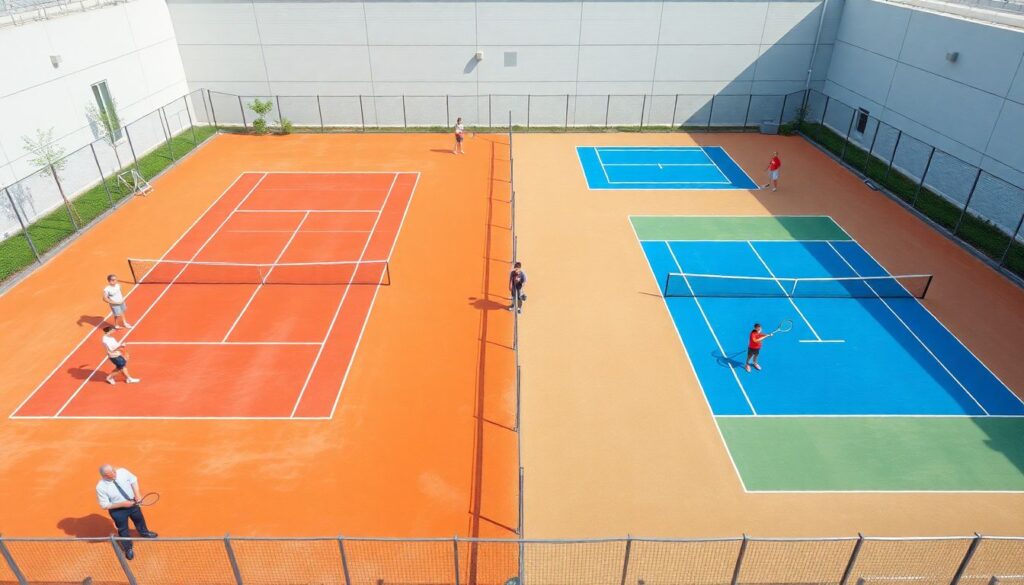
One standout project in Ankara turned a simple club renovation into a development lab. Instead of copying standard designs, they analysed tennis court construction cost clay grass hard and chose a mix: two clay, two acrylic hard, plus one experimental synthetic that mimics grass bounce. Juniors rotate through surfaces every week with “theme passports”: one week focused on defensive sliding, another on first‑strike patterns. Match stats over two seasons showed players from this club adapted 30–40% faster to new venues compared with peers, particularly in the first round of foreign tournaments.
Unconventional Ideas for Turkish Players
If court access is limited, you can still simulate surfaces creatively. Tape a low “net” line on a wall to train grass‑style low hitting. Use old, dead balls on concrete to mimic heavy clay conditions. Mix in street futsal for sliding confidence and ankle strength. Some players even run “surface days” with teammates: everyone must finish points at the net like on grass, or use only high, heavy topspin as if on slow clay. Think of it as language immersion: you speak “Clay”, “Grass”, or “Hard” for a day until that accent feels natural.
Smart Shopping: Let Gear Work For You
Modern e‑commerce makes adaptation cheaper if you shop with a plan. When you look for a tennis racket for clay and hard courts buy online platforms let you compare swing weight, string patterns and stiffness in detail; add filters for arm‑friendliness if you’re logging heavy hard‑court hours. Many Turkish players now build two “virtual bags”: a control‑oriented setup for windy, fast coastal courts and a spin‑friendly one for humid indoor bubbles. The trick is to save your specs and notes, turning every purchase into a step in a long‑term experiment, not an impulse buy.
Learning Resources and Next Steps
To push beyond local routines, Turkish players mine global knowledge while staying grounded in local reality. They watch slow‑motion breakdowns from pro tours, then test those ideas on their own mixed surfaces. Online platforms, including clay vs hard court tennis academies in Turkey, now offer remote analysis: you send practice footage, get tailored drills for each surface, and track progress on simple dashboards. Combine that with honest self‑stats and occasional camps in different cities, and you essentially build your own mini‑institute of surface adaptation—no federation budget required, just deliberate curiosity.