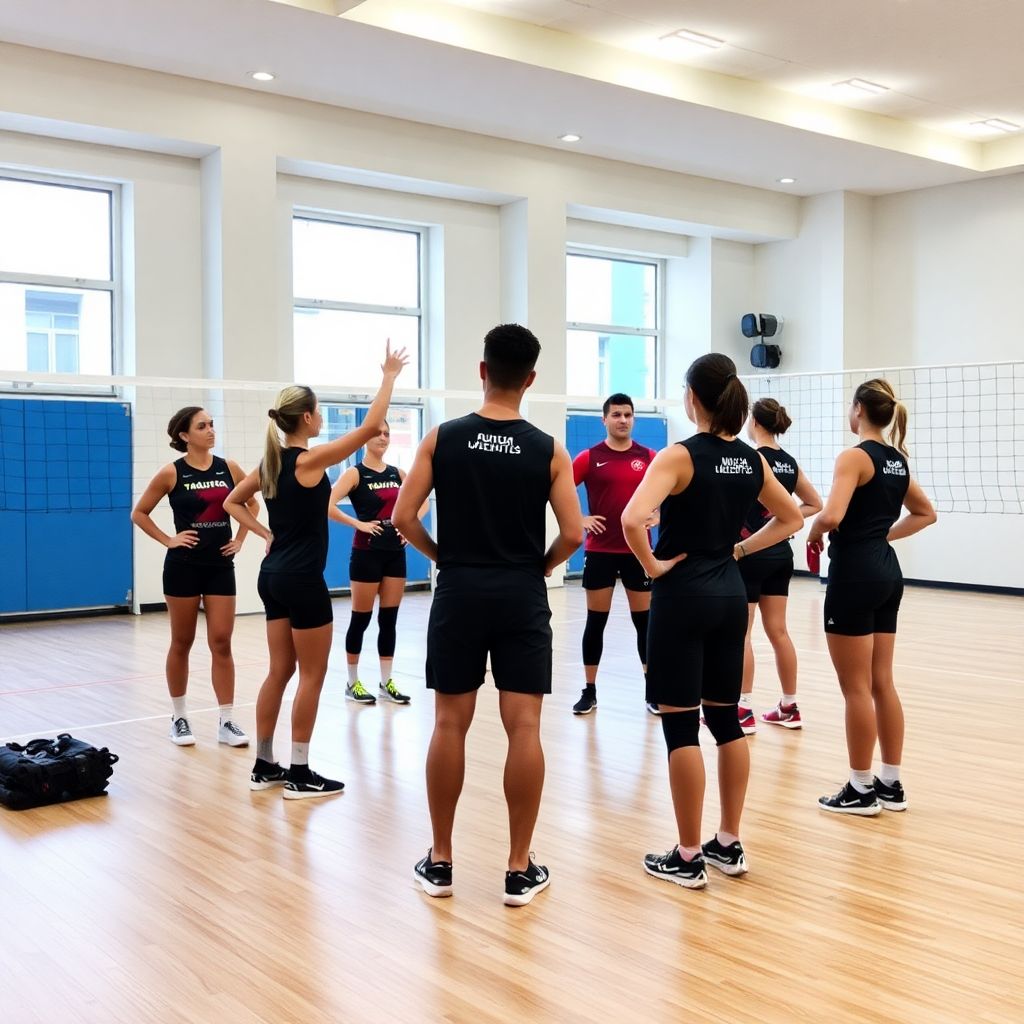
Injury prevention in modern volleyball means building systems that reduce risk without killing performance: structured warm-ups, smart workloads, strong shoulders/knees/ankles, and fast access to medical care. Leading Turkish clubs combine sports physiotherapy for volleyball players, professional volleyball strength and conditioning, and coach education into integrated, easy-to-execute daily routines.
Practical summary for immediate implementation
- Standardise a 10-15 minute neuromuscular warm-up across all teams and age groups.
- Run basic pre-season screening and use simple red-amber-green risk flags, not complex reports nobody reads.
- Track weekly jumps, sprints, and total high-intensity actions to adjust volume, not just minutes on court.
- Protect shoulders, ankles, and knees with 2-3 focused micro-sessions per week instead of long separate workouts.
- Schedule weekly coordination between coaches, S&C, and medical staff; decide one shared plan, not three separate ones.
- Plan recovery and travel routines before the season, so players do not improvise on away trips.
Injury epidemiology in Turkish club volleyball: what the data shows
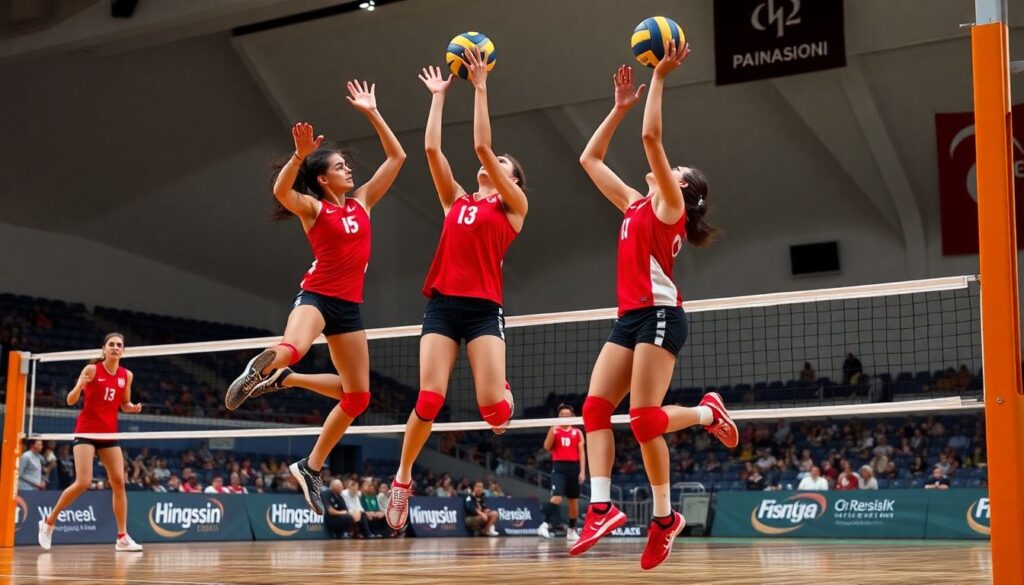
In Turkish club volleyball, the most common injuries cluster around the shoulder, ankle, and knee. Even without publishing detailed epidemiology tables, staff in the best volleyball clubs in Turkey agree that most time-loss incidents are related to jumping and landing, plus repetitive hitting loads in attackers and servers.
Compared with older, more informal Turkish volleyball training methods, modern systems emphasise tracking where and when injuries appear over the season. Typical patterns: ankle sprains in early-season tournaments when players are not fully conditioned; shoulder overload in congested fixture periods; and patellar or patellofemoral pain during heavy jump-training blocks.
Clubs that rely only on general volleyball injury prevention programs often miss these nuances. Leading organisations run simple internal audits every mesocycle: list all new injuries, their mechanism (contact vs non-contact), training vs match, and position. This low-tech epidemiology guides progress from generic prevention to role-specific solutions that are easier to implement and explain to coaches.
From a risk perspective, doing no analysis leaves you blind, while over-analysing with complex software can paralyse decision-making. Turkish clubs that get this right choose a middle path: one shared spreadsheet or dashboard updated weekly, reviewed in a short meeting, and used directly for next week’s training decisions.
Pre-season screening and individualized risk profiling
Pre-season screening in Turkish volleyball has shifted from exhaustive medical testing toward focused, actionable checks. The goal is not to predict every injury, but to identify obvious risk clusters and build simple, individual “rules of care” that staff can actually follow during a busy season.
- Medical and history review. Short questionnaire on previous injuries, surgeries, and current pain. Output: clear notes like “previous left ACL – avoid two heavy plyometric days in a row” rather than long diagnostic language.
- Movement screens. Basic single-leg squat, drop jump, and lunge patterns, filmed if possible. Instead of scoring systems, staff label patterns as “acceptable” or “needs coaching”, which is much easier to translate into drills.
- Strength and power baselines. Simple protocols such as 3-5 rep sets in key lifts (trap-bar deadlift, split squat, push press) plus vertical jump tests. These are repeated mid-season to track changes and detect fatigue or asymmetry.
- Shoulder health checks. Active range of motion, rotator cuff strength with elastic bands, and scapular control in push-up and plank. For hitters, any painful arc or big left-right difference immediately triggers an individual prehab circuit.
- Risk profile summary. Each player receives a one-page profile with 2-3 key risks and 2-3 clear actions (e.g., “extra posterior chain on Mon/Thu; ankle stability before every practice”). This emphasises behaviour, not labels.
- Communication to coaches. Instead of sending full reports, staff translate results into practical constraints: maximum weekly jump volumes, recommended rest days, and specific exercise “non-negotiables.” This keeps implementation friction low.
A mid-level Istanbul club, for example, cut its screening battery from over an hour per athlete to about 25 minutes while improving follow-through, simply by focusing on tests that would directly change training or medical decisions.
Load monitoring and periodization strategies used by top Turkish teams
Leading Turkish organisations no longer see periodization as a fixed plan printed before the season. Instead, they use live data on jumps, sprints, and perceived fatigue to adjust weekly loading. This is one area where modern volleyball injury prevention programs can either simplify life or overload staff with useless metrics.
Most top teams track a mix of external and internal load using tools that match their budget and staffing. At the high end, clubs integrate wearable jump counters, GPS for transition runs, and wellness apps. Smaller clubs combine training logs with session-rating-of-perceived-exertion and simple jump counts by role (e.g., total attack and block jumps per practice for each middle blocker).
Typical application scenarios include:
- Pre-season accumulation blocks. Higher total workload but with clear caps on daily jumps and heavy lifting sessions. Coaches coordinate spike drills with professional volleyball strength and conditioning staff to avoid overload on any single day.
- In-season congested weeks. When facing two or three matches, staff cut high-impact training volume by 30-50% and replace some court conditioning with low-impact bike or pool work, especially for veterans and players with a long injury history.
- Return-to-play integration. After injury, players progress through individual conditioning sessions with quantified loads before rejoining full team practice. Staff compare the return-to-play week’s jump and sprint totals to a typical “normal” week to ensure a gradual ramp-up.
- Position-specific planning. Liberos, setters, middles, and opposites follow different weekly templates. For example, heavy lower-limb days are staggered so that the first-choice middle blocker is freshest for key matches, while bench players handle more load to stay ready.
- Micro-adjustments based on readiness. If morning wellness or subjective fatigue is poor, coaches keep tactical quality but trim set numbers and jump intensity while protecting core technical objectives.
Compared with rigid, calendar-based plans, this adaptive model is slightly harder to organise but carries much lower injury risk and better buy-in once staff see that the data directly answers daily questions like “Who should do less jumping today?”
Targeted prevention for shoulder, ankle, and knee injuries
Most Turkish clubs now accept that generic warm-ups are not enough. Teams that perform best over long seasons run compact, targeted micro-sessions focused on shoulders, ankles, and knees. These can fit into 10-15 minutes, two to three times per week, often tacked on before or after regular practice.
For implementation, the biggest challenge is time. Players and coaches tolerate short, predictable blocks far better than long extra sessions. Smart clubs therefore spread prevention over the week, attaching it to existing routines like video meetings, positional skills work, or cool-downs.
Benefits of focused joint-specific prevention
- Shoulder health: Improves overhead stability and deceleration for attackers and servers through elastic band external rotations, Y-T-W raises, and controlled eccentric work, typically 2 sets of 10-12 reps per exercise.
- Ankle resilience: Enhances proprioception and landing control with single-leg balance on unstable surfaces, multi-directional hops, and controlled decelerations integrated into technical drills.
- Knee robustness: Builds strength in quadriceps and posterior chain via split squats, Romanian deadlifts, and Nordic hamstring variations, plus technique-focused jump-landing progressions.
- Role-specific dosing: Allows middles and opposites, who accumulate more jumps, to receive extra exposure, while liberos focus more on lateral movement and deceleration.
- Easy integration: Exercises require minimal equipment (bands, boxes, small weights) and can be led by assistant coaches once protocols are clear.
Limitations and common risks when implementing
- Overly complex routines: Long or highly technical programs reduce adherence; simpler menus with 4-6 key exercises per joint work better.
- Lack of progression: Running the same circuit for months stops providing stimulus; clubs need clear weekly or biweekly progressions in reps, tempo, or load.
- Poor integration with training load: Heavy lower-limb prevention on the same day as intense jump training can increase, not reduce, joint stress.
- No ownership by players: If athletes see prevention as punishment rather than performance support, they will cut corners when staff are not watching.
- Inconsistent supervision: Leaving routines entirely unsupervised, especially with younger squads, leads to sloppy technique and lower protective effect.
Ankara-based clubs often report success by dedicating one “shoulder day” and one “lower-body day” per week, with prevention work slotted immediately before low-intensity tactical practice to reduce additional time demands.
Integrating sports medicine, S&C, and coaching in daily workflows
The injury-prevention practices that actually work in Turkey share one feature: staff alignment. Clubs that merely hire more specialists without integrating them often increase friction and confusion. In contrast, teams that coordinate sports physiotherapy for volleyball players with S&C and coaching staff see smoother routines and higher compliance.
Typical integration errors and myths include:
- “More experts automatically mean better injury prevention.” Without a clear decision hierarchy, conflicting advice from physios, S&C coaches, and technical staff can paralyse action. The fix: one person (often the head coach or performance director) makes final calls after a short, structured input round.
- “Medical information must stay secret.” Over-protecting data prevents effective load management. Top Turkish clubs define what can be safely shared (e.g., functional restrictions, green/amber/red status) so practices can adapt while respecting privacy.
- “Prevention belongs only to the gym.” Some staff believe prevention equals extra strength sessions. In successful systems, prevention is embedded in every volleyball context: landing cues in blocking drills, shoulder-friendly serving progressions, and warm-up structures aligned with on-court work.
- “High-performance tools are too complex for intermediate teams.” Many ideas from elite professional volleyball strength and conditioning can be simplified. Instead of full force-plate analysis, smaller clubs use jump mats or app-based timers; instead of big data platforms, they rely on shared spreadsheets.
- “We can fully outsource prevention to external clinics.” While external sports medicine support is valuable, day-to-day micro-decisions happen on court. Even when using outside sports physiotherapy for volleyball players, clubs still need in-house routines and coach education.
One Izmir club improved cooperation by holding a 15-minute pre-training “huddle” three times per week, where medical, S&C, and coaches quickly reviewed player status, adjusted drill intensity, and assigned any individual prehab.
Recovery, travel management, and in-season maintenance protocols
Injury prevention does not end when practice does. Turkish clubs that survive long domestic and European campaigns invest heavily in structured recovery and smart travel routines. This is where even the best-designed training plans can fail if sleep, nutrition, and regeneration are left to chance.
A simple but effective weekly in-season template might look like this:
- Match day: Short mobility-based warm-up, high focus on post-match hydration and a protein-rich meal within two hours, followed by 10-15 minutes of low-intensity cycling or walking for players with high minutes.
- Post-match day: “Recovery practice” with 20-30 minutes of light ball work, mobility circuits, and soft-tissue techniques, while non-playing squad members complete a higher-intensity conditioning block.
- Mid-week heavy day: Highest total practice and S&C load, but finished at least 48 hours before the next match when possible. Knee- and ankle-focused prevention is woven into warm-ups and cooldowns.
- Travel routines: For away games, staff set fixed rules: compression garments for flights or long bus rides, movement breaks every 60-90 minutes, and a short “arrival activation” with dynamic mobility and low-level plyometrics.
- Sleep and screen hygiene: Coaches encourage no major tactical meetings late at night, limit device use in the hour before sleep on travel days, and reinforce consistent bedtime windows.
Case example: a Bursa club that struggled with back-to-back away fixtures implemented a basic travel checklist and saw fewer reports of muscle tightness and “heavy legs” after long bus trips, with no expensive equipment required.
End-of-article implementation checklist
- Define one standard warm-up and 2-3 short joint-specific prevention circuits for all teams.
- Introduce a lean pre-season screen and convert findings into clear, shared constraints for coaches.
- Start tracking basic weekly load (jumps, intensity, sRPE) and review it in a standing staff meeting.
- Set fixed recovery and travel routines and communicate them to players before the season begins.
- Clarify roles: who has final say on daily training load, return-to-play, and individual modifications.
Answers to common implementation concerns
Do we need expensive technology to start injury prevention?
No. You can begin with structured warm-ups, simple jump counts, and basic wellness questions. Technology adds detail but is not essential. Consistency in applying low-tech methods matters more than buying advanced tools you cannot maintain.
How can smaller Turkish clubs copy what elite teams do?
Focus on principles, not gadgets: standardised routines, clear communication, and basic load monitoring. Adapt professional Turkish volleyball training methods into shorter, simpler versions that fit your staff and facility constraints.
How much extra time should prevention sessions take each week?
Most clubs can protect players with around 20-30 minutes total per training day, split between warm-up, micro prevention circuits, and cooldown. The key is embedding them into existing practice, not scheduling long separate sessions.
Who should lead injury-prevention work in the club?
Ideally, a performance coordinator or head coach owns the process, with input from medical and S&C staff. One clear leader avoids mixed messages and ensures that volleyball injury prevention programs are executed as designed.
What is the role of external clinics and physiotherapists?
External experts can handle complex cases and guide return-to-play, but daily prevention must live inside the club. Use outside sports physiotherapy for volleyball players to design frameworks that coaches and S&C staff can run on court.
How quickly can we expect to see fewer injuries?
Minor improvements, such as less soreness and better session quality, often appear within weeks. Meaningful changes in injury rates usually require at least one full season of consistent application and periodic review.
Are youth teams too young for structured prevention?
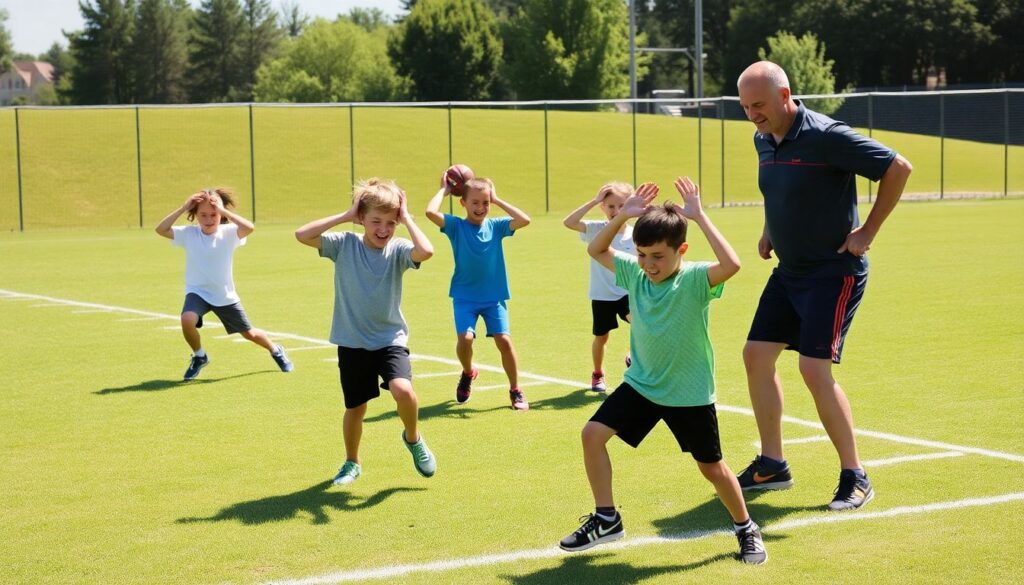
No. Youth squads benefit greatly from early exposure to good movement patterns and basic strength work. Keep programs playful and technique-focused, but still apply the same principles of load management and joint-specific care.