From Street Courts to Structured Systems: How Turkey Got Here
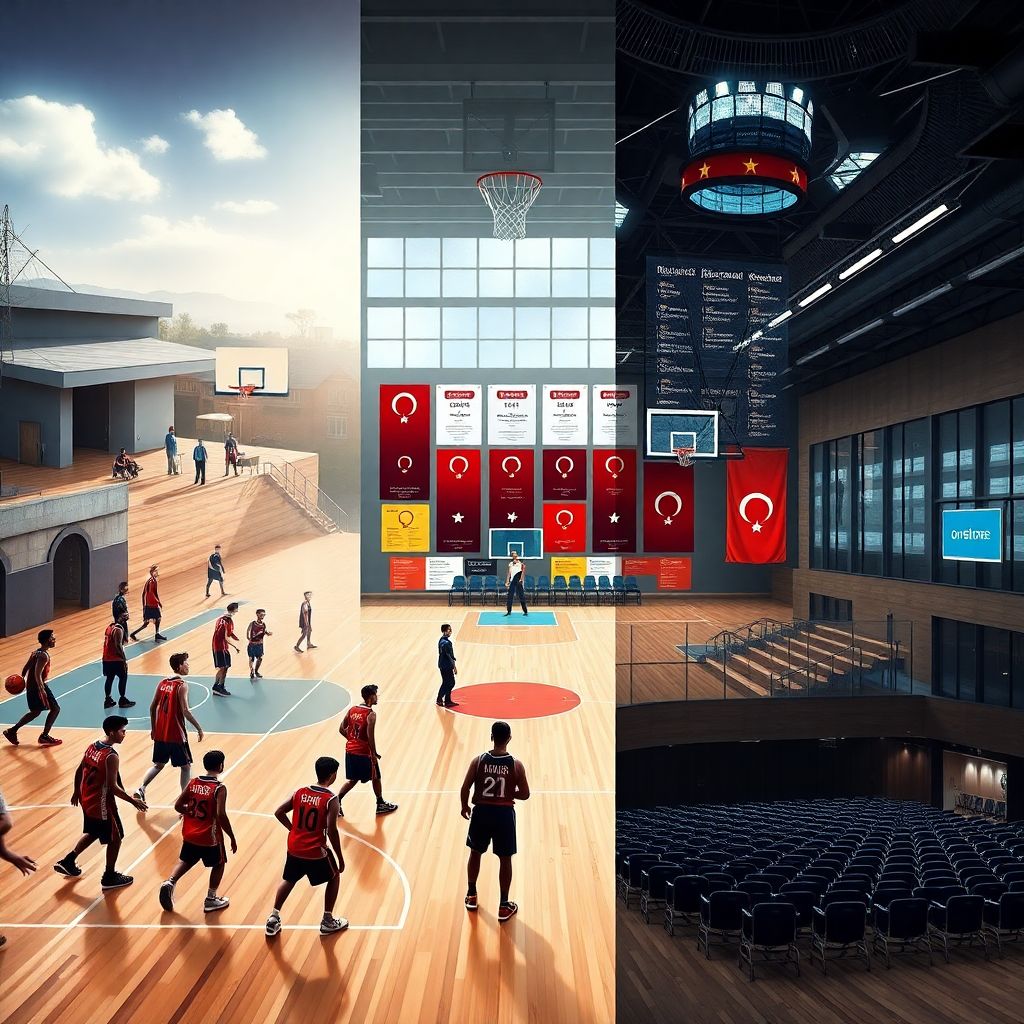
Turkish basketball didn’t wake up one morning with polished academies, shooting labs and biometric tracking. The ecosystem you see in 2026 grew out of three big phases:
1. 1980–2000: Club-first era
Big clubs like Efes, Fenerbahçe, Galatasaray and Beşiktaş dominated player development through junior teams. There were “schools” of basketball, but they were essentially marketing extensions of pro clubs, with limited sports science and almost no individualized load management.
2. 2000–2015: National-team effect and import of know‑how
The 2010 FIBA World Championship in Turkey was a catalyst. Strong national-team runs pushed federations and private investors to take development more seriously. Many coaches went to Spain, Serbia and the US for coaching clinics, then brought back concepts like:
– Structured player development models (U12–U22 pathways)
– Positionless basketball principles
– Periodized strength and conditioning
3. 2015–2026: Academy boom and tech integration
Around 2015, private Turkish basketball academies for international students started appearing around Istanbul, Ankara, Izmir and Antalya. By 2026, the top centers are operating almost like mini NCAA programs or European youth performance institutes, with:
– Video-analytics departments
– Sports psychologists on retainer
– Nutrition protocols and sleep tracking
– Linked data systems from U14 to pro level
Now, let’s dissect how these academies actually grow future pros—and how they differ from one another.
—
Different Approaches Inside Turkish Basketball Academies
Today’s academies in Turkey broadly fall into three overlapping models. The best ones blend all three, but they still lean in one direction philosophically.
1. Club-Integrated Academies
These are attached to big professional organizations—think of the best basketball academies in turkey for professionals that serve Fenerbahçe, Anadolu Efes, Darüşşafaka or Tofaş.
Core characteristics:
– Clear pathway: U14 → U16 → U18 → reserve/pro squad.
– Game-model driven: Training follows the tactical identity of the pro team (e.g., heavy pick‑and‑roll usage, aggressive ICE coverage, switching defenses).
– High competition exposure: National league, EYBL, ANGT, regional tournaments.
Upside:
If you’re already high-level, this is where your development is tightly aligned with what a pro coach actually wants. Match context, scouting, and tactical periodization are built in.
Downside:
You develop in a highly specific system. A big who can short‑roll and pass may be prized; a traditional back‑to‑basket 5 might get marginalized early. There’s less “experimental” space.
—
2. Independent Skill-Development Academies
These are more like tech labs for skills. Often run by notable player development coaches, they work with athletes from many clubs, sometimes on a short-cycle basis (4–12 week blocks).
Features you’ll typically see:
– Micro-skills emphasis:
– Footwork sequences for step-backs and sidesteps
– Finishing packages off two feet vs. length
– Advantage creation (hesitations, deceleration, deceptive pickups)
– Small-sided games: 1v1, 2v2, 3v3 with strict constraints (e.g., no dribble handoffs, must finish with weak hand).
– Data-informed drills: Shot charts, touch maps, and possession efficiency metrics used to customize workouts.
Pros:
Incredible for filling gaps—weak-hand finishing, pull‑up shooting, pick‑and‑roll reads. The environment is less about winning games, more about upgrading your “skill stack”.
Cons:
Limited live 5v5 exposure and less emphasis on team concepts. Without a club context, some players end up as “workout stars” who don’t translate as well to structured competition.
—
3. Residential / Boarding Academies for Youth and International Players
This is the fastest-growing segment, especially for turkey basketball training camps for youth players who come in for summer or full-year programs.
What defines them:
– Boarding + academics: Athletes live on or near campus and attend partner schools or international high schools.
– Multi-lingual environment: English is the working language, especially for turkish basketball academies for international students.
– 360° development: Basketball, strength & conditioning, sports psychology, nutrition, life skills.
These centers are often where families from Europe, the Middle East, and sometimes Africa or Asia enroll in elite basketball academy in istanbul to combine FIBA-style fundamentals with exposure to European club scouts and US college recruiters.
—
Technology Inside Turkish Academies: Tools, Advantages, Trade-Offs
What Tech Looks Like in 2026
You’ll typically find some combination of:
– Optical or wearable tracking (accelerometers, gyros, heart rate)
– Shooting analytics systems (release angle, entry angle, arc consistency)
– Force plates and jump mats (monitoring RSI, peak power, asymmetries)
– Video breakdown platforms (Synergy-type tools, AI-tagged clips)
– Wellness and readiness apps (RPE, sleep, soreness, HRV inputs)
—
Benefits of Tech-Driven Development
1. Load Management and Injury Risk Reduction
By tracking acute vs. chronic workload, academies can adjust practice density and intensity. Over time this:
– Reduces soft-tissue strains
– Helps identify when an athlete is near a red zone for overload
– Allows more intelligent tapering before tournaments
2. Objective Skill Measurement
Instead of “your jumper looks better,” coaches can show:
– Catch-and-shoot 3P% from each spot
– Pull‑up efficiency in pick‑and‑roll vs. isolation
– Finishing success vs. length at the rim
It changes conversations from opinions to data-backed decisions.
3. Tactical Feedback Loops
With tagged video, players can see not just “you missed the rotation,” but *how often* they miss X coverage vs. Y action. That supports better tactical IQ and pattern recognition.
—
Limitations and Hidden Costs of Technology
Despite the hype, tech isn’t a magic fix.
– Overreliance on numbers: Some coaches default to metrics without context. A player’s usage rate may look inefficient because they’re asked to self-create at the end of broken possessions.
– Skill sterilization: If every shot is “optimized,” players can lose creativity—floaters, wrong-foot finishes, “non-ideal” angles that still win games.
– Financial burden: High-end systems raise the cost of basketball academies in turkey for foreigners, especially when tuition has to cover hardware, software, and staff training.
The best academies treat tech as a decision-support tool, not a decision-maker. They combine analytics with old-fashioned film sessions, on-court feel, and the coach’s experienced eye.
—
Comparing Approaches: How Different Academies Actually Train
Training Microcycles
Most competitive academies use periodized weekly microcycles:
– High-intensity technical days: Skill work + high-speed small-sided games
– Strength-dominant days: Gym emphasis with on-court low-load shooting
– Tactical days: 5v5 sets, ATO situations, BLOB/SLOB plays
– Recovery/regeneration: Mobility, pool, light shooting, film only
Club-integrated academies anchor everything around game schedules. Independent skill academies focus on pre-season and off-season blocks. Residential academies have more stable year-round structures, similar to US prep schools.
Philosophical Differences in Player Development
– European positional fundamentals vs. NBA-style versatility
Some Turkish environments still prefer defined roles: pure 1, 2, 3, 4, 5. Others, influenced by NBA spacing and switching, train every wing to initiate offense and every big to stretch the floor.
– Tactical discipline vs. creative freedom
A club that competes in EuroLeague youth tournaments might prioritize low turnover rates and system execution. An independent academy might tolerate more mistakes if it means a guard learns to manipulate coverages and extend advantages.
– Game-based learning vs. drill-based learning
Old-school programs still rely heavily on on-air drills and pattern repetition. Modern academies push for representative learning design: more live reads, more messy situations, fewer “perfect” rehearsals.
—
How to Choose the Right Turkish Academy or Camp
If you’re a parent or player looking at turkey basketball training camps for youth players or a long-term program, here’s a practical way to structure the decision.
Key Evaluation Criteria
– Coaching Staff Quality
– Do they hold credible FIBA or FECC certifications?
– Have they actually placed players into pro teams or NCAA programs?
– Are there full-time player development coaches, not just team coaches?
– Development Pathway
– For club academies: Is there a documented route into U18 and pro rosters?
– For residential academies: Do they have partnerships with clubs or schools?
– For international students: How is visa, schooling, and language support handled?
– Training Environment
– Player-to-coach ratio at practices
– Access to weight rooms, recovery facilities, sports medicine
– Competitive exposure—leagues, tournaments, showcases
– Philosophical Fit
– Does the playing style match your long-term profile?
– Is there a clear plan for your position, not just generic training?
—
Practical Recommendations Before You Commit
– Request full practice videos, not highlight reels. You want to see how coaches communicate, correct, and structure sessions.
– Ask about individual development plans (IDPs): Every serious academy should be able to show you a 6–12 month plan with specific KPIs (e.g., 3P% targets, playmaking reads, physical benchmarks).
– Check track record by position: An academy great with point guards might not be as strong at developing mobile bigs or 3‑and‑D wings.
– Talk to current and former players: They’ll tell you about playing time politics, transparency, and whether promised resources actually exist.
For families from abroad, specifically looking at the cost of basketball academies in turkey for foreigners, make sure you clarify:
– What’s included (tuition, housing, meals, insurance, school fees, transportation)
– Hidden costs (tournament travel, extra skill sessions, physio, visa extensions)
– Refund or transfer policies if things don’t work out
—
What 2026 Looks Like: Current Trends in Turkish Basketball Academies
1. Blending European and US Development Models
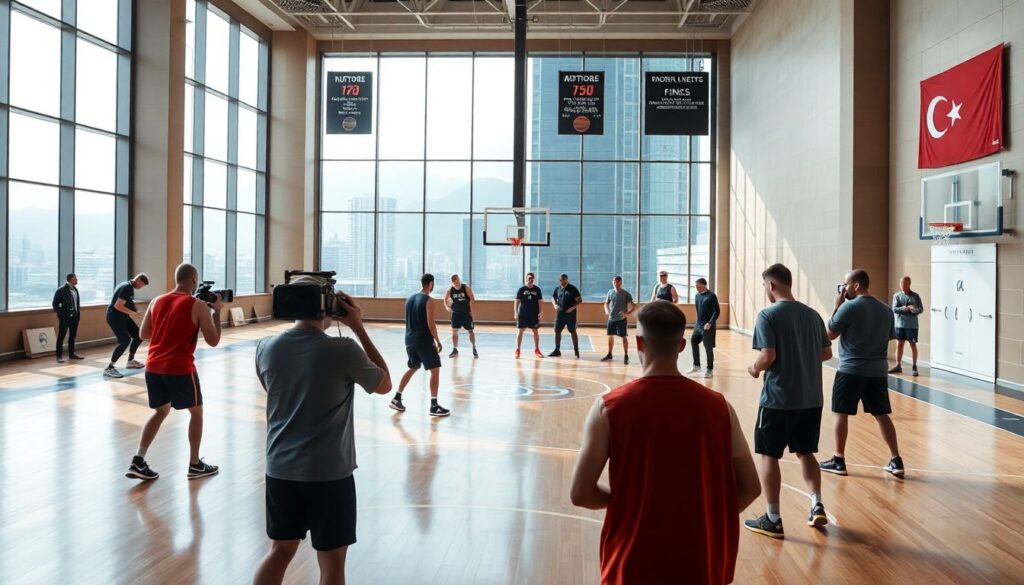
You’ll see more hybrid setups:
– European-style team concepts and spacing
– US-style exposure culture: showcases, mixtapes, individual branding
– Dual pathways: FIBA pro route + NCAA eligibility preserved for as long as possible
Some of the best basketball academies in turkey for professionals now have in-house academic counselors just to navigate NCAA, NAIA, and JUCO rules, while also maintaining pathways into BSL and EuroCup clubs.
2. Positionless, Skill-Heavy Rosters
The 2026 meta inside high-end Turkish academies:
– Wings from 6’5″–6’9″ trained to defend 1–4, handle in pick‑and‑roll, and shoot off movement.
– Bigs drilled on short-roll playmaking, handoff hubs, and spacing to the corners.
– Guards pushed to become multi-level scorers with advanced PnR reads against all major coverages (drop, switch, ICE, show-and-recover).
The days of hiding non-shooters in the corner are nearly over. Even at U14, if you can’t attack closeouts and hit open threes, your ceiling narrows quickly.
3. Sports Science Moving From “Nice to Have” to “Standard”
By 2026, the leading Turkish academies operate with:
– Baseline movement screenings (FMS-style) at intake
– Regular monitoring of growth spurts to safeguard against overuse injuries (especially in rapidly growing teens)
– Nutrition protocols tailored for Ramadan, travel, and congested calendars
The competitive gap is increasingly defined by how well programs manage growth, fatigue, and recovery—not just who trains the hardest.
4. Internationalization and Language Shift
With more turkish basketball academies for international students, English has become the default language in many sessions. Coaches switch seamlessly between Turkish and English; play calls are often in English to reflect international norms.
For players, this has a subtle but important effect:
– Easier transition to European leagues or US colleges
– Comfort playing with diverse teammates
– Better access to global basketball terminology and resources
—
Final Thoughts: What Really Creates a Future Pro in Turkey
When you strip away branding and slogans, the Turkish academies that consistently produce pros share a similar core:
– Clear, long-term development plan that goes beyond one season or one tournament
– Balance of structure and freedom, where players learn systems but still explore solutions creatively
– Integrated support teams—coaches, S&C, analytics, psychology, nutrition working from the same playbook
– Real competition, not just pretty workouts or social-media-ready clips
If you’re planning to enroll in elite basketball academy in istanbul or elsewhere in Turkey, focus less on logos and more on:
– Who is actually coaching you every day
– How they measure progress
– How they handle failure and adversity
– And whether the environment feels like a place you can grow for 2–4 years, not just survive one season
That combination—smart structure, modern tech used intelligently, and a healthy, competitive culture—is what’s turning Turkish academies in 2026 into genuine factories for future pros, rather than just places to get a nice jersey and a few highlight clips.