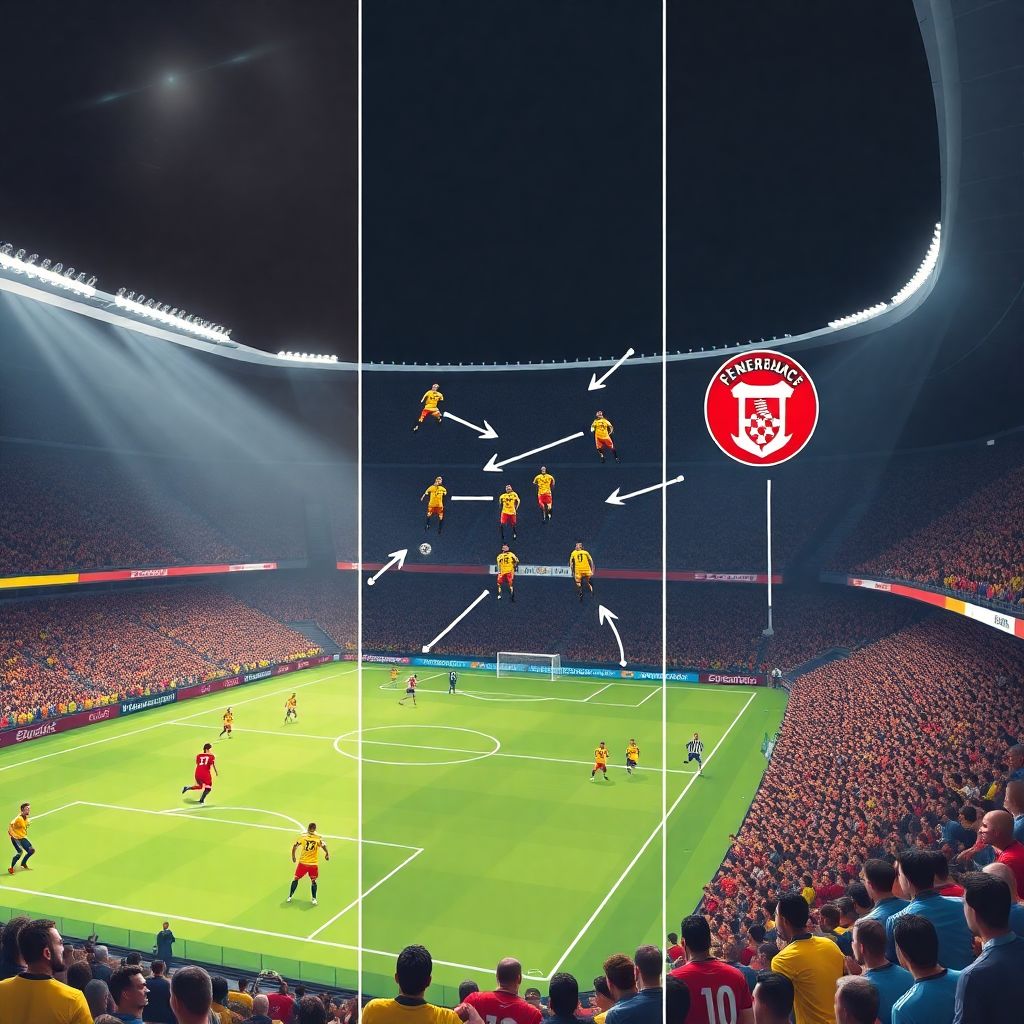
Why the Big Three Still Shape Turkish Football
If you want to understand modern Turkish football, you still have to start with Galatasaray, Fenerbahce and Besiktas. Even in the mid‑2020s, with rising Anatolian clubs, European data trends and global scouting networks, the conversation always circles back to the big three and how differently they try to win games. Any serious Turkish football big three comparison has to zoom in on what happens on the pitch, not just in the trophy room.
So let’s break down how these clubs play today, where their ideas come from, and what’s actually changed in their tactical DNA.
—
Historical Background: How the Identities Were Built
Galatasaray: Control, European ambitions and “big game” mentality
Historically, Galatasaray have seen themselves as the most “European” of the three, and that still colours their style. From Fatih Terim’s aggressive 4‑4‑2 and 4‑3‑3 in the late 90s and early 2000s to the more possession‑heavy approaches of the 2010s, the club identity has revolved around two big ideas: dominate the ball and dominate key moments.
That European self-image pushed them towards structured buildup, technically strong midfielders and wingers who can both score and create. Even when the shape changes—4‑2‑3‑1, 4‑1‑4‑1, asymmetrical 4‑3‑3—the underlying message is similar: “We’ll decide how this game is played.”
—
Fenerbahce: Direct power and emotional intensity
Fenerbahce’s tradition leans more towards physical intensity, fast attacks and using the crowd as a tactical weapon. Kadiköy at full volume still encourages a style that is vertical, aggressive and emotional. Coaches change, but the expectation rarely does: play forward quickly, use the flanks, bombard the box.
Where Galatasaray usually chase control, Fenerbahce have historically chased momentum—turning 10–15 minute spells of pressure into goals and chaos.
—
Besiktas: Street‑smart, transitional and flexible
Besiktas have often been the “street football” club of the trio. Even their most polished recent side under Şenol Güneş (mid‑2010s) was built on transitional quality, clever combinations and high‑IQ forwards rather than pure structure.
The fan culture at Vodafone Park accepts a bit of chaos as long as the team shows fight and flair. That has usually meant a willingness to press in bursts, counter with speed and adjust the game plan more often than the other two.
—
Basic Principles: What Defines Their Modern Game Models
Here’s where a real Galatasaray Fenerbahce Besiktas playing style analysis gets interesting. In the mid‑2020s, all three clubs are forced to absorb global tactical trends—pressing triggers, rest‑defence, data‑driven recruitment—while still preserving their own identity.
—
Galatasaray: Structured possession with power wide and central overloads
In recent seasons, Galatasaray have leaned into a possession‑first game model, but not in a sterile, side‑to‑side way. Their basic principles look something like this:
1. Structured buildup – Using a back four that often morphs into a three in possession (full‑back inverting or holding), plus a deep pivot to progress the ball through zones rather than just going long.
2. Central overloads – Attacking midfielders and a dropping striker crowd the half‑spaces, trying to create 3‑v‑2 or 4‑v‑3 situations against compact midfields.
3. Wide power – Wingers are expected to both stretch the pitch and attack the box, which makes crossing and cut‑backs a staple, especially against low blocks.
4. High defensive line – To keep opponents pinned in, the back line pushes up, supported by a counter‑press after losing the ball.
The modern trend here is clear: more attention to rest‑defence (how many players you leave behind the ball), more structured pressing and less reliance on pure individual brilliance to break teams down.
—
Fenerbahce: Verticality, wing focus and controlled chaos
Fenerbahce’s basics are different, and you can feel it within five minutes of watching them:
Longer passes into the channels, switches of play to isolate wingers, and a midfield that doesn’t dwell on the ball. The core principles now tend to be:
– Fast vertical progression – Get the ball into advanced zones quickly, either through direct passing from the centre‑backs or aggressive dribbling from midfield.
– Wing‑driven attacks – Full‑backs overlap, wingers cut inside or go outside depending on the matchup, and the box is regularly loaded with 3–4 targets.
– Emotional pressing – Instead of a rigid, clock‑like press, Fenerbahce often press “on feeling”: a big tackle, a refereeing call, the crowd noise—these moments trigger waves of pressure.
The modern twist is that recent coaches have tried to wrap this in more tactical discipline: clear pressing triggers, a better‑defined holding midfielder, and more attention to second balls so the team doesn’t get stretched.
—
Besiktas: Hybrid pressure and transition‑first thinking
Besiktas sit somewhere between the other two but with their own flavour. They rarely go full positional‑play like Galatasaray and rarely go completely direct like Fenerbahce. Instead, their playbook is increasingly built around:
– Medium‑block with pressing traps – Let the opponent have the ball in certain zones, then spring a press when the pass goes into the full‑back or pivot.
– Quick, vertical counters – Once the ball is won, the first idea is forward. Vertical passes into the striker, wall passes and third‑man runs are a big theme.
– Technical link players – No matter who’s in charge, Besiktas usually base their attack around one or two half‑space playmakers who connect midfield and attack.
In modern terms, this is a very transition‑oriented style, leaning into what Turkish footballers often do well: play at high tempo, improvise combinations and exploit broken defensive shapes.
—
Examples of Implementation: How It Looks On the Pitch
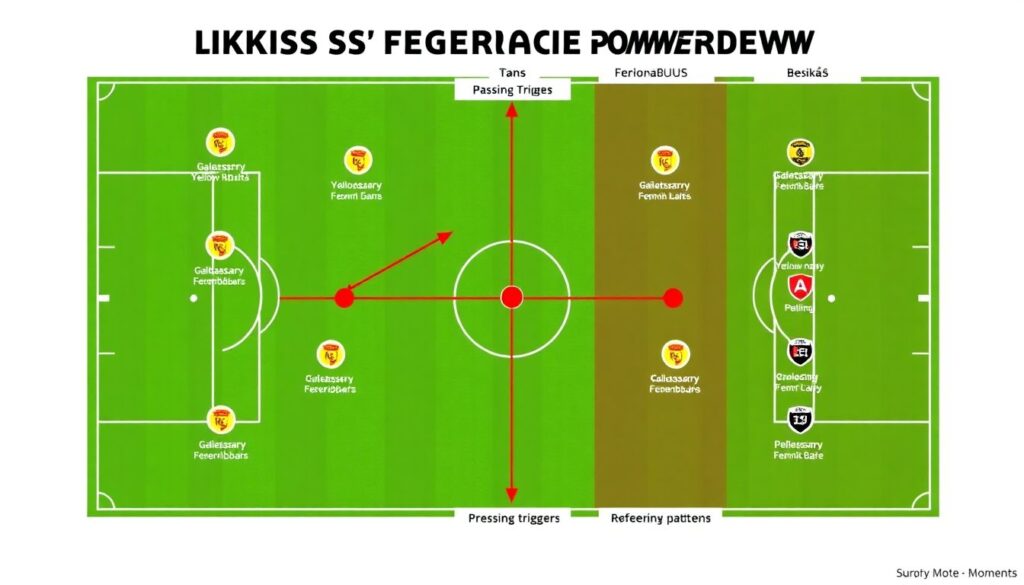
To turn this tactical breakdown of Turkish Super Lig big three into something concrete, let’s zoom into a few recurring patterns rather than specific single matches.
—
Galatasaray: Breaking low blocks at home
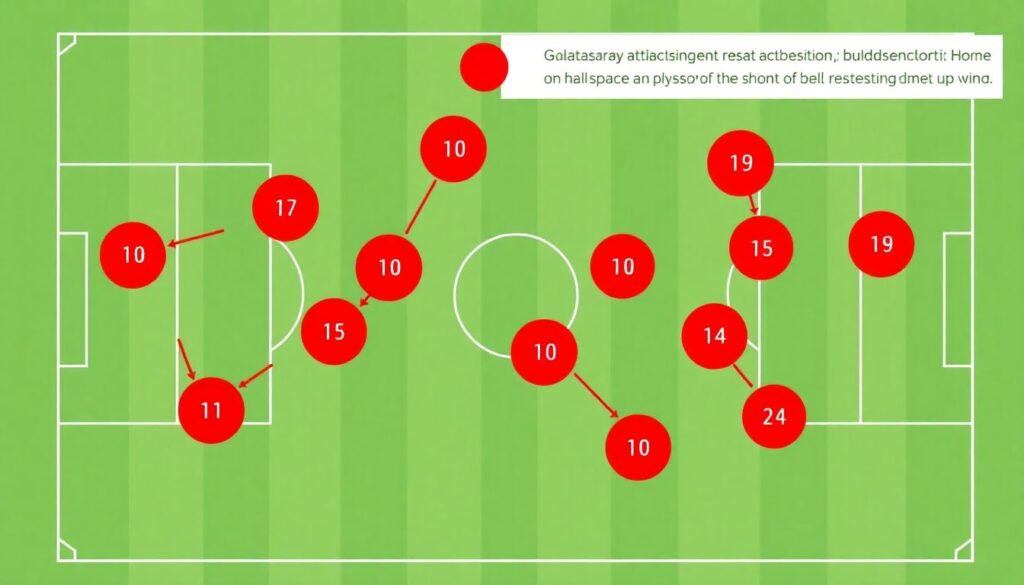
At home, against a deep 4‑1‑4‑1, Galatasaray typically:
– Drop the pivot between or next to the centre‑backs to form a 3‑2 base.
– Push at least one full‑back high, sometimes both, to stretch the defending line.
– Let the “10” and a winger occupy the half‑spaces between midfield and defence.
You’ll often see the ball go from centre‑back to pivot, then into the half‑space, then out wide, and finally cut back into the box. It’s methodical but not slow; the idea is to constantly move the block sideways and create a free man just outside the area.
This is where their emphasis on technical midfielders shows: one good first touch and disguise on the final pass can completely open up tight games.
—
Fenerbahce: Turning pressure into waves of attacks
In contrast, when Fenerbahce smell blood at home, you can almost script their game:
1. Win a duel or second ball near halfway.
2. Immediately switch the ball into the strongest winger.
3. Full‑back overlaps; the near‑side central midfielder arrives at the edge of the box; the striker and far‑side winger attack the six‑yard area.
The beauty (and risk) of this setup is that when it works, opponents crumble under constant crossing and second‑ball pressure. When it doesn’t, gaps appear behind the marauding full‑backs and the holding midfielder is forced into emergency defending.
—
Besiktas: The “steal and strike” sequence
A classic Besiktas sequence in recent years: they sit in a medium block, let the opponent’s centre‑back carry the ball, and then spring a trap when the pass goes into the full‑back. The winger and full‑back press, the near‑side midfielder steps up, and suddenly there’s a turnover.
From there, the first pass is often vertical into a dropping striker or attacking midfielder, who lays it off to a runner coming from deep. Within three passes, they’re taking a shot, often before the opponent has fully reset its shape.
This is less tidy than Galatasaray’s possession approach, but it massively suits a team that often has quick, technical attackers and a crowd that feeds off fast transitions.
—
Modern Trends: What’s Changed by the Mid‑2020s
Pressing and counter‑pressing
All three clubs have become far more pressing‑aware:
– Galatasaray’s press is usually the most structured, with defined roles for the 9 and 10 in forcing the ball wide.
– Fenerbahce now mix emotional surges with more planned triggers, especially goal‑kicks and throw‑ins.
– Besiktas are more selective, using pressing as a way to create transitions rather than as a constant state.
Across the board, the big three press more and better than they did a decade ago, in line with European trends—and fitness and squad depth now heavily dictate how long they can sustain it.
—
Data, recruitment and tactical fit
Another modern twist: player recruitment is more closely tied to the game model. You rarely see a pure target man signed by Galatasaray now unless he can link play; Fenerbahce look obsessively for wide players with 1‑v‑1 ability and high sprint numbers; Besiktas scout for flexible forwards who can play both centrally and wide to keep their transition game unpredictable.
This has made any Turkish big three football clubs tactical comparison more interesting: you can almost guess a player’s destination just by his profile. Deep‑lying playmaker with elite passing range? More likely Gala. Relentless up‑and‑down full‑back? Feels like Fener. Clever half‑space dribbler who loves counters? Sounds like Besiktas.
—
European influence vs local reality
All three are trying to “look European” in terms of structure and metrics, but they still operate inside the realities of the Super Lig: fiery atmospheres, uneven pitches, refereeing inconsistencies and huge pressure from fans and media.
This tension creates a unique blend: a 4‑3‑3 that turns into a 2‑3‑5 in possession might look like something from the Premier League on a chalkboard, but in Istanbul it has to survive late tackles, long throw‑ins and opponents who are perfectly happy to kill the rhythm for 90 minutes.
—
Common Misconceptions About Their Playing Styles
Because discourse around these clubs is so emotional, a lot of tactical myths survive longer than they should. Let’s address a few that often distort any serious Galatasaray vs Fenerbahce vs Besiktas tactics debate.
—
“Galatasaray are always tiki‑taka”
They’re not. They want the ball, yes, but modern Galatasaray sides are usually more direct than people realise. They frequently hit early diagonals to wingers, cross a lot, and are not shy about exploiting set‑pieces. Possession is a tool, not a religion.
—
“Fenerbahce only know how to cross and hope”
The stereotype of endless blind crossing is outdated. Recent Fenerbahce teams still value width and crossing, but there is more structure in how they arrive in the final third: cut‑backs, low driven balls, and deliberate overloads against the opponent’s weaker full‑back are now common.
The style is still more direct than their rivals, but there’s a clear plan behind much of that “chaos.”
—
“Besiktas have no clear style, they just rely on talent”
This one is half‑true and half‑wrong. It’s fair to say Besiktas accept more improvisation in the final third than the other two. But their overall model—medium block, pressing traps, fast transitions, use of half‑space playmakers—is consistent across different coaches.
It just doesn’t always show up as neat passing maps; it lives in the timing of their counters and how they set pressing traps.
—
Where the Styles Might Be Heading Next
Looking ahead in the 2020s, the gap between the big three and Europe is more about consistency and squad balance than ideas. Tactically, they’re tracking global trends: higher lines, more pressing, fluid attacking shapes, and game plans built around data.
The next step? Probably more versatility. Galatasaray will need to vary their possession tools to break ever‑deeper blocks. Fenerbahce will likely keep looking for that balance between intensity and control so they don’t burn out. Besiktas will try to refine their transition game so it works not just in big games but week‑to‑week against defensive sides.
In short, the badges stay the same, but the details are evolving fast—and that’s exactly why going back to the chalkboard and doing a fresh tactical breakdown of Turkish Super Lig big three never really gets old.