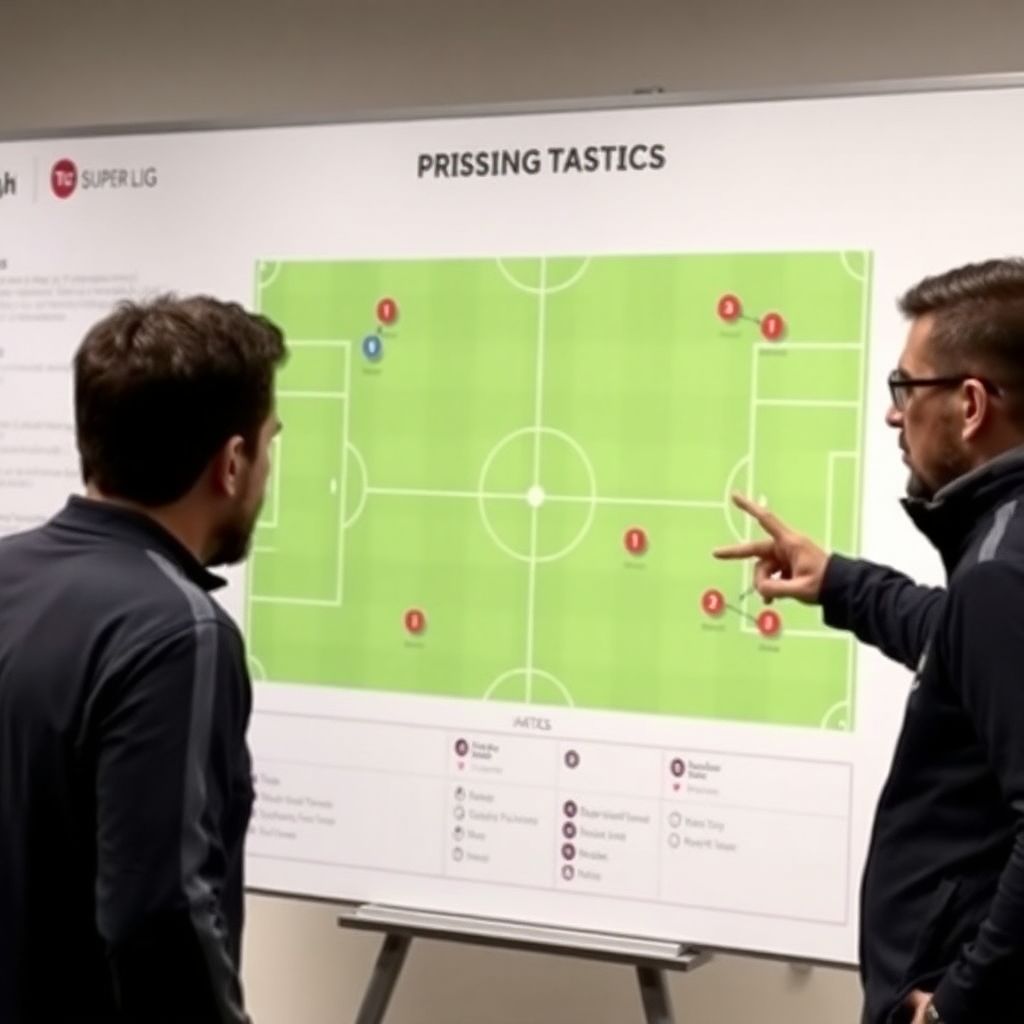
Turkish Super Lig coaches are blending aggressive pressing, fluid defensive shapes and structured set-pieces into a modern, data-informed style that you can adapt at semi-pro and academy level. This guide explains how to copy their pressing triggers, build-up patterns, hybrid formations and set-play routines in clear, safe steps, with risk checks and practical constraints.
Core Tactical Innovations from the Super Lig
- Pressing schemes built around flexible triggers and risk zones instead of rigid man-orientation.
- Goalkeeper-led build-up with rotating midfield diamonds and third-man concepts.
- Hybrid defensive formations that switch shape between phases and ball locations.
- Attacking patterns focused on half-space overloads and fast vertical attacks.
- Set-piece routines using decoy movements and unusual starting positions.
- Integrated video and data workflows for opponent-specific game plans.
Pressing Architectures: Triggers, Zones and Risk Management
Modern Turkish Super Lig tactical analysis shows pressing systems shifting between 4-4-2, 4-2-3-1 and 4-3-3, depending on opponent build-up and game state. This approach suits coaches who already have basic team organization, clear fitness standards and at least three training sessions per week.
Use advanced pressing if:
- Your squad can repeat high-intensity sprints and quick direction changes.
- Defenders are comfortable defending big spaces in transition.
- Players understand basic zonal marking and cover-shadow concepts.
- You can record and review training clips to correct spacing and timing.
Avoid complex pressing schemes when:
- You coach younger age groups still learning fundamental positioning.
- The pitch conditions are consistently poor, making compactness difficult.
- Your players lack fitness for repeated presses over 90 minutes.
- You cannot commit time for video review or detailed game preparation.
Practical application examples from 2020-2025 Super Lig seasons include high 4-4-2 presses by title contenders, converting into a narrow 4-3-3 mid-block once the ball is forced wide. Use these as models when you watch Turkish Super Lig live stream matches and pause to note triggers: bad touch, backward pass, sideline trap, or isolated full-back.
Progressive Build-Up: Keeper Involvement and Midfield Templates
Implementing a Super Lig-style build-up game requires specific tools, roles and off-field support. Before copying what you see in an advanced football tactics course Turkish Super Lig style, confirm that you have the following elements in place.
Essential requirements:
- Goalkeeper skillset: Comfortable with both feet, calm under pressure, able to play firm ground passes into midfield; basic understanding of when to clip longer balls.
- Ball-playing centre-backs: At least one defender able to break lines with passes; both must be safe with first touch and body orientation when receiving facing their own goal.
- Midfield understanding: Double-pivot or single-pivot players capable of:
- Rotating into full-back or centre-back zones.
- Receiving on the half-turn under pressure.
- Acting as third man in bounce combinations.
- Width and depth from full-backs and wingers: Clear rules for when full-backs invert, overlap or stay in the first line next to centre-backs.
- Video access: Basic ability to record training and matches to show players specific build-up situations and correct spacing.
Support tools and resources:
- Simple pitch diagrams showing your main build-up shapes (e.g., 2-3-2-3 or 3-2-5) that you can present in the dressing room.
- Clips from Super Lig games (2020-2025) where keepers create a back three, and pivots drop between centre-backs to attract pressure.
- Online resources and Turkish football coaching courses online that cover playing out from the back with local examples, so your players see familiar stadiums and opponents.
- Clear internal rules defining when you must bypass the press and go long, to protect against risky short passes in your own box.
Many fans approach this area via Turkish Super Lig betting tips and predictions, looking at which teams dominate possession and create clear chances from build-up. As a coach, use the same lens for learning: track which Super Lig sides progress the ball safely and copy their basic patterns before adding your own variations.
Defensive Fluidity: Hybrid Formations and Role Rotation
Hybrid defensive systems, where a 4-2-3-1 in possession becomes a 4-4-2 or 4-1-4-1 out of possession, are common in Turkey. To copy these safely, you must control risk and respect your squad’s physical and cognitive limits.
Key risks and constraints before you start:
- Too many rotations at once confuse players and create open central lanes.
- Poor communication between full-backs and wingers leaves wide overloads for the opponent.
- Excessive shape shifting can drain focus and cause late-game concentration drops.
- Players may resist new roles if you change their responsibilities too quickly.
- Lack of depth in your squad makes complex schemes fragile when injuries occur.
-
Define one base shape and one defensive shape
Choose the formation you already use as your base (for example, 4-3-3) and one clear out-of-possession shape (for example, 4-4-2). Do not add a third variation until the team fully understands the first two.
-
Assign precise role changes per player
For each player, write a one-line description of what changes when you lose the ball. This avoids vague instructions like "drop" or "shift" and replaces them with concrete behaviours.
- Example: "Right winger tucks inside to form second striker in 4-4-2."
- Example: "Left 8 drops alongside pivot to make a double six."
-
Use small-sided games to rehearse rotations
Start with 6v6 or 7v7 games on a reduced pitch, where you freeze play during transitions and ask players to quickly step into their defensive roles. Limit the number of rotations so players feel the shape, not just hear it.
-
Layer in wide and central rules
Once the basic rotation is stable, add specific rules for wide and central zones to mirror what leading Super Lig clubs have done between 2020-2025.
- Wide: nearest winger always tracks full-back; full-back decides whether to jump or hold line based on ball pressure.
- Central: one pivot steps out to press, the other covers the passing lane to the striker.
-
Introduce game-state adjustments
Teach your team when to switch between shapes based on scoreline and time. For example, you might stay in a compact 4-1-4-1 when leading, but push into a more aggressive 4-4-2 press when chasing a goal.
-
Review clips and refine individual cues
After matches, select 6-10 clips where your shape worked and 6-10 where it failed. Review them collectively, asking players to explain their rotations. This builds understanding rather than blind obedience.
Attacking Patterns: Overloads, Half-Spaces and Verticality
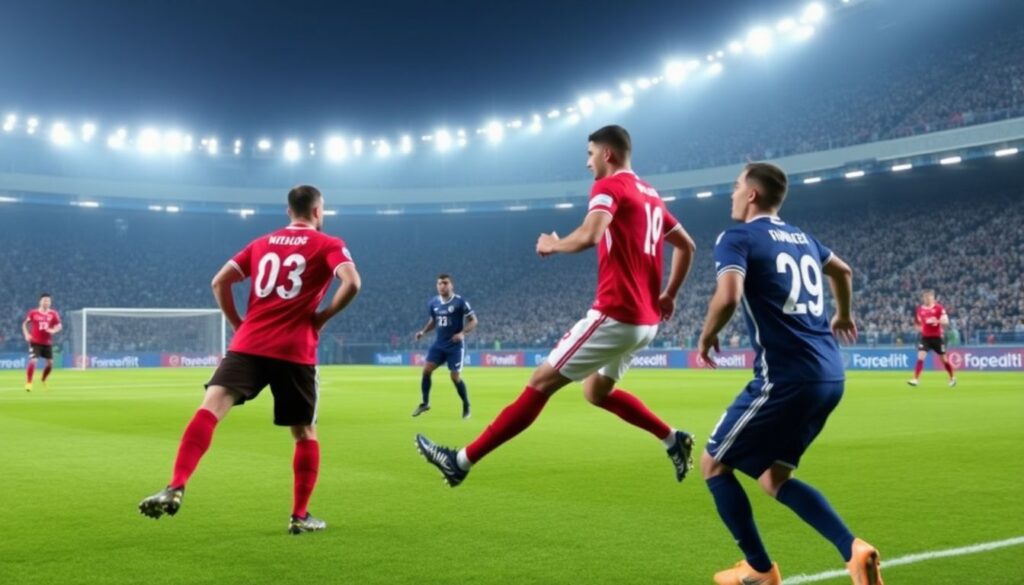
Use this checklist to verify whether your attacking patterns reflect what you see in top Turkish Super Lig tactical analysis, especially regarding half-spaces and vertical runs.
- Wide players and full-backs consistently create 2v1 or 3v2 overloads on at least one flank during settled possession.
- At least one attacking midfielder regularly receives between opposition lines in the half-space, facing forward, not with back to goal every time.
- Strikers or wingers make diagonal runs in behind immediately after a successful overload, turning possession dominance into penetration.
- Switches of play are purposeful: you move the ball quickly to the weak side after attracting pressure, not just for lateral circulation.
- Your central midfielders understand when to support inside the half-space and when to hold position for rest defence against counters.
- Combination patterns (wall passes, third-man runs) are visible at least a few times each half, not only improvised dribbles.
- Crosses and cut-backs come from zones you have prepared in training, with 2-3 clear target areas, rather than random deliveries.
- From goal-kicks and deeper build-up, you can identify structured routes to progress into the final third, not only long balls under pressure.
- Your players can describe the main attacking pattern names or cues you use (for example, "overload right, finish left"), and these appear in matches.
- Video review shows at least a few attacks per game that resemble the examples you have taken from recent Super Lig matches.
Set-Piece Engineering: Unconventional Routines and Game Management
Coaches in Turkey have become creative with corners, free-kicks and throw-ins, but complex routines can easily backfire. Avoid these common mistakes when engineering Super Lig-inspired set-plays.
- Overcomplicating routines with too many moving parts, making them impossible to execute under pressure.
- Ignoring defensive balance and leaving opponents free to counter-attack from your own corners or attacking free-kicks.
- Designing routines that depend on one specialist (for example, a perfect inswinger) without a backup version if that player is absent.
- Changing routines every week, preventing players from mastering core patterns and killing their confidence.
- Failing to adapt routines to pitch dimensions, wind and surface conditions in specific stadiums.
- Copying Super Lig routines you have seen live or on TV without adjusting to your players’ physical qualities (height, jump, speed).
- Not rehearsing the same set-piece from both sides of the pitch, leading to confusion when the angle changes.
- Spending all your time on attacking set-pieces and neglecting defensive organization and blocking assignments.
- Using the same runs and starting positions for months, making you predictable to opponents who scout or watch Turkish Super Lig live stream games and adopt similar analysis habits.
- Shouting new instructions from the sideline that contradict the pre-trained routine, which creates hesitation and poor execution.
Analytical Integration: Data, Video Workflows and Opponent Modeling
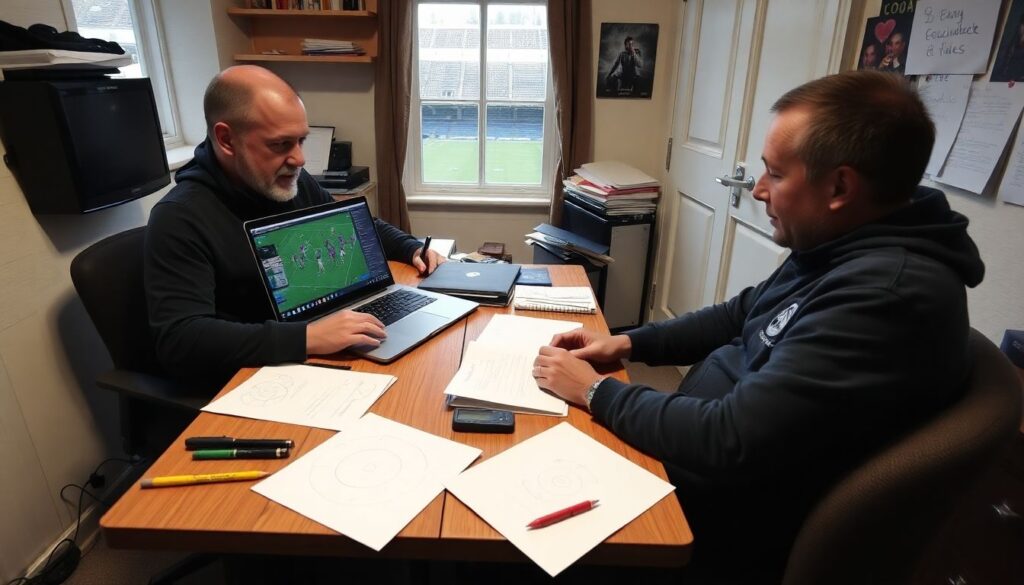
Even without a big budget, you can integrate analysis into your coaching like many Super Lig staffs do. When full professional workflows are not realistic, consider these safer alternatives and when to use them.
- Manual video tagging with simple notes – Use free or low-cost video tools to tag key moments (pressing triggers, set-pieces, transitions). Ideal for semi-pro and youth teams with limited staff; avoids the complexity and cost of full data platforms.
- Template-based opponent reports – Build a one-page report structure (formation, pressing style, key threats, set-piece habits). This mirrors basic opponent modeling without needing extensive databases.
- Learning through curated matches – Instead of watching full weekends of games, choose two or three relevant Super Lig matches per month and clip specific phases that match your own style. This keeps analysis time manageable.
- Structured online education modules – Enrol in Turkish football coaching courses online focusing on match analysis and practical tools. Many modules reference local teams, helping you translate theory into your own environment efficiently.
If you want a more formal path, look for an advanced football tactics course Turkish Super Lig style, but always compare its concepts with your team’s reality: squad quality, training time and support staff. Use betting previews and Turkish Super Lig betting tips and predictions only as contextual information about team strengths, not as your primary analysis source.
Troubleshooting Common Tactical Issues in Implementation
How do I know if my pressing structure is too complex for my players?
If players cannot explain their own pressing roles in simple sentences, or you see frequent gaps between lines and late reactions to triggers, your structure is too complex. Simplify to fewer rules and smaller zones before adding detail.
What should I prioritise first: build-up patterns or defensive shape?
Prioritise a stable defensive shape so your team can compete and stay confident. Once your players consistently understand their roles without the ball, gradually layer in basic build-up patterns in low-risk areas of the pitch.
How often should I change my hybrid formation or rotations?
Keep one main hybrid structure for at least several weeks of matches. Only adjust when you see clear, repeated problems or when your players execute the current model with high consistency in both training and competition.
My team struggles with half-space play; how can I simplify it?
Start by designating one player per side responsible for receiving in the half-space, and rehearse simple pass-and-follow patterns. Avoid overloading players with multiple option trees until they are comfortable turning and playing forward.
We concede counters from our attacking set-pieces; what is the first fix?
Assign 2-3 players to stay back in pre-defined positions, focusing on central protection and wide cover on the transition side. Train the recovery run and first defensive duel after your set-piece as part of the routine.
How can I use Super Lig matches effectively for my players’ learning?
Choose short clips aligned with a single theme, such as pressing or build-up, rather than full matches. Show each clip two or three times, ask guided questions, then replicate the same scenario in a small-sided training game.
Is it risky to copy Super Lig tactics if my players are much less skilled?
It becomes risky only when you copy them fully without adaptation. Take the underlying ideas-such as overloading zones or staggering lines-and translate them into simpler, slower patterns suited to your players’ technical and physical levels.