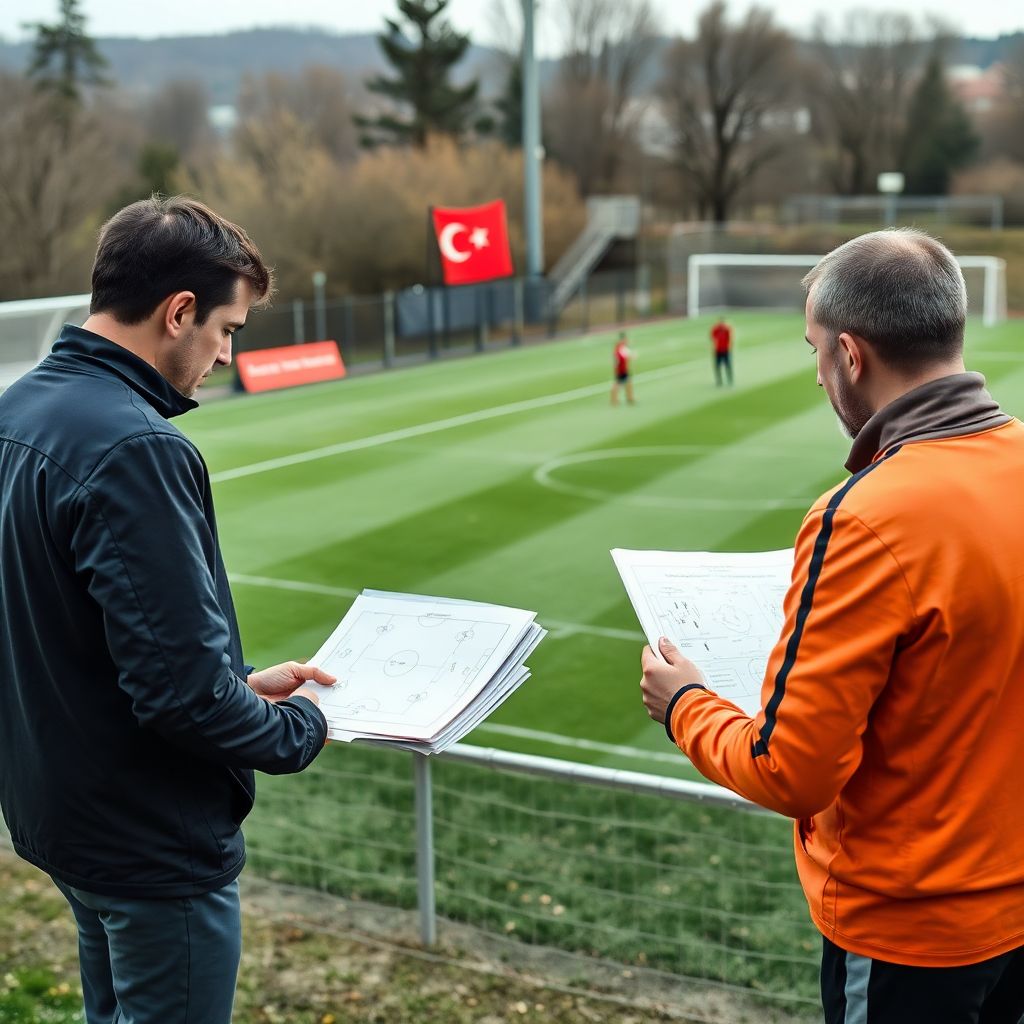
Turkish clubs are cautiously adopting European football tactical trends by upgrading pressing structures, build-up patterns, and recruitment profiles without abandoning local strengths. Safe steps include clearer team principles, better spacing, and role-based training. Main limits are squad profiles, coaching education gaps, budget constraints, and unstable club cultures that disrupt long-term tactical evolution in modern soccer.
Common Myths vs Evidence on Turkish Tactical Shifts
- Myth: Turkish clubs already play full European-style pressing. Reality: intensity and compactness improve, but pressing triggers and rest-defense are still inconsistent across many teams.
- Myth: Copying a famous coach’s system guarantees success. Reality: systems from European football tactical trends only work when adapted to league tempo, climate, and player profiles.
- Myth: Possession football simply means more passes. Reality: modern football tactics analysis shows that purposeful progression, not raw possession, predicts control and chance creation.
- Myth: Star players can solve any tactical issue. Reality: without synchronized structures, even elite individuals get isolated, especially in Turkish football clubs European competitions.
- Myth: Sweeper-keepers are mandatory. Reality: the key is a goalkeeper comfortable enough under pressure for the chosen build-up model, not mimicking extreme high lines.
- Myth: Tactics are only about formations. Reality: spacing, roles, and coordinated movements matter more than whether a team lines up 4-2-3-1 or 3-4-3.
Historical Baseline: Traditional Turkish Systems and Their Limits
Historically, many Turkish teams relied on physically strong back lines, aggressive duels, and direct play to fast wingers or a dominant striker. The structure was often a 4-2-3-1 or 4-4-2, but the real identity came from emotional momentum, home-crowd pressure, and individual flair rather than collective mechanisms.
This approach created dangerous counterattacks and intimidating home atmospheres, yet it offered limited control against organized European sides. Lines often stretched, distances between units grew, and transition defense suffered. In modern football tactics analysis, these are classic signs of low compactness and poor rest-defense.
The main limitation is repeatability: performances could fluctuate wildly depending on mood, stadium energy, and individual form. As tactical evolution in modern soccer has raised the baseline for pressing, build-up, and positional play, relying on chaos and improvisation alone exposes Turkish clubs in European competitions and even within the Süper Lig against well-drilled opponents.
Influence Vectors: Which European Trends Shape Turkish Coaching
Coaches in Turkey are increasingly influenced by European football tactical trends, but adoption is selective and gradual. The following vectors shape how Turkish clubs are adapting to European football while staying within realistic constraints:
- High and mid-block pressing concepts. Ideas from gegenpressing and structured mid-blocks affect how teams press goal-kicks, trap in wide zones, and protect central lanes.
- Positional play in possession. Coaches borrow principles such as occupying five attacking lanes, creating triangles, and using a free man between the lines rather than copying a single formation.
- Short build-up with flexible structures. European models encourage using 2-3 or 3-2 rest-defense shapes in possession, with full-backs inverting or pushing high depending on opponent pressure.
- Goalkeeper participation. Keepers are asked to support circulation as an extra outfielder, especially to create 3v2 advantages against the first pressing line.
- Data-informed recruitment and analysis. Clubs increasingly use video and data to align signings with a defined game model, instead of buying big names first and designing tactics later.
- Set-piece specialization. Influenced by top European sides, some Turkish staffs now treat set pieces as a separate phase with pre-designed routines and role clarity.
Pressing Models Adopted by Turkish Clubs: From Gegenpress to Zonal Traps
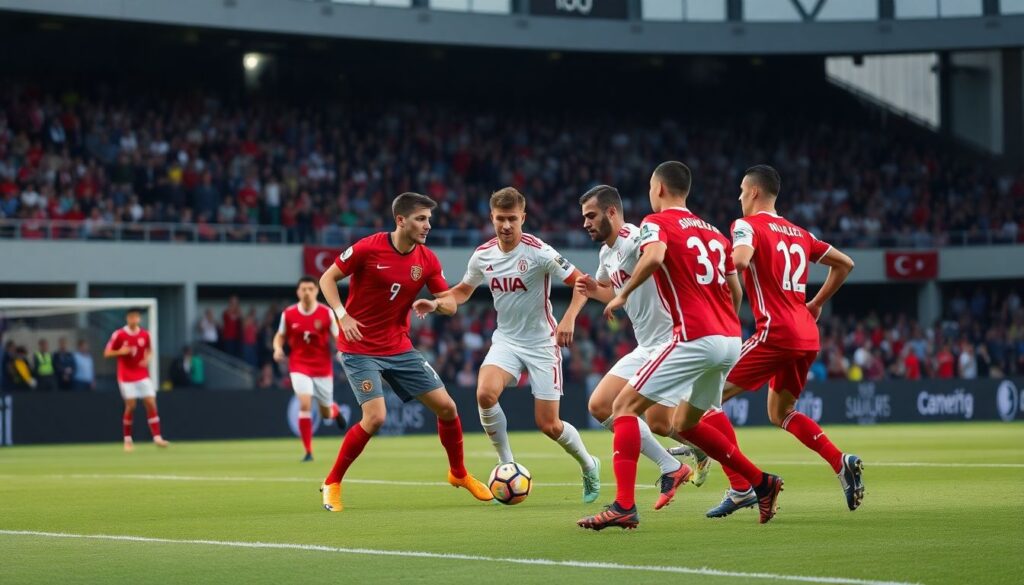
Pressing is the most visible area where Turkish clubs try to modernize safely, balancing aggression with player limitations.
- High pressing on opposition build-up. Many teams push wingers onto center-backs and use the striker to screen the pivot, aiming to trap the ball toward one side. The safe step is to drill clear pressing triggers (back pass, bad touch, lateral pass) instead of pressing randomly.
- Mid-block control against strong opponents. Against technically superior teams, coaches choose a compact 4-4-2 or 4-1-4-1 mid-block. Here, the focus is on horizontal compactness and denying central progression, accepting lower possession but safer defensive spacing.
- Gegenpressing after loss in attacking third. Inspired by top European clubs, Turkish sides increasingly try to counterpress for a few seconds after losing the ball. The low-risk adaptation is to focus on regaining vertical compactness quickly if the first 3-4 seconds fail, rather than chasing hopelessly.
- Zonal traps on the flanks. Some clubs design pressing traps in wide areas: allow passes to full-backs, then jump with winger, full-back, and nearest midfielder. This is easier to train and demands less elite athleticism than full-pitch man-oriented pressing.
- Situational retreat into low block. When protecting a lead or facing heavy pressure, teams retreat into a deeper block. The challenge is to avoid collapsing too deep and losing any outlet for counters, which would invite constant crossing and shots.
- Hybrid man-zonal references. Because many players are used to man-marking, coaches use hybrid structures: zonal lines with man-oriented behavior in key zones (pivot, number 10). This transitional model can be a pragmatic step toward more fully zonal systems.
Build-Up Play and Goalkeeper Roles: Transitioning to Modern Ball Progression
Building from the back is often where risks and safe steps must be balanced carefully in Turkey’s intense and emotionally charged match environments.
Structured Advantages of Modern Build-Up and Sweeper-Keeper Use
- Better escape options under pressure by forming numerical superiority (for example, 3v2 against the first pressing line using the goalkeeper).
- Improved progression through central corridors when pivots learn to receive on the half-turn between lines.
- Greater control of tempo, allowing teams to rest with the ball instead of constant end-to-end transitions.
- Higher-quality first pass into attackers’ feet, enabling cleaner combinations instead of hopeful long balls.
- More flexible rest-defense structures (2-3 or 3-2) that reduce vulnerability to counters after losing possession.
Operational Limits and Risk Management in Turkish Contexts
- Goalkeepers and center-backs may lack consistent first touch and passing range; forcing extreme short build-up can create cheap turnovers.
- Pitches and weather in certain venues make low passing riskier; adjusting height and direction of passes is essential.
- Home crowds often react negatively to backwards passes, increasing psychological pressure on players and staff.
- Opponents frequently press in a chaotic but intense way; rehearsed patterns are needed to avoid panicking under unstructured pressure.
- Time for training is limited during congested fixture periods; complex rotations are hard to automate without solid pre-season foundations.
Player Profiles and Recruitment: Tactical Fit over Star Power
Many adaptation problems start at squad-building level, where myths about talent often override tactical logic.
- Mistake: Signing attackers only for dribbling highlights. Wingers recruited solely for 1v1 skills may not counterpress or respect positional roles, breaking the pressing structure.
- Mistake: Ignoring running capacity and intensity. Midfielders who cannot repeat high-intensity runs limit the feasibility of aggressive pressing and fast transitions.
- Mistake: Overloading creative number 10s. Playing multiple playmakers together can slow circulation and weaken defensive coverage in central zones.
- Myth: Any tall defender fits a high line. High-line defending needs acceleration, reading of depth, and comfort defending big spaces, not just aerial dominance.
- Myth: Experience in big leagues automatically equals tactical intelligence. Some stars arrive with habits that clash with the desired structure; adaptation and role clarity are still required.
- Myth: Youth players are tactically naive by default. Properly coached academy graduates often understand pressing and build-up rules better than older players used to freer roles.
Implementation Barriers: Infrastructure, Coaching Education, and Club Culture
Rolling out modern tactical ideas in Turkey requires more than a good game model; structural barriers repeatedly slow or distort tactical shifts.
Mini-case: A hypothetical Süper Lig club’s cautious adaptation
Season 1: a mid-table club appoints a coach inspired by European models. Instead of enforcing radical changes, he takes these safe steps:
- Clarifies three core principles: compactness without the ball, simple wide pressing traps, and short build-up only when the goalkeeper sees a clear 3v2 option.
- Reduces the number of set plays but rehearses each one intensively, focusing on defensive organization first.
- Works with analysts to run basic modern football tactics analysis: average team width, distances between lines, and locations of ball losses.
- In recruitment, prioritizes two central midfielders with high running output and one ball-playing center-back, instead of a marquee attacker.
Season 2: results stabilize, but barriers appear. Board impatience leads to transfer changes, and a new sporting director wants a more “attractive” style immediately. Training time shrinks due to fixture congestion, and infrastructure limits (analysis staff, pitch quality) slow further refinement. The club maintains a more organized mid-block and slightly improved build-up yet struggles to reach the consistency of top European sides. This illustrates how Turkish clubs are adapting to European football gradually, under real-world resource and culture constraints rather than through overnight tactical revolutions.
Practical Clarifications for Coaches and Analysts
Do Turkish clubs need to copy a specific European team’s system?
No. The safer approach is to copy underlying principles (compactness, overloads, clear pressing triggers) and then adjust them to squad profiles, league tempo, and club culture.
How fast can a team realistically change its tactical identity?
Most squads need at least one full pre-season plus a transfer window to internalize a new model. Mid-season revolutions usually create confusion; incremental steps are more stable.
Is high pressing always better than a mid-block in Turkey?
Not necessarily. High pressing requires specific physical and tactical profiles. Many Turkish teams benefit more from a compact mid-block combined with well-practiced pressing traps.
What is the safest first step toward modern build-up play?
Start by improving goalkeeper and center-back passing angles under mild pressure, and define clear rules for when to go long, rather than forcing constant short goal-kicks.
How important is data for tactical evolution in Turkish clubs?
Even basic data and video help align recruitment with the game model and evaluate pressing or build-up efficiency. Advanced models are helpful but not mandatory to start improving.
Can a team modernize tactically without changing many players?
Yes, but with limits. Role redefinition, smarter spacing, and better rest-defense can improve performance, yet some roles (e.g., ball-playing center-back) may still require new profiles.
Why do tactical changes often collapse after a coaching change?
Because many clubs lack a long-term game model at board level. Each new coach restarts from zero, which resets tactical learning and confuses player development paths.