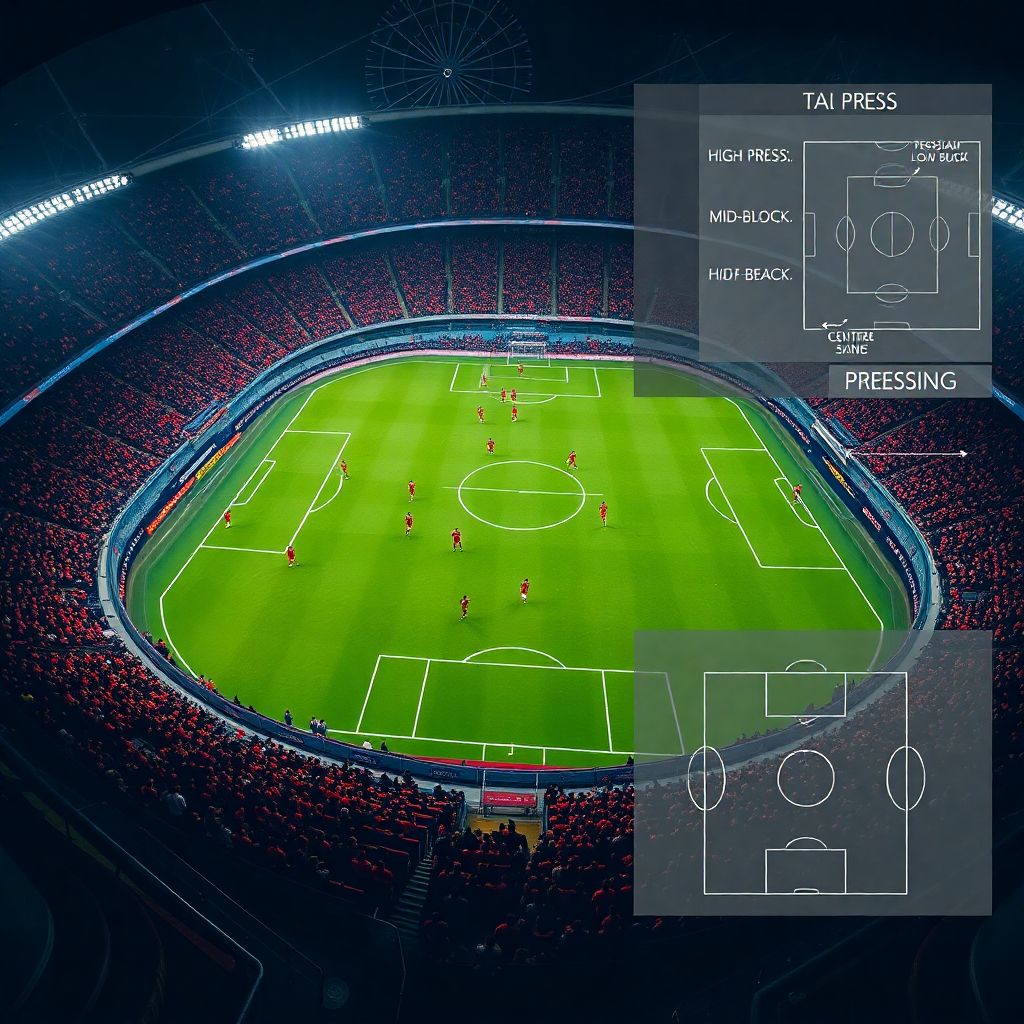
From Chaos to Structure: How Turkish Teams Rewired Their Game
Over the last decade, Turkish football has quietly shifted from emotional, end‑to‑end chaos to a more structured, system‑driven model. Where Süper Lig clubs once relied heavily on individual brilliance and late‑game comebacks, you now see rehearsed patterns of play, controlled rest‑defence and clearly defined pressing triggers. In tactical terms, the league has moved from “player‑centric” to “game‑model‑centric” thinking: instead of asking “who are my stars?”, coaches start with “what is our game model — how do we build, press, defend transitions?” This mirrors trends seen earlier in the Bundesliga and Serie A, but with a distinctly Turkish twist: intensity and crowd energy are now channelled into preplanned behaviours rather than pure improvisation.
Key Terms You Actually Need to Know
To make sense of this evolution, it helps to lock down a few definitions. “Game model” is the codified set of principles that governs a team’s decisions in all phases: build‑up, creation, finishing, defensive block, pressing and transitions. “Rest‑defence” describes the positioning of players behind the ball when your team is attacking, ensuring you’re stable if possession is lost. “Half‑space” is the vertical lane between wing and centre, a key zone for modern attacking. “Pressing trigger” means a cue — a poor touch, a backwards pass, a pass into a full‑back — that signals the whole team to press. Turkish analysts now use these terms daily, whereas fifteen years ago they barely entered mainstream coaching language.
Structured Build‑Up: From Long Balls to Layered Progression
The traditional Süper Lig pattern was simple: get it to the number 10 or the winger and let them “solve” the game. Contemporary coaches design layered build‑up schemes with explicit positional play rules. For example, many sides now use a 2‑3‑5 shape in possession: two centre‑backs, a line of three in midfield and five in attack occupying both wings, both half‑spaces and the central corridor. Compared with La Liga, Turkish teams still play more direct vertical passes, but they now plan those verticals. Central defenders are coached to fix the first pressing line, draw opponents in, then break lines via the pivot or an inverted full‑back, instead of just launching long diagonals under pressure.
Text‑Based Diagram: Typical Turkish Build‑Up Shape
You can imagine a common Süper Lig attacking structure this way:
[Diagram:
CB ———— CB
— FB — DM — FB —
— W — AM — AM — W —
———— CF ————]
The two centre‑backs (CB) form the base, full‑backs (FB) step into midfield next to the defensive midfielder (DM), while the attacking midfielders (AM) occupy the half‑spaces. Wingers (W) stay wide to stretch the back line, and the centre‑forward (CF) pins central defenders. The crucial change is functional: players understand which vertical lane they own and how to rotate if a teammate vacates his zone, a concept borrowed from positional play schools in Spain and Germany but now adapted to local player profiles.
Pressing and Defensive Organisation: From Waiting to Provoking
Defensively, many Turkish sides used to defend in a reactive mid‑block, relying on counter‑attacks and set pieces. The modern trend is proactive pressing with clear height and intensity guidelines. Coaches describe “high press” (engaging near the opponent’s box), “mid‑block” (around the centre circle) and “low block” (near your own area) as adjustable layers rather than fixed identities. Expert analysts working in Istanbul clubs point out that the turning point came when video evidence showed just how many goals were conceded in disorganised retreats; the solution was to turn that chaos into coordinated forward pressure, with the first line curving runs to force play to one side before trapping.
Pressing Diagram and Triggers in Words
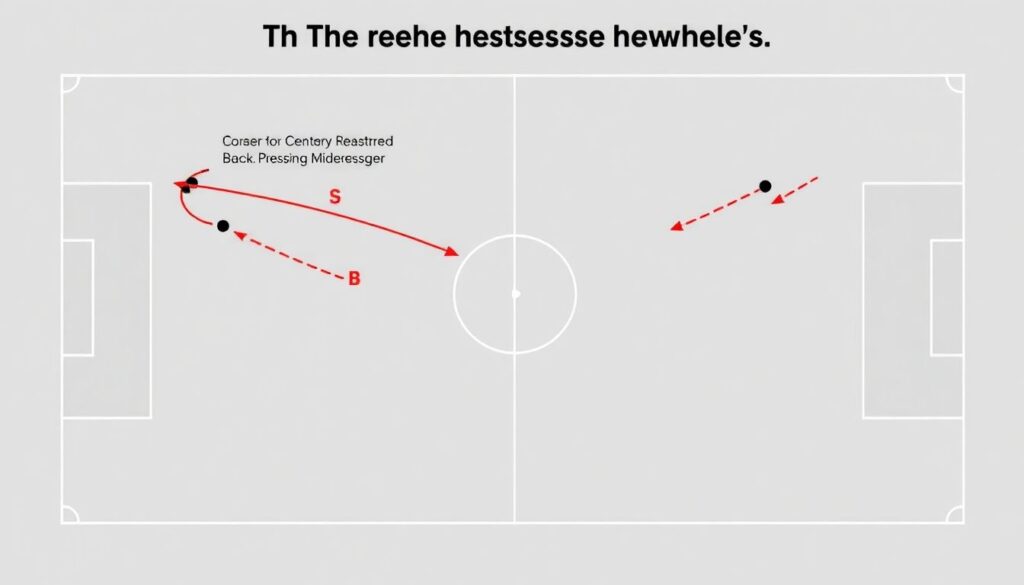
Visualise a common pressing scheme: the centre‑forward curves his run to block the passing lane from centre‑back to defensive midfielder; the near‑side winger jumps to the full‑back; the attacking midfielder locks the pivot from behind.
[Diagram:
W —— CF —— W
——— AM ——
— CM ——— CM —
——— DEF LINE ——]
Pressing triggers often used in the Turkish Super Lig include a backward pass from full‑back to centre‑back, a lofted clearance into the touchline corridor or a slow switch of play by the goalkeeper. Once a trigger appears, the block squeezes 10–15 metres higher. Compared to the Premier League, the intensity is slightly lower but the directional traps — pushing play to the touchline — are increasingly similar.
Transitions: Managing the “Wild” Phase of the Game
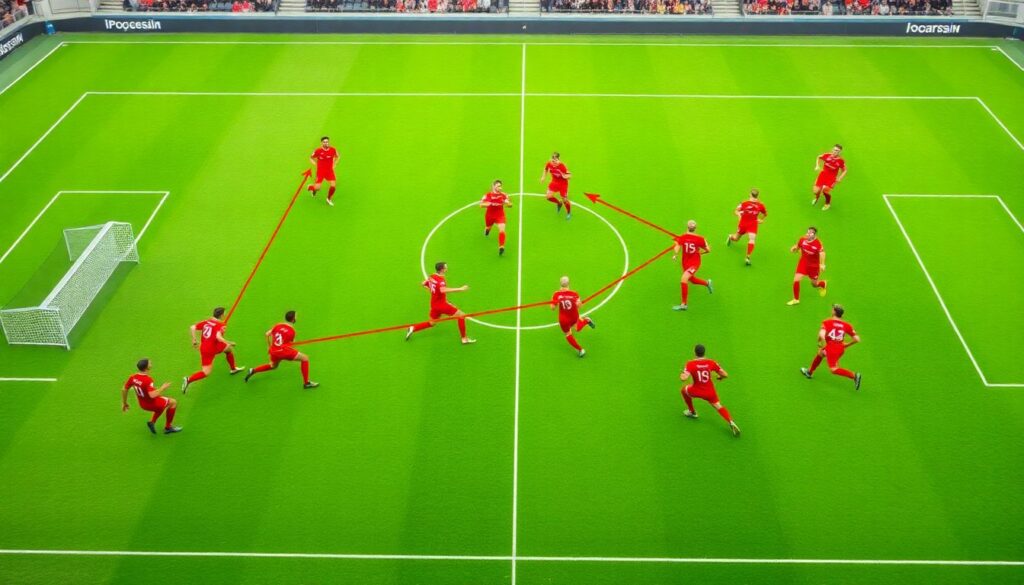
Transitions, the brief windows right after winning or losing the ball, used to be the most chaotic phase in Turkey. Coaches now treat them as programmable events. “Offensive transition” is defined as the first 6–8 seconds after regaining possession, with pre‑agreed patterns: immediate vertical pass to the highest player, sprinting wingers into inside channels, and a late‑arriving midfielder attacking the box edge. “Defensive transition” covers the first 6–8 seconds after losing the ball, where the principles are counter‑press if you can, otherwise foul tactically and delay. Expert staff from leading Istanbul clubs report that transition efficiency is now a core KPI, evaluated per match in video debriefs, not just a vague talking point.
Comparing Transition Models with Other Leagues
If we contrast Süper Lig transitions with the Bundesliga, the German game still shows higher collective sprint intensity, but Turkish teams have closed the gap in structural clarity. Italy’s Serie A leans more towards immediate defensive consolidation — dropping into compact blocks — while Turkish clubs more often attempt an aggressive counter‑press, at least for the first seconds. This reflects the cultural preference for high‑energy moments in front of noisy stands, but it is now rationally constrained: analysts track how many players are behind the ball at the moment of loss and how many can realistically press, preventing the reckless, all‑in counter‑presses that used to leave back lines exposed against even modest opposition.
Role of Data, Video and Analytics in Turkish Clubs
Behind this tactical evolution sits a quieter revolution in data and video workflows. Clubs have expanded analysis departments, integrating tracking data (player positions and velocities) with event data (passes, shots, pressures). Terms like expected goals (xG) and expected threat (xT) are now part of weekly reports. Rather than relying on gut feeling, coaches ask analysts to tag every pressing trigger, line‑breaking pass and rest‑defence situation. In some teams, post‑match meetings are structured around four key dashboards: chance creation, pressing efficiency, transition balance and set‑piece ROI. This data‑driven approach is still catching up with the Premier League, but the gap is narrowing faster than many outside observers realise.
Coaching Education and the New Generation of Staff
Modernisation also flows from a new wave of educated coaches. Many have completed UEFA licences abroad or enrolled in some of the best Turkish football coaching courses, where modules now include game‑model design, video analysis and microcycle planning. Compared with older generations, this cohort speaks a shared language of “principles, sub‑principles and sub‑sub‑principles” to describe tactical rules. Expert educators emphasise scenario‑based training: every drill replicates a specific game phase with clear coaching cues. That said, a uniquely Turkish strength remains: blending this formal knowledge with strong man‑management, acknowledging that emotional regulation under intense fan pressure is a tactical variable in itself, not just a psychological side note.
Expert Recommendations for Further Tactical Growth
Leading Turkish analysts and coaches tend to converge on a similar set of practical recommendations for clubs that want to keep modernising without losing identity:
1. Codify a club‑wide game model, from academy to first team, instead of reinventing the wheel with every new coach.
2. Invest in at least one dedicated set‑piece specialist; marginal gains here decide tight title races.
3. Integrate physical and tactical periodisation so sprint loads match intended pressing intensity.
4. Build a common video language: short clips, consistent tags, minimal jargon for players.
5. Align recruitment profiles with tactical roles — sign players for specific behaviours, not just reputations or highlight reels.
How This Affects Fans: Streaming, Betting and Tickets
All these tactical shifts also reshape how supporters consume the league. Fans watching Turkish Super Lig live streaming now receive richer graphics: average positions, pressing zones, xG timelines. This in turn informs Turkish Super Lig betting tips and predictions, as tipsters lean on pressing stats and chance‑quality metrics rather than only league tables. On the commercial side, more organised scheduling and stadium upgrades make it easier to buy Turkish Super Lig tickets online, while the globalised style of play fuels international demand for Turkish Super Lig jerseys for sale. In other words, tactical modernisation is not just a coaching fad; it’s part of a broader professionalisation that connects the pitch, the analyst’s laptop and the global fan’s screen into one coherent ecosystem.