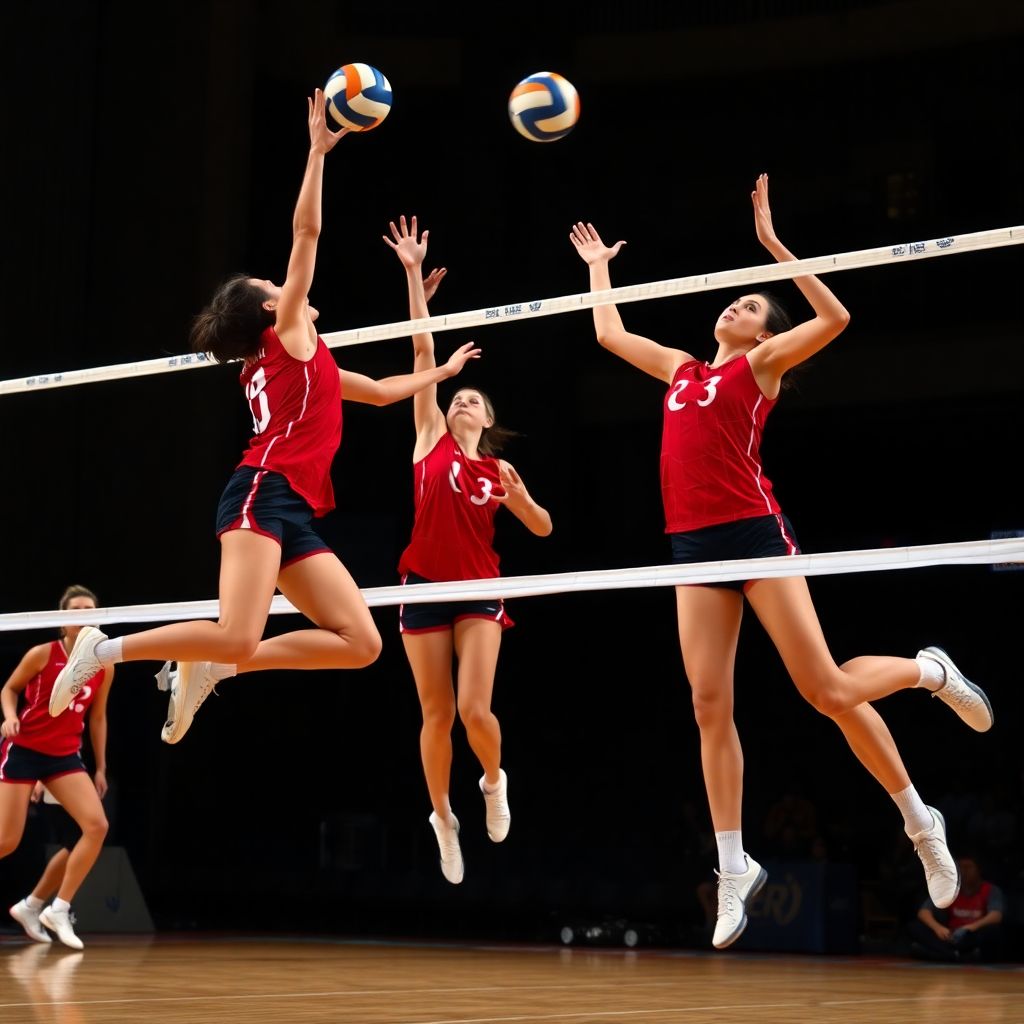
Turkey’s top volleyball servers combine efficient biomechanics, smart spin control, and ruthless tactical targeting. They build power from the legs, transfer it through the core, and release with a relaxed but fast arm. Consistent, measurable routines, even without expensive facilities, make their serves both powerful and predictable under pressure.
Core Serving Principles Behind Top Turkish Players
- Use the legs and core as the primary power source, with the arm as a whip, not a hammer.
- Control spin (topspin or float) deliberately instead of accidentally mixing contact types.
- Standardise toss height, location, and timing to reduce serve-to-serve variability.
- Serve with a tactical goal: specific receiver, seam, or zone, never “just over the net”.
- Track objective metrics such as error rate, ace rate, and opponent’s first-ball quality.
- Integrate strength, mobility, and shoulder care into every volleyball serving training program.
Biomechanics of an Efficient Jump Serve
An efficient jump serve starts in the ground. Elite Turkish players load through the legs and hips, then sequence extension from ankles, knees, and hips before the torso and arm rotate. This kinetic chain lets them generate high ball speed without muscling the ball with the shoulder alone.
Two timings are critical: the toss-approach rhythm and the arm-torso interaction. The toss must land slightly in front of the hitting shoulder so the player can jump “through” the ball. The torso rotates and extends first, with the arm following like a whip, creating high racket-speed-style acceleration.
Core stability matters as much as raw strength. A stable trunk allows force from the jump to travel efficiently to the arm. When the core is weak or late, players compensate with a harder arm swing, which reduces control and increases shoulder load.
For intermediate players in Turkey with limited access to a professional volleyball coach turkey, the priority is to stabilise these basics: repeatable toss, consistent approach rhythm (for example, 3-step or 4-step pattern), and a relaxed, fast arm that contacts the ball at full reach in front of the body.
Technical Variations: From Float to Power Serve
-
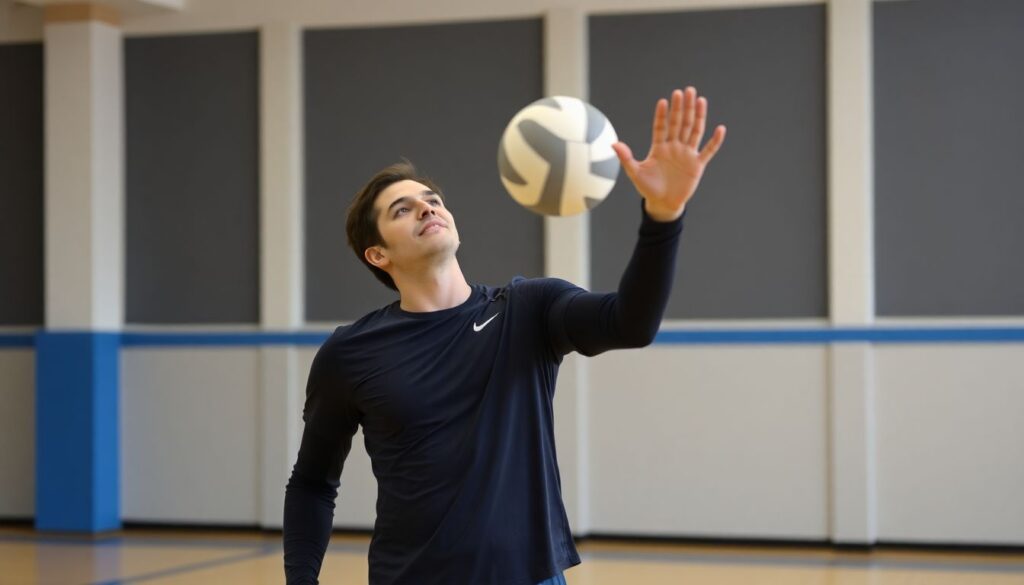
Standing float serve mechanics
Contact slightly behind the ball’s center with a firm, flat hand and minimal wrist movement. The goal is very low spin so the ball “floats” unpredictably. Weight transfers from back foot to front without jumping, ideal for precise zone and seam serving.
-
Jump float serve mechanics
Use a short approach and low, controlled jump. Toss is lower and closer than a power jump serve. Strike the ball in front of the hitting shoulder with a stiff wrist to keep spin minimal. Land balanced inside the court, ready to transition to defense.
-
Topspin jump serve mechanics
Generate more arm speed and use a brushing motion over the back of the ball to create topspin. This spin causes the ball to dip late, allowing aggressive net clearance while still landing in. A loose wrist and fast pronation after contact are key.
-
Hybrid / power float variation
Intermediate players often benefit from a “hybrid” serve: jump like a topspin serve but contact the ball more square to reduce spin while maintaining speed. This can be an effective compromise when full topspin mechanics are not yet consistent.
-
Short (“drop”) serve variation
Use reduced power, a slightly higher arc, and a more vertical hand path to land the ball just behind the net. This forces front-row receivers to pass and can disrupt quick attacks. Control and disguise, not power, are the focus.
-
Side-line and seam targeting
Regardless of float or topspin, adjust contact direction with shoulder rotation rather than crossing the arm wildly. Small changes in torso angle let you attack alleys between passers or deep corners without losing control.
Drills and Progressive Practice Routines
Effective serving development links science to daily habits. A structured volleyball serving training program usually moves from technique stability to pressure simulations. Even in a small Turkish school gym or outdoor court, you can progress systematically with clear targets and counts.
-
Toss-only rhythm drill
Stand on the end line and perform 20-30 tosses in a row without hitting. Let the ball drop and land. Mark an ideal landing spot with tape; repeat sets until at least 80% of tosses land within a small circle. This stabilises timing and trajectory.
-
Wall contact accuracy (low-resource option)
If you lack full-court access, use a solid wall. Mark a small target box at realistic net height. Perform standing serves from 4-5 meters, focusing on flat, clean contacts. Track how many out of 20 hit the box. This is an inexpensive alternative to a volleyball serving clinic for advanced players.
-
Zone serving ladder
Serve in sequence: Zone 1 → Zone 5 → Zone 6 → Zone 1, etc. Do not advance until you complete 3-5 successful serves in a row to the current zone. This builds precision and tactical flexibility. Reduce rest to simulate late-set fatigue.
-
Serve-under-fatigue series
Perform a short conditioning set (for example, 10 squat jumps and 10 sit-ups), then immediately execute 5 jump serves. Record make-miss numbers. This links physical conditioning with skill execution, similar to what you experience at the best volleyball training camps in turkey.
-
Pressure countdown game
Start at 10 points. Each successful serve to a named target adds 1, each miss subtracts 2. Stop when you reach 0 or 15. This introduces decision-making and stress. If you train alone, call zones out loud before the toss to simulate a tactical plan.
-
Video feedback micro-sessions
Use a phone to film only 8-10 serves per angle (side and behind). Review immediately and pick one mechanical cue for the next mini-set. This simple practice replicates some benefits of an online course to improve volleyball serve without extra cost.
Tactical Application: Serving to Disrupt Opponent Systems
Once mechanics and consistency are solid, serving becomes a weapon against the opponent’s offensive system. The goal is not just aces but also forcing predictable, high balls by reducing the quality of the first pass. Turkish professionals constantly adjust serve type, speed, and location to stress weak receivers and break offensive timing.
In match-like scenarios, you can mirror their approach even without full staff or analytics. Example: before a friendly match, identify one passer who looks uncomfortable in warm-up. During the game, float-serve short to this player to pull them forward, then mix in deeper jump serves to the seam between them and the libero. Track how often the opponent loses the quick middle attack after your serve.
Positive impact of tactical serving focus
- Forces specific receivers (often opposites or taller attackers) to pass, reducing their attacking threat.
- Targets seams between passers, increasing communication errors and hesitation.
- Breaks setters’ comfort by pushing passes off the net, limiting quick middle and pipe options.
- Allows your blockers to “read” simpler patterns because the opponent’s offense becomes more predictable.
- Creates psychological pressure when servers consistently attack the same weak passer or zone.
Limitations and risks of aggressive serving tactics
- Higher risk of service errors if players overreach their power or spin capabilities.
- Fatigue-related drop in accuracy during long sets when jump serves are overused.
- Predictability if the server always uses the same type (for example, only topspin to Zone 5).
- Potential miscommunication with coaching staff or teammates if tactical targets are not clearly defined pre-serve.
- Over-focusing on aces instead of consistent pressure can lead to streaky performance.
Physical Conditioning and Injury Prevention for Servers
Serving repeatedly loads the shoulders, lower back, and knees. Turkish pros invest heavily in strength and prehab routines so they can attack the ball thousands of times per season without breaking down. Intermediate players, especially those training without full-time support, should treat basic conditioning as part of the serve itself.
-
Mistake: ignoring leg strength
Relying on the arm instead of the legs reduces power and strains the shoulder. Even with limited equipment, bodyweight squats, lunges, and calf raises 2-3 times per week improve jump height and take-off stability.
-
Mistake: no dedicated shoulder care
Skipping rotator cuff and scapular work is common. Use simple bands (or even light water bottles) for external rotations, Y-T-W raises, and serratus punches. These low-cost drills mirror routines at a professional volleyball coach turkey’s gym.
-
Mistake: poor warm-up before serving
Going from zero to full-speed jump serves increases injury risk and hurts accuracy. Instead, progress from general jogging to dynamic arm swings, then 10-15 easy standing serves before full-power jumps.
-
Myth: “more serves is always better”
Volume without quality or rest leads to bad habits. Focus on smaller, high-focus sets (for example, 3×10 serves with clear targets) rather than endless, unfocused repetitions.
-
Myth: you need a big gym for real conditioning
Many elements can be done at home: single-leg balance work, core planks, hip bridges, and band walk exercises. Combined with court sessions, they provide a solid base comparable to what you would do at the best volleyball training camps in turkey.
Measuring Success: Metrics and Video Analysis
Objective feedback separates serious servers from casual ones. Turkish professionals and high-level clubs track serve outcomes carefully: aces, direct errors, and how often the opponent passes perfectly. Even in a small club or school team, you can build a simple system using paper, a friend with a phone, and honest review.
For example, over 50 serves in a session, note three basic metrics: how many land in, how many force the opponent off the net (estimated), and how many are clear errors. Do this weekly and compare changes. Combine this with short video clips from behind and from the side to see if mechanical adjustments improve your numbers.
A simple pseudo-routine you can run with teammates, similar in structure to a volleyball serving clinic for advanced players, might look like this:
Session plan:
1. Warm-up: 10 min
2. Technical block: 20 serves (focus on toss)
3. Tactical block: 20 serves (target Zone 1 or 5)
4. Pressure block: 10 serves, score +1 in, -2 error
5. Review: 5 min video + notes (1 cue for next time)
Repeat this blueprint for 4-6 weeks, adjusting the focus each week. You now have a personal, trackable mini-program that works even without formal staff or a full-time volleyball serving training program at your club.
Practical Answers to Common Serving Challenges
How can I improve my serve if I only have a small court or half a gym?
Shorten the distance and prioritise clean contact, toss consistency, and wall or target drills. Use taped squares on the floor or wall to simulate zones. When you return to a full court, gradually increase power while keeping the same toss and arm rhythm.
Is it better to learn jump float or topspin serve first?
For most intermediate players, a reliable standing or jump float serve is the priority. It is easier to control and already causes trouble when well-placed. Once you can consistently hit zones with a float, begin adding topspin mechanics in small, structured sets.
How many serves should I practice in one session without a coach?
Focus on 30-60 deliberate serves instead of very high volume. Divide them into small sets of 10 with a clear goal for each set. Record basic stats (in, out, target hit) to keep yourself accountable even without direct coaching supervision.
What is the simplest way to use video for self-analysis?
Place a phone on a stable surface behind the end line and record 8-10 serves. Watch in slow motion and look for toss height, contact point, and follow-through direction. Choose one small cue to adjust next session rather than trying to fix everything at once.
Do I need access to a professional volleyball coach turkey to reach a high serving level?
A qualified coach accelerates progress, but disciplined self-practice, simple metrics, and occasional clinics can also take you far. Combine local sessions with online resources, such as an online course to improve volleyball serve, to refine technique and tactics over time.
Are expensive camps or a volleyball serving clinic for advanced players necessary?

Specialised camps provide great concentrated learning, but they are not the only path. If budget is limited, attend shorter clinics when possible, then apply what you learn through regular, focused practice sessions using the drills and routines described above.
How do I know if my serve is actually effective in matches?
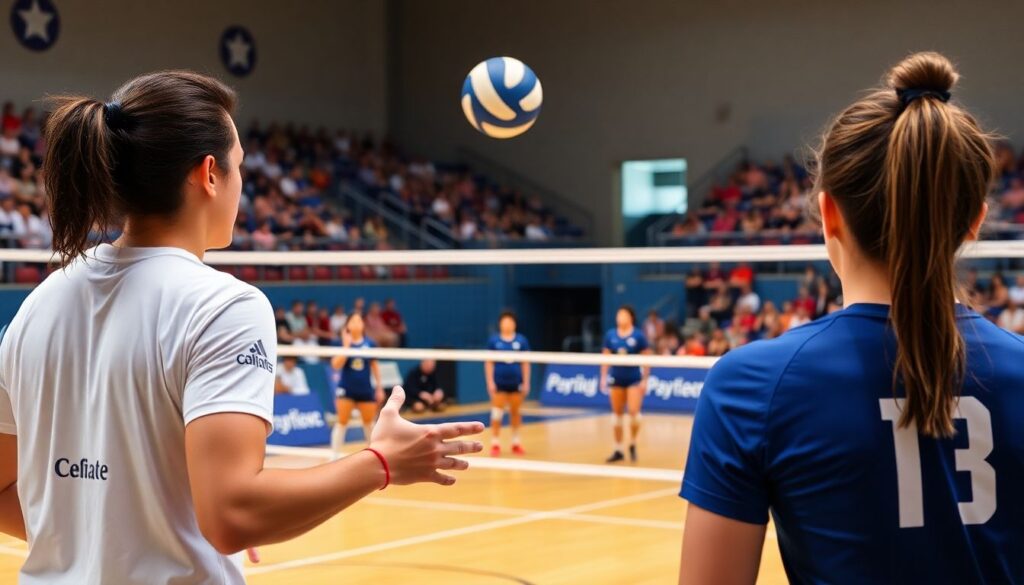
Track simple match stats: how many direct errors you make, how often your serve produces free balls or high balls, and whether the opponent can still run quick attacks. If your serve regularly forces predictable, high sets, it is effectively helping your team.