
Why women’s football in Turkey is suddenly on everyone’s radar
Women’s football in Turkey has moved from the margins to the spotlight in less than a decade, и это не преувеличение. Around 2016–2017, most games were played in front of a few hundred fans, often family members and friends. By 2023–2024, derby games between big Istanbul brands started pulling in several thousand spectators, with proper TV coverage and sponsor backdrops. This is still far from Western European standards, yet the pace of change is striking: more media talk, more girls at academies, and a completely different level of visibility on social networks and streaming platforms.
The league’s evolution: from survival mode to structured ecosystem
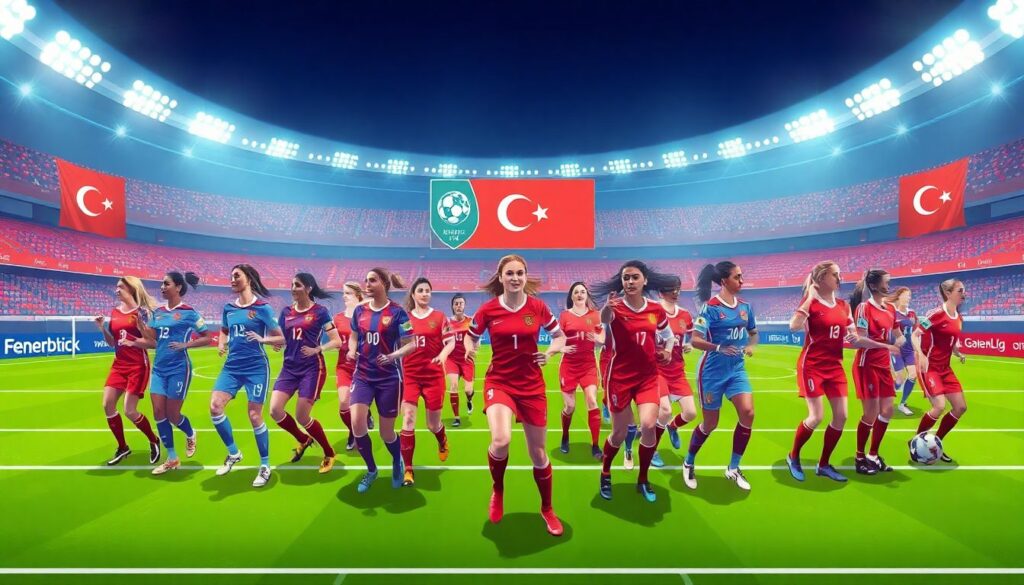
The turkish women’s football league has gone through multiple reforms, name changes and format tweaks, but the underlying trend is clear: more teams, better organization, and stronger links to men’s clubs. The turning point was the official backing of Süper Lig giants such as Fenerbahçe, Galatasaray and Trabzonspor, who either founded or absorbed women’s sections. Their entry brought better training facilities, medical support and marketing machinery. At the same time, “old guard” women’s clubs like ALG Spor or Konak Belediyespor pushed standards up by staying competitive and insisting on professional conditions, even when budgets were modest and travel budgets barely covered basic needs.
> Technical focus: league structure and licensing (as of 2024)
> – Multi-tier system with promotion/relegation between top division and lower leagues
> – Club licensing criteria: minimum youth teams, coaching qualifications, basic medical support
> – Centralized match ball and kit regulations to align with TFF standards
> – Gradual introduction of semi-professional contracts instead of pure amateur status
Professionalisation: contracts, salaries and the reality behind the hype
From the outside, it may look as if women’s football Turkey has “turned professional” overnight, but players’ stories paint a more nuanced picture. In top clubs, first-team contracts now often include year-round salaries, win bonuses and housing support, something almost unthinkable ten years ago. However, in many mid-table and regional sides, players still juggle day jobs, studies and long bus trips for away games. A recurring theme in interviews is the gap between social media visibility and actual financial security: some stars gain respectable sponsorship deals, while squad players sometimes buy their own boots and rely on public transport to training, especially outside the big cities.
Modern fan culture: from empty stands to destination events
New audiences and the matchday experience
One of the most visible changes is who comes to the stadium. Instead of mostly relatives of players, you now see families with kids, young women’s teams watching together and even men’s ultras groups adopting the women’s side of their club. To watch women’s football live in Turkey in Istanbul or Ankara often means a friendlier atmosphere than at some men’s games: fewer flares, more banners with player names, and a tone that is supportive rather than hostile. Ticket prices for women’s matches tend to be low or symbolic, which helps attract newcomers who are curious and willing to give the women’s game a chance without a big financial commitment.
Tickets, broadcasting and the value of visibility
The economics of turkey women’s national football team tickets and league games are still modest, yet visibility has grown sharply. Federation and broadcasters have experimented with free streaming of key matches on YouTube and social platforms, hoping to remove barriers to entry for new fans. For key national team qualifiers, tickets are often promoted via school programs and local municipalities, turning games into community events. The link is simple: more people in stadiums and more eyeballs on screens make it easier to argue for higher sponsorship fees and better player wages. Long term, the ability to reliably monetize audience interest will decide how fast the sport can close the gap with more developed markets.
> Technical focus: revenue streams (indicative patterns)
> – Gate receipts: still a small share, but rising for big-city derbies and national team games
> – Sponsorship: shirt sponsors, municipal backing, local businesses critical for smaller clubs
> – Broadcasting: mix of traditional TV, federation streams and club-run channels
> – Ancillary income: academies, summer camps, merchandise for high-profile clubs
Key clubs and breakthrough stars reshaping the landscape
Clubs driving standards on and off the pitch
Discussions about the best women’s football clubs in turkey usually start with a mix of traditional women’s teams and new powerhouses attached to famous badges. ALG Spor from Gaziantep, for example, became a symbol of what focused investment and smart scouting can achieve, qualifying for European competitions and showing that a women-first project can succeed even without a big men’s brand behind it. On the other side, women’s sections of Fenerbahçe, Beşiktaş and Galatasaray have leveraged fan bases and infrastructure to quickly climb the competitive ladder. Their presence raises expectations: better training grounds are no longer a luxury, and sports science support, from GPS vests to individualized strength plans, is gradually becoming a norm.
National team faces of a new generation
The current wave of stars in the women’s national side reflects this club progress. More players grow up with regular tactical training, video analysis and exposure to different styles through youth tournaments. A noticeable trend up to 2024 has been the gradual increase in players plying their trade abroad, especially in Central and Western Europe, then bringing back higher tempo standards to the national setup. Younger players cite not only big global icons like Alexia Putellas or Sam Kerr as inspirations, but also local heroes from the turkey women’s national football team who made it into foreign leagues, proving that the leap from domestic competition to the broader European scene is genuinely possible with the right support and career planning.
> Technical focus: player development trends
> – Shift from multi-sport participation to early specialization in football for talented girls
> – Wider use of video and data: basic xG, passing maps and physical metrics at top clubs
> – Better integration of U17/U19 teams with senior squads for smoother transitions
> – More UEFA coaching-licensed staff in women’s academies compared with a decade ago
Structural challenges that still hold back full potential
Grassroots bottlenecks and regional inequality
Despite visible progress at the top, grassroots development remains uneven. Big cities enjoy academy networks, indoor pitches and school programs, while smaller regions sometimes lack even a dedicated girls’ team. Some promising players travel hundreds of kilometers weekly for better training, a logistical and economic burden on families. Coaches often mention that technique and game understanding can be developed later, but if girls miss out on structured football between ages 8 and 13, it becomes hard to catch up. Regional inequality thus shapes the talent map: a few urban centers concentrate most prospects, while entire provinces contribute almost no players to national youth camps or professional squads.
Cultural barriers and retaining teenage players
Another persistent challenge is keeping girls in the game during their teenage years. Between school pressure, family expectations and social stereotypes, many drop out at 15–17, right when serious development should accelerate. Coaches describe situations where players skip away games due to exam schedules, or leave entirely because relatives consider football “not serious” compared with traditional professions. Initiatives that highlight academic success among players, offer tutoring support and showcase role-model athletes balancing university with elite sport have shown promise. Still, the drop-off problem remains central: without wider cultural acceptance of women in competitive sport, even the best league reforms will struggle to produce enough high-level footballers.
Modern tactics and playing styles in Turkish women’s football
From physical battles to structured positional play
As clubs improved coaching and analytics, the style of play in women’s football in Turkey has shifted noticeably. Earlier, many matches were decided by raw pace and individual talent; defensive lines were chaotic, and transitions resembled end-to-end races. Today, leading sides increasingly use clear positional principles: compact mid-blocks, defined pressing triggers, and rehearsed build-up patterns from the back. Analysts working in top clubs point out that the tactical “gap” with mid-level European sides is narrowing, especially in organization without the ball. Fitness programs tailored for female physiology also reduce late-game fatigue, allowing teams to maintain pressing intensity into the final 20 minutes, instead of simply hanging on and clearing long.
> Technical focus: tactical and physical benchmarks
> – Average team distances covered tracked via GPS to plan load and recovery
> – Growing use of wide overloads and underlapping fullbacks vs older direct styles
> – Set-piece routines prepared through video scouting of opponents’ weaknesses
> – Recovery protocols (cold baths, nutrition plans) similar to men’s professional teams
Goalkeeping, set pieces and the “details gap”
Coaches often say that the difference between mid-table and title contenders lies in how they handle details: goalkeeping quality, set-piece execution, and error management under pressure. In the Turkish context, goalkeeper training used to lag behind outfield development, with limited specialist coaching available. Over the last few seasons, more clubs have hired dedicated GK coaches for women’s teams, leading to better command of the box and improved distribution. Corners and free-kicks have also evolved from improvised deliveries to carefully scripted routines, using blockers, late runs and second-ball traps. As these micro-aspects improve, domestic games become more tactical chess matches, reducing the randomness that once made results wildly unpredictable.
How fans and stakeholders can sustain the momentum
What ordinary fans can actually do
Sustainable growth is not just about federations and sponsors; everyday supporters matter as well. Simple steps like bringing friends to a match, sharing highlight clips or buying a jersey of a women’s player create visible demand signals. When fans choose to watch women’s football live in Turkey instead of only following men’s games, they shift the algorithm: broadcasters notice viewing numbers, sponsors check engagement metrics and clubs justify bigger investment lines in their budgets. For young girls in the stands, seeing active fan culture around women’s teams normalizes the idea that their own football dreams are not a quirky hobby, but a legitimate path worthy of time, effort and social recognition.
Strategic priorities for the next decade
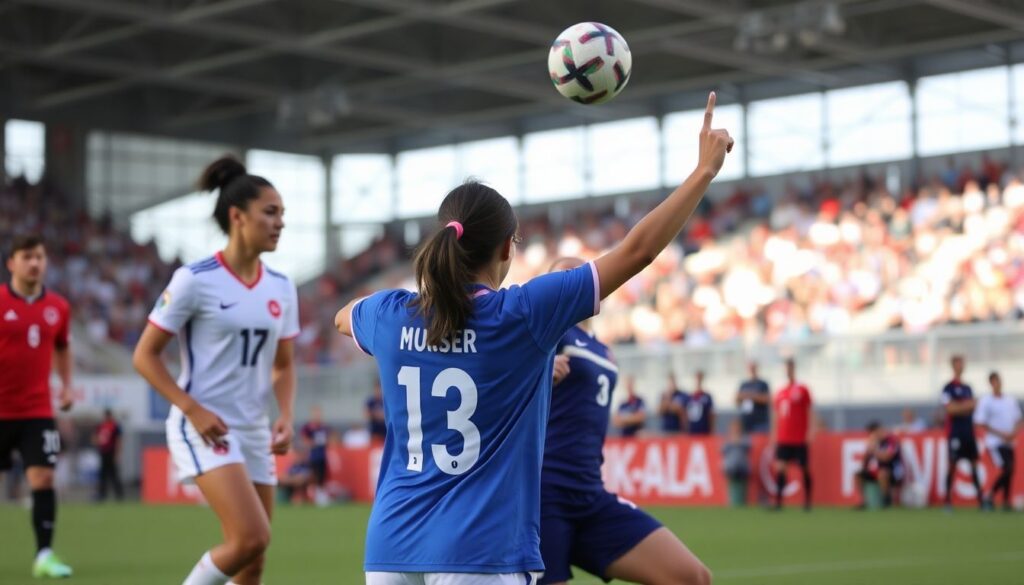
Looking ahead from 2026, the main question is not whether the women’s game will grow in Turkey, but how quickly and how evenly this growth will spread. Key priorities frequently highlighted by experts include deepening school partnerships, stabilizing club finances beyond municipal support, and expanding coach education focused specifically on the women’s game. Another crucial area is data collection: transparent statistics on attendance, injuries, wages and youth participation would move debates from anecdotes to evidence-based decisions. If stakeholders can align around these goals, the trajectory suggests that by the early 2030s, the women’s domestic league could become a recognized talent exporter and a regular participant in later stages of European competitions, rather than just a hopeful outsider.