
The science behind Turkey’s rise in women’s volleyball
Turkey didn’t become a queen of women’s volleyball by accident.
It’s not “talent” or “good generation” magic. It’s systems, data and a very specific way of teaching the game – especially the spike.
If you look at how the Turkish national team plays today, you see three things right away: height, speed and ruthless efficiency in attack. Behind that highlight-reel power is a surprisingly nerdy infrastructure.
Let’s break down how Turkey built this powerhouse – and what you, as a player or coach, can actually copy. Along the way, I’ll point out the most common beginner mistakes that Turkish coaches work hard to erase from day one.
—
How Turkey built a volleyball factory, not just a team
From “good” to world-class: the timeline that matters
Turkey’s rise didn’t happen overnight:
1. Early 2000s – clubs like VakıfBank and Eczacıbaşı start investing heavily in women’s volleyball.
2. 2010–2018 – Turkish clubs dominate the CEV Champions League. VakıfBank, for example, wins the title 5 times (2011, 2013, 2017, 2018, 2022).
3. 2019–2023 – the national team climbs: EuroVolley medals (gold in 2023), and in 2023 Turkey becomes FIVB world No.1 in women’s volleyball rankings.
Turkish clubs stopped thinking “let’s just sign stars” and started thinking “let’s manufacture stars.” That meant academies, sport science, and brutally high training standards from U14 and up.
Short version:
They professionalized every level, not just the senior national team.
—
Clubs as laboratories: why Istanbul is a volleyball science hub
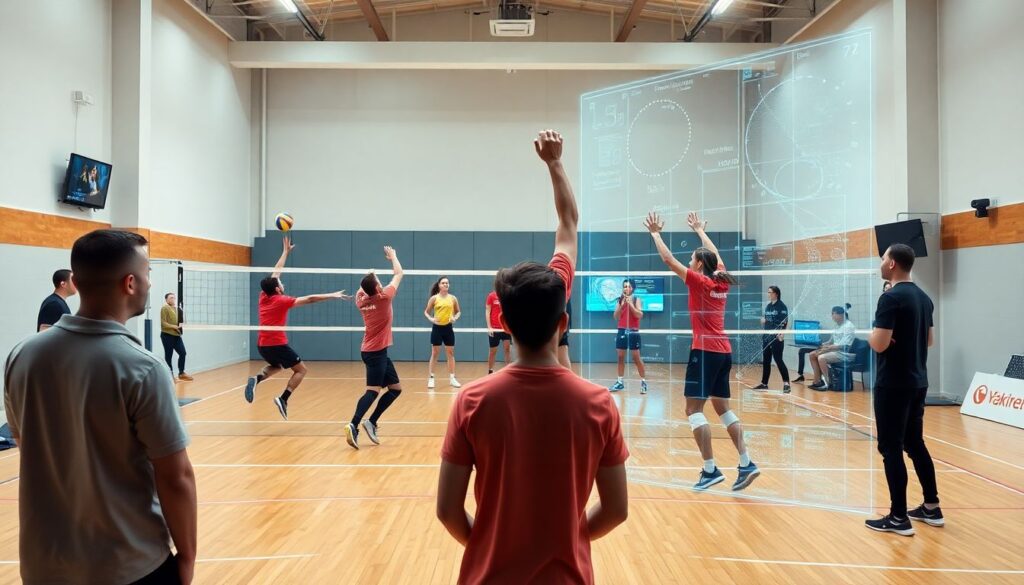
In Turkey, the big Istanbul clubs invested in:
– in-house strength & conditioning staff
– video analysis departments
– sports psychologists
– data tracking (serve speed, spike angles, jump height)
Coaches at VakıfBank and Eczacıbaşı will routinely track players’ jump reach, spike velocity and landing mechanics. This is not “extra”; it’s standard practice.
You feel this even as a fan. When you’re buying vakifbank eczacibasi womens volleyball tickets, you’re not just watching a match – you’re watching the output of a whole research-and-development pipeline.
—
The science of the spike: what Turkish coaches actually teach
Technical block: the spike, broken down like a Turkish coach
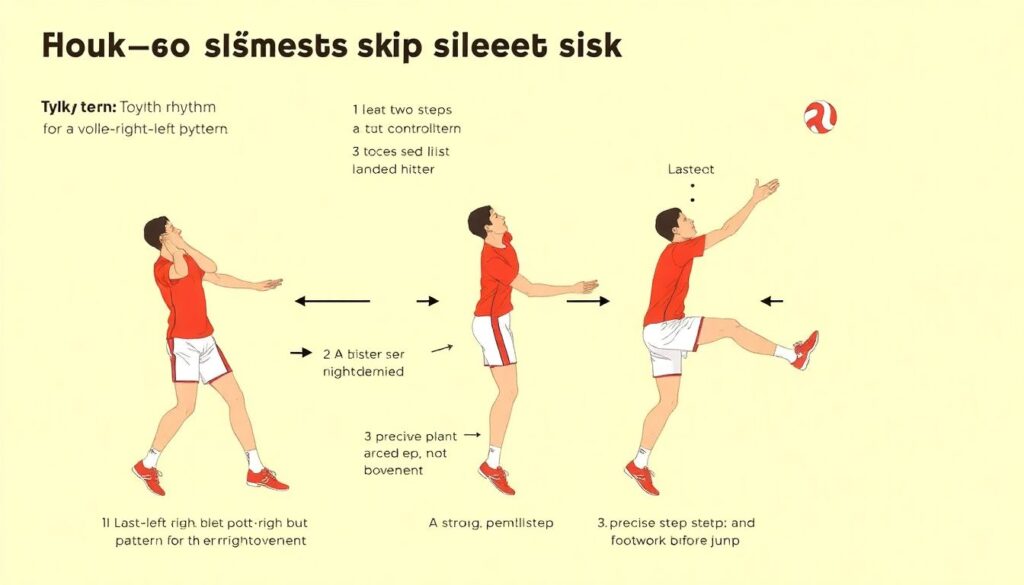
Let’s strip the spike to its components the way elite Turkish coaches do:
1. Approach rhythm
– Standard pattern: left–right–left for right-handed hitters, right–left–right for left-handers.
– Ideal approach speed: fast last 2 steps, not frantic, with a clear acceleration.
2. Penultimate step and plant
– Wide penultimate step to lower the center of mass.
– Feet shoulder-width or slightly wider on the plant, both feet turned slightly towards the setter (about 20–30°), knees loaded.
3. Arm swing and takeoff
– Both arms drive back aggressively, then whip forward and up.
– Shoulder extension → flexion adds 10–20% to jump height when done correctly (data from multiple S&C studies).
4. In-air mechanics
– Hitting arm fully cocked (elbow high, shoulder externally rotated).
– Contact out in front of the hitting shoulder, at the highest possible reach with a slightly closed body position for power.
5. Contact and wrist action
– Open hand, firm palm, slightly spread fingers.
– Pronounced wrist snap to generate topspin and a sharper downward angle.
6. Landing
– Two-foot landing preferred for most outside and opposite hitters.
– Knees bent, hips back, chest up – absorbing force like a spring.
This is the “language” you’ll hear in a serious Turkish gym every day.
—
Common beginner mistakes in the spike (and how Turks fix them)
Here are the five errors that show up constantly with new players – and how they’re corrected in high-level Turkish systems:
1. “Running” instead of approaching
– Mistake: Players sprint in a straight line under the ball, losing timing and power.
– Turkish fix: Hard drilling of the 3-step rhythm, sometimes with no ball, using verbal counts: “1–2–3, JUMP”. Coaches won’t even toss a ball until the rhythm is automatic.
2. Jumping “under” the ball
– Mistake: Player approaches too close to the net, the ball ends up almost behind their head. Result: weak tip or awkward “push” shot.
– Turkish fix: Using floor markers (cones or tape) to define takeoff distance from the net (typically 60–90 cm depending on level and approach speed). Players repeat dozens of reps only to the target spot.
3. No use of the non-hitting arm
– Mistake: The non-hitting arm just dangles or flails. Power and accuracy both drop.
– Turkish fix: Coaches cue “point then pull”: point at the ball with your non-hitting hand, then rip it down towards your hip as you swing. This stabilizes the torso and adds speed to the rotation.
4. Hitting with a bent wrist and “slapping” the ball
– Mistake: New players flex the wrist too early or hit with a soft hand, causing floaty, unpredictable shots.
– Turkish fix: Wall drills with strict form – contact at full reach, firm hand, late wrist snap. The focus is on feeling the ball roll from the heel of the palm toward the fingertips.
5. Dangerous, stiff landings
– Mistake: Landing on straight legs or on one leg, knees caving inward. Huge ACL risk, especially for young girls.
– Turkish fix: Separate jump-and-landing sessions with no net. Soft knees, hips back, knees tracking over toes, even adding mini-hurdles to force proper mechanics.
—
Data, not vibes: how Turkey measures progress
Technical block: key metrics Turkish clubs track
Elite Turkish clubs and the national team monitor:
– Spike velocity:
– Top outside hitters often reach 75–90 km/h on hard cross-court swings.
– Youth targets might start at 50–60 km/h and build up with technique work and strength training.
– Vertical jump & spike reach:
– A 185 cm outside hitter might have a spike reach of 305–315 cm.
– Progress is tracked monthly; +2–3 cm in a season is a realistic improvement.
– Landing asymmetry:
– Using video or pressure plates, they check if a player loads one leg more. More than 10–15% difference is a red flag.
– Attack efficiency (not just “kills”):
– (Kills – errors – blocked) ÷ total attempts.
– Top Turkish pros sit around 0.300–0.350 in tough international competitions.
Instead of saying “her spike looks better,” coaches can say, “her spike speed went from 65 to 74 km/h and her approach consistency is up.” That’s how you turn subjective opinion into objective progress.
—
Real practice example: a typical spike-focused session
Here’s how a 90-minute attacking session in a strong Turkish club might look:
1. 15 min – Movement prep and jump technique
Light plyometrics, landing mechanics, quick footwork.
2. 20 min – Approach and timing without hitting
Players run approaches while a coach tosses balls to a target zone; the focus is on arriving at the correct takeoff point, not hitting.
3. 25 min – Controlled hitting from a coach’s toss or easy set
Specific swing goal: cross-court only, or high hands, or deep line. Video used on tablets right at the court.
4. 20 min – Game-like drills
6v6 or 4v4 with constraints: you only score on a controlled spike, hitting out = -1 point. Forces quality over chaos.
5. 10 min – Cooldown, notes & data
Players note how they felt, coaches mark key observations and compare with tracking data.
This sounds intense, but that’s the level of structure that produces national-team-ready spikers.
—
Systemic advantages: why Turkey keeps producing hitters
The club–national team feedback loop
Turkey’s system works because clubs and the national team are aligned.
– National-team coaches share clear technical standards for skills like spike mechanics, blocking and defensive posture.
– Clubs integrate those standards so when a player gets a call-up, there’s minimal “re-learning” needed.
– Data flows both ways: the national staff may notice, for example, that a certain player’s spike efficiency drops vs. big blocks, so the club designs off-season training to target that.
This avoids the classic problem some countries have where clubs and national teams pull players in different technical directions.
—
How pro culture trickles down to kids
If you visit volleyball training camps in Turkey, you’ll notice something:
Children and teenagers are exposed early to:
– video breakdown of their own technique
– structured footwork progressions
– basic strength and landing work (age-appropriate)
Even U14 girls are taught the “why” behind drills: how a better approach angle opens more hitting options, or how proper arm swing can add centimeters to their jump without touching the weight room yet.
This is important: Turkey is not waiting for “natural” athletes. It is engineering better ones, step by step.
—
What beginners can copy from the Turkish model
1. Treat footwork like a skill, not a warm-up
Most beginners want to “just hit.” In Turkish gyms, players may spend weeks perfecting approach timing before being allowed to smash full-speed.
If you’re new:
1. Practice the 3-step approach 20–30 times a day, no ball.
2. Add a jump, still no ball, focusing on balance and soft landings.
3. Only then start adding easy tosses or sets.
It feels slow, but it saves months of bad habits later.
—
2. Fix the “head under the ball” problem early
Beginners often chase the ball so aggressively they end up directly under it. This kills power and makes timing almost impossible.
Borrow a simple Turkish drill:
Draw or tape a takeoff box on the floor (about 60–90 cm from the net). Players must always jump from inside that box. Setters adjust the ball to reach that zone – not the other way around.
You train the brain to think: “I go to my spot, and the ball meets me there.”
—
3. Normalize video feedback from day one
Turkish teams use video constantly – not as punishment, but as a mirror.
Beginners hate seeing themselves at first, but it’s one of the fastest ways to correct:
– slow arm swings
– off-balance approaches
– dangerous landings
Even recording on a phone from the side once a week helps. Compare your form to elite Turkish hitters; look at when they jump, not just how hard they swing.
—
The fan ecosystem: how money and passion power the system
Tickets, broadcasts and why full stands matter
A packed arena isn’t just fun; it’s funding.
Strong demand for turkey volleyball league tickets means clubs can invest more in youth academies, foreign experts and technology. When thousands of fans buy vakifbank eczacibasi womens volleyball tickets, they’re indirectly financing new weight rooms, better analytics software, and more specialized coaches.
On the media side, the rise of turkish womens volleyball live stream broadcasts has created a bigger audience and more sponsors, which again cycles back into better facilities and coaching. Young players grow up seeing professional women play on big screens weekly – and that visibility boosts both participation and ambition.
Even things like turkey womens volleyball team jerseys matter. They’re not just merch; they turn players into role models. When a 13-year-old shows up to practice wearing a jersey with her favorite Turkish outside hitter’s name on the back, that’s motivation you can’t buy in any other way.
—
Beginner mistakes beyond technique: mindset and training habits
Overtraining the arm, undertraining the legs
New players love to swing. They’ll do 200 spikes in a session with zero focus on leg strength or landing technique. In Turkey, the ratio is smarter:
– Fewer maximal spikes per session
– More quality jumps with technical cues
– Consistent leg and core work to support the load
If you’re a beginner:
For every intense hitting drill, aim to balance it with lower-intensity movement or strength work. You want your legs and core to be able to handle the power your arm is producing.
—
Trying to hit “through” the block too early
Big mistake: beginners copy pro hitters by blasting straight into the block, without having the control to use the block smartly.
Turkish coaches introduce:
– tooling high hands
– hitting high off the top of the block
– roll shots to open space
long before they tell young players to “hammer everything.” Power is important, but decision-making is king.
If you’re starting out, set a simple rule in practice: for every hard spike, you must also execute one controlled shot to a specific target (deep corner, line, tip to the middle, etc.).
—
What Turkey teaches the volleyball world
Turkey’s women’s volleyball success looks glamorous on TV – fast rallies, huge crowds, elite stars. Underneath that is an almost obsessive focus on:
– technical detail in the spike and other skills
– early, systematic coaching for kids
– data and video to guide training
– alignment between clubs, national team, and fan ecosystem
If you’re a player, coach or even a serious fan, there’s a lot you can borrow:
– Break the spike into clear, trainable components.
– Fix footwork and landing first, power second.
– Use video and simple metrics to track real progress.
– Treat the system – not just the star – as the real product.
Turkey didn’t just find great attackers. It built them.
And the science of the spike sits right at the center of that story.
Комментарии