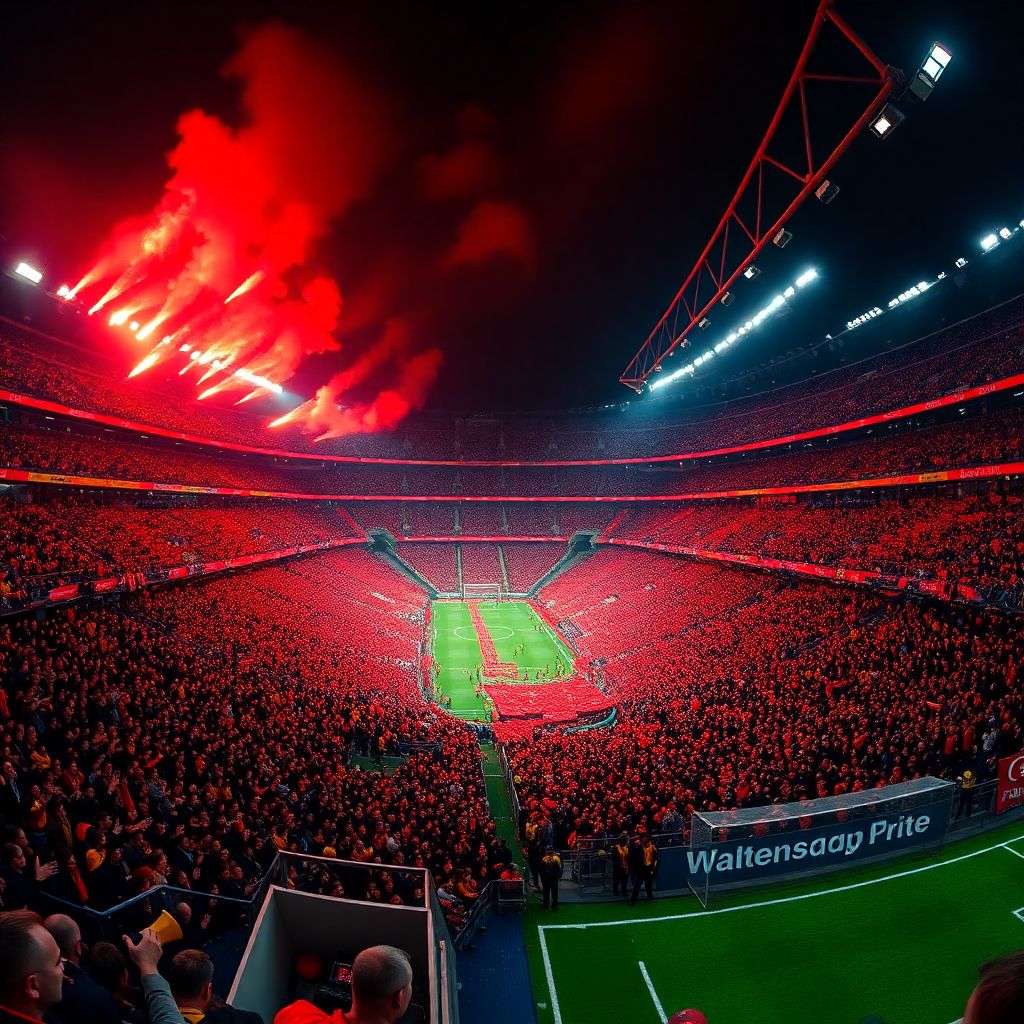
Why Turkish ultras feel different from the rest of Europe
Walk into almost any big stadium in Europe and you’ll see flags, hear chants and maybe a drum or two.
Walk into a big game in Istanbul and it feels like you’ve stepped into another universe.
Turkey’s most passionate football fan groups — the ultras — don’t just support their clubs. They *occupy* them. They shape the atmosphere, the choreography, even the politics around the stands. If you’re planning to watch a derby live or just curious how these groups work from the inside, you need to understand both their culture and their rules.
And yes, there are rules — even when nobody writes them down.
In this deep dive we’ll unpack how Turkish ultras are structured, how they coordinate those insane atmospheres you see on YouTube, and what mistakes foreigners and new fans almost always make when they try to “join the party”.
—
Main ultra groups in Turkey: who’s who
Galatasaray – ultrAslan and the “fire” identity
Galatasaray’s main ultra group is ultrAslan, founded in 2001, but their roots go back to hardcore supporters from the late 80s and 90s.
– Core zone: North stand (behind the goal) at Rams Park (formerly Türk Telekom Arena)
– Self‑image: fire, passion, never shutting up
– Motto often heard: “Cehenneme hoş geldiniz” – “Welcome to hell”
In the 2013 Champions League match against Real Madrid, official UEFA reports measured noise levels inside the stadium at around 131 dB, close to a jet engine at takeoff. That wasn’t “the club” doing it. That was ultrAslan coordinating:
– capos (leaders with megaphones)
– drummers
– flag bearers
– pyro teams (where allowed, often outside UEFA games)
They decide when to crank up pressure on rivals, when to show support to their own players, and when to protest the club board.
Fenerbahçe – Genç Fenerbahçeliler and the “resistance” vibe
On the Asian side of Istanbul, Fenerbahçe’s hardcore are Genç Fenerbahçeliler (GFB). They formed in the late 80s and became a structured ultra group in the 90s.
– Core zone: Maraton (east stand) and Okul Açık at Ülker Stadium
– Image: resistance, loyalty, militant style of support
Their choreography for big games, especially derbies, is military‑level in timing. For example, during title run‑ins, GFB will keep the stadium in constant noise for 90+ minutes, rotating songs so people don’t burn out. They’re known for large banners responding to political events or federation decisions within days — prepared in hidden warehouses, brought in pieces, assembled on matchday.
Beşiktaş – Çarşı and the political edge
Beşiktaş has one of the most famous ultras in Europe: Çarşı.
– Core zone: Dolmabahçe side of Vodafone Park
– Identity: anti‑authoritarian, loud, sarcastic
Çarşı became internationally known during the Gezi Park protests in 2013, when some members were on the streets with a famous banner: “Çarşı, her şeye karşı” — “Çarşı is against everything.”
Inside the stadium they’re masters of call‑and‑response chants. The famous “Beşiktaş – Black Eagles” roar is structured like waves: one side screams, the other answers, capos conduct it like an orchestra. Noise levels in some derbies at İnönü (the old stadium) were recorded above 120 dB.
—
How Turkish ultras are structured (it’s not just chaos)
Unwritten hierarchy: how it really works
From the outside it looks like a mass of people jumping. From the inside there’s structure:
1. Founders / elders
They rarely lead chants now, but they have moral authority. They decide big positions: new capos, new rules, when to escalate protests.
2. Capos (chant leaders)
The faces you see with megaphones. They’re chosen for stamina, rhythm and respect. They manage the tempo, decide which song fits the match context, and when to go silent for a minute of remembrance or protest.
3. Crew leaders
Each block of seats has an informal leader. They make sure people stand up, clap in rhythm, hold the choreography correctly.
4. Logistics teams
They handle banners, drums, ticket coordination, and sometimes bus trips for away games.
5. Regulars
Fans who attend most home games, know all the songs, stand in the ultra sector and follow the group’s etiquette.
It’s more like a horizontal network than a rigid pyramid. But ignore that structure and you’ll instantly stand out as a tourist or a rookie.
—
Technical block: communication and coordination
How ultras actually organize things (simplified):
– Channels used
– Private WhatsApp / Telegram groups for core members
– Closed Instagram pages for design previews (banners, tifos)
– Encrypted chats for away‑day logistics
– Matchday timeline – big game example
– T‑72 hours: final design of choreography approved
– T‑48 hours: printing / painting banners, cutting card choreographies
– T‑12 hours: crew leaders receive seating charts with tifo locations
– T‑3 hours: entry into stadium, hiding elements under seats
– T‑20 minutes: capos briefed on “scenario”: which chants at what minutes
– Kickoff: live adjustment based on score, referee, opponent reaction
– Command principles
– One main capo, two backups per stand
– No conflicting songs from different capos
– Quick switch to “unity” chants if team is under pressure
—
Inside the atmosphere: the sensory shock for newcomers
First time at a big Istanbul match, especially a derby, you’ll likely experience:
– Constant noise – talking normally is impossible
– Visual overload – flags, flares (in domestic games), smoke, massive banners
– Zero sitting down – in ultra sections you stand 90 minutes, minimum
– Emotional swings – from euphoria to rage in seconds
Many first‑timers buying Turkey football tickets assume they can treat it like a Premier League experience: arrive 20 minutes before kickoff, grab popcorn, take selfies. In an ultra sector, that attitude will instantly mark you as “not one of us”.
—
Frequent mistakes new fans make (and how to avoid them)
1. Choosing the wrong sector
Newcomers often just pick “best available” when booking. They end up in:
– hardcore ultra block (non‑stop standing, zero patience for phones and selfies) or
– family sector (no singing, no swearing, different vibe)
If you want to *watch* the ultras without being in the middle of them:
– For Galatasaray: choose lateral stands, not behind the goal
– For Fenerbahçe: avoid Okul Açık and the densest Maraton blocks
– For Beşiktaş: go opposite the main ultra end, still great view and sound
Common rookie error:
Buying the most expensive seat thinking “more expensive = better atmosphere”. In Turkey, the most expensive seats are often the *quietest*. Ultras usually fill cheaper stands behind the goals.
—
2. Treating a derby like a tourist attraction
Especially with Galatasaray vs Fenerbahce derby tickets, foreigners sometimes:
– Wear neutral colors and act like it’s a museum visit
– Ignore local tension and joke about both clubs equally
– Pull out flags of other teams “because I’m a football fan”
Derby day in Istanbul is not a neutral event; it’s a deeply emotional one. Locals might have family members who stopped talking to each other after title deciders. Riot police, road closures, banned away fans — this is serious business.
Better approach:
– Go with a local who supports one side and stick with that side
– Avoid colors of the rival club, even if they’re part of your normal clothes
– Never try to “banter” both sets of fans around the stadium
—
3. Filming everything instead of joining in
Ultras want participation, not an audience. One of the biggest sins in an ultra block is:
– Phone in the air
– Mouth closed
– Not singing, not clapping, just recording
In many groups, regulars will:
– Tap you on the shoulder and tell you to put the phone down
– Move in front of you with a banner or flag
– In extreme cases, ask you to leave the core zone
You don’t have to know every lyric. But you *do* need to show effort:
– Clap in rhythm when you hear drums
– Repeat easy parts of the chant
– Join big, simple shouts like “GALATASARAY!” or “FENERBAHÇE!”
—
4. Ignoring dress and colors
Another rookie mistake: turning up in random European club shirts.
Imagine walking into Galatasaray’s end wearing a Barcelona top because “I’m a fan of good football.” It signals you’re not emotionally invested, which is the opposite of what ultras value.
Guidelines:
1. Neutral t‑shirt in club colors is fine (red/yellow, yellow/navy, black/white).
2. Avoid visible crests of other clubs, even if they’re not rivals.
3. Don’t wear the *rival’s* color scheme under any circumstances.
—
5. Underestimating the intensity of away days
New fans sometimes join away trips for the “experience” without:
– Understanding travel security
– Knowing the chants
– Having any previous matchday experience
On high‑risk away games, buses go in convoys, escorted by police, with tight control over where they stop. Rival fans may throw stones, shout abuse or provoke at rest areas.
Jumping into that with zero preparation and no local contact is not brave — it’s naive.
—
How ultras use songs, symbols and space
Chants as a weapon – not just background noise
Ultras don’t sing randomly. They pick songs based on:
– Match situation – leading, drawing, losing
– Opponent – rival or mid‑table team
– Referee decisions – perceived injustice triggers specific chants
Example from practice:
– When Galatasaray scores late against Fenerbahçe, ultrAslan often launches into long, triumphant songs rather than short shouts, to “keep the rival down” emotionally after the goal.
– When Beşiktaş plays poorly, Çarşı might switch to songs honoring club legends, subtly reminding players of the shirt’s weight.
Visual identity: flags, banners, pyro
Flags aren’t just decoration. They carry:
– Neighborhood names
– Year of founding of the group
– Historical references: old crests, legendary players, slogans
Pyrotechnics are heavily regulated, especially in European competition. But in domestic games (and sometimes around the stadium rather than inside), ultras still use:
– Red and yellow flares for Galatasaray
– Yellow and navy for Fenerbahçe
– Black and white smoke for Beşiktaş
These displays are timed: player entrance, anthem, kickoff, or key minutes related to club history (like 19:03 for Fenerbahçe, reflecting 1903 — Beşiktaş’s founding year — in some choreographies, or 19:05 for Galatasaray).
—
Technical block: how a tifo is actually built
Step‑by‑step typical choreography preparation:
1. Concept phase (2–3 weeks out)
– Theme: anniversary, legend, political message, rivalry
– Designers sketch on paper or digitally
2. Approval and budgeting
– Estimate material: plastic sheets, fabric, paint, ropes
– Fundraising via online posts, matchday collections, local businesses
3. Production (7–10 days)
– Renting a hall or using a school gym at night
– Volunteers trace the design onto fabric / plastic
– Teams assigned to specific colors
4. Transport and hiding (matchday –6 to –3 hours)
– Rolled into tubes or folded into small packages
– Brought in under banners, jackets, bags
5. Execution (stadium –30 to 0 minutes)
– Crew leaders distribute parts by row and seat
– At a pre‑agreed signal, everyone lifts at once
– Capos maintain chant that fits the message
Failure at any step — late arrival, wrong sector, wrong timing — ruins weeks of work. That’s why ultras get angry when someone in the tifo zone refuses to cooperate.
—
Ultras and the business side: tickets, tours, and packages
Commercial football vs. ultra culture
As Turkish football becomes more global, the tension between ultras and commercialization grows. Clubs now:
– Sell VIP experiences
– Offer hospitality lounges
– Promote official Turkey football fan tours
At the same time, ultras fight to keep their sectors affordable and loud. They often criticize dynamic pricing and ticket policies that hurt regulars.
If you’re coming from abroad and looking at Turkish Super Lig match packages, understand this: the closer your “package” is to luxury hospitality, the farther you are from the heart of ultra culture. It might be safer and more comfortable, but you’ll be in a glass box watching atmosphere rather than living it.
—
Stadium tourism vs. real matchdays
There’s a booming market for Istanbul football stadium tours — walking through empty stands of Galatasaray, Fenerbahçe or Beşiktaş, visiting museums, locker rooms, press areas.
These tours are great for:
– Taking photos of the stadium architecture
– Learning about trophies and history
– Visiting club shops without crowds
But they won’t teach you how the north stand breathes on a cold January night, or why a certain song starts exactly at minute 34. For that, you need a live match, ideally with someone who knows the unwritten rules.
—
How to experience ultras respectfully (step‑by‑step)
If you’re serious about understanding ultras from the inside — not just filming them — follow a basic path:
1. Start with a non‑derby game
Atmosphere is still intense, but risks and tension are lower. You can focus on observing.
2. Go with someone local, if possible
A friend, guide, or trusted contact from a fan forum. They’ll help with songs, etiquette, and where to sit or stand.
3. Choose your sector wisely
Ultra block if you’re ready to sing for 90 minutes. Adjacent sector if you want to watch and occasionally join in.
4. Arrive early
Aim for 60–90 minutes before kickoff. Watch the stadium fill up, see how ultras set up banners, how capos prepare.
5. Participate, don’t just consume
Clap, chant, respond to leaders. Don’t treat fans as background actors for your social media content.
—
Final thoughts: passion with rules
Turkish ultras look wild on camera, but it’s not chaos. It’s organized passion — with structure, roles, timing, and a strict (if invisible) code of conduct.
Newcomers usually make the same mistakes: wrong sector, tourist behavior, phones up instead of hands up, no respect for colors or context. Avoid those, and you won’t just “see” the atmosphere; you’ll feel how a stadium becomes a living organism.
If you treat the stands with the same seriousness that players treat the pitch, Turkish ultras will rarely shut you out. You might even find yourself, one day, shouting along with thousands of others — not as a tourist or a rookie, but as part of something much bigger than a 90‑minute game.