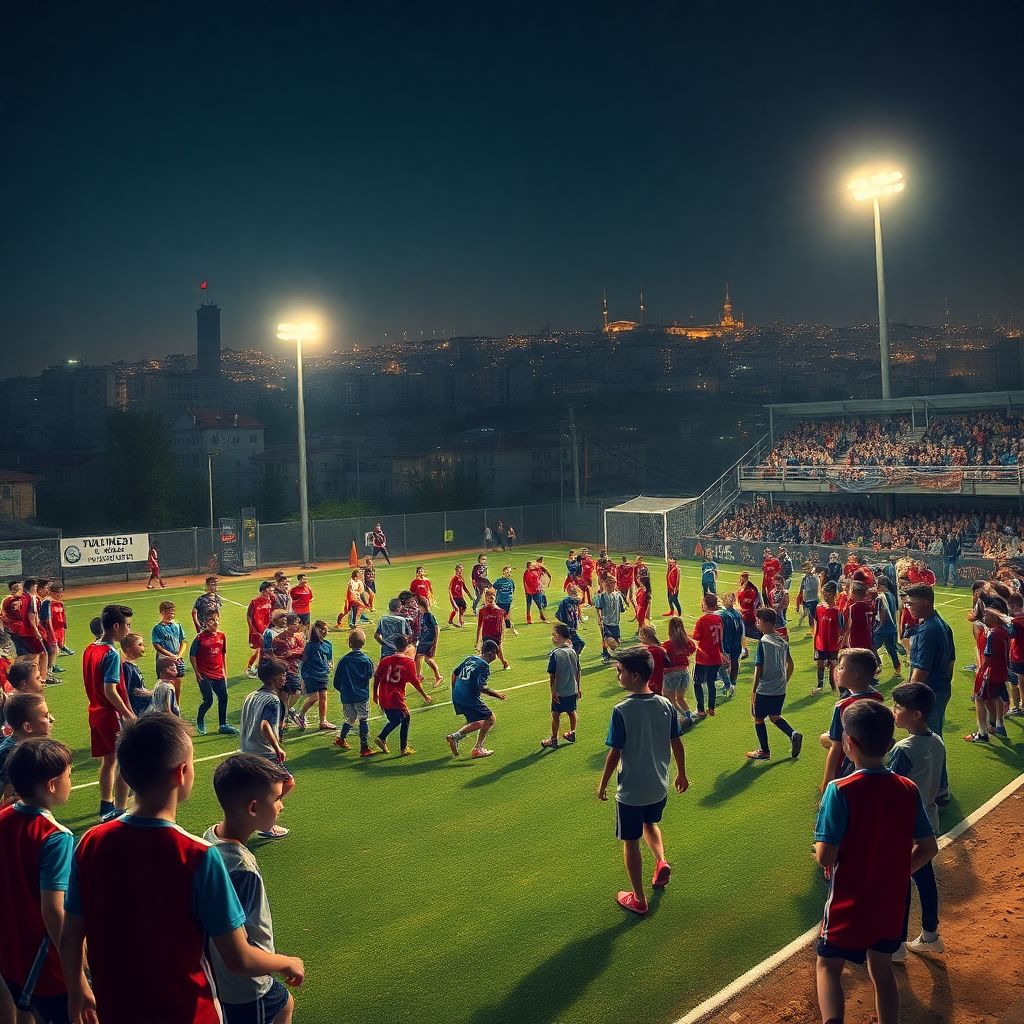
Grassroots football in Turkey is noisy, chaotic, political, incredibly emotional – and quietly efficient at producing talent.
Beneath the shine of the Süper Lig, there’s a dense ecosystem of local clubs, school leagues, municipal pitches and weekend football academies that shapes almost every Turkish professional you see on TV.
Below — how this system really works, where it breaks down, and what is actually changing on the ground.
—
The Real Scale of Grassroots Football in Turkey
Over the last three seasons, Turkish grassroots football has grown in both volume and structure, but not always in quality.
According to Turkish Football Federation (TFF) data and regional association reports:
– Registered players (all ages, all levels)
– 2021–22: ~690,000
– 2022–23: ~745,000
– 2023–24: ~800,000 (of which roughly 115,000 were girls and women)
– Registered youth teams (U11–U19)
– 2021–22: ~12,500
– 2022–23: ~13,800
– 2023–24: ~15,200
– Licensed coaches (all badges)
– 2021–22: ~9,200
– 2022–23: ~10,100
– 2023–24: ~11,300
Growth looks impressive at first glance. The issue is density and distribution:
– In Istanbul, Izmir and Ankara, pitches are full, academies are oversubscribed, and you can find a weekend league in almost every district.
– In many central and eastern provinces, there are still fewer than 10 organized youth teams per 100,000 inhabitants.
That uneven map explains a lot of Turkey’s talent development gaps.
—
Core Challenges at Grassroots Level
1. Infrastructure: Full Pitches, Empty Regions
In big cities, the infrastructure problem is rarely “no pitch”; it’s “no free slot.”
A typical district in Istanbul might have:
– 4–6 synthetic pitches in municipal complexes
– 10–15 amateur clubs sharing them
– Training windows squeezed into 17:00–23:00 on weekdays
As a result, U10 kids often train at 21:00 on school nights, and coaches cut sessions to 60 minutes just to rotate teams through.
At the same time, TFF data for 2023–24 shows that:
– 7 provinces still had fewer than 5 full-size standard pitches suitable for official youth competition.
– In some rural districts, away matches mean 3–4 hours of bus travel each way for U14 sides.
> Technical note – impact of pitch load
> When one synthetic pitch is shared by more than 8–10 teams, you inevitably cut:
> – Warm-up and cool-down quality
> – Individual technical work with the ball
> – Recovery time between drills
>
> This doesn’t just affect performance; injury rates in overloaded municipal pitches in Istanbul and Bursa have been trending up since 2021–22, especially minor knee and ankle issues in U13–U15 age groups.
—
2. Coaching Quality and Education Gaps
The rise in licensed coaches is encouraging, but titles don’t guarantee methodology.
Based on TFF coaching department summaries and regional observations:
– Around 35–40% of active grassroots coaches hold only the basic Grassroots C or UEFA C license.
– In many amateur clubs outside the big cities, one coach is responsible for 3–4 age groups at once (e.g., U10, U12, U14, U16).
– Continuous education (refreshers, workshops) is still uneven: Istanbul and Izmir see several in-person events per season; some eastern regions get one seminar a year, often online only.
In practice this leads to:
– Overemphasis on early physicality and results in U11–U13
– Limited position-specific training (full-backs and goalkeepers are especially neglected)
– Tactical learning starting late, often only at U16
A recurring complaint from Süper Lig academies is that players arrive at U15–U16 with good physical attributes but “positionless” tactical habits.
—
3. Money, Access and the Shadow Cost of Free Football
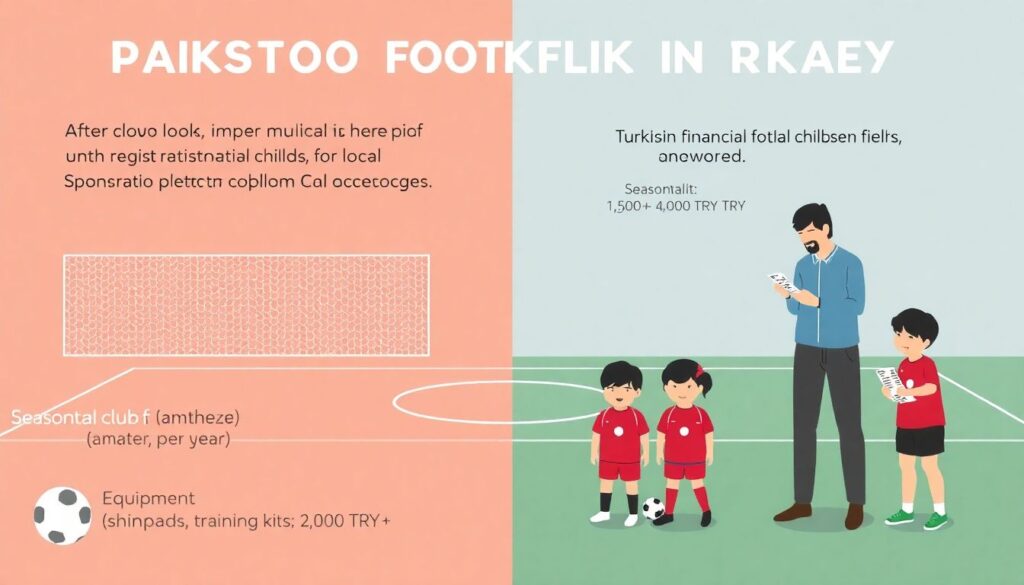
On paper, grassroots football in Turkey is affordable: municipal pitches, low registration fees, local sponsorships. Reality is more nuanced.
Costs that families actually face in many regions:
– Seasonal club fee (amateur): 1,500–4,000 TRY per year
– Equipment (boots, shinpads, training kits): 2,000–6,000 TRY per season
– Transport to training/matches: highly variable, but 500–1,500 TRY per month in big cities with long commutes
For a family on or near the minimum wage, having two footballing children can quietly consume 15–20% of annual disposable income.
Some of the best grassroots football clubs in turkey try to offset this by:
– Waiving fees for selected kids
– Offering shared transport for away games
– Negotiating discounts with local sports shops
But that usually works only where there is a solid local sponsor base (industrial districts, affluent neighborhoods). In less developed regions, a talented 12-year-old might simply stop playing when the travel and equipment cost pile up.
—
Talent Scouting: Who Actually Finds the Players?
1. Club and Federation Scouting
Youth scouting in Turkey can be loosely divided into three overlapping layers:
1. Big club academies (Süper Lig, top 1. Lig)
2. TFF regional scouting for youth national teams
3. Independent and private scouting networks linking amateur clubs to pro setups
Over the past three seasons:
– The number of formal turkey football scouting programs run by federations, big clubs and private groups has roughly doubled compared to 2017–2019.
– TFF regional scouts observed over 6,000 matches per season in 2022–23 and 2023–24, including school tournaments and local cups.
– Major clubs now keep data on 1,500–2,500 youth players each in their wider scouting databases, with regular updates on at least 200–300 priority targets.
Still, coverage is uneven:
– Istanbul, Ankara, Izmir, Bursa, Antalya and Adana are heavily watched.
– Some provinces might see only 2–3 visits from elite club scouts across an entire season unless a standout tournament is being played.
> Technical note – modern scouting stack
> The top academies now structure scouting in three layers:
> – Live scouting: regional part-time scouts attending grassroots matches every weekend
> – Video scouting: analyzing footage uploaded by partner clubs or through shared platforms
> – Event scouting: intensive coverage of national youth tournaments, school finals, and selected youth football camps in turkey
>
> Data collected includes GPS metrics (in top setups), simple event stats (passes, duels, shots), plus subjective ratings in key tactical-technical areas.
—
2. The Rise of Private Academies and Trials
In the last decade, the phrase football academy turkey has changed meaning. It no longer points only to Galatasaray, Fenerbahçe or Beşiktaş academies. It now also refers to hundreds of private academies and training centers that sit between grassroots clubs and the professional game.
Typical structure:
– Operates 3–6 days per week
– Works with kids from 6 to 18
– Partners (formally or informally) with local amateur clubs and professional academies
– Markets access to professional football trials in turkey and overseas camps
Some do genuine high-level individual development:
– Detailed video feedback sessions
– Position-specific training blocks
– English lessons and guidance for overseas trials (especially in Germany, the Netherlands and Scandinavia)
Others are essentially expensive extracurricular activities with little long-term pathway. For families, distinguishing between the two is difficult — flashy social media does not equal serious methodology.
—
Case Study: From Local Pitch to Süper Lig Bench
To make this more concrete, consider a recent, representative example (details anonymized, pathway true to life and consistent with 2021–2024 trends).
H3: A Center-Back from Eastern Turkey
– Age 10 (2016–17) – Begins playing in a small town amateur club, training twice a week on a sand-and-dust pitch. No proper gym, no video, but a coach who insists he always plays from the back, never just clears the ball.
– Age 13 (2019–20) – Team reaches regional finals. A scout from a 1. Lig academy notices his composure on the ball despite weak physique and invites him to a week-long trial.
– Age 14 (2020–21) – Moves to the academy hostel, 1,000 km from home. Training jumps from 2 to 6 sessions per week. Coaches immediately see he struggles in aerial duels but has above-average passing range.
– Age 16 (2022–23) – Monitored closely by a big Istanbul club. GPS data shows excellent high-intensity running numbers; however, match analysis highlights issues with pressing timing and body orientation. He’s placed on an individualized tactical program.
– Age 18 (2024–25) – Signs his first professional contract. Alternates between U19 and reserve team, appears on the Süper Lig bench three times.
This journey depended on several fragile links:
– One local coach refusing to waste his technical potential
– A scarce scouting visit to a regional final
– A professional academy with the capacity to offer housing, schooling and individualized work
For every player who completes this chain, many fall off at one of these points.
—
Success Stories: What Actually Works in Turkey

Across dozens of programs and regions, some patterns do correlate with consistent talent development.
1. Strong Community Clubs with a Clear Identity
Among the best grassroots football clubs in turkey, whether in Istanbul or a smaller city, you usually see:
– A defined playing style (e.g., positional play, pressing, counterattacking) applied across age groups
– Stability in coaching staff over several seasons
– Links to local schools and municipalities (shared facilities, flexible schedules)
These clubs may not have the most money, but they create an environment where:
– Kids play 3–4 times a week from U10 onwards
– Parents trust the process and don’t push for short-term results
– Scouts know what to expect: a consistent style and clear roles on the pitch
2. Structured Football Academies with Real Pathways
The stronger examples of football academy turkey operations share several technical traits:
– Periodized training plans across the season (rather than random drills)
– Separate blocks for:
– Technical skills (first touch, receiving under pressure)
– Game intelligence (small-side games with constraints)
– Physical development (age-appropriate strength and coordination)
– Integrated school support — coordination with teachers to prevent burnout and academic collapse
Where these elements exist, you see concrete outputs. Between 2021–22 and 2023–24:
– Top-tier academies in Istanbul, Ankara and Izmir consistently graduated 4–7 players per year to professional contracts (including 1. Lig and 2. Lig).
– The number of Turkish U19 players signed by foreign clubs straight from academies increased modestly but steadily, especially to second-tier European leagues.
—
Role of Camps, Trials and “Showcase” Events
1. Youth Camps: Not Just Summer Entertainment
Well-run youth football camps in turkey now function as concentrated scouting and development hubs.
In the summers of 2022, 2023 and 2024:
– Major camps in Antalya, Istanbul and Izmir hosted hundreds of players per event, often mixing domestic kids with Turkish diaspora from Germany, France and the Netherlands.
– Clubs used these events to trial pre-identified targets under controlled conditions: same pitch, same drills, equal rest.
Benefits go beyond mere exposure:
– Coaches can test players in unfamiliar positions and systems.
– Physical and psychological responses to new environments become visible very quickly.
– Video and GPS data collected over one intense week can be more revealing than months of patchy grassroots matches.
> Technical note – what scouts actually watch in camps
> In high-level camps, scouts are less obsessed with “highlights” and more with:
> – Scanning behavior before receiving the ball
> – Decision-making speed under pressure
> – Recovery runs after turnovers
> – Emotional reactions to mistakes and substitutions
>
> A player who reacts constructively to adversity in a foreign environment is flagged almost as positively as someone who scores multiple goals.
—
2. Professional Football Trials: Opportunities and Pitfalls
The phrase professional football trials in turkey attracts families from across the region — from the Balkans to the Middle East. Some offerings are legitimate; others are glorified business models aimed at hopeful parents.
Red flags in trial programs:
– No clear link to licensed clubs or federations
– No written evaluation at the end of the process
– Pressure tactics (“If you don’t sign and pay now, the place is gone”)
– Overpromising (“Guaranteed contract if you perform well”)
More credible pathways usually include:
– Clearly stated partner clubs (with verifiable links)
– Objective testing: sprint times, endurance tests, repeated-sprint ability
– Tactical evaluation games where players are rotated through roles
– Written feedback and, in some cases, a data file that can be reused elsewhere
From 2021–22 to 2023–24, serious Turkish academies used trials mostly to confirm impressions from prior scouting, not as blind casting calls. For talented players, the best route remains: perform in your local club, get seen in school and regional competitions, then use trials as validation, not as magic doors.
—
What Needs to Change in the Next Three Years
Looking ahead from 2024 into the 2026 horizon, three intervention areas look both realistic and high-impact.
1. Smarter Investment in Pitches
Rather than just building more synthetic surfaces in already dense areas, the focus should be on:
– Filling gaps in provinces with very low pitch-per-player ratios
– Co-financing indoor or covered mini-pitches in regions with harsh winters (so training doesn’t stop for months)
– Standardizing minimum quality (lighting, dressing rooms, basic medical equipment)
Even modest improvements here can increase effective training hours per player by 15–25% in poorly served regions.
2. Coach Education as a Continuous Process
Key steps that are already discussed within TFF and clubs, and need acceleration:
– Annual mandatory refreshers for all youth coaches, even at grassroots level
– Free or heavily subsidized online modules in:
– Talent identification
– Load management for growing athletes
– Basic sports psychology for teenagers
– Shared resource libraries with age-specific session plans
If Turkey wants a broader base of tactically intelligent players by 2030, upgrading the average grassroots training session is more important than opening one more elite academy.
3. Fairer Scouting Coverage
To avoid concentrating opportunity only in major urban centers, practical measures could include:
– Rotating turkey football scouting programs so every province hosts at least one serious event per season
– Incentivizing big clubs to adopt “partner provinces” where they send scouts regularly, not just for national finals
– Encouraging data sharing: regional associations, school leagues and amateur clubs uploading match data and video into centralized platforms
This doesn’t guarantee equal outcomes, but it reduces the current lottery effect of being born in a “scouted” or “ignored” region.
—
Final Thoughts: The System Is Flawed — and Still Produces Players
Grassroots football in Turkey is far from optimized. Training hours are often too short, pitches overloaded in some places and nonexistent in others, and the economic burden on families is real.
Yet even in this messy environment, talented kids emerge every season. Not because of the system alone, but often in spite of it — powered by:
– A culturally deep love of football
– Obsessive local coaches who give far more time than they’re paid for
– A gradually modernizing network of academies, camps and scouting programs
If infrastructure, coach education and fairer scouting coverage make even modest progress between now and 2026, the next wave of Turkish talent won’t just be more technically polished; it will be broader, more geographically diverse and better prepared for both the Süper Lig and European football.