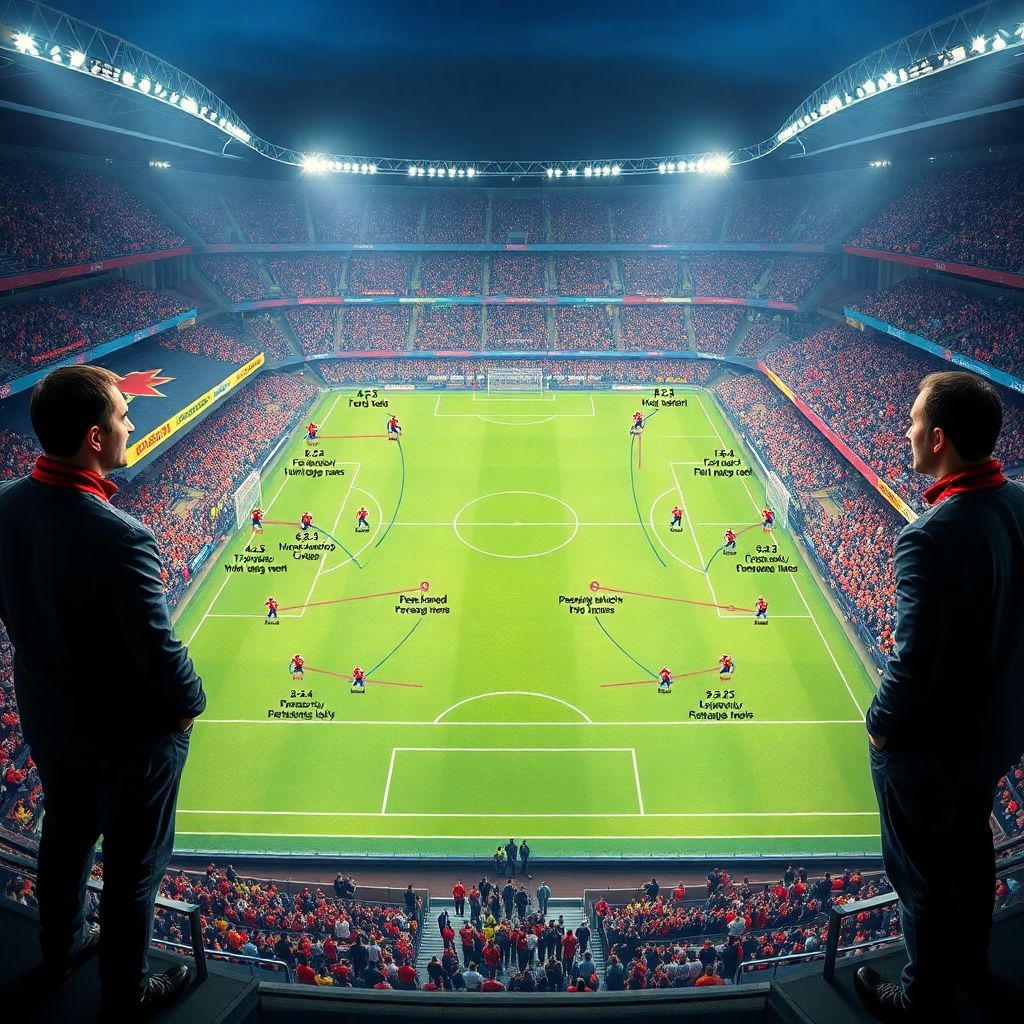
Turkish football has quietly gone through a tactical reboot over the last few seasons. If you still imagine the Super Lig as “chaotic end‑to‑end football with brilliant individuals”, you’re at least three years behind. Coaches have started to build highly-structured systems, using data, detailed micro-coaching, and some surprisingly modern solutions to old problems like defensive transitions and set-pieces.
Below is a deep dive into how they’re doing it, why it works, and what you can steal from their approach if you coach or analyse the game yourself.
The context shift: from chaos to controlled aggression
For a long time, many Turkish clubs relied on individual quality plus crowd pressure. The default script was: foreign playmaker, fast wingers, aggressive crowd, direct balls, high‑risk defending. It entertained, but it didn’t scale to European level and produced massive volatility in results.
In the last 3–4 years, more clubs have moved towards clear game models: defined pressing triggers, “rest defence” structures, and set-piece automation. If you do serious Turkish Super Lig tactical analysis today, you’ll see behaviors that 10 years ago you’d only expect from top-five European leagues: asymmetric full-back roles, third‑man runs as a planned pattern, lane‑based pressing, and possession schemes designed for specific opponent blocks.
Short version: the Super Lig is still emotional, but the better coaches now try to control *where* the chaos happens instead of letting it happen everywhere.
Case study 1: Okan Buruk and the flexible 4‑2‑3‑1 at Galatasaray
Okan Buruk is a good starting point because his Galatasaray is a textbook example of “controlled aggression”. On paper it’s a 4‑2‑3‑1, but in possession it morphs into a 2‑3‑5 or 3‑2‑5 depending on the full-back heights and the pivot’s positioning. One holding midfielder drops to create a back three in build‑up, the other operates as a “connector” between lines.
The non‑obvious piece is how he manipulates the half‑spaces. Instead of keeping a classic No.10 always central, Buruk frequently pushes the 10 into the right half‑space and lets the right winger go very wide and high. This opens a straight passing lane from the right centre‑back into the advanced 10, skipping the first pressing line. You’ll often see what looks like a risky vertical ball that’s actually a rehearsed pattern to beat a 4‑4‑2 mid‑block.
For coaches, the key takeaway isn’t “copy Galatasaray’s shape”, but “pre-plan your vertical lanes”. Buruk’s staff map out where they want each line‑breaking pass to land and then design player roles backwards from that point.
Case study 2: Abdullah Avcı, structures and “defensive forecasting”
Abdullah Avcı, now back at Trabzonspor, has long been one of the league’s most detail-obsessed coaches. His sides historically looked conservative, but the nuance is in his so‑called “defensive forecasting”: he sets up attacks based on where the ball is likely to be lost.
In practice, when the ball is on one flank in the final third, his far‑side full-back rarely goes all the way to the back post. Instead, he stands in a “safety pocket” inside the half‑space, roughly aligned with the holding midfielder. It looks timid, but when possession is lost and the opponent tries to break, Avcı’s team is already in a 3‑2 rest‑defence shell, ready to counter-press or foul intelligently.
This small structural tweak cut the number of clear counter-attacks his teams conceded. It’s a neat illustration that “attacking shape is defensive insurance” rather than just a creative platform.
Non‑obvious innovation: the “hidden 6” in Turkish midfields
One interesting Super Lig trend is the use of a “hidden 6”: a player nominally listed as an 8 or 10 who temporarily behaves as a defensive midfielder in specific phases. Instead of a fixed double pivot, you see rotational pivots.
Example pattern: against a 4‑4‑2 press, the nominal 10 drops next to the 6 when the ball is with the centre‑backs, creating a temporary 2‑2 structure. The “real” 8 then pushes high into the half‑space, dragging their marker away, and a lane opens for third‑man combinations. Once the press is beaten and the ball enters the middle third, everyone returns to their standard positions.
The benefit is predictable: you stabilise the first phase of build‑up without sacrificing vertical presence. The downside is high cognitive demand on players; this is where top-level video work and very clear role definitions become crucial.
Pressing: from “run and hope” to trigger-based systems
If you go back and rewatch older live streaming Turkish Super Lig matches, a lot of pressing looked like pure emotion: chase the ball, react late, foul if needed. Now, the more sophisticated sides use explicit triggers: bad backward touch, bouncing ball into a full-back, sideways pass from CB to FB, or a goalkeeper forced onto his weaker foot.
Coaches like İsmail Kartal and others have introduced layered pressing: the first line screens central passes, the second line jumps on the trigger, and the back line squeezes only once the ball is forced wide. Instead of running more, teams try to run *smarter*, compressing the field only after they’ve “won” the directional battle and locked the ball to one side.
For analysts, the metric that matters isn’t just PPDA (Passes Allowed Per Defensive Action) anymore. More clubs are coding “pressing efficiency”: how many dangerous recoveries per pressing phase, and how many forced long balls.
Alternative methods: hybrid back threes and “rotating full-backs”
One of the more creative Turkish twists is how teams simulate a back three without actually lining up with three centre-backs. You’ll often see a left-back stepping into midfield while the right-back tucks inside to become a “fake” third centre-back in the first line.
This rotating full-back concept creates three advantages:
1. You gain an extra passer in midfield during build-up.
2. You protect yourself against counters on the side where your aggressive full-back vacates space.
3. You can switch mid-game between a 4‑2‑3‑1 and a 3‑2‑5 without substitutions, just by flipping which full-back goes and which stays.
For opponents, this is a nightmare to prepare for, because the same players present different reference points between minute 1 and minute 60. Scouting becomes less about formation diagrams and more about recognising patterns of *behavior*.
Set-pieces: the quiet weapons of the best Turkish Super Lig coaches 2025
If you want a competitive edge in the Super Lig now, you can’t ignore set-pieces. Several backroom staffs are treating corners and free-kicks as a separate game inside the game, with dedicated analysts and rehearsed “playbooks”.
Non-obvious solutions include:
– Using decoy screens not to free the main header, but to free the *cutback passer* on the second ball.
– Crowding the goalkeeper’s “launch zone” on defensive set-pieces to reduce the quality of opponent’s second phase after clearances.
– Mixing zonal and tight man-marking only on the two best aerial threats, while treating the rest zonally to simplify assignments.
Some analysts estimate that optimized set-piece design is worth 8–10 extra points per season, which can be the difference between title contention and Europa League at Super Lig level.
Data and video: from gut feeling to measurable frameworks
Behind most of these innovations is a steady shift toward data-driven work. Clubs are tracking not just xG, but *xThreat* (where possession starts and where it progresses), pressing outcomes, and patterns of “repeatable” chance creation instead of just final shots.
If you’re doing Turkish Super Lig tactical analysis as a professional or a serious amateur, you’ll notice an explosion of clipped sequences: coaches don’t show 15‑minute videos anymore; they show 6‑8 short clips around a single theme (e.g., “defending wide overloads” or “breaking the 4‑1‑4‑1 mid-block”). The aim is to compress complexity into digestible examples that can be applied by players at game speed.
This is also why interest has grown in online courses Turkish football coaching tactics: analysts and young coaches want structured frameworks rather than scattered YouTube highlights. We’re seeing a feedback loop: better education → more structured coaches → more complex league tactics → more demand for advanced education.
Betting, prediction models and tactical transparency
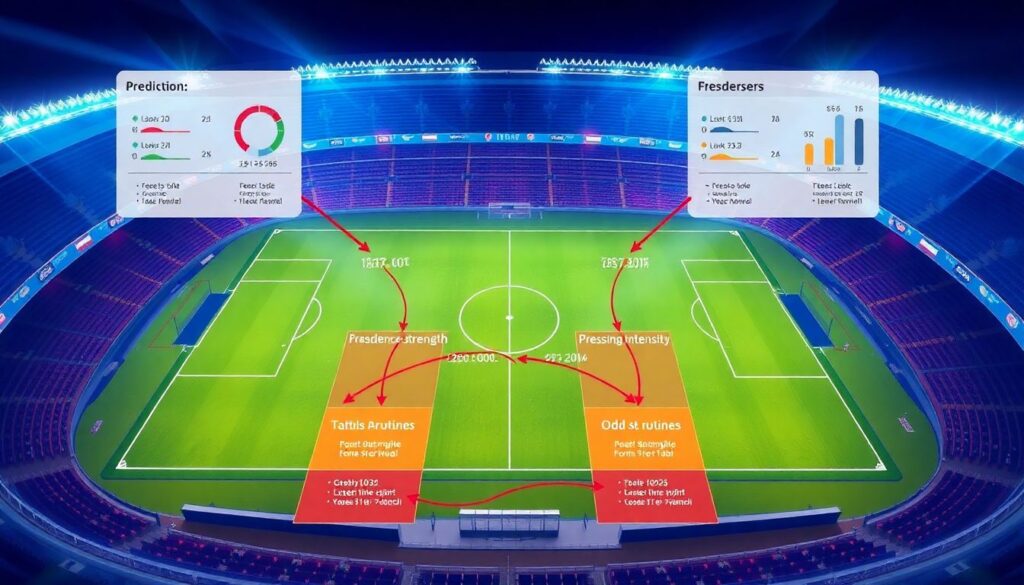
There’s also a side effect on the prediction and betting world. As game models stabilise and become more consistent, Turkish Super Lig predictions and betting tips increasingly incorporate tactical factors such as rest-defence strength, pressing intensity, and set-piece usage, not just form tables and simple xG.
For example, a team that uses very high full-backs and a risky 2‑3 rest-defence structure may produce high xG both for and against; models and expert tipsters can adjust goal expectancy up accordingly. On the other hand, sides like Avcı’s, which control transition volume, may produce fewer but higher-quality chances, shifting the risk profile of Over/Under markets.
In plain language: the more structured the football, the easier it is to model, and the more tactical edge you can get — whether you’re a bettor, an analyst, or an opposition scout.
Five expert-backed recommendations for coaches and analysts
If you work in or around the game and want to borrow from the Super Lig’s tactical evolution, here are distilled, expert-style takeaways:
1. Design your rest defence first, not last.
Build your attacking structure *from* your defensive transition plan. Start with: “Where do we want defenders when we lose the ball?” Then shape your full-back heights and midfield rotations around that.
2. Use position-rotations, but cap the complexity.
Rotating 6–8–10 roles or full-back/winger lanes can give you a huge edge, but only if players can read the same triggers. Keep rotations tied to simple signals (ball zone, opponent shape), not to abstract ideas.
3. Treat set-pieces as 10–15% of your tactical identity.
Allocate weekly training minutes and analyst time proportionally. Script 4–6 “core” attacking routines and 3–4 defensive schemes, and track their efficiency over 5–10 match samples.
4. Measure pressing outcomes, not just pressing volume.
Tag every high press with outcome labels: forced long ball, throw-in won, foul, clean progression conceded, chance conceded. This is what leading Super Lig clubs are beginning to do to optimise where and when they press.
5. Educate your staff, not just your players.
Encourage assistants and analysts to take specialised courses and certifications; those who complete structured programmes on tactics or data tend to translate complex ideas into clearer field exercises, which is where the real value lies.
These principles aren’t Super Lig-specific; they just happen to be highly visible there right now because the league is in a transitional phase between “emotional” and “structured” football.
Pro-level “life hacks” inspired by Turkish coaches
Coaches and analysts around the league quietly share a few pragmatic tricks that rarely make it into press conferences:
– Run “shadow transitions” in every positional game.
Any time a rondo or possession exercise ends, immediately simulate the opponent’s counter. Players must sprint into pre-defined rest-defence spots. It wires transition habits into every drill.
– Micro-coach one player per week.
Following the example of some Istanbul clubs, pick a single player and do an individual 10‑minute video plus 10‑minute field session around one theme (e.g., receiving on the half-turn under pressure). This has a compounding effect over a season.
– Scout referees as well as opponents.
In a league where game rhythm and foul tolerance vary heavily, top staffs quietly track which referees allow aggressive pressing and which punish minor contact. They then tweak pressing intensity and dueling strategy accordingly.
– Build a “pattern bank” instead of a playbook.
Instead of scripting 20 detailed plays, create 6–8 core patterns (e.g., wide overload → third-man run → cutback) and teach players to recognise cues and improvise within them. This mirrors how Buruk and others use half-space patterns without looking robotic.
These hacks reflect a broader trend: coaches are not just copying European ideas, they’re adapting them to the specific tempo, officiating, and emotional environment of Turkish stadiums.
Where the tactical curve is heading next

Looking towards the next couple of seasons, the arms race will likely move towards better integration of data, physical periodisation, and in-game tactical coaching. The label “best Turkish Super Lig coaches 2025” will probably belong to those who can combine three skills: create clear game models, adapt those models live under pressure, and communicate them in simple language to players with very different football educations.
For practitioners, the Super Lig has become an underrated tactical laboratory. If you’re a coach, analyst or serious fan, watching and rewatching these games with an eye on structure — ideally beyond just TV angles — is an efficient way to see modern ideas under extreme pressure.
The stereotypes are outdated: Turkish football isn’t just noise, passion and individual chaos anymore. Under the surface, a lot of quiet, meticulous work is turning the league into a genuinely interesting case study in how to modernise a competition without losing its identity.