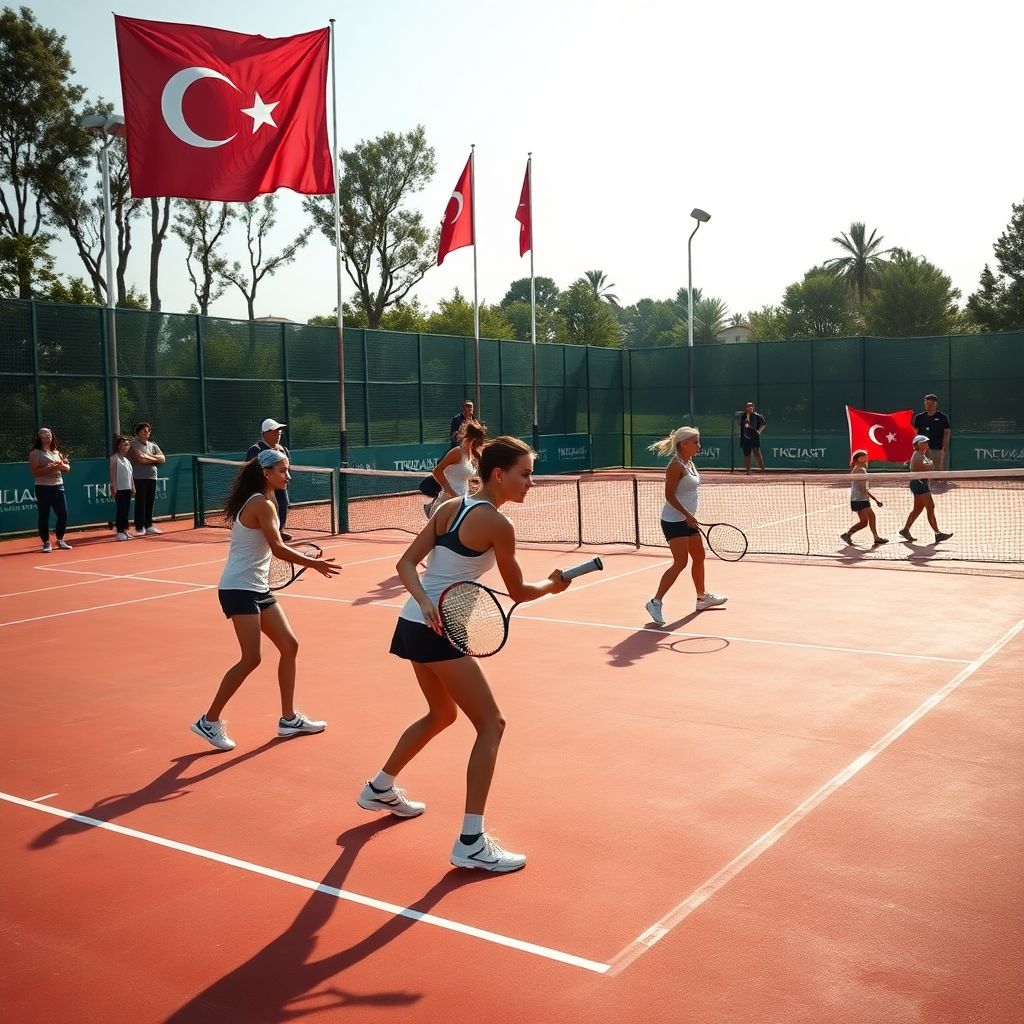
Turkish women in tennis are quietly progressing from national-level contenders to consistent presences in international draws, supported by improving coaching, federation programs and family investment. A small but growing group of established names and rising stars in Turkish women’s tennis shows that with smart resource use, targeted support and community backing, sustainable success is achievable even on limited budgets.
Snapshot: The Growing Impact of Turkish Women in Tennis
- A clear pathway now exists from local clubs to ITF, WTA and college tennis for turkish women tennis players.
- Several athletes can legitimately be called the best turkish female tennis players 2024 based on rankings, consistency and leadership roles.
- Targeted turkish tennis federation women’s programs are expanding access, especially for girls outside major cities.
- Funding remains fragile, so families and local sponsors still carry much of the financial burden.
- Media coverage and social channels are amplifying role models and attracting new girls to the sport.
- Alternative, low-cost routes such as U.S. college scholarships and regional circuits are crucial for long-term careers.
From Local Courts to Global Draws: A Brief History
Turkish women’s tennis began largely in private clubs and a few public courts where access, coaching and competition were limited. For years, most turkish women tennis players competed almost exclusively in domestic events, with occasional wildcards into larger tournaments hosted in Turkey.
The turning point came as more ITF women’s events were staged in the country and as the Turkish Tennis Federation invested in structured junior pathways. This raised the competitive bar, encouraged full-time professional ambitions and gave players regular international exposure without prohibitive travel costs.
In practical terms, the landscape has shifted from isolated individual efforts to a more connected ecosystem: performance academies, federation-supported training blocks, and better collaboration between coaches. The definition of success also broadened: not only WTA main draws, but also top-level college tennis and coaching careers abroad now form part of the realistic horizon.
Today, when analysts talk about rising stars in turkish women’s tennis, they refer to a pipeline that starts in mini-tennis programs, moves through regional and national circuits, then into ITF, WTA and NCAA pathways. The scene is still small compared to traditional tennis powers, but the structure is recognisably professional.
Profiles to Watch: Emerging and Established Turkish Players
This section focuses on typical player profiles and what they illustrate about the current ecosystem, not on ranking tables. Names are examples to show different routes and support models.
-
The Trailblazing Professional
Players like Çağla Büyükakçay and İpek Soylu represent the first generation to regularly crack WTA-level events. Their journeys show how persistent ITF grinding, home Federation wildcards and occasional big wins can open doors for the next wave. -
The Late-Blooming Tour Regular
Athletes similar to İpek Öz and Zeynep Sönmez demonstrate that reaching solid ITF and occasional WTA qualifying draws can be achieved with careful scheduling, strong physical conditioning and incremental improvements rather than early junior stardom. -
The Doubles-Focused Specialist
Some turkish women tennis players intentionally aim at doubles success, leveraging good net skills and tactical awareness. They often travel with smaller teams, share coaching resources and use doubles prize money to partially fund singles improvement. -
The National Champion Balancing Education
Many domestic standouts combine university studies in Turkey with competing in national events and selective ITF tournaments. They rely on university facilities, federation camps and sometimes local municipalities instead of full-time touring budgets. -
The International Junior on a Budget
Junior names emerging in ITF junior draws often follow a low-cost plan: regional ITF events, shared accommodation, and short training camps with high-level sparring, instead of year-round academy residency abroad. -
The College Tennis Pathway Pioneer
Growing numbers of players use U.S. or European college tennis as an alternative to early professional commitment. Scholarships cover tuition and training, allowing families with limited means to keep the dream alive while safeguarding education.
Concrete Pathways for Players with Limited Resources
For families and coaches working with tight budgets, several practical models are emerging:
- Cluster ITF and national tournaments within bus or short-flight distance, avoiding long single-event trips.
- Share coaches and physios among two to four players during travel to reduce per-player costs.
- Use offseason blocks at regional academies in Turkey instead of full-year residence abroad.
- Target college recruitment early by building video highlights and clear academic plans from age 15-16.
Youth Development: Academies, Coaching Models, and Talent ID
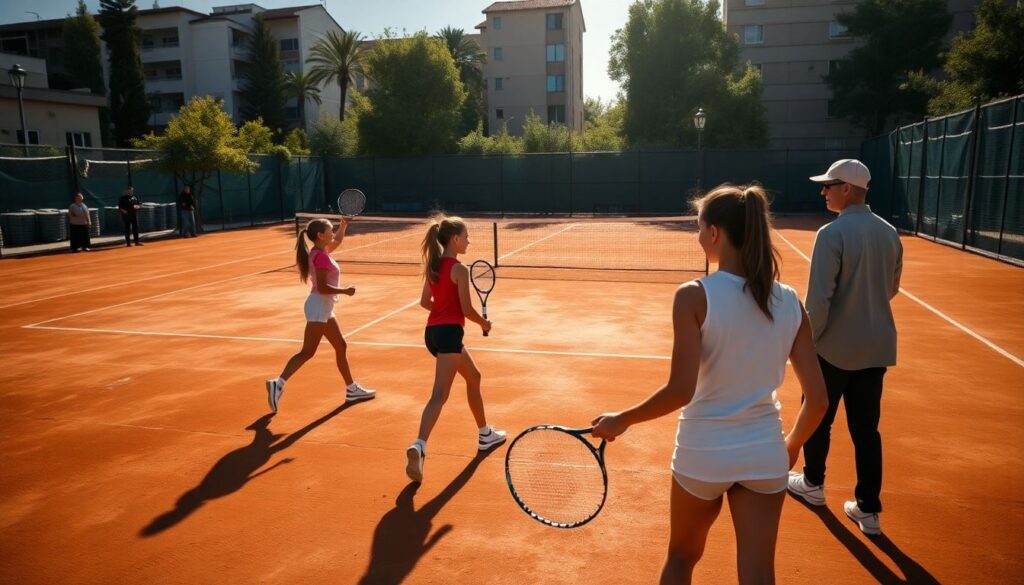
Youth development in Turkish women’s tennis now blends private academies, club programs and turkish tennis federation women’s programs. Talent is usually spotted at mini-tennis festivals, school tournaments or multi-sport clubs, then guided toward more structured training environments.
-
Club-Based Early Training
Many girls start in local clubs where fees are relatively affordable and equipment can be shared or borrowed. Here, the focus is basic coordination, fun and simple competition formats. For low-income families, negotiating off-peak court times or group lessons can reduce costs. -
Regional Academies as Performance Hubs
Performance academies in major cities centralise fitness, on-court work and sports psychology. Talented players from smaller towns often join on scholarship or part-time, commuting for weekend camps instead of relocating, which keeps expenses manageable. -
Federation Talent ID and Camps
Federation coaches monitor national junior tournaments to identify promising girls for centralised camps and international team events. These programs typically cover or subsidise travel and coaching, offering a rare chance for players from modest backgrounds to experience higher-level training environments. -
School and University Partnerships
Some schools and universities provide flexible schedules, court access and small stipends. This hybrid model is especially valuable for families who cannot commit to the unpaid years of full-time junior travel, but still want a path toward professional or collegiate tennis. -
Cross-Border Training Blocks
Short stints at European academies give exposure to stronger competition and different coaching philosophies. When budgets are limited, players can plan one or two intensive blocks per year instead of continuous international residency.
Federation Policies and Institutional Support Mechanisms
Federation and institutional frameworks provide crucial scaffolding but cannot fully replace private effort and funding. Understanding both strengths and limits helps families and coaches plan realistic career strategies and decide where to seek additional support.
Benefits of Current Programs and Structures
- Talent ID and junior national teams that give early international match experience and structured training environments.
- Subsidised participation in selected ITF and regional events, which lowers entry barriers for promising girls.
- Centralised training camps that connect players from different regions, raising competitive standards and building peer networks.
- Coaching education initiatives that gradually improve the quality and consistency of coaching available to girls at all levels.
- Partnerships with municipalities and clubs to build or refurbish public courts, expanding access outside big-city private clubs.
Limitations and Gaps Players Must Work Around
- Funding cannot cover full-season travel for most players, so parents still shoulder much of the cost.
- Support is often concentrated in a few major centres, making it harder for remote regions to benefit consistently.
- Depth of competition at junior and national levels is still limited, so players need international exposure sooner than in stronger tennis nations.
- Communication about selection criteria for some programs can feel opaque, leading to frustration and uncertainty.
- Transition support from juniors to professional or college routes is uneven, so families must proactively seek independent advice.
Funding, Sponsorship and Media Strategies Driving Visibility
Financial and media ecosystems around turkish women tennis players are evolving unevenly. A few top names secure solid sponsorships, while many others rely on family, local businesses and occasional prize money. Misunderstandings about how funding works can lead to inefficient choices or missed opportunities.
-
Myth: A Single Big Sponsor Solves Everything
In reality, career sustainability often comes from a mix of smaller local sponsors, equipment deals, federation help and careful cost control. A diversified support base is more realistic than waiting for one large contract. -
Myth: You Must Train Abroad Full-Time to Succeed
Full-time foreign academies are expensive and not always necessary. Many of the best turkish female tennis players 2024 combine Turkish-based training, short international blocks and smart tournament scheduling instead of permanent relocation. -
Mistake: Ignoring Storytelling and Personal Brand
Players who do not build a basic media presence make it harder for sponsors and fans to connect. Simple steps like regular match updates, behind-the-scenes posts and community engagement can significantly improve sponsor appeal. -
Mistake: Overloading the Calendar
Chasing ranking points by playing every possible event can backfire through injuries and burnout. A lean, well-planned schedule aligned with budget and recovery capacity is more effective than constant travel. -
Myth: Only Elite Results Deserve Support
Local businesses and community sponsors can have impact even at national or junior levels. Supporting travel to a few key events or funding a strength program can materially shift a young player’s trajectory.
Barriers Remaining: Injuries, Infrastructure, and Cultural Challenges
Despite progress, the pathway for rising stars in turkish women’s tennis is still fragile. Injuries, uneven infrastructure and social expectations can derail promising careers, especially for players without strong financial or social support systems.
Consider a typical mini-case: a 16-year-old girl from a mid-size Anatolian city excels in national tournaments. Courts at her club are overcrowded, indoor options are scarce and professional physio support is minimal. She receives occasional federation camp invites but cannot afford frequent flights to major cities.
Her realistic growth plan might look like this pseudo-roadmap:
- Negotiate early-morning or off-peak court access at her local club to increase training volume without raising costs.
- Join two to three federation or regional academy camps per year, focusing on tactical and mental work she cannot access locally.
- Play a cluster of nearby ITF and national events over a few weeks rather than expensive one-off trips.
- Build an online profile and approach local businesses with a simple sponsorship deck, clearly stating travel needs and visibility offers.
- From age 15-16, prepare for possible college scholarship routes as parallel options to a full pro career.
This kind of layered, flexible approach illustrates how to support turkish women tennis players even when infrastructure and finances are limited: by combining local creativity, federation opportunities, and alternative pathways such as college tennis.
Quick Clarifications on Progress, Pathways, and Support
Who are some notable current Turkish women tennis players to follow?
Fans often watch players like Çağla Büyükakçay, İpek Öz, Zeynep Sönmez and others who regularly appear in ITF and occasional WTA events. Their careers show different ways of building an international presence from a Turkish base.
What defines the best turkish female tennis players 2024 in practical terms?
Instead of focusing only on rankings, look at consistency across the season, competitiveness against higher-ranked opponents and contributions to national teams. Leadership roles and ability to inspire younger players also matter in a still-growing tennis culture.
How can parents with limited budgets still support a talented daughter?
Prioritise quality coaching over expensive travel, cluster tournaments geographically, share coaching costs with other families and explore scholarship options early. Being strategic with planning often matters more than total spending.
What role do turkish tennis federation women’s programs play in development?
They provide talent identification, national team opportunities, training camps and some event subsidies. These programs do not remove all costs but can significantly lower barriers for promising girls and connect them with higher-level coaching.
Are international academies essential for rising stars in turkish women’s tennis?
They can help but are not essential. Many players succeed with mostly Turkey-based training, supplemented by short international blocks and well-chosen tournament circuits that offer strong competition without constant foreign residency.
What are simple ways fans and communities can help turkish women tennis players?
Attend local tournaments, share players’ content on social media, introduce them to potential sponsors and support community fundraising efforts. Even small, consistent backing can cover key expenses like stringing, physio sessions or travel to one important event.
Is college tennis a realistic alternative pathway for Turkish girls?
Yes, college tennis is increasingly used as a dual pathway for education and high-level competition. With proper academic preparation and video materials, Turkish players can attract interest from coaches abroad and reduce long-term financial pressure.