
Political and economic changes in Turkey affect football transfers through three main channels: club budgets, regulations and risk perception. Currency volatility and inflation reshape wages and fees, new rules alter squad planning and foreign quotas, while shifting investor appetite and sponsorship income decide how aggressively Super Lig clubs can act in the market.
Executive overview: how Turkey’s political and economic shifts alter the transfer market

- Macroeconomic pressure reduces predictable cash flow, forcing shorter contracts, more loans and performance-based deals.
- Regulatory interventions (licensing, foreign player limits, tax changes) directly shape squad cost structures.
- Exchange-rate swings change real transfer fees overnight, favouring foreign-currency earners over lira-based clubs.
- International politics influences work-permit ease, player preferences and the image of the Super Lig as a destination.
- Club financing depends increasingly on broadcasting reliability, political ties of sponsors and foreign investment in Turkish football clubs.
- Recent windows show that off-pitch instability matters as much as form when interpreting Super Lig transfer news and market value signals.
Current macroeconomic pressures and their direct consequences for club transfer budgets
When discussing the turkey football transfer market analysis, macroeconomic stress is the base layer. High inflation, volatile interest rates and a weakening local currency compress real purchasing power, even if headline budgets look similar on paper. Clubs face growing gaps between planned spending and what they can actually afford during a long season.
Most Turkish clubs earn primarily in lira through tickets, domestic broadcasting and local sponsorships, but transfer fees and top wages are usually negotiated in foreign currencies. This mismatch means that sudden macro changes immediately alter the true size of a club’s transfer budget, often mid-window, complicating planning and negotiations with agents.
Political decisions also feed into daily economics. Changes in tax policy, credit availability from state-linked banks or public support for stadium and infrastructure projects influence how much liquidity clubs can unlock. The turkey economic crisis effect on football clubs therefore appears not only in balance sheets but also in risk tolerance when closing deals.
Comparative view: economic climate versus transfer activity
The table below uses qualitative signals to compare recent seasons, linking macro conditions with transfer behaviour. Even without exact figures, it shows how cycles of relative stability and stress affect strategy.
| Season | Macroeconomic climate | Club budget visibility | Typical transfer activity | Net spending tendency |
|---|---|---|---|---|
| Season A (earlier baseline) | More stable inflation and currency | Higher predictability across full season | More permanent signings, longer contracts | Closer to balanced, occasional net buyers |
| Season B | Rising inflation, growing currency pressure | Medium visibility, frequent budget revisions | Mix of loans and free agents, reduced fees | Slight shift toward selling and wage trimming |
| Season C | Acute economic stress and uncertainty | Low visibility, late political decisions matter | Last-minute loans, short-term contracts, exits | Clear net sellers, focus on survival |
| Season D (most recent) | Continued volatility, partial adjustments | Selective visibility for bigger brands only | Targeted marquee signings plus bargain hunting | Polarised: top clubs spend, others offload |
Clubs that anticipate these cycles early tend to secure more favourable deals, locking in key players before economic headlines spike. Others react late, being forced into distressed sales or risky contracts denominated in foreign currency without adequate hedging.
Regulatory landscape: government policy, licensing and the changing rules for transfers
The impact of Turkey politics on football transfers is clearest in the regulatory layer. Rules can change how squads are built without ever mentioning a specific club or player, yet they determine which deals are even possible.
- Licensing and financial control frameworks. Domestic and international licensing rules set limits on overdue payables, wage-to-revenue ratios and documentation. Sudden tightening of enforcement can block new registrations until old debts are cleared.
- Foreign player quotas and homegrown requirements. Adjustments in the allowed number of foreign players per matchday or squad push clubs either toward domestic talent or overseas markets, reshaping wage structures and scouting priorities.
- Tax treatment of wages and bonuses. Changes in income tax rates, social security burdens or special exemptions alter net salary expectations. Clubs must recalculate gross costs quickly to avoid breaching wage budgets.
- Currency and payment regulations. Rules regarding the use of foreign currency in contracts and the repatriation of transfer fees affect how deals are structured, including instalments and sell-on clauses.
- Broadcasting and betting regulations. Government decisions on broadcasting tenders, payment schedules and betting frameworks influence the security of key revenue streams that underpin transfer budgets.
- Public stance toward club governance. Political support or scrutiny regarding club ownership, debt restructurings and stadium projects indirectly shapes access to credit and investor confidence, especially for large city clubs.
Exchange rates, inflation and the practical valuation of transfer fees and wages
Currency risk sits at the core of practical transfer valuation in Turkey. Transfer fees quoted in euros or dollars fluctuate in lira terms from one day to the next. This affects negotiations with both foreign clubs and players whose agents benchmark offers against more stable leagues.
Below are typical scenarios in which exchange rates and inflation become decisive for football decisions:
- Repricing existing contracts. Players signed when the lira was stronger may now cost far more than initially expected in local-currency terms. Clubs sometimes seek to renegotiate, switch to lira-based wages or insert performance clauses to regain control.
- Structuring new signings. For imports, clubs may propose mixed structures: partly fixed foreign-currency salaries, plus lira-denominated bonuses. This spreads risk but requires careful communication so players still feel valued.
- Instalment planning for transfer fees. Instead of a single lump sum, transfers are increasingly paid in instalments, timed with expected broadcasting income. Each instalment exposes clubs to future exchange-rate movements.
- Release clauses and indexation. Contracts may use floating clauses linked to exchange benchmarks or inflation, preventing either side from being trapped in a severely undervalued or overvalued deal after macro shocks.
- Hedging through natural offsets. Some clubs look to balance foreign-currency wage commitments with outgoing transfers or sponsorship deals in the same currency, creating a basic hedge without complex financial products.
- Benchmarking against rivals. In every Super Lig transfer news and market value discussion, agents compare net take-home pay and stability across clubs. Those with bigger foreign-currency income streams can outbid rivals even if headline numbers look similar.
Rapid practical tips for dealing with currency and inflation
- Simulate wage and fee costs at multiple exchange rates before making any multi-year offer.
- Prefer shorter contracts with renewal options in periods of extreme volatility.
- Use mixed-currency structures only when both sides clearly understand risk-sharing.
- Review all foreign-currency commitments at least quarterly against updated revenue forecasts.
International relations and work-permit dynamics affecting foreign signings
International politics shapes how attractive Turkey looks to foreign players and how easy it is to employ them. Visa policies, bilateral agreements and the general diplomatic climate all filter into risk perception, alongside sporting considerations like European competition exposure.
These dynamics create distinct advantages and constraints for Turkish clubs in the global market.
Advantages created by international and regulatory context
- Relatively straightforward residence and work processes for some neighbouring or partner countries can widen scouting networks and reduce administrative delays.
- Strategic positioning between Europe and Asia gives clubs access to diverse talent pools seeking a platform to move to top-five leagues.
- Positive football reputation in certain regions means players view the Super Lig as a showcase, accepting lower initial salaries for visibility.
- Flexible registration windows, compared with some leagues, occasionally allow Turkish clubs to sign players after others have closed their transfer periods.
Constraints and risk factors for foreign signings
- Sudden shifts in visa policy or security perception can deter players or families, even when contracts are competitive.
- Political tensions with specific countries can complicate negotiations or fan reactions to certain signings.
- Clubs in more politically stable leagues may portray Turkey as higher risk, using this narrative to win bidding wars for the same players.
- Fluctuations in foreign media coverage can influence agents who rely on headlines instead of deep turkey football transfer market analysis.
Club financing: ownership structures, sponsorship flows and alternative funding models
Club financing in Turkey is strongly intertwined with politics and macroeconomics. Ownership structures often combine member-based governance with influential individuals or entities that may have political links. This can be both a source of support and a vulnerability when external conditions change.
Several persistent misconceptions and mistakes regularly undermine financial planning around transfers.
- Myth: political backing always guarantees funding. In reality, even well-connected clubs can face delayed payments or stricter oversight when economic priorities shift nationally.
- Mistake: assuming broadcast income is fully secure. Overcommitting future transfer budgets based on optimistic broadcasting expectations leaves little room when payments are rescheduled or renegotiated.
- Myth: foreign investment solves all problems. Foreign investment in Turkish football clubs can improve governance and capital access, but investors demand clearer financial discipline and exit routes; they rarely accept unlimited losses.
- Mistake: neglecting currency matching. Funding long-term foreign-currency contracts with only lira income exposes clubs to shocks. Better practice is to align key obligations with similarly denominated revenue.
- Myth: more sponsors automatically mean stability. A large number of small, politically sensitive sponsors can be less reliable than a few diversified, commercially driven partners.
- Mistake: ignoring alternative models. Underusing mechanisms like sell-on clauses, future percentage rights, and performance-based add-ons leaves value on the table, especially for clubs acting as talent developers.
Illustrative cases: recent transfers shaped by political decisions and economic trends
Although specific deals vary, several repeating patterns show how politics and economics steer outcomes, even without citing exact fees or club names. Thinking in these patterns helps analysts read any future window more clearly.
Pattern 1: domestic star sold after macro shock
A leading Super Lig club experiences a sharp deterioration in macro conditions. Broadcast receipts are delayed, the exchange rate moves against the lira and existing foreign-currency wages become heavier. Within the same window, the club sells a local star to a more stable foreign league to restore balance and meet licensing requirements.
Pattern 2: opportunistic free agent from a politically exposed league
Political tension or economic instability in another country makes its clubs late in paying wages. A high-profile player becomes a free agent and views Turkey as a quicker route back into European competitions. A Turkish club, using a carefully structured contract, secures the player at a wage below his previous level but with attractive bonuses.
Pattern 3: postponed marquee signing after regulatory signal

Ahead of a summer window, rumours suggest tighter foreign player quotas and stricter financial oversight. Instead of executing a planned marquee transfer, a club prioritises loan deals with options to buy. Once the final regulations are confirmed, it either activates the option or walks away with limited financial damage.
Mini-framework for reading political and economic impact on a transfer
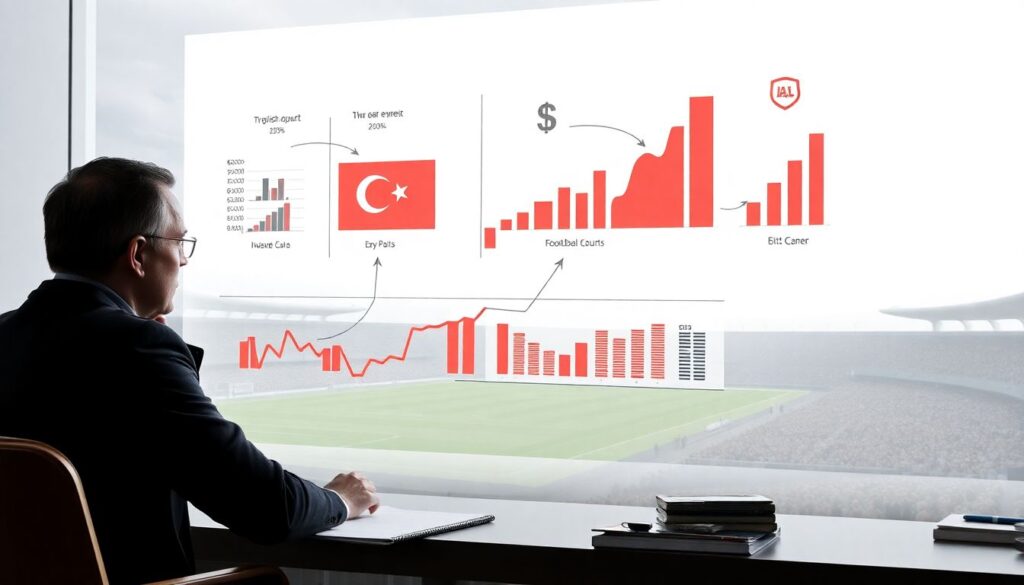
To interpret the impact of turkey politics on football transfers in any individual case, a simple mental model can help:
- Check timing: were there notable political or economic announcements close to the deal date?
- Assess currency profile: which side bears exchange-rate risk, and in which currency is the deal centred?
- Review regulatory changes: did quotas, taxes or licensing rules shift in the same period?
- Observe financing context: have there been recent signals about club debts, ownership debates or sponsor exits?
Concise checklist of actionable steps for clubs, agents and analysts
- Map each target or client contract to specific revenue sources, noting the currency of both sides.
- Scenario-test at least two negative macro outcomes for every multi-season deal before signing.
- Track regulatory consultations and draft rules, not only final announcements, when planning transfer windows.
- Distinguish between political noise and confirmed policies when interpreting market rumours.
- Document, after each window, which decisions were most influenced by macro or political developments and adjust future strategy.
Practical clarifications for clubs, agents and analysts
How should clubs prioritise between sporting needs and macro risk?
Define a core sporting spine that must be protected even in crisis, then surround it with flexible, tradeable assets. This approach keeps a minimum competitive level while allowing adjustments if macro or political shocks appear mid-season.
What can agents do to protect players in a volatile economic environment?
Agents should insist on clear payment schedules, late-payment clauses and transparent currency terms. Including performance bonuses and short review points can help players share upside without being locked into unfavourable long-term conditions.
How can analysts improve their turkey football transfer market analysis?
Combine traditional scouting and performance data with a timeline of political and economic events. Analysts who overlay transfer moves with macro and regulatory changes can better explain sudden strategy shifts and apparent pricing anomalies.
Do political links always translate into better transfer deals?
No. While connections may ease access to credit or sponsors, they can also create expectations, scrutiny and dependency. Sustainable transfer policy still depends on disciplined budgeting and realistic valuations rather than informal support.
How relevant are foreign leagues when evaluating Turkish transfer strategies?
Foreign leagues provide both competition and exit routes. Comparing wage levels, stability and exposure helps explain player flows in and out of Turkey, especially when the turkey economic crisis effect on football clubs becomes visible in contract offers.
What signals should investors watch when considering foreign investment in Turkish football clubs?
Investors should track governance reforms, transparency of financial statements, stability of broadcasting rights and the consistency of sports regulation. These factors matter at least as much as short-term league position or recent transfer headlines.
How quickly can political or economic changes reshape a single transfer window?
In highly volatile contexts, the tone of a window can change within weeks. Currency swings, new tax measures or licensing announcements can move clubs from buying to selling mode and alter which deals close before deadline day.