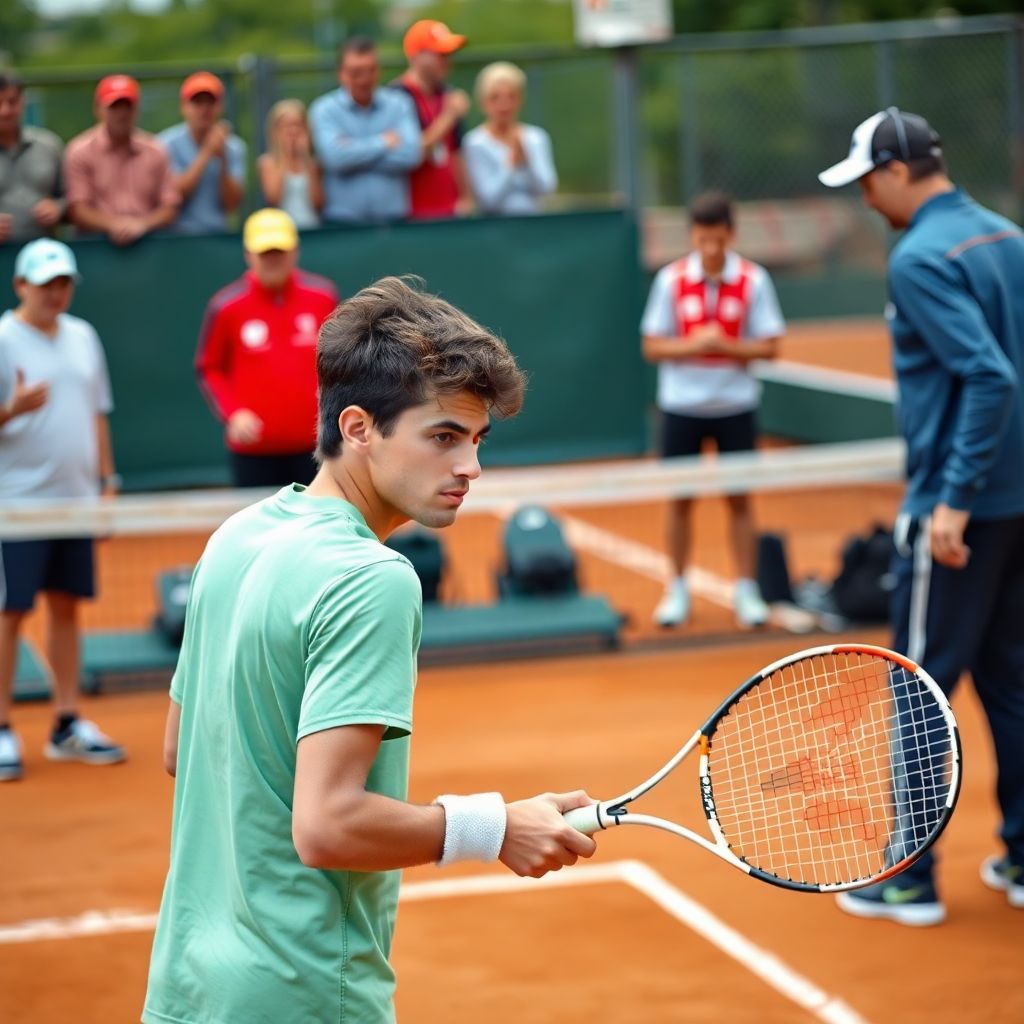
To fast‑track from Turkish junior to Grand Slam level, combine: daily high‑performance training in Turkey, targeted international tournaments, and a clear points plan for ATP/WTA entry. Build a support team (coach, fitness, mental), use federation programs, and track specific KPIs for ranking, fitness, and match performance every season.
Core Performance Pillars for Grand Slam Readiness
- Structured physical plan: year‑round conditioning, injury prevention, and surface‑specific work for clay, hard, and indoor courts.
- Technical weapons: heavy, reliable serve and aggressive first‑strike forehand adapted to fast and slow surfaces.
- Match tactics: clear point patterns, opponent scouting, and in‑match adjustment routines.
- Ranking roadmap: realistic ITF/ATP/WTA points targets and smart scheduling from Turkey‑based events outward.
- Professional environment: access to the best tennis coaches in Turkey for junior players and international sparring partners.
- Mental and recovery systems: pressure handling, sleep, nutrition, and off‑court life balance for long seasons.
Physical blueprint: conditioning, injury prevention and surface-specific prep
This roadmap suits ambitious Turkish players aged roughly 11-22 who already compete in national or ITF events and are asking how to become a professional tennis player from Turkey. It is not appropriate for players with untreated injuries, serious medical conditions, or those not yet committed to daily training and travel.
Use tennis academies in Turkey for professional training as your central base so you can combine school, family support, and top‑level courts. Choose an academy or club that offers:
- At least 4-6 weekly on‑court sessions focused on intensity, not just volume.
- Structured strength and conditioning supervision, not random fitness.
- On‑site or nearby physiotherapy and sports medicine contacts.
Core elements of the physical blueprint:
- Baseline conditioning (short term: 3-6 months) – Build general strength, mobility, and aerobic base. Emphasize safe technique on squats, lunges, core work, and basic sprints. Target: complete a 90‑minute session at match intensity without drops in speed or focus.
- Power and speed (medium term: 6-18 months) – Add plyometrics, resisted sprints, lateral speed drills, and medicine‑ball throws. Target: first‑step acceleration and court coverage that allow early ball contact in rallies.
- Injury prevention routines (ongoing) – Daily prehab for shoulders, hips, knees, and ankles: band work, single‑leg strength, and mobility. Target: no chronic pain and consistent ability to train 5-6 days per week.
- Surface‑specific prep – In Turkey, much competition is on clay, but Grand Slams use hard and grass. Rotate blocks:
- Clay: longer rallies, sliding drills, defensive movement.
- Hard: landing mechanics, first‑strike patterns, reduced pounding via good shoes and recovery.
- Indoor: quick reactions, return practice, serve precision.
Technical mastery: serve evolution, directional groundstrokes and transition game
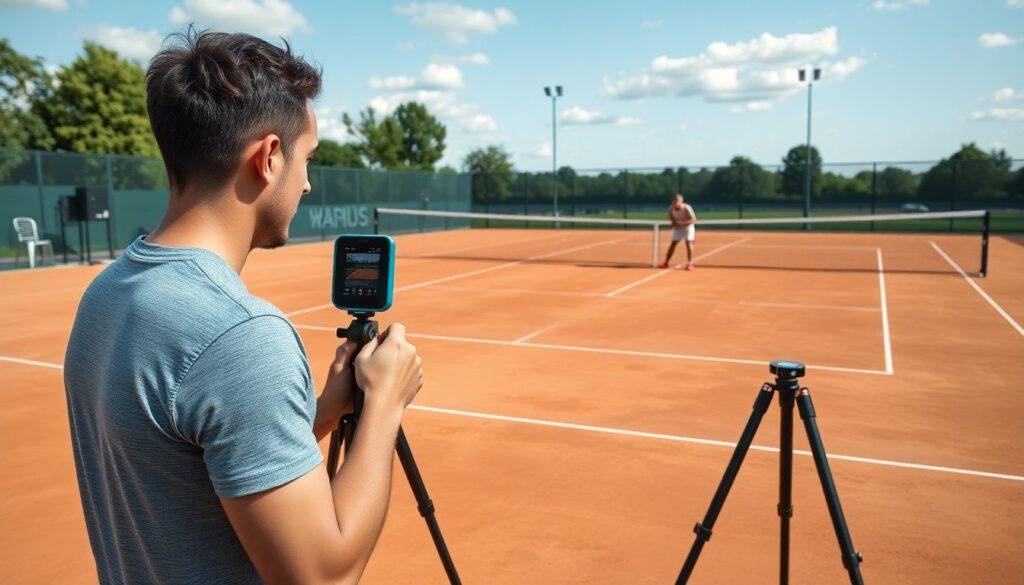
Before entering a fast‑track program you need clear tools and access:
- Qualified coaching – Work with the best tennis coaches in Turkey for junior players who have experience with ITF/ATP/WTA levels and can film and analyze your game.
- Video and data – Smartphone video, a basic tripod, and simple apps for slow‑motion and tagging serve direction, errors, and rally length.
- Sparring variety – Hitting partners with different styles (big servers, grinders, lefties) from your club, federation programs, and high performance tennis training camps in Turkey.
- Equipment consistency – Same racket model, string type, and tension across all frames to remove variables while you change technique.
Key technical priorities for a Grand Slam trajectory:
- Serve progression – Build a reliable first serve with three basic targets (wide, body, T) and a second serve that you can hit with spin under pressure.
- Directional forehand – Use your forehand as a main weapon: heavy cross‑court, change line only from good positions.
- Backhand stability – Two patterns: solid cross‑court to avoid errors, and down‑the‑line change to attack short balls.
- Transition and net game – Learn simple approach patterns and comfortable volley technique for finishing short balls and attacking second serves.
Match tactics: point-construction, scouting and adaptive game plans
This section gives a step‑by‑step tactical routine you can apply from Turkish national events to ITF, Challenger and beyond.
- Profile your own game honestly – Identify your natural strengths and weaknesses.
- Write down: best serve patterns, strongest wing, typical error patterns.
- Ask your coach and sparring partners for one sentence describing your style.
- Build two primary point patterns – Create simple A‑plans for serve and return games.
- Serve pattern example: first serve wide, next ball to open space; backup: body serve plus aggressive forehand.
- Return pattern example: deep cross‑court return, then high‑percentage rally to opponent’s weaker side.
- Scout typical opponents – Use league matches, ITF juniors, and high performance tennis training camps in Turkey to observe common styles.
- Before matches, note 3 tendencies: preferred patterns, movement weaknesses, emotional reactions.
- For unknown opponents, watch 5-10 minutes of warm‑up and first games.
- Set pre‑match tactical goals – Turn patterns into simple, measurable goals.
- Examples: attack second serve at least twice per game; play 70% of forehands cross‑court; use drop shot only from inside baseline.
- Limit yourself to 2-3 clear rules per match to stay mentally light.
- Use between‑point routines – Stabilize emotions and adjust plan in real time.
- After each point: quick breath, short cue word (e.g., “legs”, “spin”), reset focus on next serve or return.
- After each game: ask, “What’s working? What’s failing?” Then adjust 1 element, not everything.
- Mid‑match tactical switches – Prepare at least one backup plan.
- If A‑plan fails, change either target (hit to other side), height (higher or lower over net), or speed (take pace off, then accelerate).
- Use momentum breaks: slow towel walks, string fixes, and deeper breathing to reset.
- Post‑match debrief and notes – Within 30 minutes after each match, write 5-10 bullets.
- 3 things that worked, 2 things to fix, 1 tactical experiment for next match.
- Share notes with your coach and integrate them into your next practice session.
Fast-track mode: compressed tactical routine
- Lock in two patterns – One for serve, one for return, and use them in at least 80% of pressure points.
- Simple match goals – Before play, set 2 tactical goals (for example, attack second serves, play heavy cross‑court to weaker side).
- One change at a time – If losing, change only target, height, or speed, not all three.
- Write micro‑notes – After matches, capture 3 wins and 2 fixes; adjust the next training block accordingly.
Ranking strategy: tournament selection, wildcards and ATP/WTA points optimization
Use this checklist monthly with your coach to verify that your tournament plan really supports a Grand Slam trajectory from Turkey.
- You compete regularly in national events and ITF tournaments that match your current level, not just strongest or weakest fields.
- Your schedule balances Turkish events with nearby European trips to reduce travel stress while chasing points.
- You apply for federation support and wildcards where realistic, not randomly, and you understand each event’s draw strength.
- Your year has clearly separated blocks: preparation, points‑chasing, and lighter recovery phases.
- After every 6-8 weeks you review results and adjust the tournaments list based on actual wins, not hopes.
- You target entry lists where a few main‑draw or qualifying wins will move your ranking meaningfully, instead of chasing famous events only.
- You track ranking progress in a simple spreadsheet: current points, projected points, and required wins for next ranking tier.
- You align school or university exams with lighter tournament periods, especially if you aim at tennis scholarships in Europe for Turkish players.
- You discuss long‑term calendar with your coaches and, when available, federation staff, instead of deciding alone at the last minute.
Professional ecosystem: coach selection, sports science team and federation leverage
Common mistakes that slow or block Turkish players on the road to tennis’ elite:
- Switching coaches too often instead of solving communication or planning issues within a promising relationship.
- Staying in recreational clubs when tennis academies in Turkey for professional training are available and more suitable for high‑performance work.
- Ignoring basic sports science: no physical screening, no structured fitness plan, and rare or zero contact with physios.
- Relying on one local hitting partner instead of building a network via federation camps and international tournaments.
- Using short‑term results to panic: changing technique or equipment after a few bad weeks instead of following the long‑term plan.
- Missing chances to join national squads, training camps, or support programs run by the Turkish Tennis Federation due to late applications or poor communication.
- Not exploring academic pathways like tennis scholarships in Europe for Turkish players, which can provide funding, coaching, and international match play.
- Neglecting language and cultural preparation for Europe and North America, making travel and communication harder than necessary.
- Failing to involve parents constructively, leading to either over‑control or zero support in critical decisions.
Mindset & recovery: pressure management, sleep/nutrition protocol and season cycles
When full‑time travel and training are not yet possible, or budget is tight, these structured alternatives can still move you toward Grand Slam‑level habits.
- Local high‑intensity model – Train mostly at home with periodic blocks at high performance tennis training camps in Turkey. Use camps for sparring and evaluation, then implement drills at your club.
- Academic‑plus‑tennis route – Focus on strong academics and competing in national/ITF events while targeting tennis scholarships in Europe for Turkish players for the 18-22 window.
- Hybrid season planning – Combine school‑heavy months in Turkey with 2-3 international competition blocks per year, using tennis academies in Turkey for professional training as prep bases.
- Development‑first year – Take one “development season” with fewer tournaments and more work on technique, fitness, and mental skills, then re‑enter heavier competition after clear progress.
Time-mapped milestones: short, medium and long-term goals
| Horizon | Main Focus | Typical Actions from Turkey | Expected KPI Examples |
|---|---|---|---|
| Short term (0-12 months) | Foundation and clarity | Join or upgrade to a high‑performance program; test different coaches; play national events. | Consistent weekly training volume; clear game identity; competitive matches in Turkish age categories. |
| Medium term (1-3 years) | Regional and international impact | Regular ITF Junior or entry‑level pro events; attend 1-3 high performance tennis training camps in Turkey per year. | Stable performance deep into draws; early international ranking; recognizable weapons in your game. |
| Long term (3+ years) | Transition to elite | Target Challenger/WTA/ATP qualifying; build a full support team; optimize global calendar from a Turkish base. | Climbing professional ranking; main‑draw appearances; readiness for Grand Slam qualifying. |
Answers to Common Pathway Obstacles and Timelines
How early should a Turkish player commit to a professional tennis pathway?
Decision clarity usually helps from around 12-14 years old, but commitment should mean structured training and competition, not dropping school completely. Reevaluate the plan every season with your coach and parents based on progress, motivation, and health.
Do I need to move abroad to become a professional tennis player from Turkey?
Not immediately. You can build a strong base through tennis academies in Turkey for professional training and periodic trips abroad. Consider longer stays overseas only when your level and budget justify constant international competition.
How many tournaments should I play in a year while living in Turkey?
Quality matters more than quantity. Combine national events, regional circuits, and ITF tournaments that match your level. Plan at least a few intense blocks instead of random single tournaments spread across the year.
What if I cannot afford a full‑time high-performance program?
Use a hybrid model: train at your local club, attend specific high performance tennis training camps in Turkey, and focus on disciplined individual work. Share goals with coaches so you can maximize limited sessions.
Is university tennis in Europe a good option for Turkish players?
Yes, for many players it is an ideal bridge. Tennis scholarships in Europe for Turkish players can combine education, high‑quality coaching, and regular matches, keeping the door open for a later push into the professional rankings.
How long does it realistically take to reach Grand Slam qualifying level?
Timelines vary widely, but expect several seasons of serious international competition after building a strong junior or national record. Focus on continuous improvement in ranking and performance instead of fixed deadlines.
What if I start serious training later than other juniors?
You can still progress by following a fast‑track, high‑quality plan with more focus on fitness, technique efficiency, and targeted tournaments. Avoid comparing your schedule to others; measure your own improvement each season.