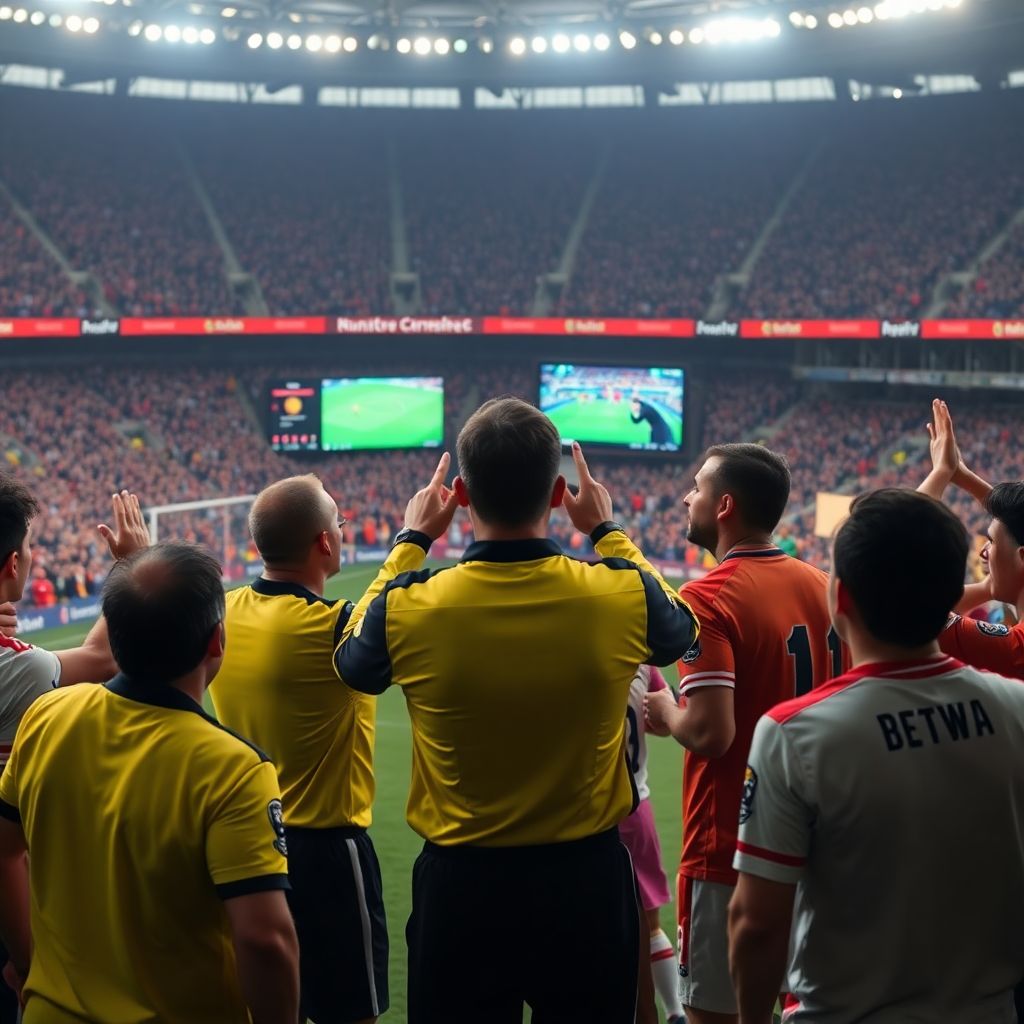
Video Assistant Referee (VAR) has reshaped Turkish and world football by adding an off‑field video team to review key incidents, correct clear errors, and support on‑field referees. It improves perceived fairness but introduces new delays, controversies, and technology‑related risks, changing tactics, emotions, and competition outcomes in Süper Lig and global tournaments.
Core Impacts of VAR on Turkish and Global Football
- Clarifies match‑changing incidents (goals, penalties, red cards, mistaken identity) with multi‑camera review.
- Reduces some clear referee errors while creating new debates over interpretation and consistency.
- Alters player and coach behaviour, including how they protest, celebrate, and manage risk.
- Shifts competition outcomes in Türkiye and worldwide through corrected goals and cards.
- Requires significant investment, training, and governance to manage technical and reputational risks.
- Highlights differences between leagues in transparency, communication, and speed of VAR processes.
Historical Adoption: VAR’s Entry into Turkish and Global Football
In simple terms, VAR in football is a system where a team of video officials supports the main referee on four specific categories: goals, penalty incidents, direct red cards, and mistaken identity. They use replay technology to recommend an on‑field review or a change when there is a clear and obvious error or a serious missed incident.
The history and evolution of VAR in football started with offline tests in a few competitions, before global law‑makers gradually allowed live use in top leagues and international tournaments. Early adopters treated VAR as an experiment focused on correcting only the most shocking mistakes, not re‑refereeing every action.
The impact of VAR on Turkish football followed a similar path but with local specifics. Türkiye implemented VAR in its top division with centralised operations and heavy public scrutiny. Fans and clubs quickly linked VAR decisions to title races and relegation battles, so acceptance depended not only on accuracy but also on perceived neutrality and convenience of implementation.
Compared with leading European leagues, Türkiye faced tougher communication challenges: fewer multilingual explanations, less broadcast transparency at the start, and intense club‑media pressure. Globally, some leagues invested early in referee communication training and media education, which softened resistance and made adoption feel more convenient and predictable.
Refereeing Accuracy: Statistical Shifts and Decision Patterns
To understand how VAR changed modern football, it helps to look at the workflow that sits behind each intervention. While each competition adjusts details, the core mechanics are similar in Türkiye and elsewhere.
- Incident selection: VAR constantly reviews live play but intervenes only for the four defined categories. In Türkiye, as in major European leagues, this boundary aims to limit interruptions while catching the biggest errors.
- Check and review protocol: Every relevant incident is silently “checked” in the background. A “review” is recommended only if the video evidence shows a clear and obvious error. Different thresholds across leagues (stricter in some, looser in others) explain why fans see variation in intervention frequency.
- On‑field review (OFR): The referee uses a pitch‑side monitor. In Turkish stadiums this moment often fuels drama, while in some global leagues it is more procedural. The OFR protects referee authority but costs time, adding to perceived inconvenience for fans in the stands.
- Communication of decisions: After a review, the referee explains with gestures; in some countries, they also provide short verbal announcements in‑stadium. Türkiye is gradually moving towards clearer broadcast explanations, but inconsistency still fuels debate about VAR in football pros and cons.
- Post‑match assessments: Referee committees later review VAR interventions. In Türkiye, public discussion often focuses on whether VAR “should have intervened”, while in global practice reports are usually more internal. This affects trust and shapes how convenient or risky the system feels to stakeholders.
- Technology and camera coverage: The number and quality of cameras differ by competition. Top tournaments with advanced offside technology can make faster, more objective calls than lower‑budget leagues, affecting both accuracy and process speed.
Tactical Evolution: How Coaches and Players Adapted to VAR
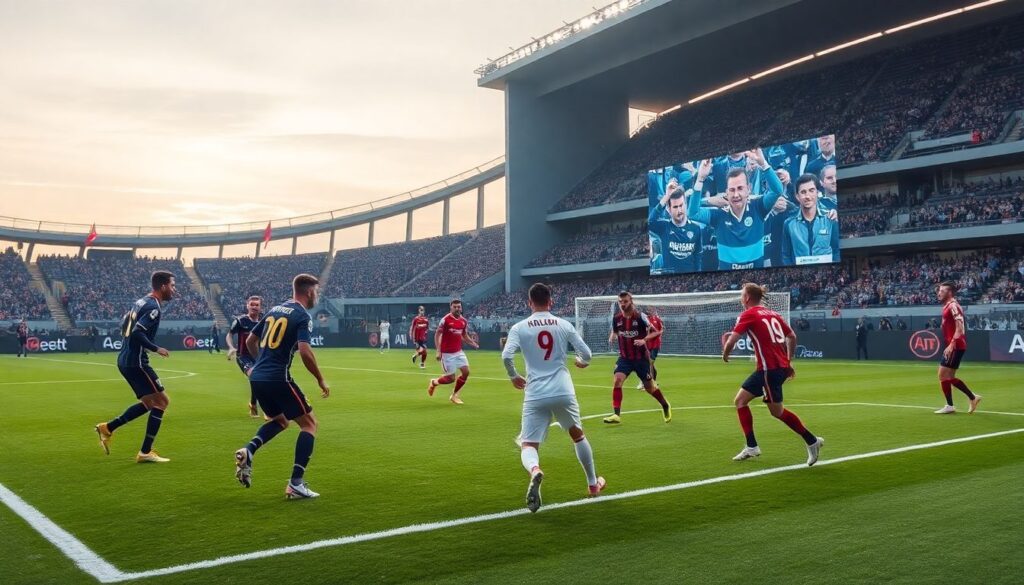
Coaches and players quickly adjusted strategy once they understood how VAR changed modern football. The same patterns appear in Türkiye and abroad, but with different risk levels depending on refereeing culture and media pressure.
- Penalty‑area behaviour: Defenders now avoid obvious shirt‑pulls and reckless tackles in the box, especially in televised matches where angles are clear. Turkish teams, like their European counterparts, coach defenders to use body positioning rather than risky contact that VAR can easily expose.
- Attacking movement and offsides: Forwards often time runs differently, knowing very tight offsides are reviewable. In some global leagues with semi‑automated offside tech, attackers push the line aggressively; in Türkiye, where offside lines are drawn manually, teams still consider the risk of drawing controversial offside frames.
- Celebration and emotional control: Players now delay full celebrations after marginal goals, aware that VAR could annul them. Turkish crowds often react twice-first to the goal, then to the confirmation-while in some leagues fans are more used to the “check” routine.
- Simulation and contact management: Attackers know that exaggerated dives can be exposed on replay, while subtle contact is more likely to be rewarded if it meets the threshold. This re‑balances the risk of simulation both in Süper Lig and in elite global competitions.
- Bench and game‑management tactics: Coaches and analysts track VAR patterns: which referees go to the monitor more, which types of handball or contact are often upgraded. In Türkiye this sometimes leads to public pre‑game comments about specific referees, increasing perceived risk and pressure around VAR use compared with more controlled global contexts.
Controversies and Limitations: Human Error, Delays and Tech Failures
Debate over VAR in football pros and cons is most intense around delays, transparency, and controversial interpretations. Türkiye and other countries share similar pain points, but the reactions differ with culture and media tone.
Perceived Advantages and Benefits
- Fewer clear, game‑deciding mistakes on penalties, red cards, and offside goals compared with pre‑VAR eras.
- Greater accountability for violent conduct and off‑the‑ball incidents that cameras can now catch.
- Psychological comfort for referees, who know that obvious errors can be corrected by colleagues in the booth.
- Opportunities for referee education, using clips from Turkish and global matches to improve consistency.
- Higher sense of justice in some competitions, especially when leagues explain decisions publicly and consistently.
Systemic Drawbacks and Risks
- Subjective interpretation remains: Many controversial VAR decisions in football are not about technology but about different readings of “clear and obvious” or handball intent, in Türkiye and elsewhere.
- Game flow disruption: Long checks and frequent OFRs frustrate fans and broadcasters, particularly in leagues where communication is limited and time‑added is seen as unpredictable.
- Technical dependence: Camera failures, connectivity issues, or wrong angles can produce new types of error, sometimes more damaging because everyone assumes the system is infallible.
- Trust and transparency gaps: Where federations communicate poorly (as often criticised in Turkish debates), fans suspect bias or incompetence, increasing reputational risk compared with more open global leagues.
- Cost and inequality: Well‑funded competitions can afford advanced systems and specialist training; lower‑budget leagues, including parts of the Turkish pyramid below the top tier, face tougher trade‑offs about when and where to use VAR.
Competition Consequences: Titles, Discipline and Competitive Balance
VAR affects league tables, cup outcomes, and disciplinary records in Türkiye and worldwide. Decisions to allow or disallow goals or to upgrade cards can swing championships, shape relegation battles, and influence club finances.
- Myth: VAR removes all referee mistakes
Reality: VAR reduces certain types of error but cannot fix every subjective judgment or unseen incident. In both Süper Lig and major European leagues, some mistakes persist, only now they are replayed and debated more intensely. - Myth: VAR always favours big clubs
Reality: High‑profile clubs receive more attention, so their VAR moments dominate headlines. However, smaller Turkish and global clubs can also benefit or suffer; perception often depends on a few emotional matches rather than balanced review of an entire season. - Myth: VAR destroys the spirit of the game
Reality: It changes the rhythm and emotional pattern but also protects fair play by punishing hidden fouls and serious misconduct. Some competitions mitigate disruption with clearer communication and faster protocols; convenience depends more on implementation than on the technology itself. - Myth: VAR is the same everywhere
Reality: The protocol is similar, but tolerance levels, communication style, and referee training differ by country. Türkiye’s intense club‑media ecosystem means similar incidents can create far bigger storms than in calmer regulatory environments. - Myth: VAR decisions are purely objective
Reality: While technology provides angles and tools, humans still interpret handball, foul intensity, and offside interference. This human layer, in Turkish and global contexts, keeps risk and controversy alive.
Implementation Logistics: Training, Costs and Operational Models
Practical implementation of VAR blends infrastructure, human resources, and governance. Comparing Türkiye with leading international leagues reveals how convenience and risks shift with different models.
Typical implementation steps in a national league (including Türkiye) look like this:
- Define competition scope (which divisions, which matches will use VAR).
- Choose centralised (one VAR hub) or decentralised (stadium‑based) operations.
- Contract technology providers and specify minimum camera standards.
- Train referees and VAR officials with shared clips from domestic and global football.
- Run offline trials, then live rollout with strict review and feedback loops.
From a risk and convenience angle, each step can be tuned differently in Türkiye and elsewhere. For example, some leagues emphasise transparency (publishing audio or video explanations), while others focus more on speed, limiting detail to avoid confusion.
Mini Comparative Example: Türkiye vs Leading European League
The table below summarises a simplified comparison of implementation choices and their consequences for convenience and risk.
| Aspect | Typical Turkish Approach | Common Global Best Practice |
|---|---|---|
| Operational model | Central VAR centre serving Süper Lig; focus on uniformity but occasional public doubts about neutrality. | Often centralised as well, framed as efficiency and consistency; neutrality emphasised through strict protocols. |
| Communication style | Post‑match statements, media programs, and federation briefings; emotional TV debates increase perceived risk. | Shorter, more standardised releases or referee audio; communication seen as more predictable and convenient. |
| Referee education | Workshops and camps with domestic clips; sometimes uneven adoption across officials. | Regular central training with international case libraries and standardised evaluation metrics. |
| Technology upgrades | Incremental improvements; investment debates tied to broader federation priorities. | Planned multi‑year upgrade cycles, often aligned with club and broadcaster revenue growth. |
| Public trust management | Heavy club and media pressure; trust fluctuates with individual incidents and headlines. | More emphasis on long‑term consistency and transparent processes to stabilise trust. |
Five‑Step Practical Checklist for Stakeholders
This checklist helps federations, clubs, and media assess whether their VAR implementation balances convenience and risk effectively.
- Clarify and publicly share the national interpretation guidelines, using examples from the history and evolution of VAR in football.
- Standardise communication after major incidents, especially in high‑profile Turkish matches affecting titles or relegation.
- Invest in regular joint sessions where referees, coaches, and players review clips of controversial VAR decisions in football.
- Monitor intervention time and frequency, comparing the impact of VAR on Turkish football with similar global leagues.
- Continuously review VAR in football pros and cons with data and case studies, rather than relying only on emotional reactions to single matches.
Practical Questions About VAR Usage and Effects
What decisions can VAR actually change?
VAR can intervene only on goals, penalty incidents, direct red cards, and mistaken identity. It cannot re‑referee general fouls or bookings, in Türkiye or anywhere else, unless they are clearly linked to these four categories.
Why do some VAR checks take so long?
Delays usually come from searching for the best angle, aligning offside lines, or debating whether an error is “clear and obvious”. Leagues with better technology and more streamlined communication generally complete checks faster.
Does VAR reduce or increase controversy?
It removes some obvious mistakes but shifts controversy towards interpretation and consistency. In passionate environments like Turkish football, every corrected or missed intervention becomes part of a larger trust debate.
Are VAR officials independent from on‑field referees?
Yes, but they are usually part of the same national referee group, trained and appointed by the same federation. The VAR advises; the on‑field referee always takes the final decision after review.
Why do similar incidents get different VAR outcomes?
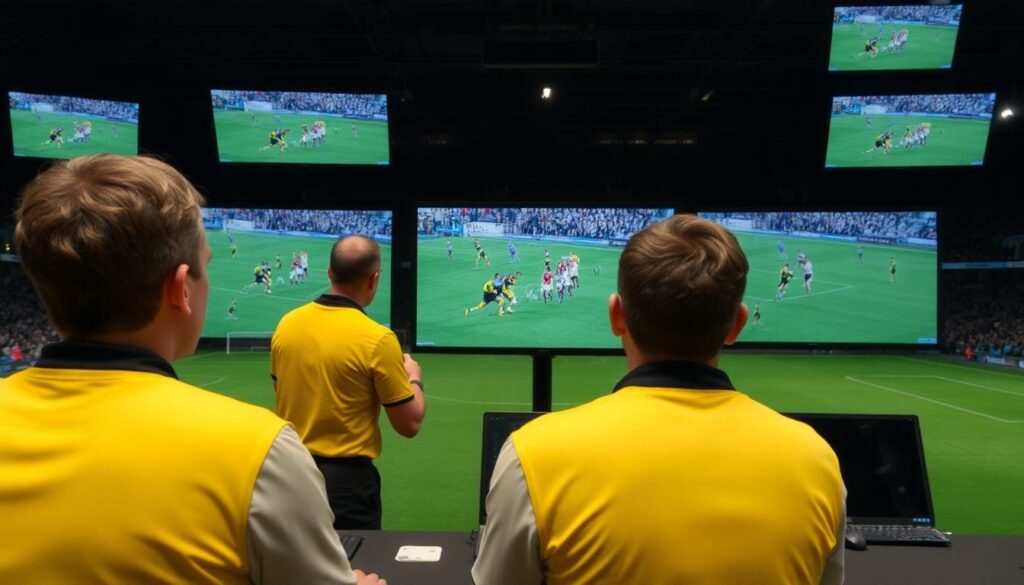
Different competitions and referee teams apply slightly different thresholds for intervention. Camera quality, angle availability, and real‑time perception all influence whether VAR sees a play as clearly wrong or within acceptable interpretation.
Can clubs appeal VAR decisions after a match?
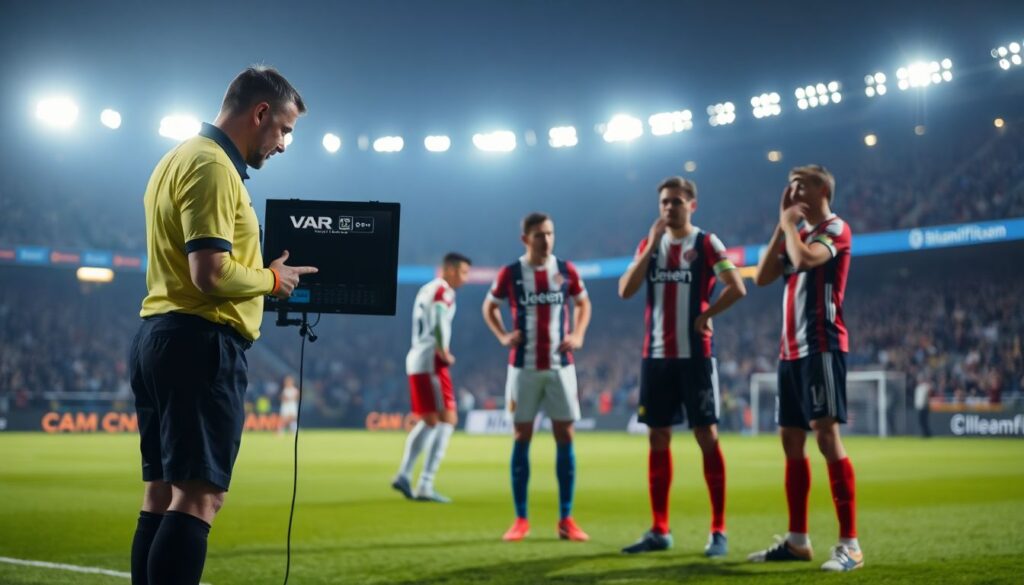
In normal circumstances, no. Once the referee has applied the Laws of the Game with VAR support, the result stands. Appeals are limited to exceptional administrative errors, not to disagreements over interpretation.
Is VAR here to stay in Turkish and world football?
Yes, all signs point to continuous refinement rather than removal. Most stakeholders accept VAR as part of modern football, focusing now on improving transparency, speed, and consistency instead of abandoning the system.