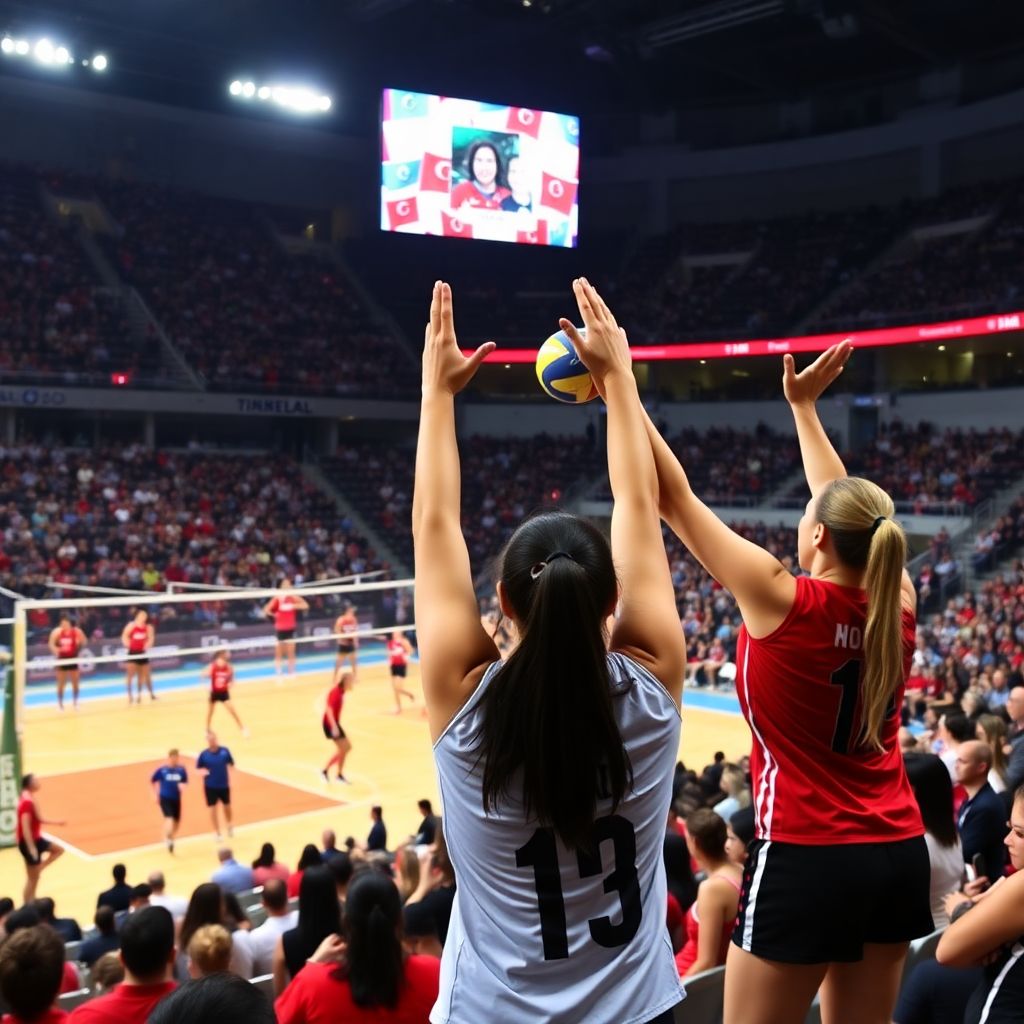
Turkey dominates European women’s volleyball through a long-term club-based model: powerful Istanbul teams, deep youth systems, aggressive foreign-player recruitment, and strong federation support. This combination creates dense competition, constant high-level pressure, and a clear talent conveyor from schools to “Sultanlar Ligi” and the national team, with risks tied to financial dependency and imported star power.
Core Drivers of Turkey’s Women’s Volleyball Supremacy
- Club-first structure in Istanbul that pulls in talent from across Turkey and abroad.
- Integrated youth academies feeding directly into elite pro squads and the national team.
- Heavy but targeted investment from sponsors, municipalities and state-backed entities.
- Fast, high-block, serve-pressure style that suits modern international volleyball.
- Robust coaching education and sports science support around top programs.
- Deliberate international exposure via CEV titles, imports and strategic branding.
Historical Path: From Domestic Clubs to Continental Power
Turkey’s rise as a women’s volleyball powerhouse is rooted in club history rather than a single national-team project. Istanbul giants such as VakifBank, Eczacibasi, Fenerbahce and Galatasaray turned women’s volleyball into a flagship sport, building professional environments that later pulled the national team upward.
This path differs from countries where the federation centralizes everything. In Turkey, club rivalries in the Turkish Airlines Sultanlar Ligi created a dense, unforgiving league. Continuous battles between stacked rosters made European competitions feel like a natural extension instead of a step up.
Over time, success in continental cups established an identity: Turkey as the destination for ambitious internationals and for local prospects who wanted to train with and against the world’s best. As that reputation grew, national-team success followed, anchored by players hardened in high-pressure club seasons.
For other countries, the lesson is to treat strong clubs as the engine of national success. The easier element to replicate is creating a competitive domestic league; the harder, riskier part is sustaining heavy investment without over-reliance on a few sponsors or city governments.
Talent Pipeline: Youth systems, scouting and player progression
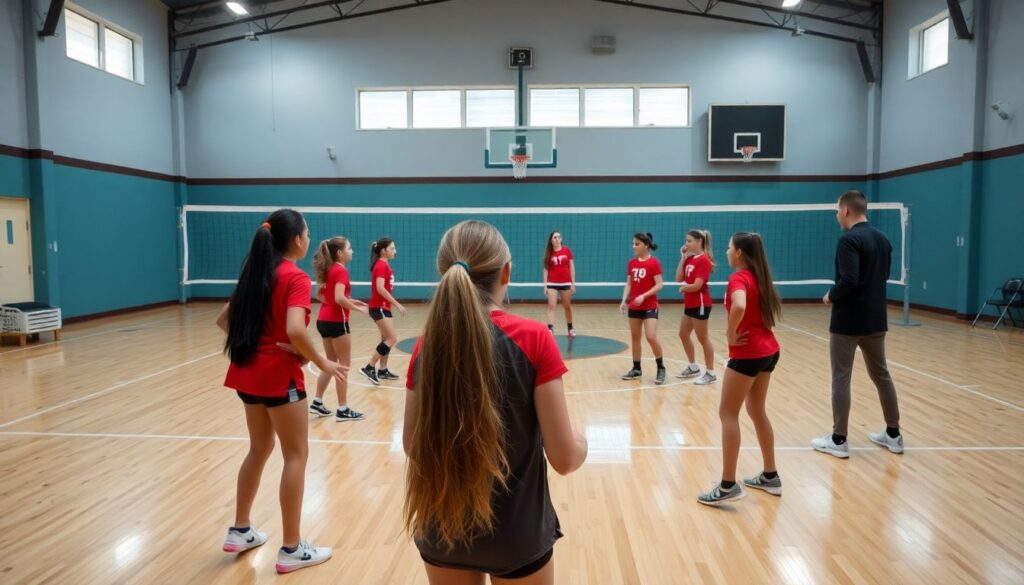
The Turkish women’s volleyball talent pipeline is a layered system connecting school sports, regional clubs, elite academies and national youth teams. It is not a single centralized academy but a network coordinated by the federation and top clubs.
- School and grassroots competitions – PE teachers and local coaches feed girls into city clubs early. Talent is identified at school tournaments, then invited to structured training while players still live at home, which keeps entry barriers low.
- Regional club structures – Provincial clubs run U14-U18 teams with clear weekly training plans. Stronger regions (e.g., Istanbul, Ankara, Izmir) share best practices that weaker regions can copy, although implementation varies widely.
- Elite Istanbul academies – VakifBank, Eczacibasi, Fenerbahce and others operate youth academies with professional standards: position-specific training, video work and physical preparation mirroring the senior team.
- National youth teams – U16, U18 and U20 teams act as filters and accelerators. Players who adapt to international tempo are fast-tracked, sometimes skipping club age groups to train with senior squads.
- Loan and dual-registration pathways – Young prospects from big clubs are loaned to mid-table Sultanlar Ligi or second-division teams to collect playing time while still training periodically with their parent club.
- Data-informed scouting – Increasingly, clubs track basic metrics (serve aggression, block touches, error patterns) from youth tournaments, allowing earlier, more objective selection and role definition.
For countries wanting to adopt this pipeline, the low-risk, high-impact starting step is to standardize youth competition formats and training weeks nationwide. High-risk moves, like building expensive centralized academies without club buy-in, often fail because they disconnect players from real match ecosystems.
Club Economics: Investment models, sponsorships and sustainability
Economically, Turkish women’s volleyball is anchored by a mix of corporate, municipal and multi-sport-club funding. These models made rapid growth possible but also create distinct risk profiles and different levels of ease for replication elsewhere.
-
Bank and corporate-backed clubs
Examples: VakifBank, Eczacibasi. These rely on long-term sponsorship from large institutions that see volleyball as branding and CSR. This model is powerful but risky to copy in markets without comparable corporations willing to commit for years. -
Multi-sport giants with fan bases
Examples: Fenerbahce, Galatasaray. Football-driven brands fund volleyball sections, leveraging shared facilities, marketing and fan engagement. Easier to sustain when the football side is healthy, but vulnerable when core club finances weaken. -
Municipal and university support
Many smaller Sultanlar Ligi and second-division teams are partially funded by municipalities or universities. This is relatively easy to launch but politically exposed: elections, budget shifts or policy changes can reshape support overnight. -
Ticketing, media and matchday revenue
Income from Turkish Airlines Sultanlar Ligi volleyball tickets, season passes and limited hospitality offers diversification, but currently complements, not replaces, sponsor money. For fans, searching for turkey womens volleyball team tickets usually means going through club websites, federation pages or local ticketing partners rather than a single national platform. -
Merchandise and brand extensions
Jerseys, scarves and broader turkey womens volleyball fan merchandise generate modest revenue but major visibility. Many fans now look to turkey womens volleyball jersey buy online options through club shops and marketplaces, which helps internationalize the fan base even if it does not yet fully stabilize budgets.
Countries trying to mirror Turkey’s ascent should start with transparent, multi-source club budgets and realistic payroll caps. The main risk is building rosters and facilities on temporary political or corporate money without long-term contracts, leaving programs exposed when priorities change.
Tactical and Technical Profile of Turkish National and Club Play
On the court, Turkish women’s volleyball is defined by high-tempo offense, aggressive serving, tall, well-drilled blocking lines and versatile outside hitters who can both receive and terminate under pressure. This style is optimized for modern European and world-level play and is trained consistently across top clubs and the national team.
Before looking at pros and cons, it helps to see this profile in practical scenarios.
Mini-scenarios of Turkish-style implementation
- Serve pressure focus in a mid-level league – A club decides that every rotation must contain at least one server able to disrupt reception, even at the cost of a few extra errors. Training blocks prioritize jump and hybrid serves, with defensive systems built to cover quick counters.
- Systemic blocking – A national team upgrades its blocking by standardizing read systems and communication terms borrowed from Turkish clubs, drilling them first in domestic leagues, then implementing in international competitions with the same language and cues.
- Outside hitters as two-way anchors – Instead of accepting one-dimensional attackers, a club invests extra reps for top outside hitters in reception and floor defense, mirroring how Turkish teams develop complete players who stay on-court across all six rotations.
Strengths of the prevailing Turkish approach
- High-pressure serving creates immediate advantages, forcing weaker passing structures into predictable offense.
- Strong, tall middle and opposite players allow dominant blocking, especially against slower teams.
- Systemic training across top clubs and the national team keeps terminology and patterns aligned.
- Depth of elite foreign players raises daily training intensity and tactical sophistication.
- Fan and media attention, including consistent turkey womens volleyball live stream coverage, builds pressure tolerance and normalizes big-match environments.
Limitations and risks of this style
- Over-reliance on physical advantages can hide technical gaps in smaller or late-developing athletes.
- Aggressive serve and block systems bring volatility; when serving accuracy dips, the system can look fragile.
- Foreign-star dependence risks slowing local talent development if roster balance is not managed.
- Copying this style without the same depth of coaching and sports science can produce overuse injuries and burnout.
- Smaller federations might find the model expensive if they try to match every element (depth of staff, technology, analytics) from day one.
For other programs, the low-risk move is to borrow the terminology and training structure of serve-block-transition systems. The high-risk move is to chase Turkish-style physical standards and match volume without equivalent recovery and medical support.
Support Systems: Facilities, sports science and coaching education
Behind the visible success of Turkey’s women’s volleyball sits a dense support system: modern arenas and training halls, specialized S&C coaches, medical teams, analysts, and a structured coaching-education pathway run with federation oversight and club participation.
Common mistakes and myths when trying to copy these support systems include:
- Myth: “We just need one national training center” – Central facilities help, but Turkey’s real strength is a network of good-quality club gyms and recovery resources, not a single mega-complex.
- Mistake: Hiring star foreign coaches without local staff development – If assistants and youth coaches are not upskilled, knowledge leaves with the head coach. Turkish programs increasingly invest in local coaching education so knowledge stays in the system.
- Myth: Technology is the main driver – Video, wearables and basic analytics are useful, but without disciplined daily practice structures their impact is minor. Turkey’s edge is consistency of routines, not gadgets.
- Mistake: Ignoring mental preparation – Playing in intense arenas, with TV coverage and high expectations, demands psychological preparation. Turkish clubs often integrate mental-skills work; skipping this makes it difficult to handle pressure when success finally arrives.
- Myth: Facilities must match big Istanbul clubs from day one – Many improvements are low-cost: reliable training slots, safe floors, basic recovery tools. Trying to build showpiece arenas too early can sink budgets before sporting culture is ready.
In practice, the safest path is phased investment: first stabilize training schedules and basic medical coverage, then upgrade surfaces and equipment, and only later expand to larger arenas as demand (and perhaps turkey womens volleyball fan merchandise sales) proves sustainable.
International Engagement: Transfers, competition selection and brand strategy
Turkey’s women’s volleyball expanded its influence by carefully managing international transfers, entering strong competitions, and building a recognizable brand that appeals to players, sponsors and global fans.
Clubs aggressively recruit high-level foreign athletes and coaches, but usually with clear role definitions: some bring scoring, others leadership, others specific tactical knowledge. The national team benefits when these imports raise the expectation level of domestic players who must compete daily for minutes.
At the same time, Turkish clubs prioritize participation in CEV Champions League and other European competitions, accepting crowded calendars to normalize constant top-level exposure. Media partnerships and online broadcasts ensure that almost every significant game is accessible, fueling global interest and making turkey womens volleyball live stream options widely searched for during peak tournaments.
Branding is reinforced through social media, English-language content, and direct sales of turkey womens volleyball fan merchandise and jerseys abroad. Foreign fans can often find turkey womens volleyball jersey buy online offers via club shops that ship internationally, while local supporters purchase turkish airlines sultanlar ligi volleyball tickets and follow their teams across domestic and continental campaigns.
For federations considering similar strategies, an incremental approach is safer: start by placing one or two clubs in regional competitions, then gradually raise foreign-player quotas and marketing efforts. The main risk is jumping too fast into expensive transfers and travel commitments without a base of local fans or digital monetization to support the costs.
Practical Clarifications on How Turkey Built Its Volleyball Edge
How crucial are Istanbul clubs to Turkey’s women’s volleyball dominance?
They are central. Istanbul clubs concentrate financial power, elite coaching and most of the daily high-level competition. Without this hub effect, Turkey would likely still be strong regionally but not the same consistent European powerhouse.
Can smaller countries copy Turkey’s model without big corporate sponsors?
They can copy the structure, not the scale. Prioritize clear youth-to-senior pathways, shared coaching education and competitive domestic leagues. Replace large sponsors with many smaller, more stable partners to reduce dependency on any single backer.
Is importing foreign stars necessary to raise league quality?
In Turkey’s case, foreign stars accelerated tactical and technical progress, but they worked because local players already had solid fundamentals. If basics are weak, spending heavily on imports can crowd out domestic development instead of lifting it.
What is the safest first step for federations inspired by Turkey?

Standardize youth competitions and coaching education, then align club and national-team playing philosophies. These moves are relatively low cost and build the foundation needed before major investments into facilities or high-priced rosters.
How important is fan culture and media coverage to on-court performance?
Very important. Strong fan culture, regular TV and turkey womens volleyball live stream coverage create pressure environments that simulate top tournaments. Players who grow up in these conditions handle decisive points better.
Does Turkey rely more on the national team or on clubs for innovation?
Mostly on clubs. Innovation usually starts with club coaches who experiment across long seasons; successful ideas are then filtered into the national team. This club-to-country flow is a defining feature of the Turkish system.
Are big arenas and modern gyms mandatory to become competitive internationally?
No. They help, but Turkey’s key advantage is systematic training, coaching alignment and deep competition. Modest facilities with high coaching standards and consistent usage beat impressive but under-utilized arenas.