
Elite Turkish sprinters combine precise biomechanics, periodized planning, track-specific speed drills and a disciplined strength and conditioning program for sprinters to reach world‑class levels. Safe progress requires gradual increases in load, careful monitoring of fatigue and regular technique checks with a qualified speed training coach in Turkey or online sprint training plans for sprinters.
Core Findings on Sprint Physiology and Performance
- Maximum sprint speed depends on high force production in very short ground contact times, especially through the hips and posterior chain.
- Elite athletes in Turkey use periodized macrocycles aligned with national and European competition calendars, not random hard sessions.
- The best sprint workouts to run faster combine acceleration, maximum velocity and speed endurance work in separate, focused sessions.
- Strength and power in the weight room only transfer if exercises are heavy, fast and technically clean, then integrated with track work.
- Recovery, heat management in Turkish summers and injury prevention routines are as important as the sprint training program for elite athletes.
- Simple, repeatable testing and video analysis guide continuous adjustments instead of guessing or copying other sprinters’ routines.
Biomechanics and Muscle Function in Elite Turkish Sprinters

This section suits intermediate to advanced athletes who already sprint weekly and have basic gym experience. It is not appropriate for people with unresolved hamstring, knee or back injuries, or for complete beginners without medical clearance and movement screening.
- Focus on upright posture: practice tall running with relaxed shoulders and neutral head position during strides and buildups.
- Train hip extension power: emphasize glute- and hamstring-dominant movements (hip thrusts, RDLs) two days per week with controlled technique.
- Improve stiffness and elasticity: add low-volume plyometrics (pogos, bounds, hurdle hops) on days with light track loads.
- Refine arm action: short, fast swings from hip to cheek, avoiding crossing the midline to keep force directed forward.
- Use video from side and rear views on Turkish tracks (indoor and outdoor) to check overstriding, collapse at foot strike or asymmetries.
Metric to track: Record 30 m and 60 m sprint times monthly and pair them with video to see whether technical changes actually improve performance.
Periodized Training: Weekly and Annual Templates Used by Coaches
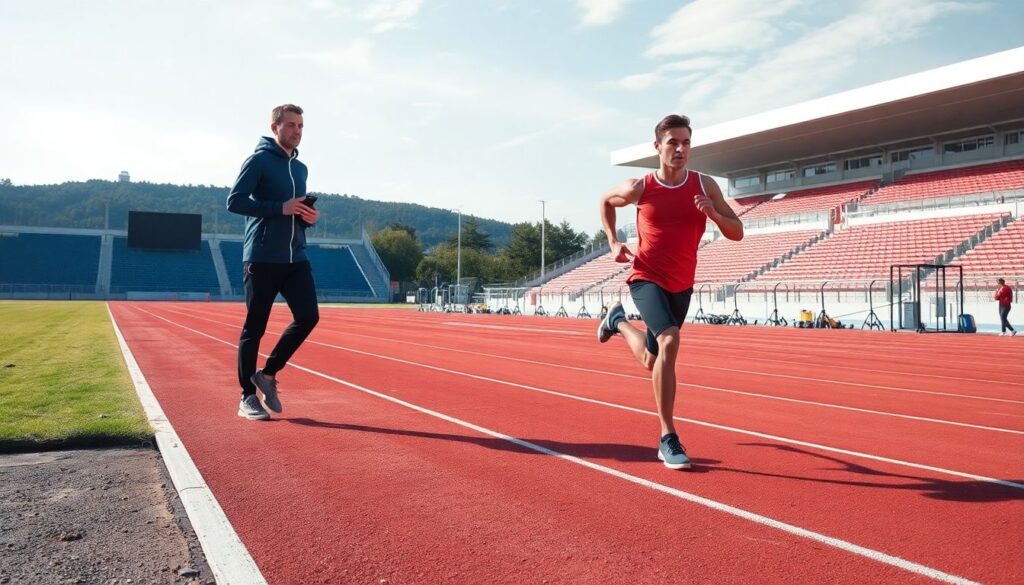
For effective implementation you need access to a standard 400 m track, basic timing (stopwatch or timing gates), a well-equipped gym, and if possible guidance from a speed training coach in Turkey familiar with the local competition calendar. A clear annual plan reduces injury risk and confusion.
- Anchor your macrocycle around Turkish national championships, university leagues and key European meets, then work backwards to plan phases.
- Structure each week with 2-3 high-intensity sprint days, 2 strength days and low-intensity or rest days, avoiding consecutive maximal sessions.
- Use 3-4 week training blocks with slightly increasing load, followed by 1 easier deload week to manage fatigue in hot Turkish summers.
- Consider using an online sprint training plans for sprinters platform to store workouts, times and RPE scores so you can see trends.
- Regularly update the sprint training program for elite athletes when life stress, exams or travel change an athlete’s recovery capacity.
Metric to track: Monitor weekly high-intensity sprint contacts (total number of sprints > 95% effort) and ensure they do not jump sharply from one week to the next.
| Template | Main Goal | Typical Weekly Focus | When Used in Turkish Season |
|---|---|---|---|
| Acceleration Block (3-4 weeks) | Improve first 30 m and start effectiveness | Short sprints (10-40 m), sled pushes, basic strength | Early preparation phase (autumn, early winter) |
| Max Velocity Block (3-4 weeks) | Raise top speed and technical quality upright | Flying sprints, wicket runs, elastic plyometrics | Mid-preparation, before indoor or early outdoor races |
| Competition Block (4-6 weeks) | Stabilize performance, maintain speed and freshness | Race modeling, reduced volume, quality strength maintenance | Main summer competitions and championships |
Speed Development: Acceleration, Max Velocity and Sprint Drills
Before following the steps below, consider these safety-focused limitations:
- Do not sprint maximally without a thorough warm-up and progressive buildups.
- Avoid sharp increases in sprint volume or intensity from one week to the next.
- Stop the session if you feel sharp pain in hamstrings, calves or groin.
- Be careful with spikes on wet or damaged Turkish tracks to reduce slipping risk.
- When in doubt, consult a qualified physio or coach instead of pushing through pain.
-
Prepare With a Structured Warm-Up
Start with 5-10 minutes of easy jog or brisk walk, then dynamic mobility (leg swings, hip circles, lunges). Add 4-6 progressive strides at 60-80% effort to prepare the nervous system before any hard sprint work. -
Train Safe, Progressive Acceleration
Perform 4-8 sprints of 10-30 m from various starts (3-point, standing, falling). Rest 2-3 minutes between reps, focusing on powerful but relaxed pushes, not all-out racing in every repetition.- Use sleds or hills with moderate resistance that slow you down slightly but do not alter your technique dramatically.
- Stop 1-2 sprints earlier than failure to reduce soft-tissue injury risk.
-
Develop Maximum Velocity With Flying Sprints
After acceleration work, add 3-6 flying sprints such as 20 m buildup + 20 m fast zone. Keep total high-speed distance modest, especially in heat, and take 3-4 minutes recovery walking back on the track’s infield.- Focus on quick, light contacts and vertical posture rather than straining.
- Stop the set if your times slow noticeably or technique breaks down.
-
Add Technical Drills and Wicket Runs
Use 2-3 sets of A-skips, dribbles and wicket runs with small hurdles or cones spaced evenly on Turkish synthetic tracks. Prioritize rhythm and consistency over speed to groove efficient mechanics safely.- Keep drill volumes moderate; drills should prepare you, not exhaust you.
- Avoid complex plyometric combinations if you feel fatigued or unsteady.
-
Include Controlled Speed Endurance
On a separate day, run 3-6 repetitions of 60-150 m at 90-95% of race intensity with generous recoveries. This supports the best sprint workouts to run faster in 100-400 m without pushing into reckless fatigue.- In hot Turkish cities like Adana or Antalya, schedule these later in the evening and increase water and electrolyte intake.
- End the session if your pace drops more than slightly between reps.
-
Cool Down and Reflect Safely
Finish with 5-10 minutes of easy jog or walk and light stretching. Write down what felt good, any niggles, your RPE and times so you can adjust future sessions instead of repeating risky patterns.
Metric to track: Use flying 20 m or 30 m timing every 2-3 weeks to monitor top-speed progress while keeping total high-speed meters controlled.
Strength and Power Protocols: Weightroom to Track Transfer
Use this checklist to verify that your strength and power work actually supports sprint performance instead of adding injury risk or useless fatigue.
- Lower-body main lifts (squat, trap bar deadlift, hip thrust) are technically solid, with no pain and controlled depth.
- Loads increase gradually over weeks, never jumping sharply from one session to the next.
- Power exercises (cleans, jump squats, medball throws) are performed explosively, with low to moderate reps and plenty of rest.
- Heavy leg sessions are placed at least 24-48 hours away from maximal sprint days.
- Single-leg exercises (split squat, step-up, RDL variations) are included to address imbalances and improve stability.
- Plyometrics are limited to small, high-quality doses and matched to the athlete’s strength level and injury history.
- Core work emphasizes anti-rotation and trunk stiffness, not endless crunches.
- The strength and conditioning program for sprinters is reviewed every 4-6 weeks based on sprint times and perceived fatigue.
- There is clear communication between the gym coach and track coach so total load stays manageable.
- Sessions are logged consistently, including load, sets, reps and RPE, to spot risky trends early.
Metric to track: Monitor relative strength (e.g., trap bar deadlift or squat compared to bodyweight) alongside 30 m times to confirm that strength gains actually coincide with faster acceleration.
Recovery, Nutrition and Injury Mitigation Strategies
Typical mistakes in recovery and injury prevention can quietly sabotage even the best sprint training program for elite athletes.
- Skipping low-intensity days and treating every track visit as a race effort.
- Underestimating hydration needs during hot, humid Turkish training conditions, especially in midday sessions.
- Ignoring early signs of hamstring tightness or calf soreness and continuing maximal sprinting anyway.
- Relying on late, heavy evening meals and poor sleep instead of planning regular, balanced nutrition throughout the day.
- Using static stretching as the only warm-up instead of dynamic mobility and progressive runs.
- Changing shoes or spikes abruptly before major races, instead of testing them in training first.
- Copying another sprinter’s supplements or recovery gadgets without considering personal needs or medical advice.
- Traveling to domestic or European meets without a plan for sleep, food and light movement on travel days.
- Returning too quickly from a muscle strain, jumping straight back to full-volume sprinting and heavy lifts.
Metric to track: Use a simple daily wellness score (sleep, soreness, mood, energy) together with training load to spot patterns that precede injuries or performance drops.
Monitoring, Testing and Data-Driven Adjustments
When advanced technology or experienced staff are limited, consider these practical alternatives for tracking progress and making safe adjustments.
- Manual timing and video instead of timing gates: Hand-held stopwatch plus smartphone video from consistent angles on the same Turkish track are enough to see trends in 30-60 m times and technique.
- Subjective wellness scales instead of wearables: Simple 1-10 scales for fatigue, soreness and stress can guide when to reduce volume or intensity before a problem grows.
- Low-cost jump tests instead of force plates: Measure vertical or standing long jump with basic equipment to monitor power trends over the season.
- Remote guidance instead of daily in-person coaching: When a local speed training coach in Turkey is unavailable, structured online sprint training plans for sprinters with video feedback can keep your progression safe and organized.
Metric to track: Choose 3-4 key tests (e.g., 30 m time, flying 20 m, vertical jump, wellness score) and repeat them regularly under similar conditions to inform week-to-week training changes.
Practical Concerns and Common Implementation Issues
How often should an intermediate sprinter in Turkey do maximal sprint sessions?
Most intermediates do well with 2 maximal or near-maximal sprint sessions per week, separated by at least 48 hours. In very hot or stressful weeks, reduce to 1 high-intensity session and prioritize quality and safety over volume.
Can I follow an online sprint training plan if I do not have a full track?
Yes, many online sprint training plans for sprinters can be adapted to 60-80 m straight sections, indoor bends or safe hills. You may need to adjust distances and focus more on acceleration and short speed endurance.
How do I know if my strength work is helping or hurting my sprinting?
Track simple metrics: your 30-60 m times, perceived leg freshness on sprint days and progress in key lifts. If sprint times stall or you feel heavy and sore, reduce gym volume or intensity and reassess exercise selection.
When is it better to hire a speed training coach in Turkey instead of self-coaching?
Seek a coach if you have repeated injuries, plateaued sprint times or important competitions coming up. A coach can adjust your sprint training program for elite athletes to your specific technique, schedule and local competition demands.
How should I adjust sprint training around exams or busy work periods?

During high stress weeks, reduce total sprint volume and gym load by around one third while keeping 1-2 quality speed sessions. Protect sleep and recovery to prevent illness and injury when academic or work demands are high.
Is it safe to sprint in very hot Turkish summer conditions?
It can be safe if you train in cooler hours, hydrate well and reduce volume and rest times in direct sun. Avoid maximal efforts when you feel lightheaded or unusually fatigued, and move sessions indoors where possible.
How quickly can I progress to more advanced sprint workouts to run faster?
Increase intensity or volume only when you have at least several weeks of consistent, pain-free training. Add one change at a time-such as a few extra meters or one more rep-and reassess how your body responds before progressing further.