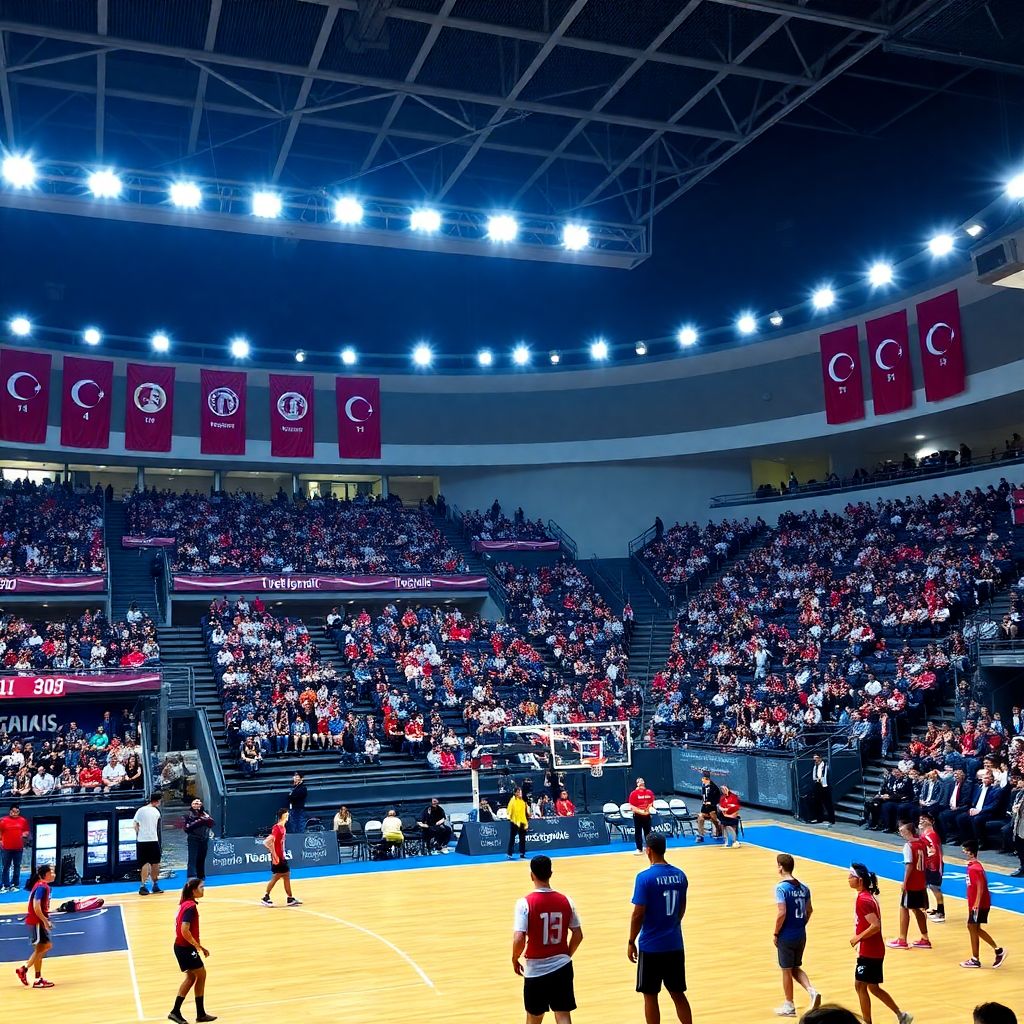
Turkish volleyball clubs evolved from small municipal and school halls into globally respected brands competing in Europe and hosting fans worldwide. Their growth rests on professional governance, strong youth systems, competitive domestic leagues, and modern fan products such as Turkish volleyball clubs tickets, media content, and international volleyball tours Turkey sports travel packages.
Core Insights on the Evolution of Turkish Volleyball Clubs
- Turkish volleyball grew from community-based teams to multi-branch sports clubs integrated into national identity and city branding.
- Professional structures, backed by banks, municipalities, and corporate sponsors, turned clubs into stable institutions rather than seasonal projects.
- Systematic youth academies and coaching education feed a deep talent pipeline for both women’s and men’s teams.
- Domestic league formats and intense rivalries force clubs to maintain high training, scouting, and analysis standards.
- European competitions act as both performance benchmarks and marketing platforms for the best Turkish volleyball clubs.
- Modern clubs link revenue, media, and fan activation through tickets, a Turkish volleyball merchandise shop presence, and digital storytelling.
- Clear evaluation routines and data-based reviews help managers check whether strategic changes actually improve sporting and business results.
Historical Trajectory: From Local Halls to National Institutions
Turkish volleyball clubs can be understood as multi-layered sports organizations that moved from amateur, hall-based teams into institutional actors in Turkish sports and city life. Early clubs were often extensions of schools, public institutions, or multi-sport community associations using modest indoor facilities.
Over time, these teams became formal departments within large multi-sport entities such as Fenerbahce, Galatasaray, and Besiktas, or specialized clubs backed by banks and companies like VakifBank and Eczacibasi. The focus shifted from participation and local pride to sustained elite performance, talent development, and brand building.
In parallel, arena infrastructure transformed. Simple halls were upgraded into modern arenas with TV-ready lighting, hospitality areas, and better seating, enabling structured Turkish volleyball league schedule planning, higher-level training routines, and commercial activities around matchdays. This allowed clubs to host international events and welcome travelling fans.
Today, leading clubs operate across three layers at once: as community symbols rooted in local halls and schools; as professional high-performance programs aiming for domestic and European titles; and as business-like entities managing media, sponsors, and event operations. Understanding these layers is crucial when analyzing their growth trajectory or designing improvement plans.
Governance, Ownership and Financing of Turkish Clubs
Governance and financing define whether a Turkish volleyball club can sustain success or collapses after a few strong seasons. While structures differ, several recurring mechanisms dominate the landscape:
- Multi-sport club departments – Volleyball teams attached to big multi-sport entities (for example Fenerbahce Opet or Galatasaray HDI Sigorta) share branding, member governance, and some financial resources with football and basketball departments.
- Corporate-backed entities – Clubs such as VakifBank and Eczacibasi Dynavit are strongly supported by financial or industrial groups, providing relatively stable funding and professional management models aligned with company culture.
- Municipal and public-institution clubs – City-backed teams rely on local government budgets and public facilities, often focusing on regional representation and grassroots programs, with performance targets defined by municipal strategies.
- Sponsorship and media contracts – Naming rights, jersey sponsors, and broadcasting agreements contribute significantly to operating budgets, especially for clubs regularly in European competitions and televised domestic matches.
- Matchday and fan-related income – Revenue from Turkish volleyball clubs tickets, limited hospitality, and on-site or online sales via a Turkish volleyball merchandise shop supports running costs and fan-focused initiatives.
- Federation and prize money – Performance-based rewards from domestic competitions and European tournaments offer additional but usually less predictable income streams.
Conceptually, good governance in Turkish volleyball balances member or stakeholder control with professional decision-making. Practically, top clubs use clear role definitions: elected boards set strategic direction, professional executives manage budgets and operations, sports directors handle rosters and staff, and head coaches run daily performance processes.
Consider VakifBank as a practical example. It combines strong institutional backing from its parent bank with specialized sports management expertise. This allows long-term investment in coaching, analytics, and youth development instead of short-term roster changes driven only by results pressure.
Actionable recommendations and indicators
- Define written governance rules: decision rights for board, CEO, sports director, and head coach.
- Separate operational budget decisions from emotional reactions to single match results.
- Monitor budget distribution across salaries, youth investment, facilities, and analysis tools.
- Review sponsor portfolio annually and track renewal rates as a stability indicator.
Quick algorithm to check governance and financial health
- List all major income sources and estimate their stability for the next two seasons.
- Compare total fixed costs (salaries, rent, staff) with guaranteed income only.
- Verify whether at least one person is clearly responsible for financial planning and reporting.
- Check if strategic sports decisions (signings, academy investment) are backed by written budget approvals.
Building Talent Pipelines: Youth Academies, Coaching and Scouting
Talent pipelines are the bridge between grassroots participation and elite squads. In Turkey, strong clubs build layered academy structures, link them to school programs, and support coaches with continuous education. The aim is not only to produce stars but also to maintain a broad base of well-trained players.
Typical application scenarios include:
- Club-linked school programs – Partnerships with schools provide training spaces, early talent identification, and daily contact with young players. Many Istanbul-based clubs use this model to enlarge their scouting base.
- Tiered academy teams by age – Systematic age categories (for example U13, U15, U17, U19) allow gradual progression and consistent technical standards across squads, with clear promotion criteria.
- Regional satellite centers – Clubs from big cities build training outposts in neighboring regions to reach more athletes and reduce travel burdens for families, especially in girls’ volleyball.
- Integrated coaching ladders – Youth coaches follow a curriculum aligned with senior team playing philosophy. Coaches can progress from youth teams to assistant roles in senior squads if they meet development targets.
- Data-assisted scouting – Basic statistics, video analysis, and standardized test protocols help identify promising players in school tournaments, regional leagues, or youth national teams.
- Loan and partner-club systems – Surplus academy graduates are loaned to smaller teams for playing time, while the parent club monitors their development and can recall them when needed.
For example, a successful women’s club in Istanbul may run multiple youth teams in parallel, collaborate with district schools for gym access, and share facilities with the senior squad. Promising players join joint training sessions and pre-season camps, building both technical and cultural integration.
Actionable recommendations and indicators
- Document a clear club playing philosophy and ensure all academy coaches use it in training plans.
- Track how many players per season move from academy to senior squad or professional contracts elsewhere.
- Measure training attendance, injury rates, and progression in core skills (serve, reception, block) across age groups.
- Set annual targets for the number of schools and regional tournaments covered by scouts.
Competitive Landscape: Domestic Leagues, Cups and Rivalries
Domestic competition in Turkey provides the day-to-day environment that shapes club development. League formats and cup tournaments create different types of pressure: long-term consistency, short knockout focus, and rivalry-driven intensity. Clubs must manage rotation, peak periods, and recovery across a dense annual calendar.
In practice, planning around the Turkish volleyball league schedule is a core management task. Staff need to align training loads with travel, TV games, and European commitments. Derbies between major Istanbul clubs or clashes involving Ankara heavyweights bring extra media attention and fan expectations, affecting preparation psychology and logistics.
Performance advantages in the Turkish system
- Regular high-quality matches help players adapt to pressure and different tactical styles.
- Derbies and city rivalries create natural motivation drivers and clear emotional narratives for fans.
- Cup competitions allow rotation, testing of younger players, and tactical experiments without league-table risk in every game.
- Domestic success often grants access to European tournaments, improving club visibility and attractiveness for sponsors and players.
Structural constraints and challenges
- Fixture congestion can overload key players, raising fatigue and injury risks if rotation is poor.
- Smaller clubs may struggle to compete financially with the best Turkish volleyball clubs, creating performance gaps.
- Travel across a large country requires careful planning for recovery, nutrition, and training load adjustments.
- Short-term pressure for results can push clubs to favor imports over long-term development of local talent.
From a practical standpoint, successful performance departments build season plans that include periodization around key domestic clashes and cup phases. They establish internal targets for league position, cup rounds, and European qualification, then align rotation and training cycles accordingly.
Crossing Borders: Turkish Clubs in European and Global Competitions

Participation in European and global competitions exposes Turkish clubs to diverse playing styles, high-level officiating, and intense media scrutiny. It also provides benchmarks: how domestic dominance translates into international competitiveness. However, misconceptions about this step often lead to poor planning and frustration.
Common mistakes and myths in international transitions
- Myth: Domestic dominance automatically ensures European success – Teams sometimes underestimate tactical variation and physical intensity in European competitions, failing to prepare specific game plans for top foreign opponents.
- Mistake: Ignoring travel and recovery demands – Clubs may treat European away matches as regular domestic trips, underestimating time-zone, hotel, and logistics impacts on performance and injury risk.
- Myth: Star signings alone close the gap – Instead of improving structure, analysis, and training, some clubs rely solely on imported stars, which can disrupt squad balance and long-term development.
- Mistake: Weak integration of scouting reports – Staff produce detailed opponent analysis but fail to transform it into concrete training tasks and clear match plans understood by all players.
- Myth: European games are only about prestige – Clubs sometimes overlook their marketing and networking value for sponsors, foreign fan engagement, and future volleyball tours Turkey sports travel opportunities.
- Mistake: No post-competition learning cycle – After elimination, some organizations move on without structured reviews, losing the chance to build institutional memory and long-term adaptation.
A practical example is how successful Turkish clubs use international experiences to refine their systems: analyzing serving trends, block-defence patterns, and substitution tactics seen in European matches, then integrating them into domestic training routines and youth curricula.
Revenue, Media Strategy and Fan Activation in Modern Clubs
Financially and culturally, modern Turkish volleyball clubs act as event and content producers. They sell matches as experiences and the team as a story across TV, social media, and physical arenas. Revenue and fan activation are closely connected; stronger emotional engagement usually supports more stable income.
Typical revenue channels include sponsors, broadcasting, and match-related income from Turkish volleyball clubs tickets, catering, and merchandising. A well-managed Turkish volleyball merchandise shop, whether online or in-arena, reinforces identity and offers additional touchpoints for fans beyond matchdays.
On the media side, clubs use short-form video, behind-the-scenes content, player interviews, and tactical explainers to keep supporters engaged between matches. These assets promote upcoming games, clarify the Turkish volleyball league schedule, and encourage attendance or streaming, especially for key derbies and European nights.
Mini-case: aligning media, revenue, and fan experience
Consider a club from Ankara preparing for a critical home match against a traditional rival. Marketing staff build a simple but coordinated sequence:
- Two weeks before the match, publish a rivalry story video featuring former players and historical moments.
- One week before, push targeted messages highlighting remaining seat categories, linking directly to the ticket platform.
- On matchday, post early-arrival incentives (merchandise discounts, player meet-and-greet) to drive hall entry before warm-up.
- After the match, share highlights and short tactical breakdowns, inviting feedback and promoting the next home game.
Actionable recommendations and indicators
- Track average home attendance, percentage of pre-sold tickets, and changes across the season.
- Measure merchandise revenue per spectator and identify which product categories perform best.
- Monitor social media reach and engagement around key content types (match previews, behind-the-scenes, player stories).
- Connect ticketing and merchandise data to communication channels to understand which campaigns convert into revenue.
Over time, this structured approach helps clubs turn occasional visitors into committed fans who follow schedule updates, buy merchandise, and even plan trips that include matches, supporting broader volleyball tours Turkey sports travel initiatives.
Practical Clarifications for Coaches, Managers and Analysts
How can a mid-level Turkish club realistically grow its program in three to five years?
Focus on one or two clear pillars: strong youth development, stable governance, or fan engagement. Build written plans, assign responsible staff, and define simple indicators (academy promotions, sponsor renewals, attendance trends) reviewed after every season.
What should analysts prioritize when facing top domestic or European opponents?
Concentrate on serve patterns, reception targets, side-out efficiency, and substitution habits of key rivals. Translate reports into 2-3 concrete training themes and a clear match plan that both staff and players can recall easily under pressure.
How do ticketing and merchandising support on-court performance?
They finance better staff, recovery, and analysis tools. A professional approach to Turkish volleyball clubs tickets and a consistent Turkish volleyball merchandise shop presence stabilizes income, reduces panic-driven roster decisions, and allows investment in long-term projects like academies.
Is it better to sign more foreign stars or invest in local youth?
The optimal mix depends on club resources and ambitions, but sustainable models combine a few impact imports with a strong core of locally trained players. Track playing time distribution, performance metrics, and salary balance to avoid over-dependence on short-term signings.
How can coaches use domestic league data to prepare for European competitions?
Identify how your team performs under different match tempos, serve intensities, and block heights in domestic games. Compare these patterns against video of European opponents, then adjust training loads and tactical focuses accordingly.
What is a simple way to review if a strategic change actually worked?

Define in advance which indicators should move (for example, reception efficiency, academy promotions, or average attendance). Collect baseline values, implement the change, then compare the same indicators after an agreed period, controlling for schedule difficulty.
How can smaller clubs still benefit from volleyball tourism and international interest?
Collaborate with local agencies to integrate matches and facility visits into volleyball tours Turkey sports travel packages. Offer clear information in English, coordinate with the national federation’s calendar, and highlight unique regional experiences around matchdays.