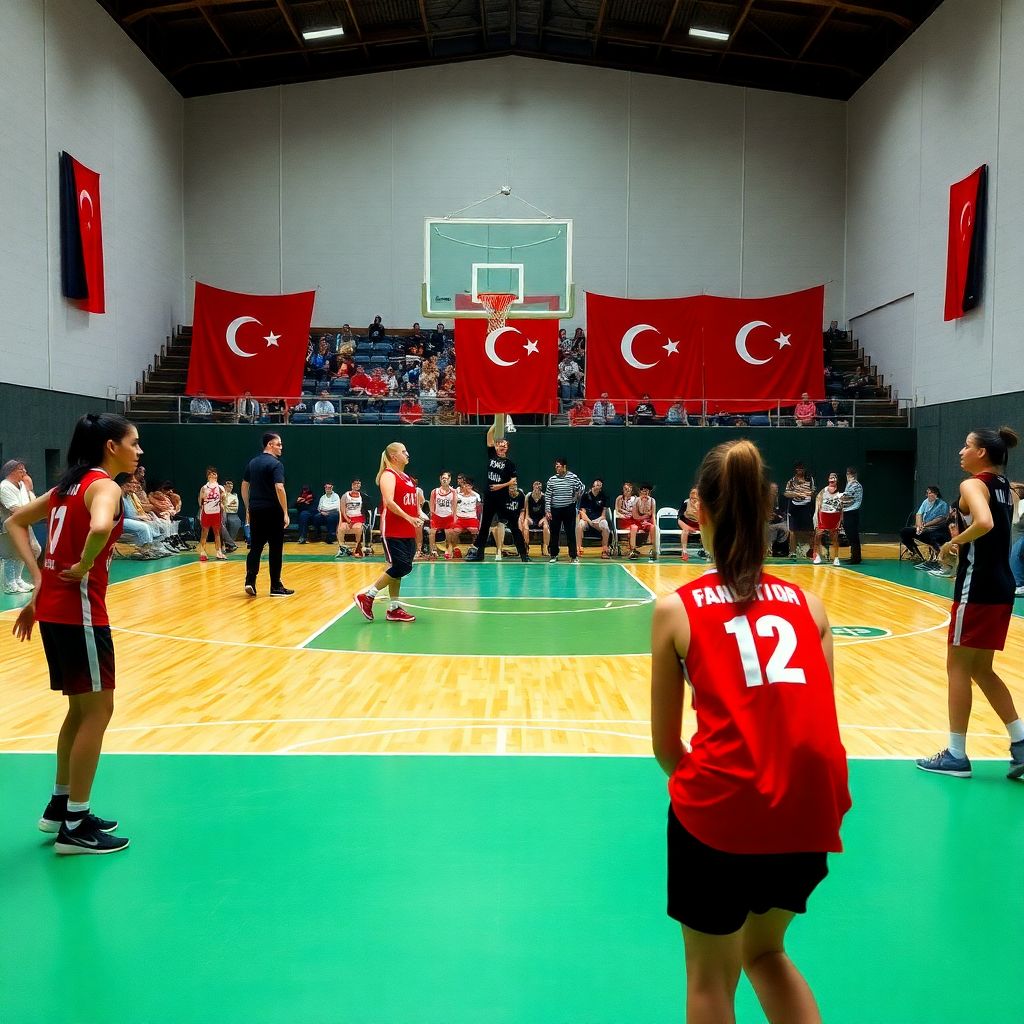
Women’s basketball in Turkey combines major club success with structural challenges in funding, youth development and visibility. To keep growing, the system must protect academies, coaches and players from common mistakes: short-term planning, over‑reliance on imports, weak school links, and limited career guidance for Turkish talent on and off the court.
Core insights on Turkish women’s basketball
- Women's basketball Turkey is globally competitive at club level, yet still fragile at grassroots and financial levels.
- The turkish women's basketball league relies heavily on a few rich clubs; depth and parity remain issues.
- Best women’s basketball teams in Turkey win Europe-wide, but many local clubs struggle to fund youth programs.
- Professional women’s basketball careers in Turkey need clearer dual-career and post-retirement pathways.
- The future of women’s basketball in Turkey depends on school leagues, coaching education and stable club governance.
- Most recurring problems are preventable with earlier planning, written policies and basic data tracking.
Historical rise of women’s basketball in Turkey
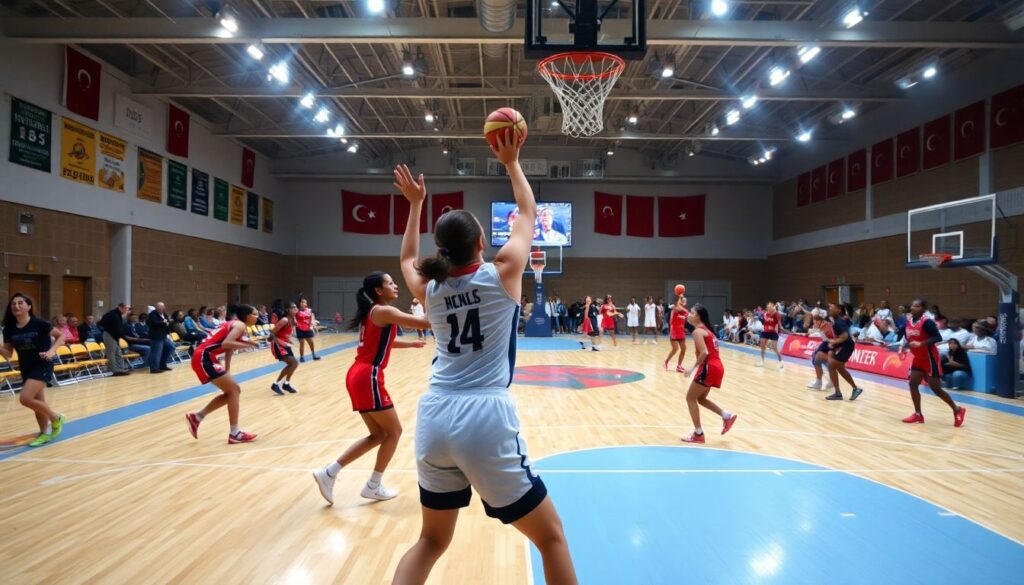
Women’s basketball in Turkey refers to the ecosystem of female competitions, from school and regional leagues to the top-tier club championship, as well as national team programs and overseas careers for Turkish players. It includes both professional and semi-professional structures plus a wide base of informal and school-level play.
The modern story began with a few multi-sport clubs forming women’s sections and building toward what later became the elite turkish women's basketball league. Over time, this top division, supported by state institutions and major sponsors, turned women’s basketball into a visible part of the national sports culture.
Key milestones include the professionalisation of club contracts, the rapid rise of Turkish clubs in EuroLeague Women, and improved youth systems that feed players into senior teams. Parallel growth in university and school competitions has expanded the player base, even if coordination between these pathways is still uneven.
Understanding this historical rise is essential because several present-day problems-budget instability, uneven regional access, dependence on a few powerhouses-are direct results of how the system first developed. Recognising those roots helps coaches, club directors and policymakers avoid repeating past mistakes.
Profiles of pioneering clubs and standout players
Pioneering clubs and star players are the engine of visibility and competitive standards. They show how elite structures can be built-but also illustrate patterns that, if copied blindly, create long-term risk.
-
Flagship multi-sport clubs
Large Istanbul-based clubs invested heavily in women’s sections, attracting top Turkish and foreign talent. Their model proves that strong branding, facilities and medical staff can lift performance, but it also teaches a lesson: when budgets outgrow local development, regional clubs struggle to compete and talent concentration increases. -
Regionally rooted "community" clubs
Smaller clubs outside big cities show another path-building deep ties with local schools, municipalities and sponsors. The common mistake here is over-reliance on a single political or corporate patron; when that support changes, the entire women’s program can collapse in one season. -
Academy-focused organizations
Some clubs put youth academies at the center of their identity, systematically promoting homegrown players into senior squads. Their experience highlights that clear selection criteria and transparent communication with families reduce conflicts and early drop-out, which are frequent issues where expectations are unmanaged. -
Trailblazing national team leaders
Captains and long-serving internationals have shown how consistent national team culture can attract fans and sponsors. However, when marketing focuses on just one or two faces, the system becomes vulnerable to injuries or retirements, and younger players may hesitate to step into leadership roles. -
Turkish stars with strong overseas careers
Players who succeed abroad demonstrate that technical and physical standards in Turkey can match the best. Commonly overlooked is structured knowledge transfer: if clubs do not actively capture and share what these players learn overseas, their experience benefits only a small circle. -
Foreign imports shaping standards
Elite foreign players raise tactical and physical levels and help best women’s basketball teams in Turkey compete internationally. The hidden risk is tactical dependence: teams may build systems around imports, giving fewer late-game responsibilities to Turkish players and slowing leadership development.
Domestic league structure and talent development pathways
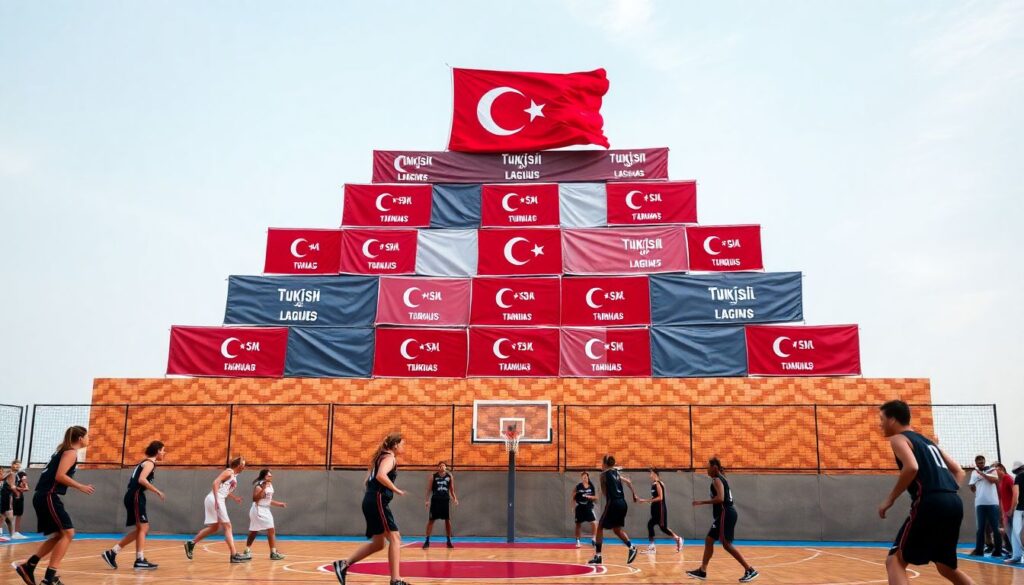
The domestic structure is built around a pyramid of divisions topped by the elite competition, supported by youth leagues, school tournaments and university championships. Together they shape professional women’s basketball careers in Turkey from first contact with the sport to retirement.
-
Top-tier league as a performance and marketing engine
The highest division sets technical standards, media expectations and salary benchmarks. When its scheduling, TV exposure or competitive balance is weak, the entire ecosystem, from sponsors to grassroots, feels the impact. -
Lower divisions as development labs
Second and third tiers allow younger or late-blooming players to get minutes. The frequent error is treating these leagues as "dumping grounds" for surplus players instead of structured development environments with clear style-of-play and teaching priorities. -
Youth leagues connected to club academies
Age-group competitions are where habits and game understanding are formed. Without shared technical standards and coaching education, clubs can accidentally reward early physical maturation over long-term potential, leading to burnout and drop-out. -
School and municipal leagues
These leagues capture players who may never enter a formal club system. A recurring mistake is the absence of scouting and communication channels between schools and clubs, which leads to missed talent in smaller cities and rural areas. -
University and semi-professional competitions
For many athletes, this level is the bridge between youth and full professionalism. Without clear agreements on training load and academic flexibility, players become overworked, and both performance and grades suffer, causing premature exits from the sport. -
Transition to coaching and management roles
As players retire, some move into coaching, scouting or administration. If federations and clubs do not offer structured education and mentoring early enough, valuable experience is lost and leadership positions remain concentrated in a small, aging group.
Scenarios showing how the structure is used in practice
Scenario 1: A talented 15-year-old plays for a municipal team with no contact with bigger clubs. A proactive regional scout attends school tournaments, invites her to a trial at an academy, and agrees on a shared schedule with her school coach, preventing overtraining and academic problems.
Scenario 2: A second-division club decides to become a development hub. It signs younger players on multi-year deals, commits to giving them minimum playing time, and hires a head coach with a track record in player development rather than only chasing short-term promotion.
Scenario 3: A veteran player nearing retirement is invited to assist youth practices twice a week and begins a coaching license course. The club builds a long-term path for her into staff roles, retaining institutional knowledge and providing a role model for younger athletes.
International achievements and influence in EuroLeague Women
Turkish clubs have become regular contenders in EuroLeague Women and other European competitions. Their success amplifies the visibility of women’s basketball Turkey-wide, raises tactical standards and attracts better sponsors, yet also exposes structural weaknesses when budgets shrink or key players leave.
Main benefits of European success
- Higher training standards, as clubs adopt modern strength, conditioning and analytics used by elite European opponents.
- Improved negotiating power with sponsors and broadcasters due to regular international exposure and marquee home games.
- Greater motivation for youth players, who can see a tangible path from local academies to facing top clubs in EuroLeague Women.
- More opportunities for Turkish players to be scouted for overseas contracts, expanding the global footprint of the domestic system.
- Knowledge exchange for coaches and staff, who learn new practice structures, load management and scouting methods.
Typical constraints and risks revealed by EuroLeague Women
- Budget volatility when European qualification is not guaranteed each season, causing roster instability and late payments.
- Over-dependence on a few wealthy clubs, while the rest of the league falls behind in facilities, staffing and sports science.
- Limited playing time for young domestic players in high-stakes games, slowing their tactical decision-making and confidence.
- Scheduling congestion that increases injury risk, especially if domestic leagues and national teams do not coordinate calendars.
- Short-term roster building focused on imported stars rather than progressive integration of Turkish role players.
Grassroots initiatives, schools and youth academies
Grassroots basketball in Turkey runs through primary and secondary schools, municipal programs and private academies. This is where most long-term potential is either nurtured or lost. Many recurring issues here are simple to avoid with clear communication and basic safeguarding standards.
Common mistakes and how to prevent them quickly
-
Chasing results over learning at young ages
Mistake: Coaches focus on winning school tournaments rather than teaching fundamentals and game understanding.
Prevention: Set age-appropriate goals for each season, share them in writing with parents, and evaluate coaches on skill development metrics, not just trophies. -
Overloading young players with too many teams
Mistake: Talented children play for school, club and sometimes private academies simultaneously, without coordinated planning.
Prevention: Create a shared weekly schedule between coaches, cap the number of games per week, and monitor simple wellness indicators such as sleep and soreness. -
Poor communication with families
Mistake: Parents are not informed about progression criteria, playing time decisions or long-term pathways, leading to conflict and drop-out.
Prevention: Hold short, regular parent meetings; provide a one-page pathway overview that explains how players can move from beginner to competitive levels. -
Lack of basic injury prevention habits
Mistake: Warm-ups are rushed, and strength or flexibility work is ignored, increasing knee and ankle injuries in teenagers.
Prevention: Standardise a simple 10-15 minute warm-up routine and one or two weekly bodyweight strength sessions; train all youth coaches to deliver them consistently. -
Ignoring late developers and multi-sport kids
Mistake: Early-maturing, taller players get most attention, while smaller or multi-sport athletes are sidelined.
Prevention: Track all players’ progress over seasons, not just in one year; encourage complementary sports such as athletics or volleyball until mid-teens. -
No clear pathway from grassroots to professional
Mistake: Players and parents do not understand how grassroots programs connect to club trials and national team selections.
Prevention: Publish transparent trial dates, selection criteria and contact points; partner with at least one professional club to create visible "next steps" for standout players.
Commercial models, media coverage and financial sustainability
Financial sustainability depends on diversified income: sponsorships, ticketing, broadcasting, merchandising and public support. In many women’s programs, a single sponsor or municipal budget covers most expenses, which is efficient short term but risky for the future of women’s basketball in Turkey.
Media coverage, especially digital, is another leverage point. Consistent storytelling around local heroes, behind-the-scenes content and community projects can grow audiences at relatively low cost. The mistake is expecting traditional TV alone to solve visibility problems without investing in club-controlled channels.
Mini case: turning a mid-table club into a stable brand
Consider a mid-table club in the turkish women's basketball league that wants to stabilise finances over three years. A simple action plan might look like this:
- Map current income sources and rank them by stability (e.g., long-term sponsors vs. one-off grants).
- Set a target that no single sponsor covers more than a defined share of the women’s budget.
- Launch a low-cost content plan: post-game interviews, youth spotlights and short tactical explainers on social media.
- Introduce family-friendly season tickets and partner with nearby schools for discounted group attendance.
- Offer co-branded community clinics for sponsors, linking their brand to health and education outcomes.
- Review progress annually, adjusting the roster budget only when recurring income clearly supports it.
This type of structured yet realistic approach turns commercial strategy from a yearly scramble into a predictable process, reducing the chance that one lost sponsor will force cuts to academies or staff development.
Common practical questions about growth and policy
How can smaller clubs compete with the richest teams?
Smaller clubs should specialise in youth development, coaching quality and community connection instead of trying to match salaries. By becoming reliable partners for bigger clubs in loans and transfers, they can secure resources while giving young players meaningful minutes.
What quick steps improve safety and wellbeing for young players?
Standardise warm-up and strength routines, coordinate training loads between school and club, and appoint a welfare officer who is clearly introduced to parents and players. These low-cost actions immediately reduce injury risk and communication problems.
How can we make professional women’s basketball careers in Turkey more secure?
Clubs and federations should promote standard contract templates, timely payment monitoring and basic financial literacy workshops for players. Supporting dual-career options via universities or vocational programs also reduces anxiety about life after sport.
What role should schools play in elite player development?
Schools should act as early talent identifiers and balanced training environments. Establishing formal cooperation agreements with nearby clubs, sharing facilities and coordinating exam schedules around major tournaments can prevent burnout and academic failure.
How do we avoid over-reliance on foreign players in top clubs?
Leagues can enforce realistic roster rules that guarantee floor time for domestic players, especially in early regular-season games. Clubs should set internal targets for Turkish players’ minutes and key roles, monitoring them like any other performance metric.
What immediate actions improve media visibility for women’s basketball?
Create consistent, simple content: highlight clips, player stories and community events, published on the same days each week. Coordinate with local journalists by offering ready-made story angles and statistics, lowering the barrier for regular coverage.
How can policymakers support the future of women’s basketball in Turkey?
Policy should prioritise facility access for girls, funding for coaching education and incentives for clubs that run sustainable youth programs. Clear, long-term agreements between municipalities, federations and clubs can stabilise budgets beyond election cycles.