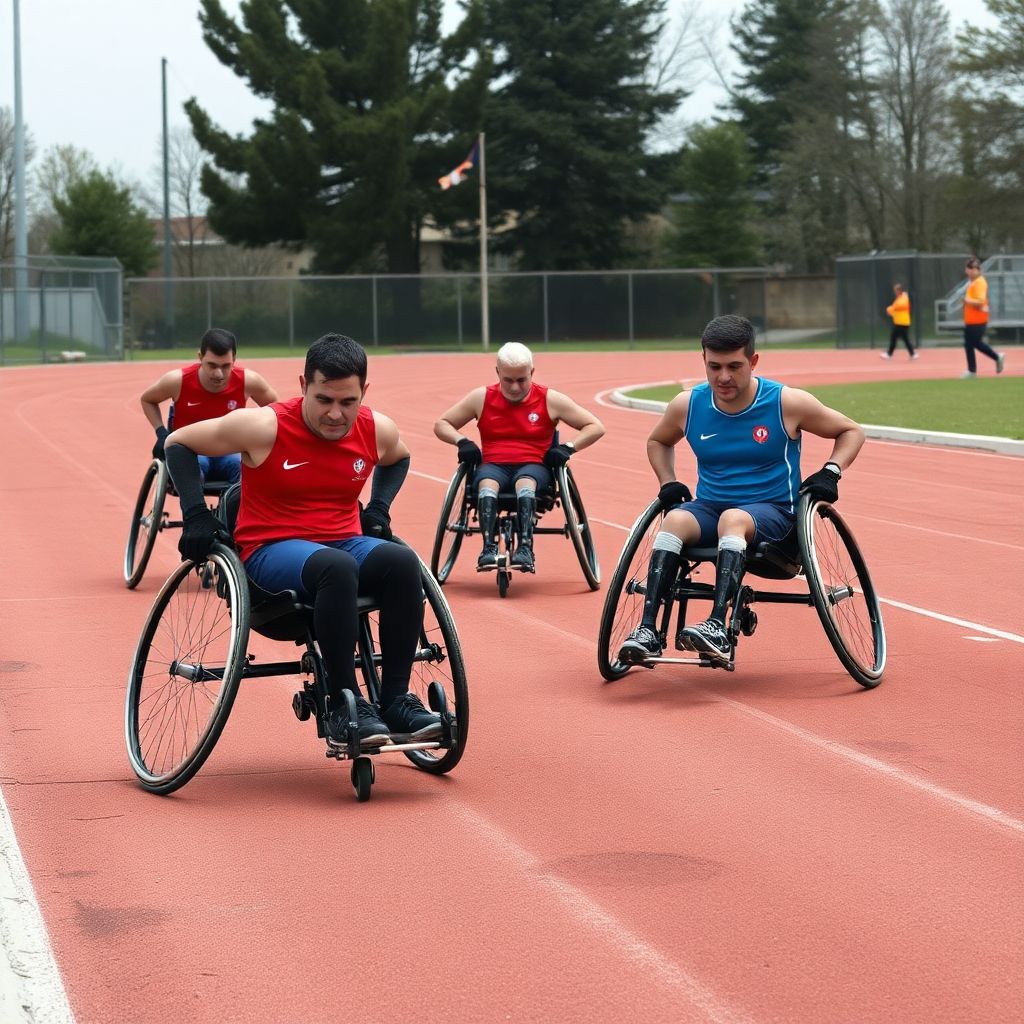
Paralympic athletics in Turkey combines inspiring personal stories with persistent structural problems in coaching, facilities, funding and transition pathways. It covers track and field events for athletes with physical, visual and intellectual impairments, governed by World Para Athletics, and implemented nationally through clubs, schools, universities and disability-focused associations.
Essential Insights on Paralympic Athletics in Turkey
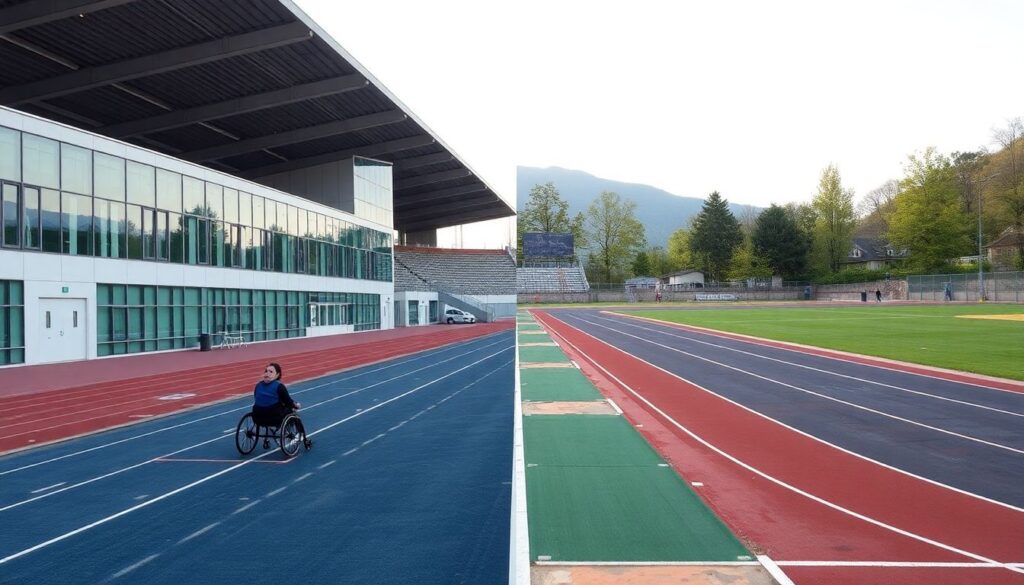
- Turkish para-athletics has grown quickly but depends heavily on a few strong clubs, cities and personalities.
- Elite success often hides structural weaknesses in grassroots development and coach education.
- Facilities and access to adaptive equipment remain uneven between big metropolitan areas and smaller provinces.
- Paralympic sports funding in Turkey is fragmented across ministries, municipalities and private foundations.
- Transition from school-level sport to national teams is poorly mapped and often informal.
- Practical improvements are possible through targeted training programs, local partnerships and smarter use of existing infrastructure.
Historical Evolution and Key Milestones of Para-Athletics in Turkey
Paralympic athletics in Turkey describes the organized system of track and field opportunities for athletes with disabilities, from school festivals to the Paralympic Games. It includes classification, coaching, competition structures and support services that make high-performance and mass participation possible.
Historically, Turkish para-sport emerged from rehabilitation and charity activities rather than from performance-focused sport structures. Early initiatives were driven by hospitals, disability associations and a few motivated physical education teachers who improvised training on standard, non-accessible tracks. Formal links to the global Paralympic Movement developed gradually through national federations and participation in regional championships.
Key milestones include the first appearances of Turkish athletes in international para-athletics championships, the establishment of dedicated para-sport departments within federations, and the first Paralympic medals in athletics, which shifted public perception from “rehabilitation” to “elite performance”. These moments encouraged municipalities to upgrade some stadiums with ramps, accessible changing rooms and adapted throwing areas.
Despite these advances, the system is still uneven. Some cities have well-structured Paralympic athletics Turkey training programs, while others rely on ad-hoc efforts by individual coaches. The current challenge is turning isolated success stories into a national, replicable model that works across different regions and impairment groups.
Profiles: Leading Turkish Paralympians and Their Competitive Paths
-
From rehabilitation to podium
An athlete starts athletics during physical therapy, is spotted by a local coach, joins a club, and quickly reaches national level. The path often includes:
– Initial testing in sprint or middle-distance events
– Reclassification as performance improves
– Entry into national training camps and targeted strength work. -
School discovery and university support
A visually impaired student is identified in a school sports day, then receives support from a university sports science department. The competitive path runs through:
– School and regional championships
– Youth national teams
– International junior events and, later, major championships. -
Club-driven thrower development
In some provinces, throws coaches convert former able-bodied athletes into para coaches. A new athlete is recruited via a disability association, then developed as a shot put or discus specialist with:
– Basic strength tests
– Technical drills adapted to their impairment
– Progressive load and competition exposure. -
Late starter, rapid elite progression
Many leading athletes begin late, in their twenties, after an accident or illness. Their pathway typically includes:
– One-to-one coaching on general fitness and movement confidence
– Intensive classification and event selection phase
– Concentrated technical work leading quickly to national records. -
Military and public-sector employment routes
Some successful athletes are linked to military or municipal sports clubs. Their path involves:
– Recruitment through institutional sports teams
– More stable income and support services
– Long-term planning for multi-Paralympic cycles. -
Hybrid path through private sponsorships
A few athletes combine club support with sponsorship opportunities Paralympic athletes Turkey receive from local companies, NGOs or universities. This can fund international camps, medical support and personal guides for visually impaired runners.
Coaching, Training Models and Adapted Methodologies
Coaching in Turkish para-athletics generally adapts conventional athletics methodology to the realities of different impairments, facility limitations and time constraints. The system works best when coaches blend mainstream training science with specific knowledge from Paralympic athletics coaching courses Turkey and hands-on experience with disability.
-
Impairment-specific load management
Coaches adjust volume, intensity and exercise selection to account for asymmetry, prosthetics use or wheelchair propulsion. For example, a unilateral amputee sprinter may perform fewer high-impact plyometrics but more resisted running and controlled acceleration drills. -
Technical models for throws and jumps
Para-throwers and jumpers need individualized technical models. A seated thrower will focus on trunk rotation, grip strength and stable anchoring, while a visually impaired long jumper trains consistent stride patterns with acoustic or tactile cues near the board. -
Integrated strength and injury prevention
Strength programs double as injury-prevention plans, especially where medical support is limited. Shoulder health work for wheelchair racers, core stability for seated throwers and stump conditioning for prosthesis users are built into weekly plans, not added as extras. -
Communication and task design
For athletes with visual or intellectual impairments, training tasks must be simple, repeatable and clearly explained. Coaches use demonstrations, physical guidance and stable routines rather than complex series of instructions changing every session. -
Micro-periodization in resource-poor environments
When track access is limited, coaches micro-plan sessions around available spaces – school yards, parks or multi-sport halls – and then consolidate performance with occasional stadium sessions. This is common in smaller cities lacking formal Paralympic athletics Turkey training programs.
Typical application scenarios include a coach in a provincial club designing a twice-weekly sprint program using a school yard and simple timing, or a university sports scientist helping a wheelchair racer use a parking lot loop plus indoor rollers when the track is occupied by other teams.
Examples of Practice-Oriented Training Scenarios
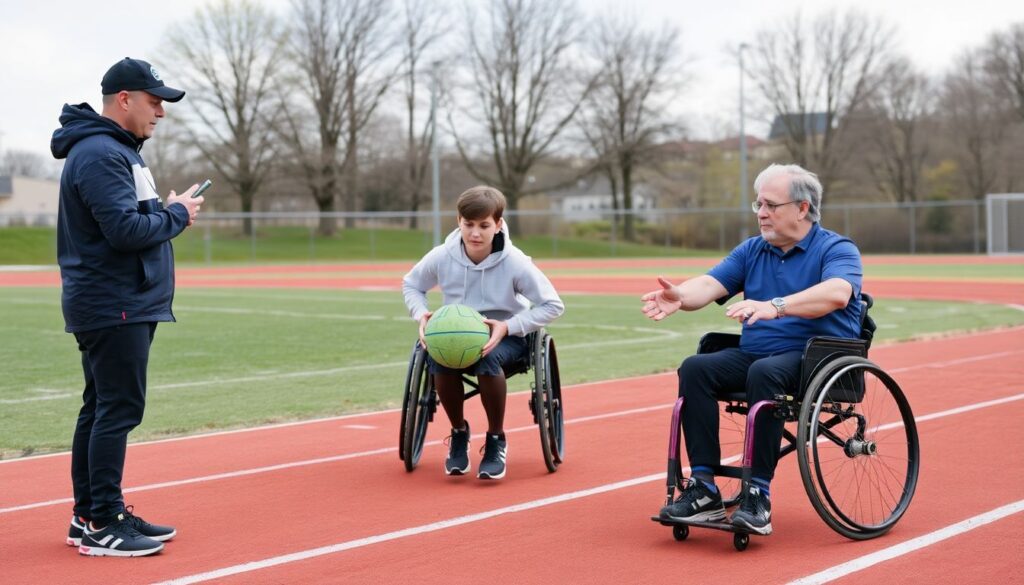
Scenario 1: Building a starter program for new athletes
A municipal coach receives three new athletes with different impairments. In the first month, they:
- Run simple fitness and movement screens to determine safe starting loads.
- Test basic speed over 30-60 m, light medicine ball throws and simple jumps (if safe).
- Assign each athlete to a potential event group (sprint, middle-distance, throws, jumps).
- Schedule two group technical sessions and one individualized strength session per week.
Scenario 2: Refining technique for an emerging national-level thrower
A visually impaired thrower has qualified for nationals but struggles with consistency. Over eight weeks, the coach:
- Uses high-contrast markers and consistent verbal cues to fix starting positions.
- Introduces a limited set of key drills repeated every session (e.g., standing throws, partial turns).
- Videos throws on a smartphone and reviews them immediately with slow-motion feedback.
- Pairs each technical focus (hip rotation, release angle) with specific strength exercises.
Facilities, Accessibility and Equipment Gaps Across Regions
Turkey has a growing network of athletics tracks and stadiums, but accessibility and quality vary across regions. In major cities, para-athletes often share modern facilities with able-bodied athletes, while smaller towns rely on basic, sometimes unsafe, training environments. Access to adaptive sports equipment for para athletes Turkey is similarly uneven.
Strengths and Practical Advantages in Current Infrastructure
- Major metropolitan areas offer relatively modern tracks, often with ramps and some accessible changing areas.
- University campuses frequently act as hubs, providing indoor spaces, gyms and sports science support to regional para-athletes.
- Some municipalities run inclusive training groups where para and able-bodied athletes share coaches, timing systems and strength rooms.
- Existing athletics clubs can integrate para-athletes into their schedules with minimal extra cost if planning is thoughtful.
- A few dedicated centers concentrate wheelchairs, throw frames and basic prosthetic support, creating local pockets of excellence.
Limitations and Structural Gaps Impacting Daily Training
- Many stadiums still lack accessible toilets, changing rooms and safe entry routes for wheelchair users.
- Throwing cages, sectors and equipment storage are often not designed for seated throwers or visually impaired athletes.
- Clubs outside big cities struggle to acquire specialized racing wheelchairs, prosthetics or throwing frames.
- Indoor training options in winter are limited, pushing sessions into corridors, halls or outdoor conditions that are not ideal for safety.
- Facility booking systems rarely prioritize para-athletes, so they may receive inconvenient hours or be displaced by able-bodied teams.
Funding Structures, Policy Shortcomings and Institutional Responsibilities
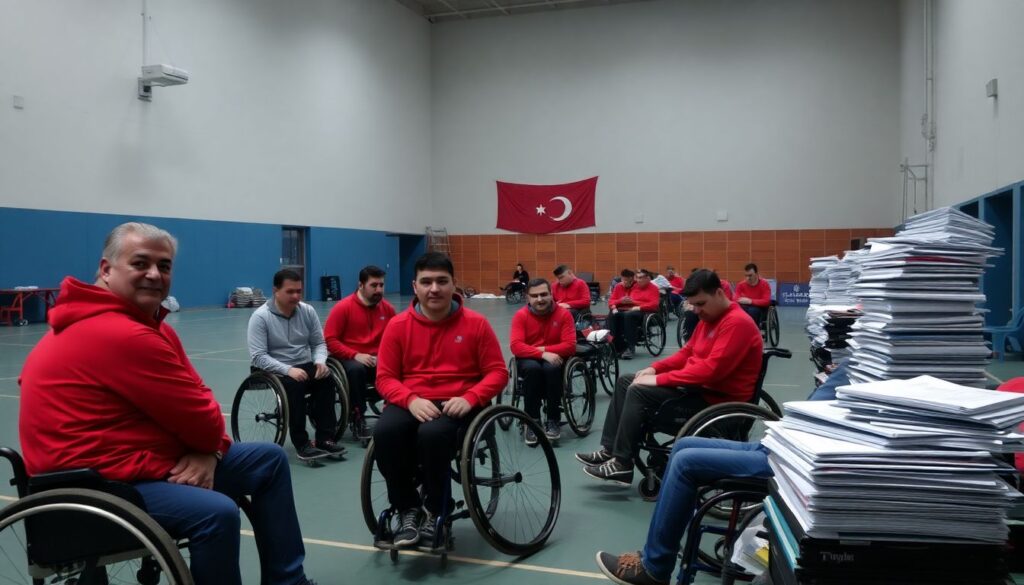
Paralympic sports funding in Turkey comes from a mix of government budgets, municipal support, federations, universities and private sponsors. On paper, these streams can cover travel, equipment, stipends and facility use; in practice, gaps and inconsistencies create uncertainty for athletes and coaches.
-
Myth: Elite medals automatically solve funding issues
High-profile medals raise visibility but do not automatically create stable, long-term funding frameworks. Without clear policies, success may lead to short-term bonuses rather than sustainable investment in grassroots and coach education. -
Myth: Equipment is a one-time expense
Racing wheelchairs, prosthetics and throw frames need maintenance, replacement and customization. Treating equipment as a one-off purchase leads to outdated, unsafe gear and discourages performance development. -
Error: Over-centralizing support in a few cities
Concentrating resources in major centers may produce quick medals but leaves many regions without pathways. A more balanced model uses regional hubs linked to national centers, with clear standards and shared expertise. -
Error: Ignoring coach support in favor of athlete-only funding
When only athletes receive stipends, experienced coaches burn out or move away. Investment in stable coach positions, including through universities and municipalities, is essential for sustainable success. -
Misconception: Sponsorship is only for top medal contenders
In reality, local companies and NGOs often provide sponsorship opportunities Paralympic athletes Turkey can use at developmental levels – covering transport, medical checks or small equipment – if clubs know how to present clear, realistic projects. -
Gap: Limited alignment between policies and practice
Formal strategies may mention inclusion and disability sport, but practical implementation depends on club managers, school directors and local officials. Clear role definitions and accountability mechanisms are still evolving.
Talent Identification, Grassroots Programs and Transition to Elite Sport
Talent identification in Turkish para-athletics depends largely on schools, rehabilitation centers, disability associations and informal networks. Many potential athletes never encounter structured sport, and those who do often lack a clear roadmap from first training session to elite competition.
Effective grassroots models link schools, municipalities, clubs and national federations with simple, repeatable steps. For example, a city might run annual inclusive athletics days in schools, refer interested participants to local clubs, and then integrate them into standardized assessment-based Paralympic athletics Turkey training programs.
Below is a simplified “pseudo-roadmap” mini-case showing how a young athlete might progress within an improved structure:
Mini-case: From school discovery to national team
- School screening – A PE teacher notices a student with a physical impairment who enjoys running and throwing. The teacher uses a short checklist: mobility, basic speed, interest in regular training.
- Referral to local club – The teacher contacts a nearby athletics club with experience in para-sport. Within two weeks, the student attends an introductory session supervised by a coach trained through Paralympic athletics coaching courses Turkey.
- Initial assessment block (4-6 weeks) – The club runs simple performance tests (30 m sprint, standing throw, basic endurance) and categorizes the athlete into a preliminary event group. The municipality grants free facility access during this period.
- Structured development phase (6-12 months) – The athlete trains two to three times per week in a mixed group, gradually joining regional competitions. A university sports science department may contribute testing or physiotherapy students.
- Talent confirmation and support upgrade – After meeting national standards, the athlete enters a junior national camp. At this point, adaptive sports equipment for para athletes Turkey – such as a custom racing wheelchair or prosthetic – is co-funded by the federation and local sponsors.
- Transition to elite – With consistent results, the athlete joins the national team, receives targeted funding and integrates into international competition planning.
To make this pathway real across Turkey, administrators need coherent agreements between schools, clubs, municipalities and federations, plus transparent criteria for progressing from one level to the next.
Practical Concerns and Answers for Coaches, Administrators and Athletes
How can a local coach start a small para-athletics group with minimal resources?
Begin by identifying 3-5 interested athletes through schools, rehabilitation centers and disability associations. Use any safe open space (school yard, park, simple track), start with basic speed and strength games, then gradually introduce event-specific drills. Document attendance and progress to support future funding requests.
What should administrators prioritize when upgrading a stadium for para-athletes?
First, ensure safe access: ramps, wide doors, accessible toilets and changing rooms, plus clear routes from entrance to track and field zones. Then adapt throwing areas and warm-up spaces. Finally, coordinate schedules so para-athletes have regular, predictable training slots.
How can clubs approach local businesses for small-scale sponsorships?
Prepare a short, concrete proposal describing how funds will be used (transport, competition entry, basic equipment) and what visibility the sponsor receives (logos on shirts, social media mentions, event banners). Emphasize the social impact of supporting Paralympic athletes and provide simple, transparent reporting after each season.
Where can coaches and PE teachers find practical education in para-athletics?
Look for national or regional seminars, online modules and Paralympic athletics coaching courses Turkey advertised through federations, universities and disability organizations. Start with general impairment-awareness content, then add event-specific technical education based on your athletes’ needs.
How can an athlete from a small city access higher-level training opportunities?
Connect with the national federation and regional clubs via email or social media, sharing basic performance results and competition history. Ask about regional camps, university partnerships or online coaching support, and plan occasional visits to major hubs for testing and technical refinement.
What immediate steps reduce injury risk for new para-athletes?
Introduce gradual training loads, prioritize good warm-ups and cool-downs, and avoid sudden changes in intensity or surface. Focus early on core strength, joint stability and technique quality rather than volume, and keep basic logs of pain, fatigue and training content.
How should funding applications justify para-athletics projects?
Describe specific target groups, clear activity plans, measurable outcomes (participation numbers, competitions attended) and realistic budgets. Link your proposal to broader inclusion and health objectives, referencing how your project complements existing public policies rather than duplicating them.