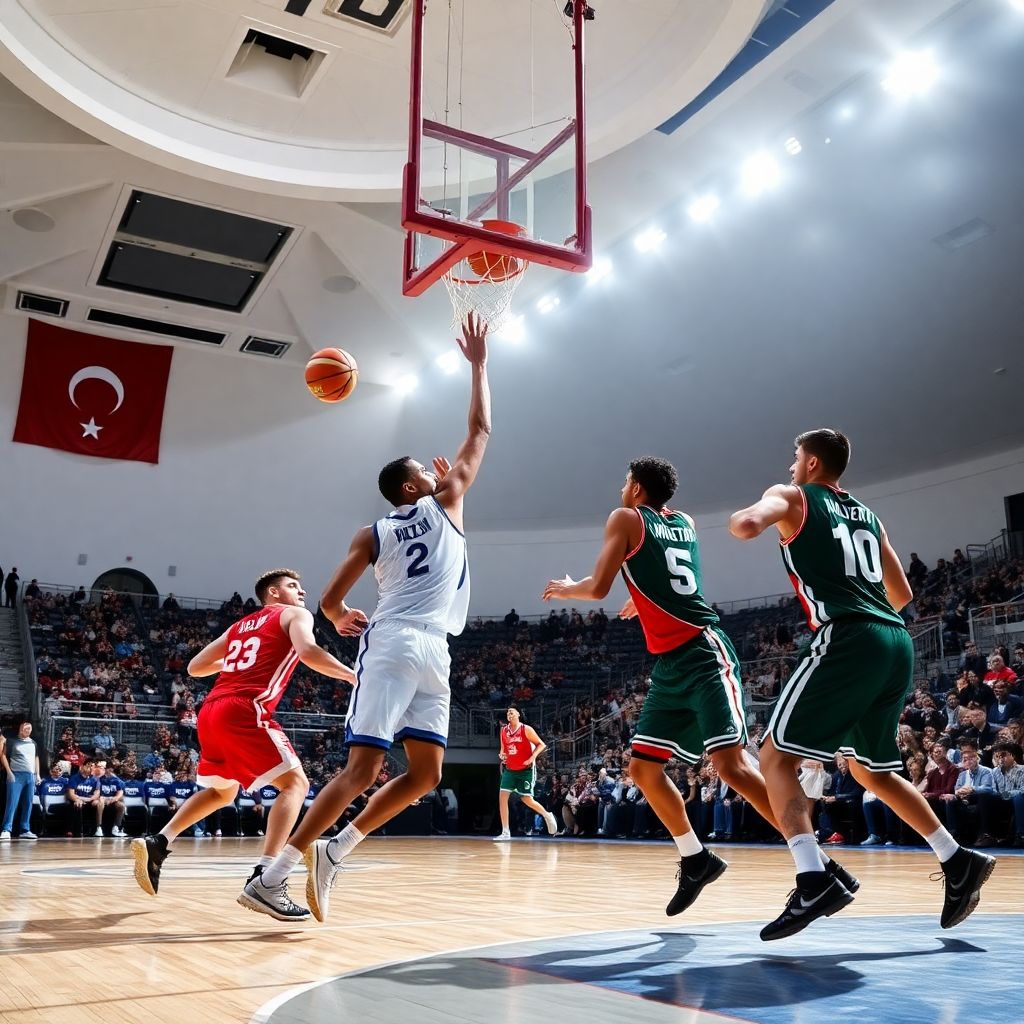
Tactical evolution in Turkish basketball is the shift from structured, post-heavy, half-court sets toward modern pace-and-space principles built on shooting, dynamic pick‑and‑roll and versatile defenders. Coaches now blend traditional Turkish physicality and discipline with analytics, positionless roles, and European-NBA influences to create faster, more spaced, read‑and‑react offenses and adaptive defenses.
Core tactical shifts at a glance
- From strict pattern offenses to advantage-based, read-and-react spacing.
- From back-to-the-basket bigs to mobile screeners, pop threats and short-roll playmakers.
- From conservative drop coverage to selective switching and aggressive help rotations.
- From star-driven isolations to multi-handler, pick-and-roll centric offenses.
- From fixed roles (1-5) to interchangeable lineups with multiple creators and shooters.
- From “energy” defense to scouting- and data-informed game plans and matchups.
- From rigid systems to in-season tactical tweaks based on roster, schedule, and opponent.
Historical foundations: the traditional Turkish systems and playing identity
Historically, Turkish basketball has been defined by structured half-court play, physical defense, and strong club cultures. Classic systems relied on clear positions, with guards organizing set plays, wings cutting off staggered screens, and bigs occupying the low or high post as primary scoring hubs and rebounders.
Offensively, many clubs and the national team preferred pattern-based motion: defined entries, cross-screens for post-ups, and continuity sets such as flex or horns with limited freedom for improvisation. This matched the available player archetypes in the Turkish league: strong centers, disciplined role players, and a few creative guards allowed to “break the pattern” in late-clock situations.
Defensively, identity was built on physical man-to-man, solid paint protection, and disciplined shell principles over full-court pressure. Teams would often drop the big in pick-and-roll, stay attached to shooters only in specific matchups, and trust half-court toughness to win games, especially in front of demanding home crowds that now eagerly look for turkish basketball league tickets.
In practice, coaches emphasized repetition and automations. A typical session would include 5-on-0 rehearsals of the primary sets, then 5-on-5 controlled scrimmages with strict rules (“score only from the post” or “run horns into cross-screen every time”) to engrain the structure.
Traditional concept in action: simple drill example
Concept: Post-centric half-court with guards feeding the big.
Tactical implication: High value is placed on entry passing, screening angles, and spacing around the post, while pace is secondary.
Practice drill: 4-on-4 “post touch or turnover” – two guards, one wing, one big. Offense must create a paint touch via low-post or high-post catch within 10 seconds. If no paint touch, automatic turnover. Rotate bigs and enforce proper weak-side spacing and cut timing.
Catalysts of change: analytics, foreign influence, and evolving player archetypes
The move toward modern pace-and-space in Turkey is driven by several interconnected forces that reshaped club and national-team tactics.
- Analytics and shot quality awareness
Clubs and federation staff increasingly track shot zones and efficiency, recognizing the value of threes, paint attempts, and free throws over long mid-range jumpers. - Foreign coaches and imports
Coaches and players arriving from the NBA, EuroLeague powerhouses, and other European leagues bring updated spacing rules, pace concepts, and switching schemes that blend into existing Turkish structures. - Modern player archetypes
Young Turkish players grow up watching NBA/EuroLeague pick-and-roll and positionless lineups, wanting to handle, shoot, and pass regardless of height; bigs practice trail threes and handoffs instead of only post moves. - Club ambitions and European competition
To compete in EuroLeague and EuroCup, Turkish teams must handle high-tempo offenses and multiple creators, forcing tactical evolution at home and making the best turkish basketball clubs to join more attractive for modern-style players. - Professionalization of development environments
Better youth academies, specialized skills coaches, and turkey basketball training camps based on small-sided games support players in learning reads, not just plays, from early age. - Digital learning and remote education
Coaches access clinics, breakdowns, and online turkish basketball coaching courses, accelerating tactical alignment with global trends and giving smaller clubs access to elite concepts that used to be confined to big budgets.
Mini-scenarios: how catalysts reshape decisions
Analytics might show a club that its post-up efficiency is lower than its pick-and-roll + kick-out threes. This leads to fewer set post isolations and more 5-out spacing around the ball-screen. A youth academy director seeing this shifts development toward shooting and decision-making drills for all positions.
When a club signs a stretch-5 and a switchable wing from abroad, a coach who used to play classic drop coverage now experiments with late-clock switching and five-out pick-and-pop sets. Over time, this becomes the default identity rather than a “Plan B”.
Offensive evolution: integrating pace-and-space into set and transition actions
Pace-and-space in Turkish basketball means maintaining spacing standards (corners filled, good slot distances, dynamic dunker spots) while pushing the ball early and flowing from transition into half-court actions without resetting. Below are typical applications and how to train them.
Scenario 1: Early drag screens in transition
Concept: Use drag or double-drag ball-screens in semi-transition before the defense is fully set.
Tactical implications: Guards must advance quickly, bigs sprint into screens, and shooters run wide lanes. Instead of walking into a called play, the team flows into drag, with reads based on the coverage (hit roller, skip to corner, snake dribble).
Practice drill: 3-lane break into drag. Start with 3-on-0 (ball, wing, big) progressing to 3-on-3. Rule: ball must cross half-court in under 3 seconds, drag screen set before 18 on the shot clock. Score only on first action (no reset) to engrain urgency.
Scenario 2: 5-out spacing around pick-and-roll
Concept: Using a 5-out alignment where the screener can short roll, pop, or slip, and all other players keep wide spacing.
Tactical implications: Turkish bigs, historically paint-bound, must now pass on the move and shoot from the perimeter. Guards must read tags and low-man rotations to find open shooters instead of automatically feeding the post.
Practice drill: 4-on-4 + coach as passer. Align 5-out (corners, slots, top). Run side pick-and-roll with spacing rules: no player may cut into the roll lane unless it is a 45-cut behind help. If spacing is broken, the possession is dead. Score system rewards drive-and-kick threes and short-roll assists.
Scenario 3: Horns into spread ball-screen
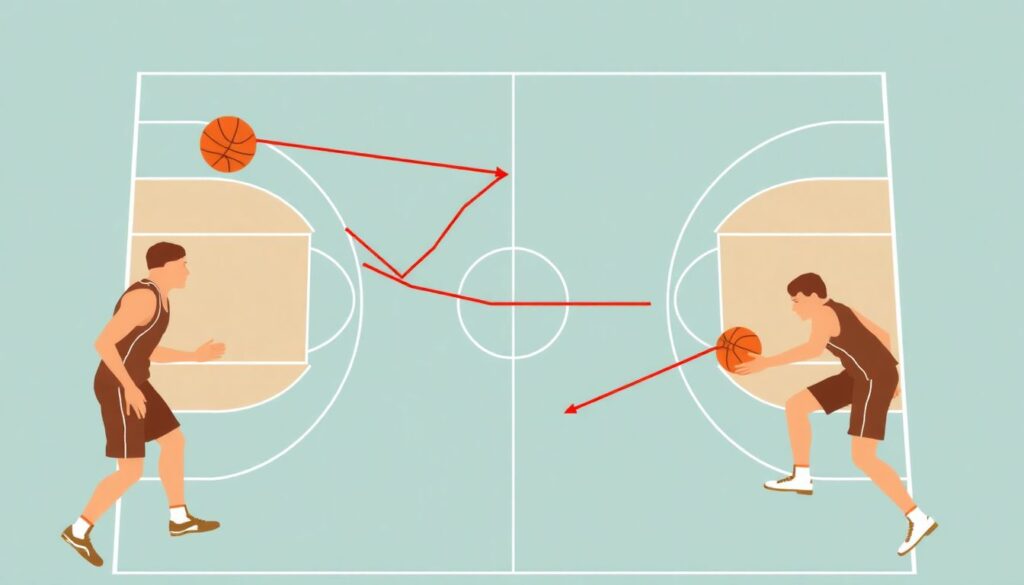
Concept: Start with horns (two bigs at elbows), then quickly empty one side into a spread pick-and-roll with a shooter in the strong-side corner.
Tactical implications: Retains some traditional Turkish horns structure but converts it into modern spacing. Defenses used to anticipating cross-screens to the post now face dynamic ball-handlers attacking with both corners filled.
Practice drill: 5-on-0 pattern into 5-on-5 live. Run horns entry; on the coach’s clap, one big sprints to corner, the other to screen. Add rule: must create paint touch or open three within two passes after the screen. Film the session to highlight spacing mistakes and improved reads.
Scenario 4: Flow offense from broken plays
Concept: Instead of resetting when the initial action fails, players automatically flow into secondary handoffs, re-screens, and slips within spacing rules.
Tactical implications: Requires shared vocabulary (e.g., “flip”, “ghost”, “twist”) and players who can recognize overplays. This directly contrasts with older habits of stopping, backing out, and looking to the bench for instructions.
Practice drill: 4-on-4 continuous flow. Start with a simple side pick-and-roll. Defense is instructed to deny the primary read. Offense must immediately flow into a new action (handoff, re-screen, or ghost) without coach call. Score bonus points for “second-action” baskets.
Defensive evolution: switching, help schemes and protecting the paint in a spaced game
As offenses in Turkey adopted pace-and-space, defenses had to move beyond simple drop or show-and-recover schemes. Modern Turkish teams use a mix of switching, aggressive help, and flexible pick-and-roll coverages tailored to personnel and opponent.
Defensive strengths in the modern context
- Versatile switching units: Using long wings and mobile bigs to switch 1-4 or even 1-5, keeping the ball in front and reducing rotations.
- Smarter help-and-recover: Clear “nail”, “low man” and “x-out” responsibilities to protect the paint against spread pick-and-roll and kick-outs.
- Targeted game plans: Different coverages (switch, drop, hedge, blitz) prepared for different ball-handlers and screening bigs.
- Leveraging physicality legally: Chest-up, verticality, and early body position in the lane to avoid fouls while still imposing toughness.
- Conditioning and depth: Lineups planned so that energy defenses (press, traps, run-and-jump) can be used in bursts around TV timeouts.
Defensive limitations and trade-offs to manage
- Mismatch exploitation after switching: Guards posted by bigs and bigs stretched out to the perimeter can be punished if help is late.
- Foul risk with aggressive help: Rotations from the nail and low man create closeouts and contested finishes, where mistimed contact leads to foul trouble.
- Rebounding vulnerability: Switching and flying rotations often leave smalls boxing out bigs; without team rebounding, second-chance points spike.
- Communication load: More coverages mean more chances for miscommunication, especially in loud Turkish arenas full of fans in turkish basketball jerseys for sale from club shops.
- Physical demands: High-intensity switching and scrambling require excellent fitness; older rosters may not sustain this across domestic and European schedules.
Practical defensive drill example
Concept: Switch-and-scramble versus spread pick-and-roll.
Tactical implications: Switch the initial action, then protect the mismatch with an early double from the closest help and rotate out of it.
Practice drill: 4-on-4 “switch then send”. On any ball-screen, defense must switch. If offense attacks the mismatch in the post or on the dribble, a second defender must come to double before the first dribble. Offense’s goal: find open three off the double. Defense scores for forced turnovers or contested misses.
Concrete case studies: tactical overhauls in clubs and the national program
Misunderstandings slow down tactical evolution. Below are common errors and myths seen when Turkish teams try to modernize their style.
- Myth: pace-and-space means no structure
Reality: top clubs maintain clear rules for spacing, locations, and sequences; freedom exists within a defined framework. Mistake: coaches scrap all sets instead of redesigning them with spacing and triggers. - Error: copying a EuroLeague set without matching personnel
A club may import a 5-out offense seen in continental play, but with a non-shooting 5 and limited off-the-dribble creators, the spacing collapses. Proper evolution adapts concepts to local players, not the other way around. - Myth: switching is only for athletic NBA-style teams
Even mid-level Turkish rosters can switch selectively (e.g., 1-3, 2-4) in late clock or side out-of-bounds situations. The mistake is using “we are not athletic enough” as a reason to avoid teaching switching fundamentals and communication. - Error: over-rotating on help, under-teaching closeouts
Some teams embrace “help everyone” without clear rules, creating chaos and open threes. The fix is defining who helps, from where, and drilling body control and hand discipline on closeouts, not just shouting for more effort. - Myth: the national team’s style must mirror a single big club
The national program combines players from various systems. Forcing a single club playbook can underuse certain skills. Better: build a simple, universal spacing and pick-and-roll framework where every player’s club habits can plug in. - Error: neglecting youth adaptation
Clubs modernize senior tactics but keep old youth drills focused only on pattern memorization. This disconnect stops the pipeline of players comfortable in modern reads and roles.
Mini case sketch: a club retools its offense
Imagine a mid-table Turkish club that traditionally used double-post lineups. After signing a stretch-4 and a mobile 5, the coach cuts low-post isolations, adds 5-out and single-big pick-and-roll sets, and reassigns a wing as secondary ball-handler. Training shifts toward small-sided games, kick-out reads, and pace rules in transition.
From concept to practice: training, roster construction and in-season adjustments
Turning tactical evolution into results requires aligned decisions across training floor, recruitment, and game-planning. The aim is coherence: roster skills, daily drills, and in-game calls all support the same pace-and-space identity anchored in Turkish physicality and discipline.
Step 1: Design training around reads, not just plays
Concept: Every drill should teach recognition of advantage (closeout, mismatch, overplay) and the next correct action.
Tactical implications: Players learn to punish mistakes quickly instead of waiting for coach calls. This is key when facing varied European opponents and when young players move between youth, reserve teams, and senior rotations.
Practice example:
{
  "constraint": "score within 2 passes after advantage",
  "rules": [
    "no static post-ups",
    "1 paint touch per possession minimum",
    "extra point for drive-kick-three"
  ],
  "progression": ["2v2", "3v3", "4v4", "5v5"]
}
Step 2: Recruit for versatility and shooting gravity
Concept: Roster construction must prioritize players who give spacing or switching value, not just individual scoring.
Tactical implications: Lineups can stretch the floor without sacrificing defense. For example, choosing a 4 who can guard multiple positions and hit catch-and-shoot threes may be more valuable than a pure low-post scorer.
Practical note: When evaluating prospects at turkey basketball training camps or among the best turkish basketball clubs to join for young talent, track decision-making and off-ball spacing as much as box-score scoring.
Step 3: Plan in-season tactical “mini-upgrades”
Concept: Instead of a complete overhaul mid-season, implement small, scheduled adjustments aligned with roster changes and opponent scouting.
Tactical implications: Players maintain confidence and clarity. For example, after signing a new shooter, add a simple Spain pick-and-roll set and one new ATO (after-timeout) play that leverage his gravity, rather than rewriting the entire playbook.
Practice routine example: Dedicate one short block (8-10 minutes) in each practice for “new layer” work. Use 5-on-0 into 5-on-5 guided reps, film the first week heavily, and track shot quality from the new actions in games.
Quick actionable tips for Turkish coaches and players
- Define three non-negotiable spacing rules and repeat them daily until players self-correct.
- Add at least one early drag or wide pick-and-roll to your transition package this month.
- Use film from Turkish league games to clip 5 possessions where your spacing collapses; turn each into a 3-on-3 or 4-on-4 corrective drill.
- Teach one simple switching coverage (e.g., 1-3 only) instead of trying to switch everything immediately.
- For guards: track how often you create paint touches per game; aim to increase by small, realistic increments.
- For bigs: dedicate extra shooting reps as a “trail 5” from top-of-the-key threes, matching shots you will take inside your system.
- For club staff: integrate fans’ interest (turkish basketball league tickets, turkish basketball jerseys for sale) into video sessions by highlighting modern, exciting plays that reflect your evolving identity.
Practical concerns and concise solutions for coaches
How do I modernize our offense without losing older players who know only set plays?
Layer new spacing rules onto familiar sets instead of throwing everything out. Start by adding simple reads (e.g., “if they overplay, backdoor”) and short “flow” extensions after the main play ends, so veterans feel continuity while learning modern concepts.
Our bigs are not natural shooters; can we still play pace-and-space?
Yes, by using them as handoff hubs, short-roll passers, and dynamic screeners. Place them at the elbows or high post instead of the blocked low post, and design actions where they can make quick passes to cutters and shooters without needing to take many threes.
What is a simple first step toward using switching defensively?
Start with switching 1-3 on side pick-and-rolls and late-clock situations only. Emphasize communication (“switch” called early) and pre-defined help from one side if a post mismatch occurs. Build confidence here before expanding to 1-4 or 1-5 switching.
How should youth coaches in Turkey adjust drills for the new style?
Use more small-sided games (2v2, 3v3) with constraints instead of long 5-on-0 patterns. For example, reward drive-and-kick threes, punish static post-ups, and rotate roles so bigs handle and pass occasionally. This matches what players will face in senior pace-and-space environments.
How can I learn these concepts if I coach in a smaller club with limited staff?
Leverage video and remote education. Watch EuroLeague and Turkish league clips with a specific question in mind (e.g., “how do they defend Spain pick-and-roll?”) and use online turkish basketball coaching courses or webinars to structure what you see into drills and terminology.
How do fan expectations and club culture influence tactical evolution?
Fans buying turkish basketball league tickets want intensity and identity, not only threes and dunks. Communicate that modern tactics enhance traditional Turkish toughness and club culture; use home games and media to showcase effort plays, smart spacing, and disciplined defense as part of the same story.
Can we keep a low-post option and still be modern?
Yes, treat the post as an “end of advantage” tool, not your main starting point. Enter the ball inside after a closeout, switch, or deep seal created by movement and spacing. Teach post players to look first for cutters and kick-outs before backing down.