
To quickly filter what truly matters in world sports, define your core competitions, follow a small set of trusted sources, and rank stories by competitive and commercial impact. Combine curated alerts with simple stat checks, ignore unverified transfer rumors, and review headlines at fixed times instead of constantly doom-scrolling.
Daily Digest: What Truly Moves the Sports Agenda
- Limit your input: no more than 5-7 primary outlets and one daily sports news subscription or digest.
- Score each headline on competitive impact, commercial relevance, and local audience interest.
- Prioritize verified team news, official statements, and fixture changes over transfer gossip.
- Use basic sports analytics tools for news and stats to validate surprising claims.
- Rely on a personalized sports news feed service instead of jumping between random links.
- Set different rules for live days (derbies, finals) versus quiet days to protect your focus.
- Always check whether a story is editorial, opinion, or sponsored before reacting.
Source Triage: Prioritizing Reliable Sports Outlets and Wires
Filtering starts with ruthless source triage. If your inputs are noisy or biased, no workflow will fix the output.
This approach is ideal if you:
- Need a fast daily overview for work, betting analysis, content creation, or fantasy sports.
- Follow multiple leagues (for example: Süper Lig, Premier League, EuroLeague, NBA, Champions League).
- Already feel overwhelmed by notifications from the best sports news apps for live updates.
It is not ideal if you:
- Need deep tactical breakdowns of one single team only; in that case, follow 1-2 specialist analysts instead.
- Work in professional scouting or trading and require proprietary data feeds and paid sports media monitoring and alert service solutions.
- Prefer long-form journalism and documentaries; this guide focuses on fast daily filtering, not deep reading.
Practical triage rules:
- Anchor on primary sources – give priority to official league and club channels, verified federation announcements, and match organizers. Use them to confirm injuries, suspensions, and schedule changes.
- Whitelist a small core of outlets – pick 3-5 trusted newsrooms (global plus local Turkish) and set them as your main bookmarks and notifications. Everything else is secondary noise.
- Downgrade social media – treat X, Instagram, and TikTok as discovery only. Never act on a story until you find it confirmed by your whitelisted outlets or official entities.
- Separate opinion from reporting – clearly mark columns, podcasts, and fan channels. Use them for context and narratives, not for hard facts or breaking updates.
Event Impact Matrix: How to Gauge Competitive and Commercial Significance
To see what truly moves the agenda, you need a simple event impact matrix that ranks stories beyond the headline emotion.
You will need:
- A basic note tool (phone notes or spreadsheet) where you can maintain a short impact checklist.
- Access to fixtures, tables, and brackets for your main competitions via league websites or best sports news apps for live updates.
- At least one dashboard or site that offers simple sports analytics tools for news and stats, including form tables and basic advanced metrics.
- Clear business or fan goals: are you optimizing for audience engagement, betting value, content planning, or just informed support?
When a story appears, rate it quickly on these dimensions:
- Competitive leverage – does it affect title race, relegation battle, European qualification, or playoff chances?
- Star power – does it involve marquee names, legendary coaches, or high-profile clubs with global followings?
- Timing and stage – is it ahead of a knockout tie, decisive league run-in, or transfer deadline?
- Commercial weight – does it involve broadcasting, sponsorship, stadium deals, or major prize money?
- Local relevance – how directly does it matter for your Turkish audience or your specific niche?
Stories that rank high on several of these axes deserve your time; low-impact items can be safely skimmed or ignored.
Player vs Team Alerts: Which Personnel Changes Matter Quickly
Not every injury, suspension, or transfer deserves attention. A structured alert system helps you react only to personnel changes that really move results or narratives.
Risk and limitation notes before you apply these steps:
- Squad news is often fluid; wait for official matchday announcements before making financial or betting decisions.
- Minor knocks reported midweek can heal; do not overreact to early training ground rumors.
- Coaches sometimes use smoke screens; rely on multiple credible sources rather than single quotes.
- Depth charts vary by league; apply extra caution when judging unfamiliar teams.
-
Map your critical players and positions
List, per team, the top three irreplaceable players plus any thin positions (for example, only one fit left-back). These names get high-priority alerts; news about rotation players is secondary.
- Focus on creative hubs (playmakers, primary scorers) and defensive leaders (goalkeepers, central defenders).
- Update the list monthly as form, transfers, or injuries change hierarchy.
-
Differentiate long-term absences from short knocks
Treat long-term injuries, season-ending issues, or multi-match bans as structural changes. Small knocks or illness are only relevant if they affect major fixtures or already weakened positions.
- Look for official medical statements or coach press conferences instead of anonymous leaks.
- Note expected return windows so you stop overreacting once the market has priced them in.
-
Weigh player quality against team system strength
A star missing from a system-strong team (like a well-drilled pressing side) can be less impactful than a mid-level player missing from a fragile squad. Always combine individual quality with tactical context.
- Ask: does the system create chances regardless of the name on the shirt?
- Check how the team performed in previous matches without this player.
-
Prioritize alerts around key fixtures and congested schedules
Personnel news matters most before derbies, finals, and knockout ties, especially when fixtures are congested. Adjust your focus calendar around such peaks.
- Increase attention 48 hours before big matches and around official squad announcements.
- Lower attention to rotation news in low-stakes fixtures against significantly weaker opponents.
-
Turn alerts into simple actions, not constant reactions
Use a personalized sports news feed service or a reliable sports media monitoring and alert service to receive filtered squad updates. Convert each alert into a single small action or decision, then move on.
- Decide whether the news changes your view on match outcome, content angle, or fantasy lineup.
- If not, archive the alert immediately to avoid clutter.
Stat Signals: Identifying Metrics That Predict Real Outcomes
Quick stat checks help you distinguish sustainable trends from short-term noise, especially when headlines are dramatic.
Use this checklist as a simple validation layer:
- Compare headline claims with underlying expected goals or shot quality where such data is available.
- Check whether a team’s recent form is opponent-driven (easy or hard schedule) rather than pure improvement.
- Look at minutes played and usage rate before reacting to sudden scoring spikes by role players.
- Confirm that defensive records are supported by limiting chances, not just short-term goalkeeper heroics.
- Review home versus away splits to see if a performance trend travels across contexts.
- Use multi-match samples instead of single-game stats when judging a tactical change.
- Distinguish garbage-time points from clutch performance by checking game states when stats were produced.
- Validate social-media narratives with neutral dashboards or sports analytics tools for news and stats.
- Flag any article that never cites a concrete metric as narrative-only content.
Time-Sensitivity Rules: Separating Breaking Noise from Durable News
Not all sports updates deserve the same urgency. Misjudging time-sensitivity is one of the most common reasons people feel overwhelmed by daily headlines.
Avoid these frequent mistakes:
- Treating speculative transfer rumors with no fee or source details as urgent breaking news.
- Checking scores and live blogs every few minutes during regular-season games that have little consequence.
- Overreacting to pre-season or friendly results as if they forecast competitive form.
- Keeping all push notifications on instead of limiting them to goals, red cards, and verified team news.
- Ignoring time zones and reading old stories as if they were fresh updates.
- Spending more time on quote controversies than on confirmed injuries, bans, or fixture changes.
- Failing to revisit stories a day later to see whether initial reports were corrected or downgraded.
- Letting midnight or late-night rumors disturb sleep instead of waiting for morning confirmations.
Narrative Filters: Spotting Bias, Hype and Sponsored Content
Even reliable outlets mix solid reporting with hype, bias, and advertising. Building narrative filters protects your time and judgment.
Useful alternative approaches for cleaner information intake:
- Algorithm-light curation – instead of endless timelines, follow one structured daily sports news subscription or email briefing focused on your top leagues, ideally with clear separation between facts and opinion.
- Thematic reading windows – assign short windows for different themes: 10 minutes for scores and tables, 10 minutes for transfer summaries, 10 minutes weekly for long-form analysis. This beats random scrolling.
- Independent analyst mix – complement mainstream outlets with a small set of independent analysts or newsletters that share methods and data sources, not just hot takes.
- Quiet data-first mode – on big match days, first check fixtures, lineups, and key stats, then only later read emotional commentary so your view is grounded in facts.
Rapid Clarifications on Common Filtering Challenges
How many sources should I follow for daily sports news?
For most people, a tight mix of 3-5 trusted outlets plus one structured daily sports news subscription is enough. Add official league and club channels for confirmations, and avoid expanding your list unless a new source clearly adds unique value.
How can I reduce notification overload without missing crucial updates?
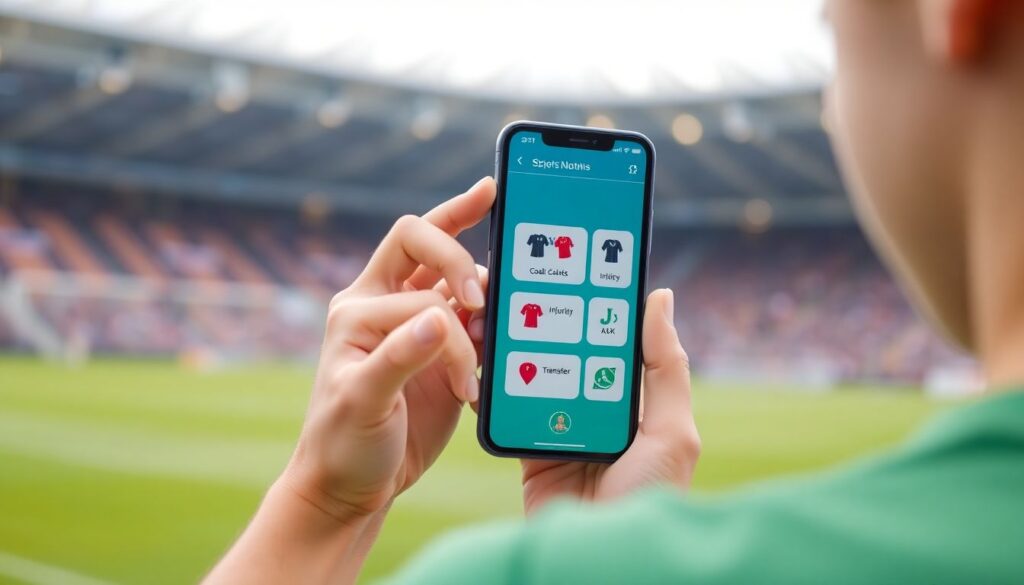
Switch apps to essential alerts only: goals, red cards, official injuries, and confirmed transfers. Rely on the best sports news apps for live updates to handle scores, while your personalized sports news feed service surfaces only high-impact stories at fixed times.
Which stats should I check first when a surprising result happens?
Start with shot quality, shot count, and possession territory to see if the underdog truly dominated or just finished well. Then look at recent form and schedule difficulty to judge whether the result represents a trend or one-off variance.
How do I know if a transfer rumor is worth my attention?
Look for multiple credible outlets, concrete fee or contract details, and comments from club officials. If none exist and the story is driven by anonymous sources, treat it as low-priority speculation, especially away from transfer windows.
What is the safest way to track many leagues at once?

Define up to three priority competitions and only skim others unless there is major news. Use a sports media monitoring and alert service or curated dashboards that group results and key headlines by league rather than app-by-app notifications.
How often should I review my filtering rules?
Reassess your workflow every few weeks or at natural breaks like winter and summer windows. Adjust source lists, alert settings, and stat checks based on which stories actually influenced your decisions or understanding.
Can I apply this method if I mainly watch highlights instead of full matches?
Yes. Use highlights for visuals, but let your filtered news and stats define which matches you watch and how you interpret them. The same source triage, impact scoring, and quick stat checks still apply.