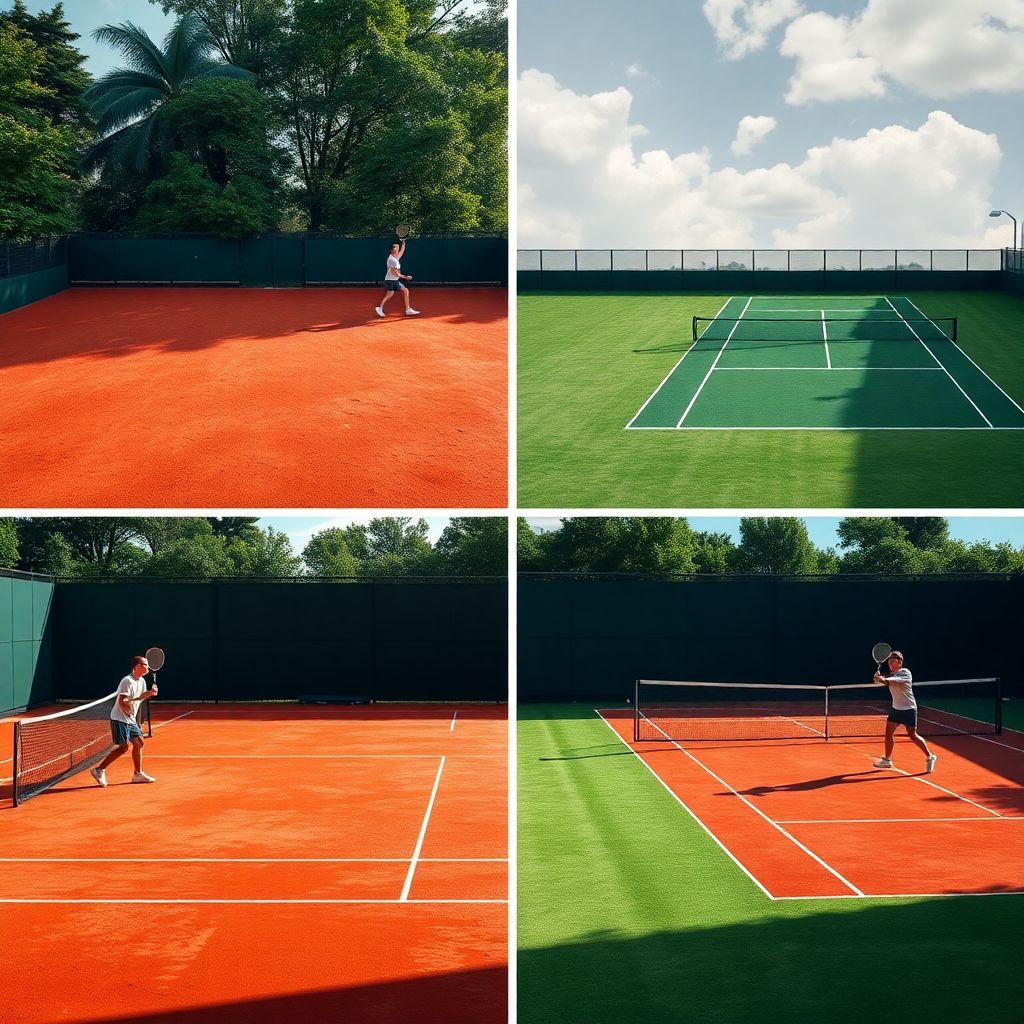
Clay, grass and hard courts change how the ball bounces, how you move and which tactics pay off. Clay rewards patience and heavy spin, grass favors fast first strikes and net play, and hard courts sit in the middle. The best surface for you depends on physique, movement, stroke style and injury history.
How Surface Physics Drive Tactical Choices
- Clay slows the ball, raises the bounce and stretches rallies, favoring topspin, stamina and consistent decision-making.
- Grass keeps the bounce low and fast, rewarding flat strokes, sharp serves and quick finishes at the net.
- Hard courts are the most neutral: medium speed, predictable bounce and balanced offense-defense dynamics.
- Footwork differs radically: sliding on clay, explosive first step on grass, repeated hard stops on hard.
- Equipment must adapt: different shoes, small string and tension tweaks, and even how to choose tennis racket for different court surfaces changes.
- Injury risk shifts: joints and back are stressed on hard, hips on clay, ankles and knees on uneven or slick grass.
- Training and match planning should peak for your main surface, with brief adaptation blocks when you switch.
Ball Behavior and Movement: Clay vs Grass vs Hard
Use these criteria to compare surfaces and choose where your game will develop fastest.
- Bounce height: Clay produces the highest, kicking bounce; grass the lowest and most skidding; hard is medium and predictable.
- Ball speed after the bounce: Grass is fastest, hard is medium, clay is slowest, creating a natural hard court vs clay court tennis comparison in how quickly you must prepare.
- Rally length: Clay encourages long rallies and point construction; grass tends to end points quickly; hard courts vary by pace and player style.
- Spin sensitivity: Clay amplifies topspin and makes heavy balls jump; grass makes underspin and slices stay low; hard is moderately sensitive to both.
- Footing and movement: Clay allows controlled sliding; grass demands light, precise steps; hard courts require strong braking and stable joints.
- Serve effectiveness: Flat and slice serves bite more on grass; kick serves shine on clay; on hard you can mix all serve types efficiently.
- Return difficulty: On fast grass, low skids compress reaction time; on clay, slower speed but higher kick challenges timing; on hard, timing is regular but impact stress is higher.
- Physical load: Clay stresses endurance and core rotation; grass stresses balance and ankles; hard courts stress knees, hips and lower back.
- Maintenance and predictability: Clay and grass conditions shift more with weather and upkeep; hard courts are usually the most consistent day to day.
| Surface | Bounce & Speed | Typical Rally Length | Favored Tactics | Injury Considerations |
|---|---|---|---|---|
| Clay | High, slow, heavy kick | Long | Topspin, patience, angles, defense-to-offense | Hip and groin from sliding, shoulder from heavy topspin |
| Grass | Low, very fast, skidding | Short | Serve-plus-one, slice, net rushes, flat drives | Ankles and knees from uneven or slippery footing |
| Hard | Medium height, medium-fast | Medium | Balanced baseline aggression, first-strike plus defense | Knees, hips, lower back from repeated impacts |
Player Archetypes: Which Styles Each Surface Favors
Match your main playing identity to the surface where it naturally thrives.
| Variant | Best For | Advantages | Drawbacks | When To Choose |
|---|---|---|---|---|
| Aggressive baseliner | Players with strong, heavy groundstrokes and solid movement | Can dictate from the back, use angles and depth to finish points | Needs discipline not to overhit, may struggle on very fast grass early on | Prioritize clay and medium-hard courts; grass once timing on low balls improves |
| Defensive counterpuncher | Quick players with excellent anticipation and consistency | Clay maximizes defense, drawing errors; hard courts reward smart counterattacks | On grass, lack of first-strike weapons becomes more costly | Choose clay for maximum effectiveness, then slower hard courts; treat grass as a development project |
| All-court player | Versatile athletes comfortable at net and baseline | Can adapt tactics to any bounce and opponent style | Needs extra focus to avoid tactical indecision when switching surfaces | Rotate through all three surfaces to build a complete game |
| Serve-and-volleyer | Players with good serve precision and confident volleys | Grass maximizes quick points; medium-fast hard courts are also rewarding | Clay exposes slower serves and rushing; passing-shot exchanges are tougher | Choose grass whenever possible, then faster hard courts; use clay mainly for fitness and passing-shot practice |
| Big server / first-strike player | Tall players with powerful serves and big first forehands | Grass and fast hard courts turn service games into a major weapon | On clay, more returns come back; extended rallies expose movement limits | Prefer grass and quick hard courts; play clay to round out defense and stamina but not as your priority surface |
Decision guideline by archetype:
- If your strengths are rally tolerance and spin, build your base on clay and treat grass as an advanced challenge.
- If you win with serve and forward movement, invest more time on grass and faster hard courts.
- If you are still figuring out your identity, stay mostly on hard courts but test your patterns on clay and grass blocks.
Serve and Return: Surface-Specific Techniques
Adjusting serve and return by surface is often the fastest way to improve your results.
- If you play on clay most weeks, then prioritize heavy kick and topspin serves to the backhand, and move back on returns to handle the higher bounce; exceptions are very short opponents where flat body serves are still effective.
- If you switch to grass for a short season, then flatten your first serve, add more slice out wide and stand slightly closer on the return; exceptions are against huge servers where extra distance buys reaction time.
- If your home base is hard courts, then build a balanced pattern: flat first serve, heavy-kick second, neutral return position; exceptions are extremely fast indoor courts, where you should copy more of your grass tactics.
- If your return is a weakness, then on clay focus on higher, looping deep returns to start neutral rallies, while on grass and fast hard courts chip or block low and crosscourt; exceptions are slow second serves you can attack aggressively.
- If your serve is a strength but movement is average, then on grass and quick hard courts shorten points with serve-plus-one; on clay, accept longer points and mix more serve-and-volley; exceptions are when fatigue or injury risk is high and you must protect your body.
- If you face heavy kick servers on clay, then step back and hit on the way down, whereas on grass step in and take the ball early before it rises; exceptions are very short kick that stays low, where you can treat it like a slice.
Footwork, Sliding and Injury Risk by Surface
- Clarify your injury history: if you have knee or back issues, limit heavy volume on the hardest acrylic or asphalt courts.
- Assess movement style: if you naturally slide, clay is safer to learn controlled slides than forcing them on hard or damp grass.
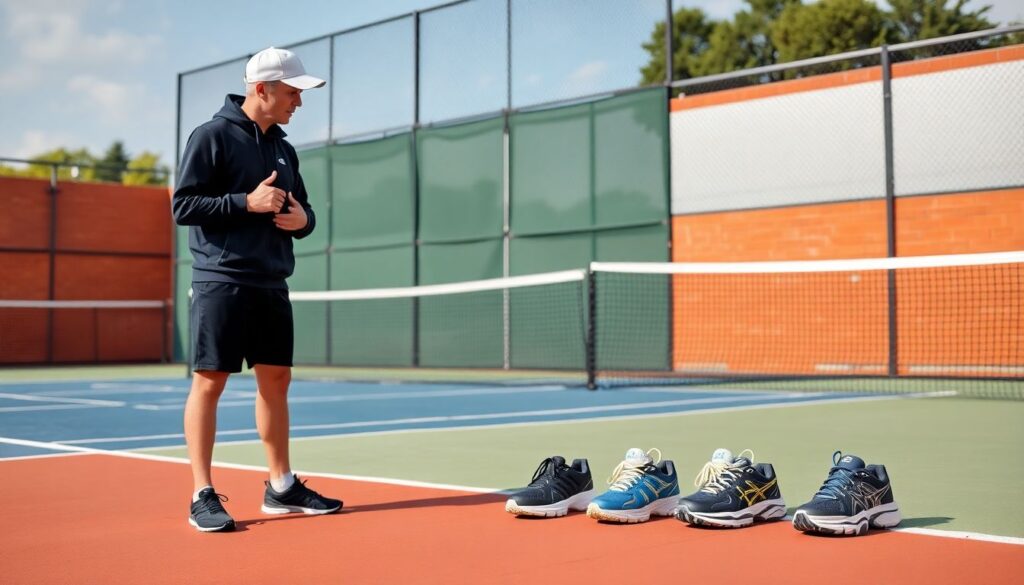
- Choose footwear by surface: tennis shoes for clay courts with herringbone tread for sliding and braking, grass court tennis shoes men with nubs for grip on grass, and durable, cushioned outsoles for abrasive hard courts.
- Adapt training volume: increase clay hours gradually to protect hips and groin from repeated sliding; increase hard-court sessions gradually to protect joints from impact.
- Modify drills: on grass, use shorter, more explosive footwork patterns; on clay, use longer rally movement with recovery steps; on hard, mix both but avoid excessive multi-directional sprints on consecutive days.
- Monitor warning signs: if you feel persistent joint pain, shift blocks to clay; if muscles and tendons around hips and adductors feel strained, reduce sliding loads and add hard or grass sessions.
- In match scheduling, avoid back-to-back tournaments on very different surfaces without at least a few adaptation practices in between to let your legs and timing reset.
Equipment and Stringing Adjustments for Optimal Performance
Common equipment mistakes when changing surfaces often cost more points than any tactical tweak.
- Using the same heavy, control-oriented frame as your best tennis racket for hard court on slow clay without checking whether you can generate enough racquet head speed for spin.
- Ignoring how to choose tennis racket for different court surfaces and never testing lighter or more spin-friendly frames when moving from fast indoor hard to outdoor clay.
- Keeping one string tension all year: lower tension slightly on clay for more spin and depth, and consider a touch higher tension on very fast grass or indoor hard for control.
- Playing all surfaces with a harsh full polyester setup when your arm would benefit from adding a softer cross or hybrid, especially on stiff hard courts.
- Wearing general-purpose sneakers instead of surface-specific tennis shoes, losing traction on clay and grass and increasing injury risk on hard courts.
- Buying narrow-tread hard-court shoes for clay, which clog with dust and make sliding and stopping unpredictable.
- Using worn-out outsoles on grass where grip is already tricky; you need fresh traction patterns, not smoothed rubber.
- Neglecting ball selection: bouncier balls on fast grass or indoor hard can make them play too fast, while heavy balls on slow clay can overtax the shoulder.
- Switching multiple variables at once (new frame, new strings, new surface), making it impossible to understand what actually changed in your ball and feel.
- Copying a pro setup without considering that their biomechanics, training load and physio support are radically different from yours.
Match Planning and In-Season Transition Strategy
- If you are still developing fundamentals or play mainly in cities with public courts, hard courts are usually the most practical base surface for training and competition.
- If your competitive edge is stamina, spin and constructing points, prioritize clay seasons and treat hard and grass as chances to learn shortened, more aggressive patterns.
- If your edge is serve, return aggression and quick finishes, focus on grass blocks and fast or medium-fast hard courts, using clay mainly for building fitness and patience.
- If injury management is your main concern, put more volume onto clay for reduced impact, use hard courts sparingly and choose good-grip grass only when the surface is well maintained.
Mini decision tree for surface focus:
- If your joints protest after hard sessions, then bias your calendar toward clay and limited, high-quality hard-court blocks.
- If you dominate short points and struggle in long rallies, then invest in grass and faster hard courts, with a controlled clay period to grow your defense.
- If your environment offers mostly one surface, then build your main game there, but schedule short training windows on the other two to keep adaptability.
- If you aspire to compete widely, then plan annual cycles where you peak on your best surface but retain minimum exposure to all three.
Overall, clay is usually best for developing complete patterns and fitness, grass is best for sharpening weapons and net skills, and hard courts are best for balanced all-round improvement and realistic tournament preparation without committing to a single style.
Common Practical Concerns When Switching Surfaces
How long does it take to adjust when moving from clay to hard courts?
Most intermediate players need several focused sessions to recalibrate movement and timing on hard after clay. Use shorter drills, emphasize stable stops instead of slides, and practice hitting through a lower, faster bounce before returning to full matches.
How should I adapt when moving from hard to grass courts?
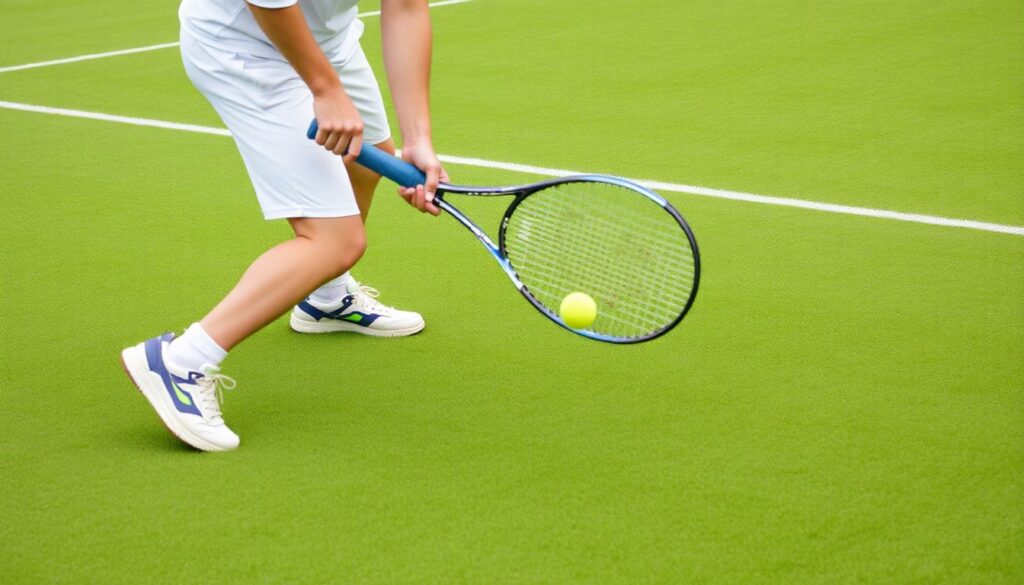
Expect lower, quicker bounces and less sure footing. Shorten your backswings, slice more on both wings, and serve more flat and slice. A few sessions in specific grass court tennis shoes men or women with proper traction will speed your adaptation.
Do I need a different racket for each surface?
You do not need three separate frames, but you should know how to tune your setup. Use the frame that feels like the best tennis racket for hard court as your base, then tweak strings, tension and maybe weight slightly for clay and grass.
What is the safest way to start sliding on clay?
Begin with controlled, slow drills and slide into predictable balls, leading with the outside leg. Wear proper tennis shoes for clay courts, which allow controlled braking, and avoid learning slides immediately after a long block on hard courts.
How should I change my practice when I have only a week before a grass tournament?
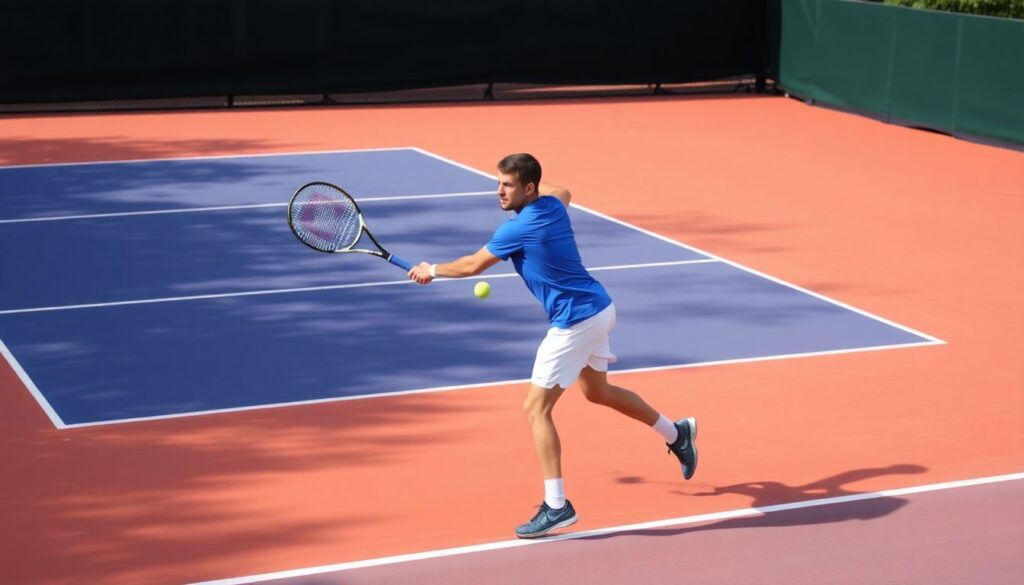
Shift to serve-plus-one patterns, return blocks, slice approaches and short, explosive movement. Reduce volume to protect your legs, and focus on quality reps that copy grass patterns even if you are still on hard until the event.
Is it harder on the body to play many tournaments on hard or on clay?
For joints and spine, long runs on hard are usually tougher because of repeated impacts. Clay is friendlier for impact but can stress hips and groin through sliding, so you still need good strength and recovery habits.
Should I string my racket differently for grass compared with clay?
Small changes are usually enough. Many players drop tension slightly on clay for more spin and depth, then go a bit tighter on very fast grass for control. Try small steps rather than big jumps so feel remains consistent.