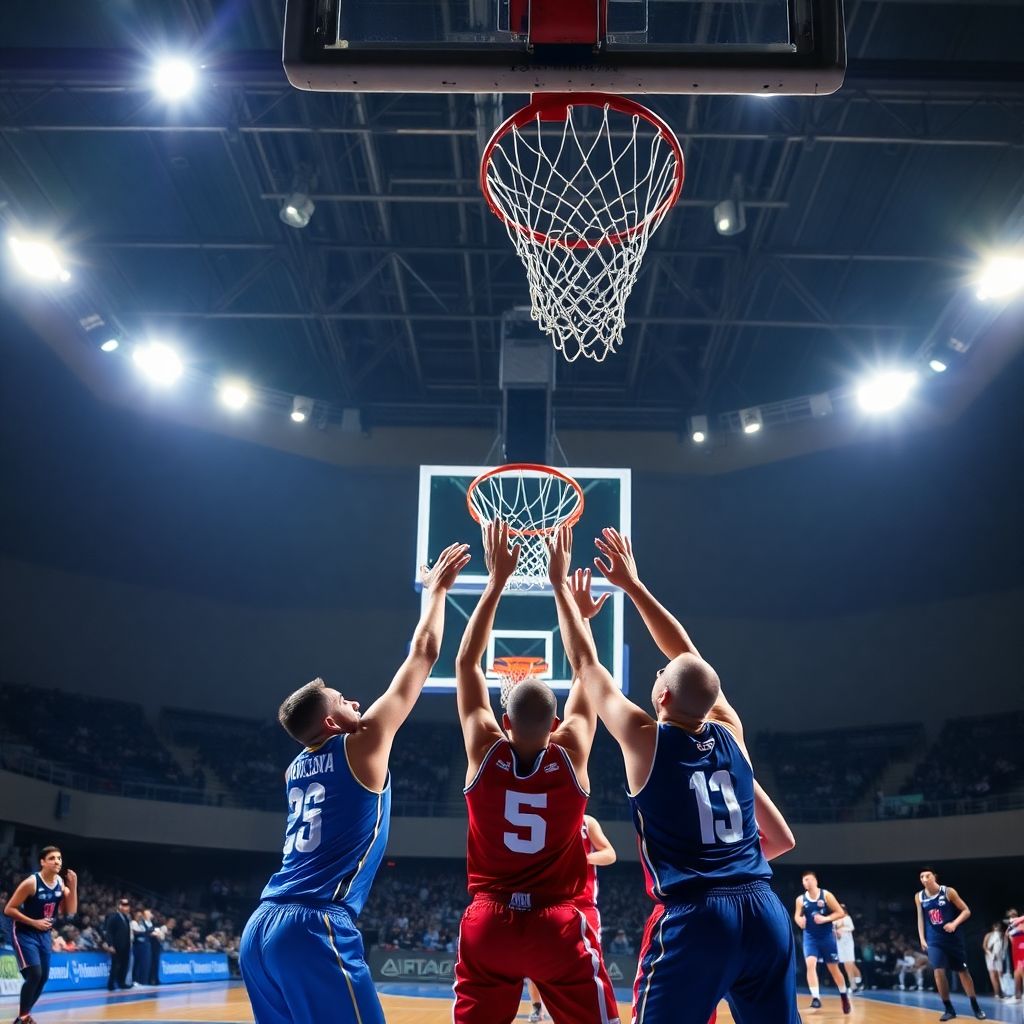
3×3 basketball is a fast, half-court format with three players per side, a 12‑second shot clock and a single basket, officially governed by FIBA and now an Olympic discipline. It grew from street courts into a standalone sport with specific rules, rankings, circuits and stars, including a rapidly expanding ecosystem in Turkey.
Why 3×3 Is Reshaping Modern Basketball
- Uses less space, money and staff than 5×5, so clubs and municipalities can launch more programs with limited resources.
- Faster games, clearer storytelling and music-driven events fit modern media and social platforms.
- Rankings are individual, allowing unknown players to rise quickly through open events and qualifiers.
- Turkey can host dense calendars of 3×3 basketball tournaments Turkey-wide using existing outdoor courts.
- Lower 3×3 basketball court construction cost enables pop-up venues in malls, city squares and schools.
- Specialized skills and conditioning create new roles for coaches, trainers, referees and organizers.
Origins and Rapid Global Expansion of 3×3
3×3 is a formalized version of classic half‑court pickup basketball, codified by FIBA in the late 2000s as a distinct discipline. It uses a 3‑a‑side format, one basket and small rosters, designed for urban events, fan engagement and simple organization.
The format gained visibility through the FIBA 3×3 World Tour and World Cup, staged in city squares and iconic venues with music, MCs and compact schedules. Spectators can easily follow short games and even casual fans quickly understand the scoring and pace.
In Turkey, early adoption came via streetball-style festivals and university tournaments, which then connected to the FIBA ranking system. Today, top Turkish players and teams regularly enter World Tour qualifiers, making FIBA 3×3 World Tour tickets attractive to local fans who want to follow both global stars and home talent.
Practical takeaway: For Turkish clubs, schools and municipalities, 3×3 is not just a “mini 5×5”, but a separate sport with its own calendar, ranking and pathways. Treating it as an independent program (with its own plan, sponsors and staff) unlocks funding and player development opportunities.
Format, Rules and Tactical Consequences Compared to 5×5
3×3 uses a condensed ruleset: one basket, a 10‑minute game clock or first to 21 points, continuous play after made baskets and a 12‑second shot clock. These mechanics dramatically change spacing, decision‑making and substitution strategies compared with traditional 5×5 basketball.
| Aspect | 3×3 Basketball | 5×5 Basketball |
|---|---|---|
| Court & players | Half court, 3 players + 1 substitute | Full court, 5 players + bench |
| Game duration | 10 minutes or first to 21 points | Four quarters / halves depending on league |
| Shot clock | 12 seconds | 24 seconds |
| Scoring | 1 point inside arc, 2 points beyond | 2 and 3 points |
| Ball | Size 6 circumference, weight of size 7 | Size 7 (men), size 6 (women) |
| Restart after score | Immediate check behind arc, no inbound pass | Baseline inbound, game pace reset |
- Continuous transitions: After a made basket, defense instantly becomes offense; no walk‑up or set plays, so players must think two possessions ahead.
- All‑round roles: With only three players, each must handle, shoot, screen, defend in space and read mismatches.
- High value of spacing: One bad position can kill an entire possession because rotations are longer and help defense exposes open shots quickly.
- Conditioning as a tactic: Substitutions only on dead balls mean fitness directly influences lineups and strategy.
- Fewer set plays, more principles: Teams organize around simple actions (hand‑offs, slips, ghost screens) and read‑based decisions.
- Foul management: Team foul limits are lower; smart physicality without reaching penalty early is essential.
Example: In a Turkish summer circuit final, a team built around two versatile forwards and a quick guard repeatedly used pick‑and‑pop and short rolls instead of complex playbooks. Their advantage came from fast re‑spacing and instant decisions rather than memorized sets.
Practical takeaway: Coaches shifting from 5×5 should design compact playbooks built around spacing rules, hand‑offs, and simple screens. Drills must emphasize 12‑second decision‑making, “score and switch” transition, and conditioning that supports long, high‑intensity shifts.
Applied Mini‑Scenarios for Coaches and Organizers
Before diving into player demands, it helps to visualize how these rules shape real decisions on and off the court.
- School PE teacher with one court: Split a class into multiple 3×3 courts marked with cones, run 10‑minute games, rotate teams; everyone plays more while you need no extra staff.
- Small club with limited budget: Instead of full 5×5 league entry, host weekly 3×3 nights; collect small entry fees, use one referee and one table official, and gradually build towards official 3×3 basketball tournaments Turkey can feed into FIBA rankings.
- Municipality event in a city square: Use a portable basket, temporary flooring and music. Lower 3×3 basketball court construction cost makes it realistic even with tight public budgets.
Practical takeaway: Understanding the rules lets you design low‑resource formats that still feel professional, from school gyms to open‑air festivals.
Turkey’s Ecosystem: Clubs, Youth Programs and Domestic Circuits
Turkey’s 3×3 ecosystem includes club‑based teams, university squads, grassroots city events and independent promoters that plug into FIBA’s global ranking and competition structure. Each layer offers different entry points for players, coaches and sponsors.
- Club‑attached 3×3 squads: Many professional and semi‑pro clubs create 3×3 units that share facilities with 5×5 teams. This allows dual‑role players and coaches while minimizing extra costs.
- University and school leagues: Campus courts are natural hubs for 3×3, often running short after‑class tournaments. These can be formalized into ranking events with modest administrative effort.
- Municipal youth programs: City sports departments can deploy 3×3 in dense neighborhoods where building full indoor courts is unrealistic, offering structured leagues on existing outdoor courts.
- Independent circuits and festivals: Private organizers host summer tours in coastal cities and malls. With music, MCs and sponsors, they create aspirational stages for young players.
- Training and development camps: Specialized 3×3 basketball training camps in Turkey focus on decision‑making, small‑sided tactics and conditioning, often scheduled during 5×5 off‑season.
Example: A mid‑sized Anatolian club fields U16 and U18 3×3 teams using existing outdoor courts at the local school. They run weekend sessions plus a short pre‑season camp, then send top players to national 3×3 events without needing a new arena.
Practical takeaway: To grow 3×3, map what you already have-school courts, club gyms, local sponsors-and then connect events to official rankings. Even modest programs can create visible pipelines if they are consistent and publicly promoted.
Technical and Physical Demands Unique to 3×3 Athletes
3×3 players require a hybrid profile: technical versatility, quick decision‑making and repeated high‑intensity efforts with short rest. The format rewards “universal” players who can switch roles instantly, not narrow specialists.
Skill and Tactical Advantages for 3×3 Players
- Strong 1‑on‑1 and 2‑on‑2 creation off drives, hand‑offs and quick pick‑and‑rolls.
- Reliable shooting beyond the arc, since 2‑point shots (beyond the arc) swing momentum quickly.
- Advanced close‑out reads: attack, pass or re‑space within a second.
- Screening and re‑screening techniques that open space without complex plays.
- Defensive switching and communication to handle mismatches without help rotations.
- Mental resilience under constant pressure; there is no “quiet” possession.
Constraints and Physical Challenges to Manage
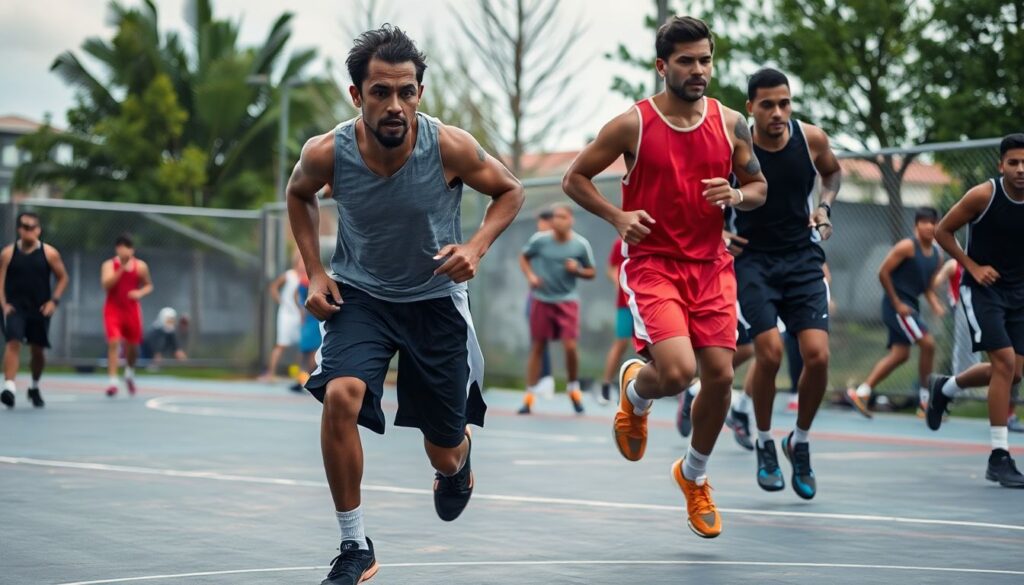
- High lactate load: repeated sprints, jumps and contacts with minimal substitution opportunities.
- Elevated injury risk on hard outdoor surfaces, especially knees and ankles.
- Difficulty balancing 5×5 and 3×3 calendars; fatigue can accumulate without structured periodization.
- Nutritional and hydration demands in hot outdoor environments, especially in Turkish summer events.
- Limited roster depth; one minor injury heavily impacts performance and tactics.
Example: A Turkish guard who plays both 5×5 and 3×3 uses short, high‑intensity interval sessions and small‑sided scrimmages to simulate 10‑minute games, focusing on quick recovery between bursts instead of long continuous runs.
Practical takeaway: Coaches should build conditioning around repeated sprints, multi‑directional work and very short work‑to‑rest cycles. Technical sessions should blend shooting, decision‑making and contact, not isolate skills in low‑pressure drills.
From Local Courts to International Podiums: Pathways and Governance
Pathways in 3×3 are structured yet surprisingly accessible: open events feed into national rankings, which feed into international qualifiers. Governance mainly flows from FIBA through national federations, but independent organizers can integrate if they respect basic standards.
- Myth 1 – “3×3 is only for amateurs”: In reality, many national‑team and pro players compete in elite 3×3 circuits. Treat it seriously in planning loads and contracts.
- Myth 2 – “You must build new facilities”: Most Turkish programs repurpose existing outdoor or school courts, upgrading only baskets and floor markings where possible.
- Myth 3 – “International play is unreachable”: Players accumulate ranking points via local events. Consistent participation can open doors to regional qualifiers even without big club backing.
- Myth 4 – “Governance is too complex”: For entry‑level events, requirements are clear: proper rules, certified referees, event registration and basic safety; this is manageable for most clubs.
- Myth 5 – “It hurts 5×5 development”: Properly scheduled 3×3 can enhance player creativity, toughness and game IQ, feeding back into stronger 5×5 performance.
Example: A local Istanbul organizer starts with a weekend event on a school court, then registers the next edition in the FIBA system. Within two seasons, the event becomes part of a regional series sending top teams to international qualifiers.
Practical takeaway: If you are an organizer, begin small but align from day one with federation rules and FIBA guidelines. This makes it easier to scale from neighborhood events to recognized ranking tournaments.
Commercial, Media and Career Implications for Players and Stakeholders
3×3’s compact format, urban vibe and clear storytelling create distinct commercial models: short events, concentrated branding, and strong player personalities. For stakeholders with limited budgets, it offers multiple entry points-team sponsorships, event naming rights, or in‑kind support.
Mini‑case: Low‑Budget City Circuit
- The municipality identifies three outdoor courts and repaints lines for 3×3, keeping 3×3 basketball court construction cost minimal.
- A local textile company provides 3×3 basketball uniforms custom to promote its brand, reducing cash sponsorship needs.
- The club streams games on social media with basic equipment and engages fans by promoting FIBA 3×3 World Tour tickets giveaways for contest winners.
- Players gain highlight clips and rankings, building profiles that can attract 5×5 scouts or further 3×3 contracts.
Alternative options for very limited resources:
- Use school pinnies instead of custom kits; add sponsor logos on banners and social graphics instead.
- Run one‑day “festival” tournaments twice per year instead of a long league to reduce staff and referee costs.
- Partner with a local café for water and snacks in exchange for logo placement and social media mentions.
- Schedule events on existing club or school open days to share promotion and logistics.
Practical takeaway: Think of 3×3 as a media‑ready product. Even basic streams, photos and social clips can attract community sponsors and create visible player brands without large investments.
Concise Practical Questions on Transitioning to 3×3
How can a small Turkish club start 3×3 without big investment?
Use existing outdoor or school courts, start with one‑day events and borrow referees from local 5×5 leagues. Focus on simple branding and social media promotion before investing in extra equipment or custom uniforms.
Do players need separate training plans for 3×3 and 5×5?
Yes, at least partially. Keep strength work similar, but adjust conditioning and on‑court drills to emphasize short, intense games, quick decisions and more contact. Periodize 3×3 tournaments to avoid overlap with peak 5×5 phases.
What surface and equipment are acceptable for official 3×3 events?
Ideally, use quality outdoor flooring or a clean indoor surface, a compliant 3×3 ball and sturdy glass or high‑grade boards. For lower‑tier events, upgrade gradually while always prioritizing safety and clear court markings.
How do we attract teams and spectators to a new local 3×3 event?
Offer clear schedules, fair officiating, music and simple prizes. Promote via schools, clubs and social media; highlight that players can gain ranking points and share game content for personal exposure.
Are 3×3 basketball training camps worth it for youth players?
They are useful if they emphasize small‑sided decision‑making, shooting and physical toughness. Short, focused camps during school holidays or 5×5 off‑season can accelerate development without causing overload.
What is the best format for 3×3 basketball tournaments Turkey-wide with mixed resources?
Use regional one‑day or weekend events feeding into a national final. This limits travel costs while still creating a clear pathway and narrative that sponsors and media can support.
Do we really need 3×3 basketball uniforms custom for every team?
Custom uniforms help branding but are not mandatory at grassroots level. Consistent colors with clear numbers are enough initially; upgrade to custom kits once sponsors or budgets allow.