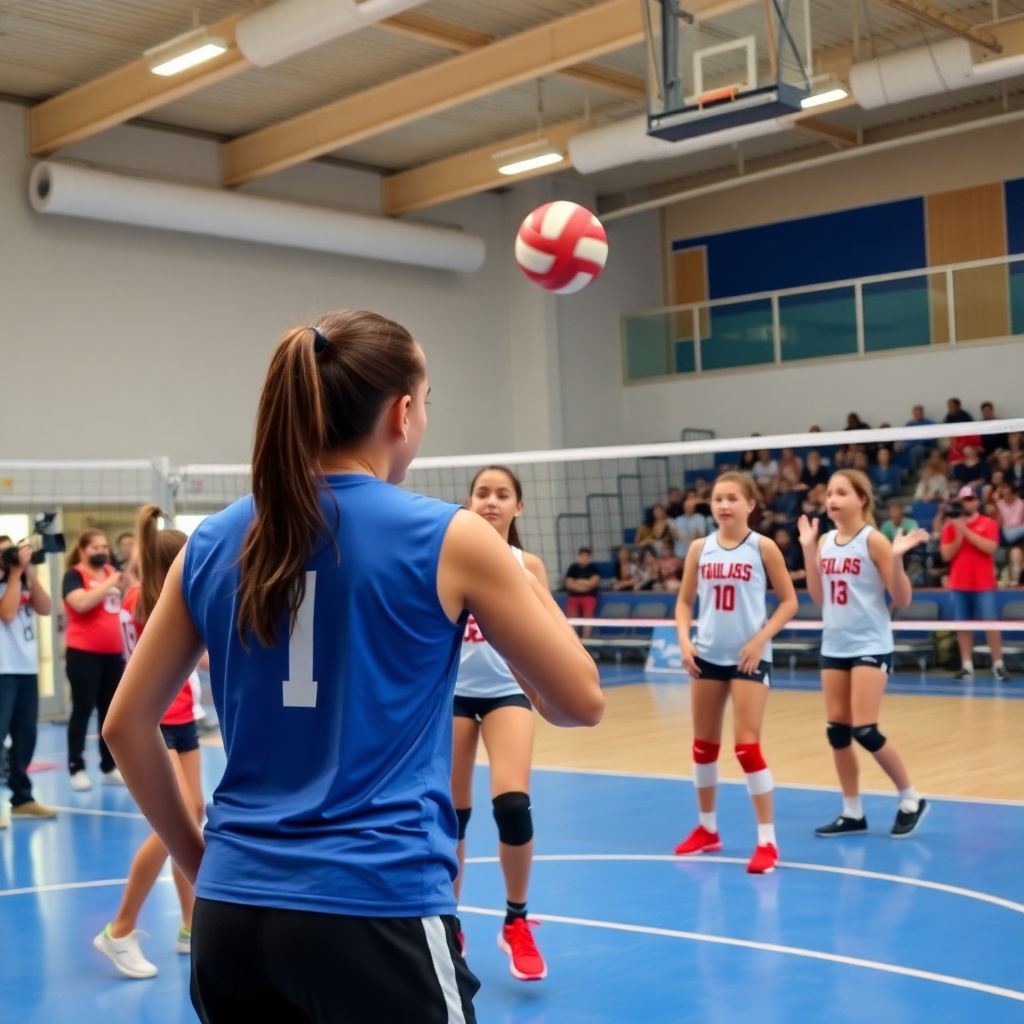
Turkish women’s volleyball became a world power through a long, deliberate process: school and club foundations, systematic youth academies, strong club-federation cooperation, modern coaching and sports science, a competitive domestic league with foreign stars, and growing social support and media attention. Even programs with limited resources can adapt these principles on a smaller, low-cost scale.
Core Drivers Behind Turkey’s Women’s Volleyball Rise
- Early grassroots focus that linked schools, municipalities and local clubs into one pathway.
- Structured youth academies and talent identification feeding the national team.
- Financial and organizational alignment between big clubs and the federation.
- Modern coaching methods, sports science support and clear tactical identity.
- Strong domestic league, foreign players and constant international exposure.
- Social acceptance, media visibility and role models inspiring new generations.
- Adaptable ideas that can be scaled down for countries or clubs with fewer resources.
Historical Foundations: From Grassroots to Professionalization
Turkish women’s volleyball did not become the “golden generation” overnight. The success of the Sultans of the Net is rooted in a gradual shift from informal school competitions toward a professional, vertically integrated system that connects kids, clubs and the national team. Understanding this evolution is crucial if you want to replicate it.
Initially, volleyball in Turkey grew inside schools, universities and municipal sports halls. Over time, big multi-sport clubs and the national federation recognized that women’s volleyball could be a flagship discipline. They invested in basic infrastructure, standardized competitions and national age-group championships, creating clear benchmarks of quality and progression.
As professionalism increased, top clubs created full-time women’s sections with dedicated staff, while the federation aligned calendars, national-team camps and youth tournaments. This turned a scattered landscape into a coordinated pathway: a young player could go from local school league to club academy, then to the domestic league and finally to the national team with predictable steps.
For regions with limited resources, the key lesson is sequence, not size. You do not need world-class arenas or fully professional teams at the start. You need: consistent school leagues, a few anchor clubs willing to treat women’s volleyball seriously, and a federation (or regional authority) that connects competitions so that talent can move upward without getting lost.
Youth Academies and the Talent Identification Pipeline
The core engine behind Turkey’s golden generation is a structured pipeline that finds, develops and retains young players. It works through several interlocking mechanisms that any federation or club can adapt.
- School and regional scouting
PE teachers, local coaches and regional tournaments identify tall, coordinated and motivated kids early. Simple testing (basic skills, movement, attitude) is enough when resources are tight. - Club academies and age-group teams
Selected players enter club academies with clear age categories (for example, mini, youth, junior). Each level has technical priorities (serve-receive, attacking, blocking) and gradually higher training frequency. - Centralized development camps
Federation-organized camps gather top prospects from different regions. Players learn a shared playing style and culture, while coaches compare talent across the country. - National youth and junior teams
Age-group national teams play continental and world competitions. This gives young Turkish players early exposure to international pressure and different styles, making senior-level adaptation easier. - Continuous monitoring and feedback
Coaches track players over several years, not just one tryout. Video, simple testing and communication between club and national-team coaches prevent promising players from “disappearing”. - Education and family support structures
Schools and clubs coordinate schedules, offer tutoring or flexible school paths and guide families so that girls can stay in the system without sacrificing education.
For programs with limited budgets, you can implement a “light” version of this pipeline:
- Use existing school gyms as academies outside classroom hours.
- Run regional development days once per month instead of long centralized camps.
- Create a simple shared evaluation sheet so every coach in the region speaks the same technical language.
If you organize volleyball tours Turkey national team matches for youth coaches, treat them as live masterclasses: observe warm-ups, rotations and bench behavior, then bring those insights home to your local pipeline.
Club-Federation Ecosystem and Investment Models
Turkey’s rise in women’s volleyball reflects a specific ecosystem where major clubs, smaller regional teams and the federation share responsibility. This structure can be translated into several typical scenarios of collaboration and investment.
- Big-club flagship model
Large multi-sport clubs invest heavily in women’s volleyball as a strategic priority. They fund professional squads, youth academies and international participation. The federation supports them by aligning calendars and promoting their games, which boosts the profile of the entire sport. - Feeder-club partnerships
Smaller clubs sign cooperation agreements with top teams. They act as feeders, developing younger players who may later transfer upward. In return, they might receive coaching education, shared training plans or occasional joint practices. - Public-private facility arrangements
Municipalities own arenas, while clubs manage teams and events. This reduces infrastructure costs for clubs and ensures public spaces are used consistently for women’s volleyball competitions and training. - Targeted investment in coaching and staff
Instead of spending only on star players, top Turkish clubs invest in specialized staff: strength coaches, analysts, physiotherapists and sports psychologists. This professional backroom structure stabilizes performance across seasons. - Revenue from fans and branding
Ticket sales, sponsorship and the sale of turkey womens volleyball team merchandise and similar products help fund operations. National-team popularity makes items from any sultans of the net fan shop more than souvenirs; they are revenue tools to reinvest into youth programs.
In low-resource contexts, you can borrow the same logic at a smaller scale:
- Turn one or two clubs into local “flagships” and encourage others to be feeders.
- Share one city gym among several clubs following a joint schedule.
- Create a simple merchandising line (scarves, basic jerseys) instead of full product ranges, using the income to buy balls and nets.
Coaching Philosophy, Sports Science and Tactical Innovation
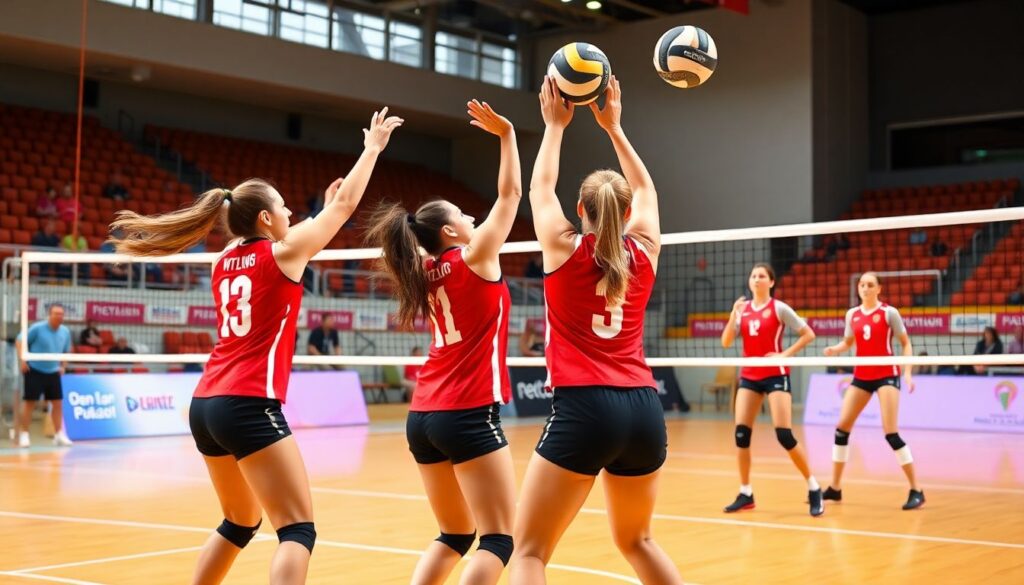
The golden generation is not only about talent; it is about how that talent is trained and deployed. Turkish women’s volleyball blended modern coaching, sports science and a clear tactical identity that suits the players’ strengths.
Conceptually, coaches focused on aggressive serving, powerful wing attacking and disciplined block-defense systems. Practically, this meant structured technical progressions, high-intensity but time-efficient practices and data-supported decisions on rotations and substitutions. Sports science teams linked workload, recovery and injury prevention to keep top players available for both club and national team.
Before looking at advantages and limits, consider how an intermediate-level program could apply these principles in practice:
- Define a simple identity (for example, “strong serve, fast outside attack”) and train everything around it.
- Use basic video (even phone recordings) to analyze serve-receive, block timing and defensive positioning.
- Track training load with subjective ratings (“easy-medium-hard”) when you cannot afford advanced monitoring.
Benefits of Turkey’s Integrated Coaching Approach
- Clear role clarity for players – Athletes grow up understanding their position’s technical, tactical and mental requirements.
- Efficient skill acquisition – Repeated, progressive drills from youth to senior level reduce the time needed to learn complex systems.
- Better physical preparation – Systematic strength and conditioning produces resilient athletes capable of long seasons and intense tournaments.
- Data-informed strategy – Basic statistics and video review support smarter match plans and in-game adjustments.
- Shared language between club and national teams – Players switch environments without relearning basic concepts.
Constraints and Practical Limitations
- Resource dependency – Full sports science departments require funding; smaller programs must prioritize essentials like basic strength work and simple video.
- Coach education gaps – Without ongoing training, local coaches might copy surface tactics without understanding underlying principles.
- Risk of over-standardization – Too rigid a system can limit creativity or alternative playing styles that might better suit certain athletes.
- Workload management challenges – Balancing club and national-team calendars is complex; misalignment can lead to fatigue and injuries.
Domestic League Structure, Foreign Players and International Exposure
Turkey’s domestic women’s league is one of the most competitive in the world. Its structure and openness to foreign stars helped local players grow, but there are also misunderstandings about what truly drives progress.
Common Misconceptions and Typical Errors
- Myth: “Star foreigners automatically raise local levels.” Reality: foreign players help only when local athletes actually train and play alongside them, not when they sit on the bench. For smaller leagues, limit foreigners or require a certain number of local starters.
- Error: Copying formats without context. Some federations try to mirror the Turkish league format without matching resources or travel capacity. Better to design a compact regional league that still guarantees regular, meaningful matches.
- Myth: “International exposure comes only from big-budget clubs.” Even modest teams can seek international friendlies, joint camps or low-cost tournaments in nearby countries, learning from tougher opponents.
- Error: Overloading the calendar. Trying to run too many competitions leads to fatigue and injuries. Turkish success relies on carefully balancing league, cup and national-team windows.
- Myth: “Fans come only when you are already champions.” In reality, building a community through media content, school visits and accessible prices prepares the ground so that when results improve, interest explodes. Smart use of turkish women volleyball tickets 2024 campaigns shows how ticketing can be leveraged to attract families and young girls.
For smaller contexts, focus on stable, predictable competition with sustainable travel and costs, then gradually add foreign players or extra tournaments instead of starting with an overloaded, unrealistic model.
Socioeconomic Support, Media Presence and Gender Dynamics
Social acceptance, visibility and gender norms strongly influence who plays and who continues in sport. In Turkey, women’s volleyball became a positive symbol of modern, successful womanhood, which reinforced its growth.
Media coverage of international victories turned national-team stars into household names. Their image connected high performance, education and professionalism, helping families feel comfortable supporting their daughters’ volleyball ambitions. Sponsorship followed the attention, creating a virtuous circle where success produced resources that, in turn, funded better development programs.
A short, illustrative scenario:
City A, limited budget.

1. Local federation negotiates with a TV channel or online platform to stream one women's match per week.
2. National-team players visit schools once per term.
3. A small club launches a mini "fan corner": scarves and a simple
   turkey national women volleyball jersey buy online via a basic web page.
4. The city organizes a yearly "girls volleyball festival" around
   a televised national-team match.

Outcome: more girls sign up, sponsors see visibility, and modest
income from merchandise and tickets flows back into training.
In Turkey, the popularity of the Sultans of the Net makes every turkey womens volleyball team merchandise campaign and each sultans of the net fan shop more than commerce: they are instruments of cultural change. Regions with fewer resources can replicate the pattern in miniature, focusing on storytelling, community events and simple, accessible fan products before aiming for large-scale commercial operations.
Finally, for fans and tourists, combining volleyball tours Turkey national team matches with visits to clubs and youth academies is a concrete way to see how social support, media visibility and everyday training environments intersect to produce a golden generation.
Practical Questions Coaches and Analysts Ask
How can a small club emulate Turkey’s talent pathway without big money?
Start with consistent school partnerships, two or three age groups and regular local competition. Use shared training plans across clubs, simple tests and periodic regional development days. Focus on structure and continuity, not on expensive facilities.
What is the first priority: facilities, coaches or competitions?
For most contexts, competent coaches and regular competitions matter more than perfect facilities. A basic, safe gym with committed staff and a predictable match calendar will develop players faster than a modern arena used only occasionally.
How important are foreign players in building a strong women’s league?
Foreign players are valuable when they complement, not replace, local talent. Ensure they train alongside young domestic athletes, share knowledge and do not block all starting spots. If resources are limited, prioritize coach education and local player development first.
What can we copy from Turkish coaching philosophy at intermediate level?
Adopt a clear identity (for example, strong serve and fast transition) and align drills, fitness and match strategy around it. Use basic video to review serve-receive and block-defense, and track simple workload indicators to avoid overtraining.
How do we grow fan engagement for women’s volleyball?

Connect the team with schools, universities and local communities, tell player stories and keep ticket prices accessible. Online streaming, social media highlights and basic merchandising can create a loyal base even before big results arrive.
Is it realistic to build a “golden generation” in a smaller country?
Yes, if you focus on a long-term plan: align schools, clubs and the federation; invest steadily in coach education; and provide regular international experience, even through low-cost tournaments and joint camps instead of expensive leagues.
How do commercial aspects like merchandise or tickets support performance?
Revenue from tickets and merchandise, such as national-team jerseys, can fund youth programs, staff education and better equipment. When reinvested wisely, these small streams create stability and allow more strategic choices in player and staff development.