Grassroots football in Turkey means community-based, low-cost football organised by local clubs, municipalities, schools, and informal street groups. It includes youth and adult amateurs, street pitches, and training environments that may feed into professional pathways. Understanding how clubs, leagues, trials, and scouting work helps families and coaches support young players with limited resources.
Essential concepts of grassroots football in Turkey
- Grassroots football connects local neighbourhood culture with formal club structures and regional federations.
- Youth pathways run from street games and school teams into licensed community clubs and football academies in Turkey.
- Street pitches and informal spaces remain the first touchpoint for many children, especially in dense cities.
- Professional football trials in Turkey usually select from existing club players, not from complete beginners.
- Volunteer coaches, parents, and small sponsors keep many amateur teams alive despite tight budgets.
- Turkish football scouting programs for young players increasingly monitor regional tournaments and school competitions.
- Partnerships between municipalities, clubs, and NGOs are essential to give low-income districts regular access to the game.
Historical roots and the social role of community clubs
Grassroots football in Turkey grew from neighbourhood clubs, factory teams, and school competitions that organised regular play long before modern academies. These community clubs are typically formed around a district identity, a workplace, or a school, and provide uniforms, training, and basic competition opportunities for local players.
In large cities, youth football clubs in Istanbul, Ankara, and Izmir often started as small social associations built by local shopkeepers, teachers, or workers. Over time, some became official feeder clubs to professional teams, while others stayed purely recreational but remained central to community life and social cohesion.
Beyond performance, community clubs act as safe spaces: children meet friends after school, learn discipline from coaches, and stay away from risky street environments. Even in districts without famous football academies in Turkey, one small club with a committed coach can anchor local identity and aspiration.
For families with limited resources, these clubs are usually the only realistic entry point. Fees are often modest, and some coaches quietly waive payments for promising or motivated players whose parents cannot afford full costs.
- Identify the closest licensed community club in your district through the provincial football association.
- Ask older neighbours or shopkeepers which local teams have a reputation for consistent training, not just winning trophies.
- If fees are a barrier, speak directly with the coach; many clubs quietly support low-income players.
- Encourage children to join club activities even if they are not the most talented; social benefits are equally important.
Organization and governance of amateur leagues and tournaments
Amateur football in Turkey is structured through provincial and regional federations that register players, approve fixtures, and enforce rules. Most grassroots teams join age-based leagues or seasonal tournaments, while school competitions sit parallel but often intersect through the same players and coaches.
- Club licensing and registration: Community clubs register with provincial federations, declare teams by age group, and submit player lists for official licensing.
- League formats: Age categories (for example, primary school, lower secondary, upper secondary) are organised into local groups, usually with home-and-away or festival-style mini-tournaments.
- Match officials and discipline: Referees are appointed by local referee boards; yellow and red cards, suspensions, and protests follow clear disciplinary regulations.
- Tournaments and cups: Municipalities, universities, and private organisers run additional cups, friendly leagues, and charity events, often used as informal scouting platforms.
- School and academy links: School coaches often recommend promising players to nearby clubs, and some football academies in Turkey formalise this link with partnership protocols.
- Data and player tracking: Licensed players receive registration numbers; performance and behaviour can be observed over several seasons by coaches and scouts.
For families new to the system, it can seem complex, but the path usually starts with a single step: registering for one local club or school team that participates in an official competition calendar.
- Check the provincial football federation website or office for current amateur league categories and registration windows.
- Confirm that the club you choose is officially registered; this affects player insurance and eligibility for higher-level competitions.
- Ask coaches which tournaments attract scouts or links to professional football trials in Turkey.
- Keep copies of any registration cards or documents so transfers between clubs remain smooth.
Street pitches, informal playspaces, and local infrastructure

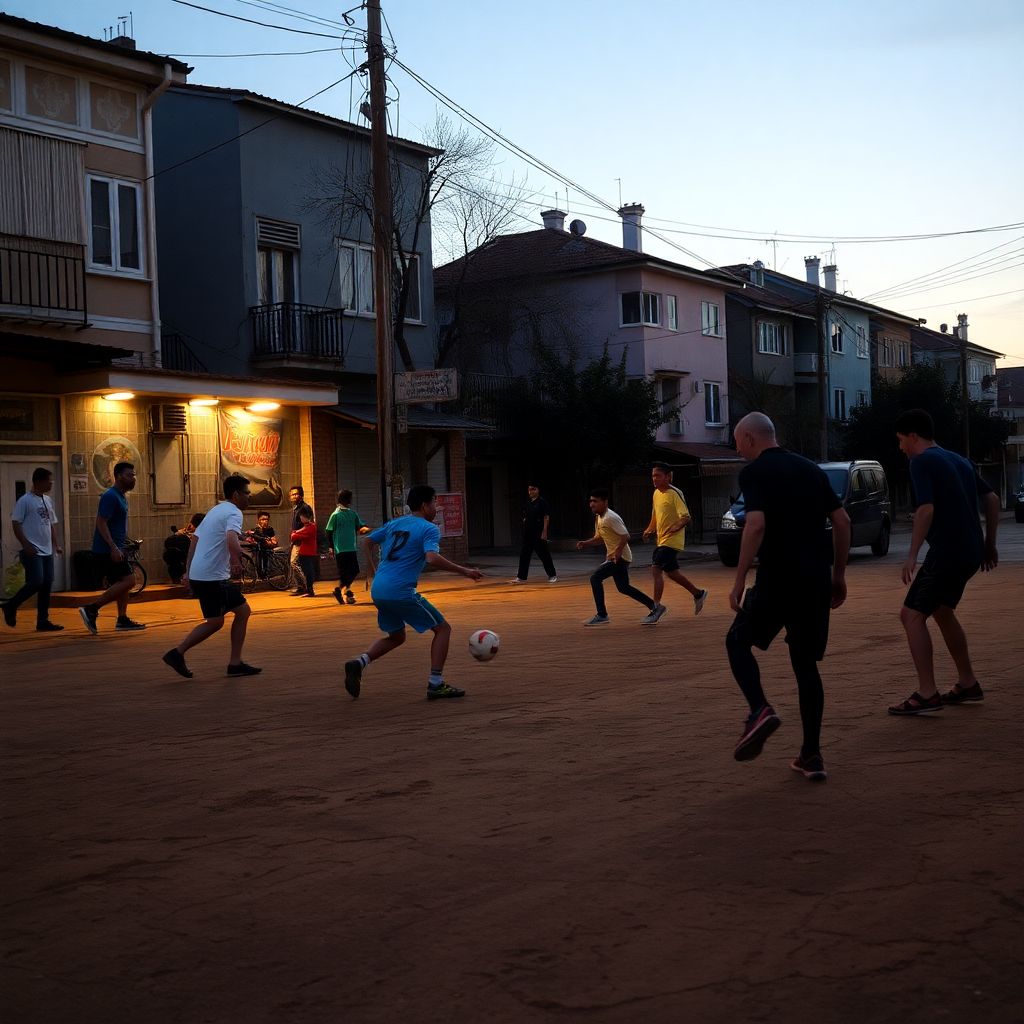
Street football is still the starting point for many Turkish players, especially in districts without formal fields. Empty parking lots, school yards after hours, and coastal promenades frequently turn into improvised pitches, with clothing used as goalposts and mixed-age groups forming ad hoc teams.
In Istanbul and other large cities, youth football clubs in Istanbul often rely on shared municipal astroturf fields, school grounds, or rented private mini-pitches. Teams may train late at night or very early in the morning to secure time slots, because the same small space serves many age groups and community teams.
For families with limited budgets, public school yards and municipal mini-pitches are key alternatives to paid facilities or the best soccer camps in Turkey for kids. Informal evening games organised by local coaches or parent groups can offer regular practice without expensive membership fees, especially in working-class districts.
Even when infrastructure is basic-uneven surfaces, no changing rooms-consistent play matters more than perfect conditions. Many future stars first developed creativity and resilience in cramped street spaces with unpredictable bounces and constant improvisation.
- Map all free or low-cost pitches within walking distance: school yards, municipal fields, and safe open areas.
- Coordinate with neighbours to organise regular small-sided games instead of waiting for perfect facilities.
- Rotate playing surfaces to reduce overuse of a single rough field and lower injury risk.
- Teach children simple rules for respecting shared spaces and stopping play when pedestrians pass through.
Talent identification and grassroots-to-pro player pathways
In Turkey, professional clubs primarily scout players who already belong to organised teams. Turkish football scouting programs for young players watch amateur leagues, school tournaments, and regional selection events to find prospects with technical quality, game intelligence, and strong attitudes.
The typical pathway begins with neighbourhood or school teams, then progresses to stronger community clubs or semi-professional sides. From there, standout players may be invited to training sessions at professional academies, or recommended for professional football trials in Turkey hosted by bigger clubs.
Alternative routes exist for families with fewer resources. Instead of joining high-fee private academies, players can seek strong local coaches, intensive small-sided games, and targeted exposure at regional tournaments. Participation in school teams and free municipal programs can still lead to visibility if performance is consistent.
Advantages of the current grassroots-to-pro pathways
- Multiple entry points: school teams, local clubs, and open municipal programs all feed into the same scouting ecosystem.
- Continuous observation: scouts can track players over several seasons in different competitions.
- Emphasis on game situations: evaluation is based more on real matches than on isolated drills.
- Opportunities for late developers: strong performances at older age groups can still attract attention.
Limitations and barriers for young players
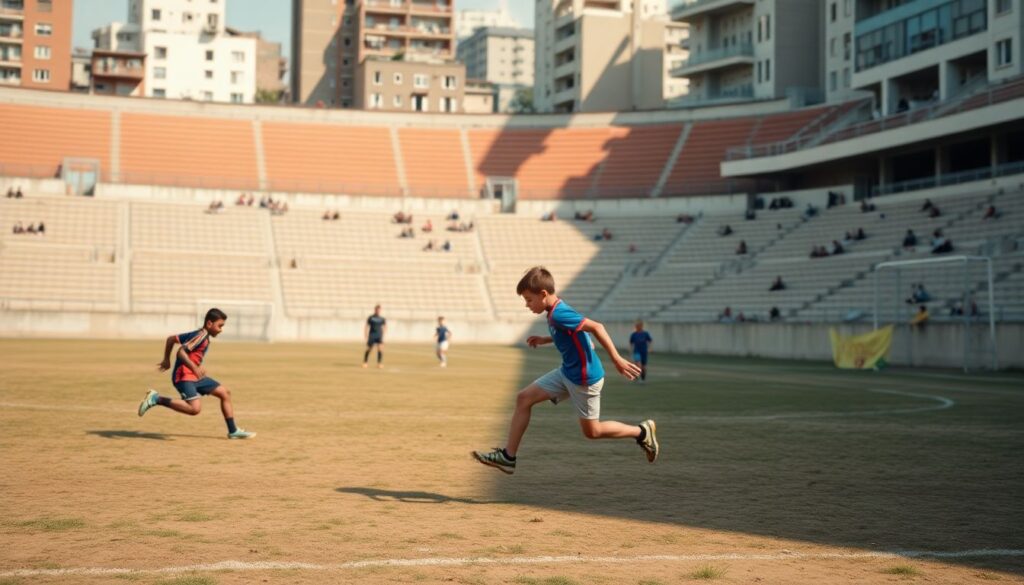
- Cost and travel: frequent training and matches at distant clubs are expensive for low-income families.
- Unequal access: districts with few clubs or pitches offer fewer chances to be seen.
- Over-focus on early physical maturity: some small but technically gifted players are overlooked.
- Limited information: many families do not know how scouting and trial invitations actually work.
- Prioritise joining a competitive local team that plays in official leagues instead of chasing random trial events.
- Record match clips on simple mobile phones to share with coaches when in-person scouting is rare.
- Use school competitions to gain extra matches and visibility at minimal cost.
- Focus training on first touch, decision-making, and resilience-not just physical strength.
Financing, volunteer networks, and operational challenges
Most grassroots clubs operate with minimal budgets, relying on parent contributions, small local sponsors, and volunteer coaches. This creates constant tension between wanting to offer quality training and struggling to pay for pitch rentals, transport to games, and basic equipment such as balls or bibs.
Parents and community members often act as unofficial staff: driving players to away matches, washing kits at home, and helping organise small fundraising events. In districts where access to the best soccer camps in Turkey for kids is unrealistic, these informal networks keep football accessible and affordable.
However, financial pressure can lead to misunderstandings. Some families assume that higher fees always mean higher quality, while others suspect any payment at all is unfair. In reality, even modestly run football academies in Turkey face real costs, and transparency is more important than pretending everything is free.
Common misconceptions and operational pitfalls
- Belief that only expensive private academies produce professional players, ignoring strong community clubs with good coaching.
- Assuming that volunteer coaches do not need support or training, which can lead to burnout and inconsistent sessions.
- Neglecting basic budgeting and written agreements, causing conflicts about fees, sponsorships, and equipment ownership.
- Using short-term results as the main funding argument, instead of emphasising long-term player development and social benefits.
- Create a simple annual budget covering pitch rental, equipment, and travel, and share it openly with parents.
- Rotate administrative tasks among parents so the same volunteers are not overloaded.
- Seek partnerships with small local businesses for in-kind support (transport, snacks, printing) rather than only cash.
- Invest in basic coach education so even unpaid coaches deliver safe, structured sessions.
Policy, partnerships, and strategies for sustainable growth
Long-term growth of grassroots football in Turkey depends on coordination between municipalities, schools, clubs, and private actors. Municipalities control many pitches, schools organise daily access to children, community clubs provide regular training, and private sponsors or NGOs can supply resources and specialist expertise.
In Istanbul, some districts demonstrate how cooperation can work: a municipality provides a shared artificial pitch, local schools direct students to after-school training there, and several youth football clubs in Istanbul rotate use of the field according to an agreed schedule. This model reduces conflicts, maximises field time, and widens access for low-income families.
When designing development strategies, it helps to think in layers: free or low-cost mass participation, targeted development squads, and only then links to elite academies or professional football trials in Turkey. This layered system ensures that even players who never go pro still enjoy health, social, and educational benefits.
Illustrative micro-plan for a resource-limited district
A realistic approach for a modest-income area could look like this:
- Map all existing fields, school yards, and open spaces that can host safe games.
- Form a small task group with one representative from each local school and club.
- Agree on shared weekly schedules for training and informal play sessions.
- Apply jointly for municipal or NGO support for lights, basic equipment, and coach education.
- Start with one pilot partnership between a school, a club, and the municipality rather than trying to fix everything at once.
- Document training hours, participation, and basic outcomes so you can justify future support requests.
- Invite local role models-teachers, former players, or community leaders-to occasional sessions to inspire children.
- Ensure that both boys and girls have scheduled access to pitches and coaching.
Quick self-check for communities and families
- Do children in your area have at least one safe, regular place to play football each week?
- Is there an affordable pathway from street play to a structured team and official matches?
- Are parents and volunteers actively involved in supporting coaches and club operations?
- Do local organisers cooperate with schools and municipalities instead of competing over field time?
- Are talented but low-income players identified and supported with fee reductions or extra help?
Practical queries from players, coaches, and organizers
How can a child start football with almost no budget?
Begin with free local options: school teams, municipal pitches, and informal neighbourhood games. Then look for a community club that keeps fees low and offers flexible payment or scholarships, instead of immediately targeting private academies.
Are private football academies in Turkey necessary to become professional?
No. Many professionals emerge from strong community clubs that compete regularly and are visible to scouts. Private academies can help with facilities and contacts, but consistent training, good coaching, and competitive matches matter more than brand names.
Where can scouts find promising players outside big cities?
Scouts often watch regional tournaments, school competitions, and provincial amateur leagues. Organizers in smaller towns should focus on well-run local events and clear communication with regional federations and Turkish football scouting programs for young players.
What should parents look for when choosing youth football clubs in Istanbul?
Check coaching qualifications, training frequency, and how much game time all players receive. Transparent fees, safe facilities, and a clear development philosophy are more important than promises about fast-track access to professional football trials in Turkey.
Are short holiday camps useful compared to full-season training?
The best soccer camps in Turkey for kids can provide intense experiences, new coaching ideas, and motivation. However, they should supplement, not replace, long-term weekly training with a stable team and coach.
How can a volunteer-run club stay organised without paid staff?
Use simple tools: shared online calendars, written role descriptions for volunteers, and a basic annual budget. Regular short meetings and clear communication with parents prevent misunderstandings and burnout.
What if our neighbourhood has no official pitch?
Identify safe, flat areas like school yards or small parks and negotiate scheduled use with school directors or municipalities. Combine this with small fundraising to buy portable goals or cones so sessions feel organised even in simple spaces.