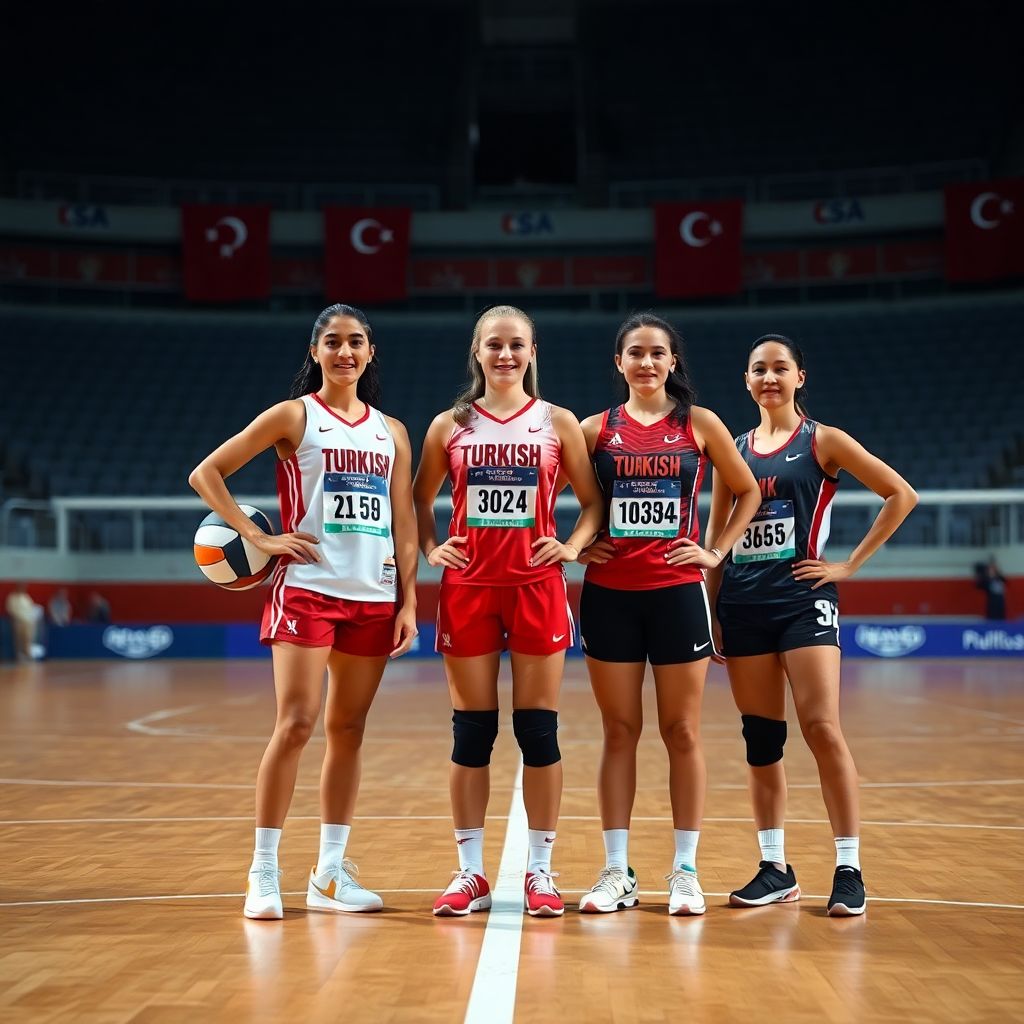
Women in Turkish sports are central players in athletics, basketball, and volleyball, acting as trailblazers who transform both elite competition and everyday participation. Their story combines early pioneers, powerful club systems, international medals, and growing media interest, alongside persistent social and institutional barriers that still shape how girls and women access and experience sport in Turkey.
Myth-busting overview: what most people get wrong about Turkish sportswomen
- Myth: Turkish sportswomen are new to the international stage. Reality: female athletes have represented Turkey for decades, gradually expanding from individual athletics to team sports like basketball and volleyball.
- Myth: Success is limited to a few celebrity players. Reality: club systems, schools, and universities create a wide, structured talent base that feeds national teams.
- Myth: Only Istanbul matters. Reality: strong regional clubs, university teams, and municipal programs across Anatolia sustain women’s athletics, basketball, and volleyball.
- Myth: Turkish women are only strong in volleyball. Reality: track and field, basketball, combat sports, and para-sport also produce elite-level Turkish women athletes, including some of the best Turkish women athletes in Olympics history.
- Myth: Fans cannot easily follow women’s competitions. Reality: digital platforms, TV rights, and club media channels now make it simple to buy Turkish women volleyball league tickets, watch Turkish women’s volleyball live stream options, or follow basketball and athletics online.
- Myth: There is no financial support for girls. Reality: public, university, and club-based Turkish women sports scholarships in Turkey exist, though access and information remain uneven.
Historical milestones: pioneers who opened doors in athletics
Myth: Women’s athletics in Turkey began only after recent global gender-equality campaigns. In fact, Turkish sportswomen started competing and training formally much earlier, often inside broader modernization projects that used sport to symbolize social change and international integration.
Early female track and field athletes entered domestic competitions before women’s team sports fully organized. Their participation challenged expectations about women’s bodies, mobility, and public visibility. Over time, these pioneers legitimized the idea that women could train systematically, travel for meets, and represent the national flag in stadiums abroad.
These athletes also helped define the practical boundaries of women’s sport: which events were prioritized, how training was integrated into school life, and which institutions (state, clubs, universities, military-affiliated organizations) controlled access. Their careers showed younger girls that sprinting, jumping, and throwing were not marginal hobbies but serious, structured pathways.
As Turkey’s international ambitions grew, women’s athletics became a testing ground for policies on coaching education, anti-discrimination norms, and athlete welfare. The early generation of female competitors, coaches, and administrators formed the backbone that later supported women’s basketball and volleyball as they expanded into professional, televised sports.
From local clubs to national teams: evolution of women’s basketball in Turkey
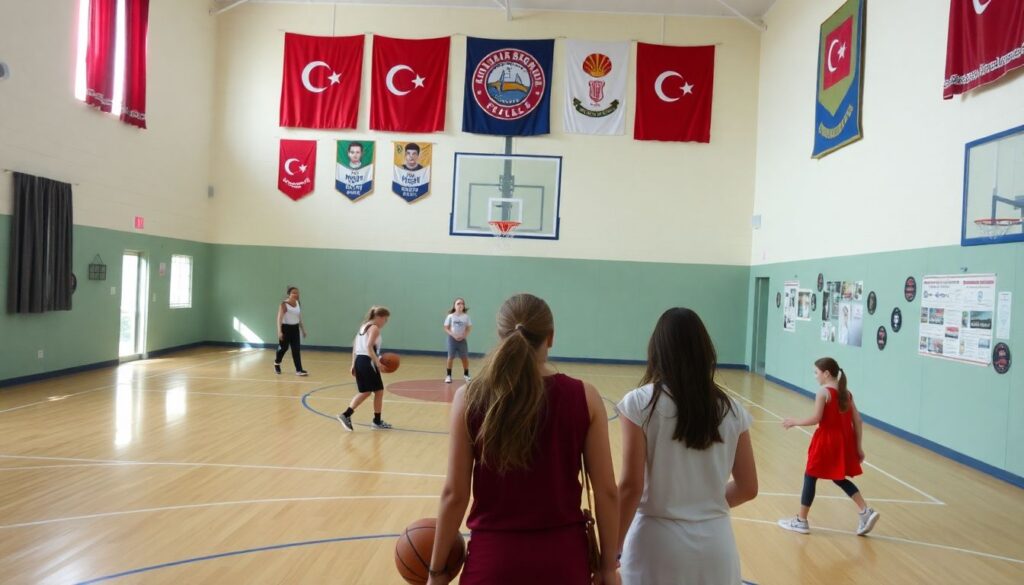
Myth: Women’s basketball in Turkey is just an add-on to men’s leagues. In reality, it has its own layered ecosystem, where local clubs, schools, and national structures interact in a defined pathway from grassroots to elite.
- School and municipal entry: Girls often meet basketball through PE classes or municipal sport schools, where basic skills and team concepts are introduced alongside general physical education.
- Club system integration: Talented players move into club youth teams, training several times a week under licensed coaches. Here they learn structured offense/defense, physical conditioning, and game analysis.
- Regional and age-group leagues: Federations organize age-based competitions, where clubs from different provinces meet. Performance here is a key filter for scouting into wider talent pools.
- University and semi-professional tiers: Some athletes transition into university teams or semi-professional clubs, often supported by Turkish women sports scholarships in Turkey that combine academic and sporting development.
- Professional league and national team: The top tier runs as a professional league, with clear licensing standards, foreign-player regulations, and performance incentives aligned with national team strategies.
- Merchandise and fan identity: Club and national-team branding, including the popular Turkey women basketball team jersey, strengthens identification and generates revenue that can be reinvested into youth programs.
Volleyball’s rise: professionalization, club success, and international impact
Myth: Turkish women’s volleyball became strong overnight. Its rise actually reflects a long-term combination of club investment, federation planning, and consistent youth development that turned domestic competitions into some of the most competitive leagues in Europe.
First, major multi-sport clubs and specialized volleyball clubs built professional women’s teams with high training standards, sports science support, and qualified coaching staffs. They competed not only in national leagues but also in continental cups, gaining tactical and psychological experience at the highest level.
Second, media and sponsorship interest in women’s volleyball increased because matches were dynamic, TV-friendly, and often featured local stars alongside international players. This changed fan habits: audiences began searching for Turkish women’s volleyball live stream options and planning in advance to secure Turkish women volleyball league tickets for high-stakes games.
Third, national team success amplified the club ecosystem. As more players gained exposure to top international tournaments, they brought back tactical innovations and training standards to their clubs. This feedback loop helped turn volleyball into a flagship sport for Turkish women, both symbolically and structurally.
Quick practical tips for following and supporting Turkish sportswomen
- Use official federation and club websites to find schedules, venues, and verified links to Turkish women’s volleyball live stream broadcasts.
- Buy Turkish women volleyball league tickets only from club box offices or trusted ticketing partners listed on official sites.
- When purchasing a Turkey women basketball team jersey, prioritize official club or federation stores; this channels revenue back into women’s programs.
- For information on Turkish women sports scholarships in Turkey, check university sports directorates, municipal youth services, and club academies; compare entry criteria and support (housing, tuition, travel).
- Encourage younger girls to try multiple sports (athletics, basketball, volleyball) before specializing, so they build broad coordination and confidence.
- Follow athletes and teams on social media to track grassroots initiatives, open try-outs, and local clinics that may not appear in mainstream media.
Training, infrastructure, and funding: current ecosystem for female athletes
Myth: Turkish women athletes succeed purely on talent without structured support. In reality, their progress depends on a complex mix of training facilities, coaching networks, and funding channels that create both opportunities and clear limitations.
- Advantages of the current system
- Established club culture in basketball and volleyball, providing year-round training and competition.
- Growing access to indoor halls, strength rooms, and medical support in major cities.
- Integration of sports into universities, where scholarships and academic flexibility support dual careers.
- Federation-run talent identification and age-group national teams in athletics and team sports.
- Rising visibility through TV, streaming, and social media, improving sponsorship potential.
- Limitations and structural gaps
- Uneven facility quality between big cities and smaller towns, especially for athletics tracks and multi-purpose halls.
- Limited long-term funding security for women’s programs outside top clubs, causing instability for coaches and players.
- Insufficient specialized support staff (sports psychologists, performance analysts) in many youth setups.
- Information gaps about Turkish women sports scholarships in Turkey, particularly for families outside major urban centers.
- Short career planning horizons, with few structured transitions into coaching, administration, or post-sport employment for women.
Barriers and breakthroughs: social, legal, and institutional challenges
Myth: Once women are allowed to play, all major problems disappear. In practice, participation rights, resource allocation, and cultural expectations still create daily frictions that athletes, coaches, and administrators must manage.
- Assuming visibility equals equality: High-profile volleyball or basketball matches can create the impression that gender gaps are solved, while grassroots girls still lack safe, affordable access to facilities.
- Overlooking regional disparities: Policies may exist on paper, but implementation differs greatly between provinces, affecting travel, equipment, and parental support for girls’ training.
- Ignoring non-elite pathways: Focusing only on national-team stars hides the need for recreational and community-level sport for women who will never become professionals.
- Underestimating cultural resistance: Families and communities may still question time spent on sport, especially when academic or domestic expectations are high.
- Confusing short-term campaigns with long-term reform: Visibility projects and one-off tournaments help, but do not replace sustained investment in coaching education, safeguarding, and governance structures.
Role models and talent pipelines: scouting, youth development, and mentorship
Myth: Talent is discovered magically, without systematic processes. In reality, role models and formal pathways work together: visible champions inspire, while structured scouting, youth leagues, and mentorship convert raw enthusiasm into stable high-performance careers.
A simplified mini-scenario shows how this pipeline functions in practice:
- Inspiration: A girl in a mid-sized Turkish city watches a national volleyball match via Turkish women’s volleyball live stream, notices a player from her region, and starts following the team.
- First contact: Her school PE teacher recommends a local club that runs beginner sessions twice a week in a shared municipal hall.
- Structured training: After one season, club coaches identify her potential and move her into an age-group squad with planned workloads and regular competition.
- Exposure and scouting: At regional tournaments, federation scouts and university coaches track her performance, adding her to a broader monitoring list.
- Support and transition: As she finishes secondary school, she applies for Turkish women sports scholarships in Turkey at universities with strong volleyball or basketball programs, easing the academic-sport balance.
- Mentorship loop: Once established, she returns to her hometown in off-seasons to run clinics, where younger girls now recognize her from TV, streaming, or even the image on a Turkey women basketball team jersey campaign, restarting the cycle.
Practical answers to common misconceptions and tactical questions
Are Turkish sportswomen successful only in volleyball, not in athletics or basketball?
No. Volleyball is highly visible, but women also compete seriously in athletics and basketball. Track and field provides individual medal opportunities, while women’s basketball benefits from strong club structures and a defined pathway from local leagues to the national team.
How can I watch women’s volleyball matches from Turkey online?
Check federation and club websites for official Turkish women’s volleyball live stream links and broadcast partners. Avoid unverified streams; official platforms usually provide better quality, accurate schedules, and a safer viewing experience.
Where should I buy Turkish women volleyball league tickets safely?
Use official club box offices, federation-approved ticketing platforms, or authorized partner sites listed on club pages. Buying from unofficial resellers increases the risk of fake or invalid tickets, especially for high-demand matches.
Is there real demand for the Turkey women basketball team jersey and other merchandise?
Yes. Fans purchase Turkey women basketball team jersey designs and club jerseys to show support and signal loyalty. Official merchandise also channels funds back into women’s programs, helping sustain youth development and professional squads.
Do Turkish women sports scholarships in Turkey cover full costs for athletes?
Coverage varies widely. Some scholarships support tuition only, while others may include housing, meals, and travel. Athletes should compare offers from universities and clubs, checking what is guaranteed and what depends on performance.
Can girls from smaller towns realistically reach the national teams?
Yes, but they often face extra hurdles such as travel, limited facilities, and fewer competitions. Consistent club participation, strong school support, and visibility in regional tournaments significantly improve their chances of being scouted.
Are the best Turkish women athletes in Olympics always from big clubs?

Many elite athletes pass through major clubs, but not all begin there. Some start in local or school programs and later transfer to larger institutions as their performance level rises and they attract attention from national selectors.