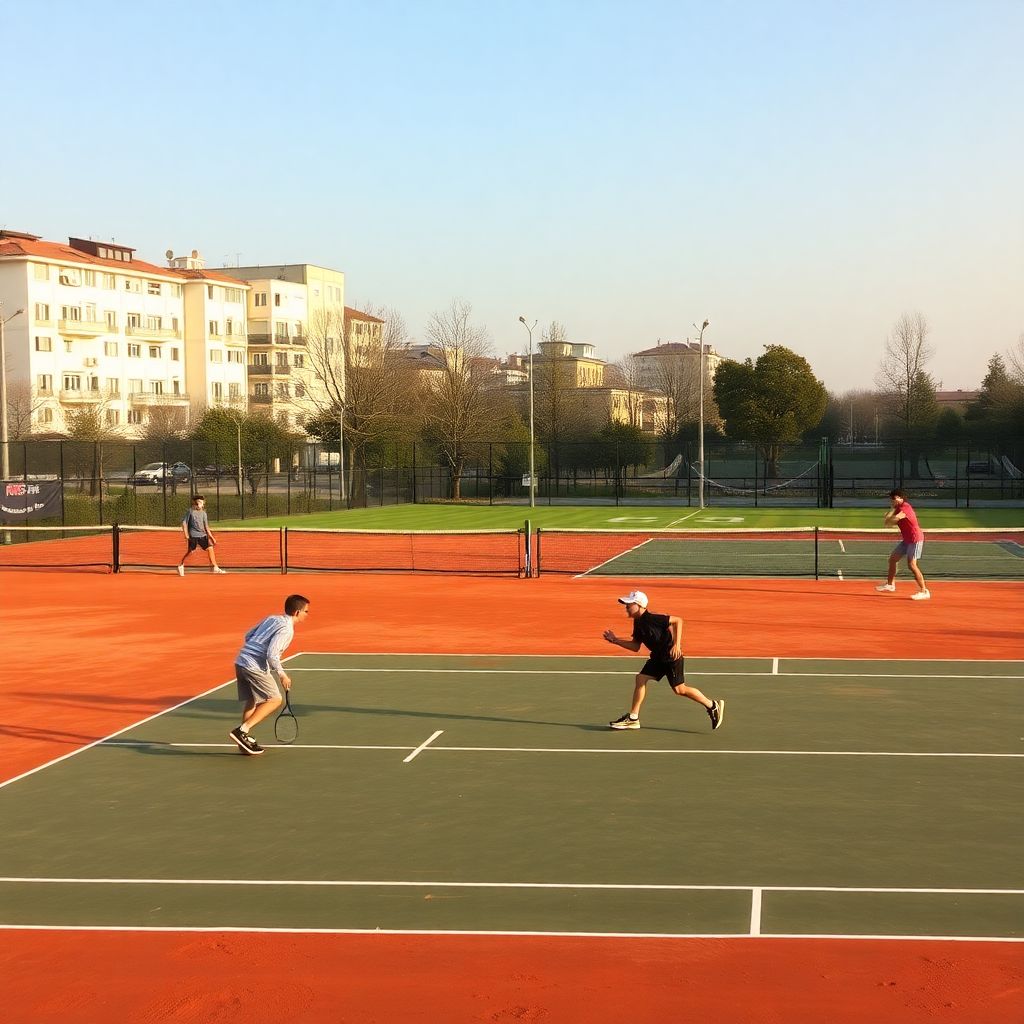
For most Turkish tennis players on a budget, hard courts are the most practical main surface, clay courts are the best technical school, and grass is a useful bonus if available. The optimal mix is: train mostly on clay and hard, occasionally test yourself on grass, and match your weekly load to each surface’s impact on the body.
How Court Surfaces Shape Turkish Players’ Strengths
- Clay builds patience, topspin, sliding control and point construction, which suits many Turkish baseliners.
- Grass rewards first-strike tennis, compact swings and aggressive returns, but is harder to access and maintain in Turkey.
- Hard courts dominate competition calendars and public facilities, so they decide most rankings and results.
- Budget-conscious players should train technique on clay, then transfer patterns and timing to local hard courts.
- Injuries differ by surface: clay loads muscles, grass challenges balance, hard courts stress joints and tendons.
- For tennis holidays in Turkey with clay and hard courts, choose resorts offering both so you can test your game in match-like conditions.
Technical Demands: Clay, Grass and Hard Court Compared
When choosing between clay, grass or hard courts in Turkey, evaluate them against several technical criteria.
- Ball speed and bounce
- Clay: slower pace, higher and more variable bounce; demands heavy spin and patience.
- Grass: fastest pace, low skidding bounce; demands early contact and precise footwork.
- Hard: medium-fast, predictable bounce; rewards clean technique and all-round skills.
- Footwork and movement patterns
- Clay: controlled sliding, long recovery steps, wider stances.
- Grass: short, quick adjustment steps, low center of gravity to handle bad bounces.
- Hard: explosive first step, abrupt deceleration without sliding.
- Swing shape and contact point
- Clay: higher net clearance, bigger topspin arcs, later contact allowed.
- Grass: compact backswings, flatter shots, earlier contact in front of the body.
- Hard: neutral swing paths; both topspin and flatter drives are effective.
- Serve and return priorities
- Clay: high-kick serves, heavy spin; deep, loopy returns to reset rallies.
- Grass: strong first serve, slice serves; aggressive, block-style returns.
- Hard: mix of power and placement; on-the-rise returns are valuable.
- Preferred playing style
- Clay: counter-punchers, grinders, tactical baseliners.
- Grass: attacking all-courters, serve-and-volleyers, big servers.
- Hard: balanced baseliners, aggressive baseliners, modern all-court players.
- Shot tolerance and rally length
- Clay: long rallies, repeatable patterns, high shot tolerance needed.
- Grass: short points, sharp focus on first four shots.
- Hard: medium rally length, flexible patterns.
- Transition to net
- Clay: requires very good approach selection; passing shots are easier for opponents.
- Grass: rewards chip-and-charge and serve-and-volley; passing shots harder.
- Hard: neutral; both baseline and attacking styles can work.
- Technical learning curve for Turkish players
- Clay: ideal for youth development and rebuilding technique after layoffs.
- Grass: advanced option; short seasonal access in most turkey tennis resorts with multiple court surfaces.
- Hard: essential for match-readiness, as most leagues and tournaments use it.
- Facility availability in Turkey
- Clay: common in bigger cities and clay court tennis academies in Turkey.
- Grass: limited; usually at premium clubs or resorts.
- Hard: widely available at municipal clubs and private complexes.
Physical Conditioning, Recovery and Injury Patterns by Surface
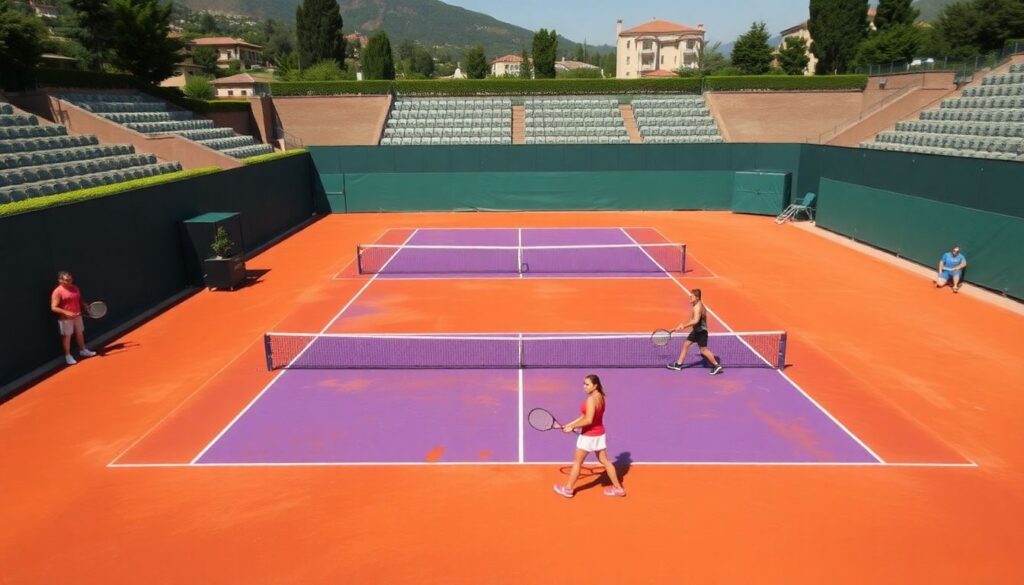
Each surface stresses your body differently, so your training load and recovery strategy in Turkey must adapt to court choice.
| Variant | Best For | Pros | Cons | When To Choose |
|---|---|---|---|---|
| Clay courts | Players needing endurance, spin, patience and safer joints |
|
|
|
| Grass courts | Explosive players with good balance and strong serves |
|
|
|
| Hard courts | All-round competitors focused on ranking and league results |
|
|
|
For tennis coaching Turkey grass and hard courts, adjust weekly volume: more sessions but shorter duration on hard, fewer but longer rallies on clay, and short, high-quality sets on grass.
Tactical Adaptations Aligned with Typical Turkish Playing Profiles
Many Turkish players grow up as clay-based baseliners but compete heavily on hard courts. Use surface-specific tactics that match this profile and your budget.
- If you are a clay-trained baseliner moving to hard courts, then:
- Shorten your backswings slightly to handle pace.
- Shift patterns from 10-12 ball rallies to 6-8 ball finishes.
- Budget version: play practice tie-break sets on public hard courts twice a week.
- Premium version: book video-analyzed sessions in clubs offering tennis coaching Turkey grass and hard courts.
- If you rely on heavy topspin and struggle on low-bouncing grass, then:
- Flatten your forehand on short balls and aim deeper down the middle.
- Use more slice backhands to stay low and neutralize skidding shots.
- Budget version: simulate grass by training on faster indoor hard courts with low-pressure balls.
- Premium version: schedule pre-season blocks at turkey tennis resorts with multiple court surfaces including natural or artificial grass.
- If you are an aggressive server from hard courts switching to clay, then:
- Add more kick and slice to your serve instead of pure flat power.
- Expect more returns to come back and plan plus-one patterns.
- Budget version: use a cheap ball basket and serve on an empty clay court focusing on spin targets.
- Premium version: join clay court tennis academies in Turkey with dedicated serve-plus-one drills and match analytics.
- If you are a counter-puncher trying to become more offensive, then:
- On clay, practice turning neutral balls into inside-out forehands.
- On hard, step into the court and take returns early.
- Budget version: organize low-cost group drills where one player attacks, one defends, rotating roles.
- Premium version: combine private coaching with match recording during tennis holidays in Turkey with clay and hard courts.
- If you are older or managing chronic joint pain, then:
- Prioritize clay for most weekly volume, use hard courts mainly for match rehearsal.
- Reduce sudden direction changes and emphasize anticipation.
- Choose facilities whose maintenance keeps courts even; many of the best tennis courts in Turkey publish surface details and photos online.
Affordable Training Plans and Drills Tailored to Each Surface
Use this budget-friendly checklist to choose training content and frequency for each surface in Turkey.
- Define your primary competition surface (usually hard in Turkey).
- Play at least one full match or two match-play sessions per week on that surface in-season.
- If budget is tight, use club ladders and local leagues instead of extra private lessons.
- Allocate one technique block per week on clay (if accessible).
- Focus on topspin, depth and footwork patterns.
- Drill idea: 20-30 cross-court rallies to big targets, then 10-15 down-the-line changes.
- Use short, intense hard-court sessions for point construction.
- Play first-to-4 or first-to-7 tie-break formats to limit impact time.
- Measure: unforced errors in first four shots; aim to reduce by a small number each week.
- Add grass-specific work in mini-blocks if you have access.
- Two or three 60-minute sessions before any grass tournament.
- Drill idea: serve + volley and return + charge for at least 30 points each.
- Organize group sessions to cut costs.
- 4-6 players per court with one coach for pattern drills.
- Rotate: clay for consistency blocks, hard for competitive games.
- Match load with recovery days by surface.
- After long clay matches, schedule easy hitting or rest next day.
- After hard-court tournaments, add mobility and light cycling to unload joints.
- Use holidays and camps strategically.
- During tennis holidays in Turkey with clay and hard courts, structure your week: mornings on clay for drilling, afternoons on hard for match-play.
- Track simple metrics: wins/losses, service-hold percentage, and rally length.
Match Analytics: Turkish Player Performance Trends on Different Courts
Many Turkish players lose winnable matches not because of lack of talent, but due to poor surface-related decisions. Avoid these frequent mistakes.
- Training all winter on slow indoor clay, then entering a hard-court event without a two-week adaptation block.
- Using the same return position on grass and hard, instead of moving closer on grass to attack shorter bounces.
- Ignoring serve patterns: not adding more kick on clay or more body serves on grass.
- Underestimating heat and dehydration on outdoor hard courts in Turkey, leading to late-match collapses.
- Choosing tournaments only by location or friends, not by how the surface fits your current strengths.
- Spending the entire budget on a few private lessons, instead of mixing cheaper group drills and match-play sessions.
- Failing to record basic stats: double faults, first-serve percentage, and unforced errors by surface.
- Practicing heavy topspin on clay, then switching to overly flat, risky hitting on hard courts during pressure moments.
- Skipping recovery protocols after hard-court weekends, which increases overuse injuries and missed training time.
- Assuming the best tennis courts in Turkey are always the most expensive, instead of testing local clubs with good maintenance but modest facilities.
Scheduling, Surface Selection and Ranking Strategy for Cost-Conscious Players
For Turkish players with limited budgets, the best primary surface for ranking is usually hard courts, because that’s where most official matches are played. The best learning surface is clay, especially for juniors and technical rebuilds. Grass is best treated as a short, specialized block to sharpen attacking skills when opportunities arise.
Common Practical Questions Turkish Players Ask About Surfaces
Which surface should a Turkish junior focus on first?
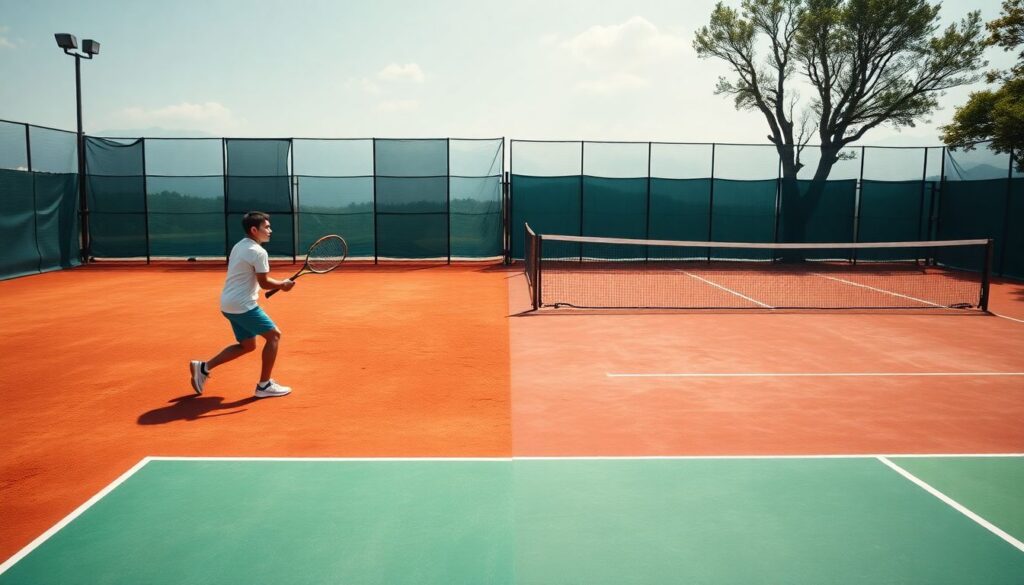
Start primarily on clay to build movement, topspin and patience, while playing regular matches on hard courts. Clay forms solid fundamentals; hard courts translate those skills into real Turkish tournament results.
Are grass courts worth it if I live in a big Turkish city?
Yes, but only in short, focused blocks. Use grass sessions to practice serve, return and first-strike patterns before specific events, rather than as your main weekly surface.
How can I train for clay if my local club only has hard courts?
Increase rally length, use higher net clearance and emphasize topspin on hard courts. Add sliding and movement practice when you occasionally visit clay court tennis academies in Turkey or resorts with red clay.
What is the cheapest way to prepare for a hard-court season?
Play structured match-play on local hard courts two to three times a week, join group clinics, and track simple stats instead of paying only for private lessons. Supplement with one weekly clay session for technique if possible.
How should my fitness change between clay and hard seasons?
Before clay, focus on endurance, leg strength and sliding drills. Before hard, prioritize joint stability, explosive sprints and deceleration work, while reducing total impact hours per week.
Can tennis holidays in Turkey with clay and hard courts really improve my level?
They can if the week is structured: morning drilling on clay, afternoon matches on hard, and one full rest or light recovery day. Without planning, camps become just extra hitting, not targeted development.
How do I choose between different Turkey tennis resorts with multiple court surfaces?
Check which surfaces match your upcoming tournaments, how many hours of court time are included, and whether coaches offer clear surface-specific drills. Balance the resort’s quality with travel, accommodation and coaching costs.