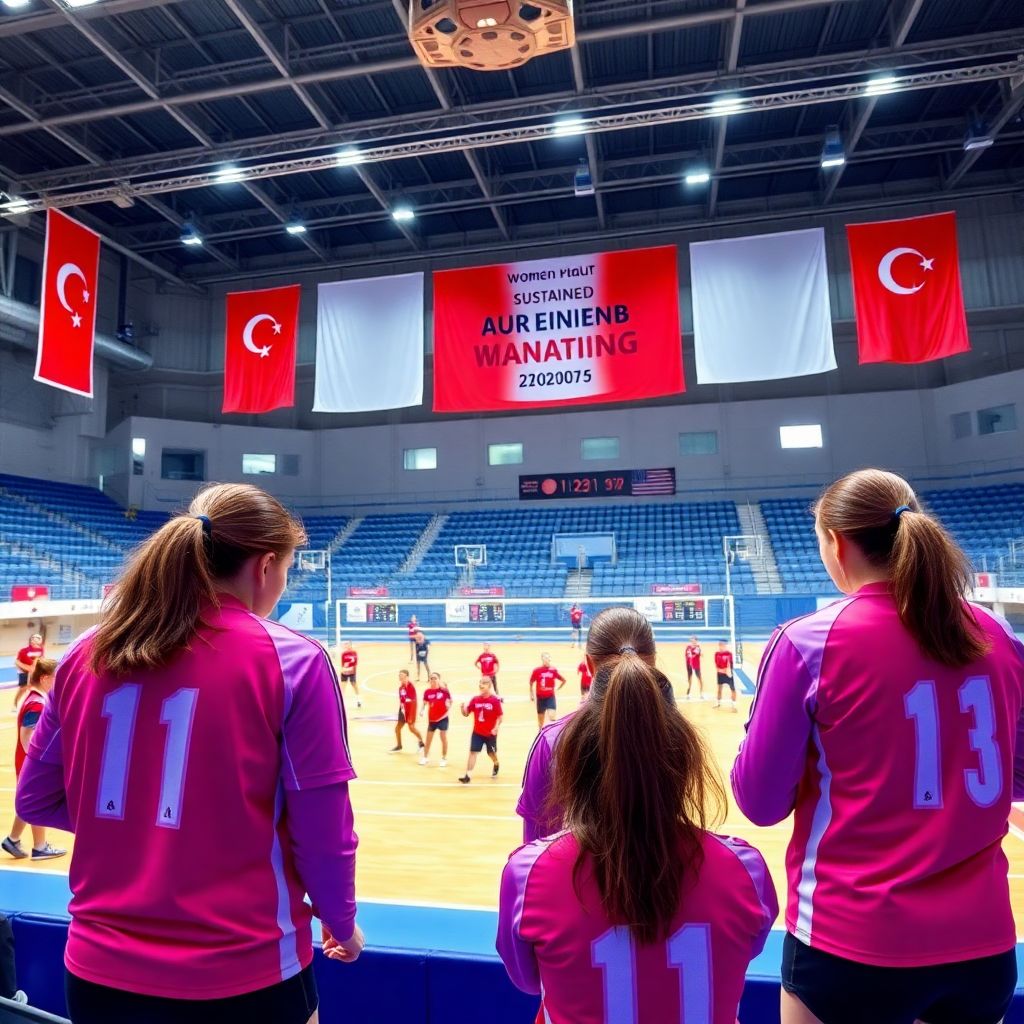
Turkey’s volleyball success comes from a long club tradition, a disciplined youth pipeline, bold investment in women’s programs, and modern coaching that embraces analytics. The “silent revolution” is systematic: strong leagues feed national teams, mistakes are corrected early, and structures-not one golden generation-keep the Turkey volleyball national team winning consistently.
Core Drivers Behind Turkey’s Volleyball Ascendancy
- Deep club culture that connects school, amateur, and professional volleyball into one talent ecosystem.
- Standardised youth development and talent ID that start early and correct technical errors fast.
- Elite coaches, foreign and local, importing and adapting the newest tactical and training ideas.
- Financial commitment from clubs, federation, municipalities, and sponsors to facilities and staff.
- Women’s volleyball positioned as a flagship sport, with strong media exposure and role models.
- Heavy use of video, statistics, and scouting to design match‑specific game plans.
- Alignment of club and national team calendars, priorities, and playing philosophies.
Historical Foundations: From Grassroots Clubs to Professional Leagues
The “silent revolution” in Turkish volleyball began with clubs, not national teams. For decades, multi‑sport giants like VakıfBank, Eczacıbaşı, and Fenerbahçe built youth academies, hired foreign coaches, and treated volleyball as a strategic sport, not a side activity. That foundation now supports national team depth in almost every position.
Grassroots growth happened through school competitions, municipal sports halls, and regional clubs that gave young athletes regular competition long before they dreamed of the Turkey volleyball national team schedule. Training culture prioritised repetition, discipline, and positional clarity, which reduced technical chaos and injury risk at later stages.
As professional leagues stabilised, the women’s and men’s top divisions became attractive for international stars. Local players suddenly trained daily with world‑class teammates and against elite opposition, which accelerated learning. Instead of depending on rare international camps, Turkish players could “import” higher standards into their everyday environment.
A frequent mistake in other countries is to expect the national team to “fix” weak domestic structures. Turkey largely did the opposite: it raised the level of clubs, coaches, and facilities first, then asked national teams to select and coordinate that existing quality. That sequence is the quiet but decisive difference.
Youth Development Pipeline and Talent Identification
The youth pipeline is organised to catch talent early, correct errors quickly, and keep players in the system. The main mechanics can be summarised as follows.
- Early multi‑sport base, focused specialisation later: Many young athletes start with general physical education and multiple sports, then specialise in volleyball when height, coordination, and interest become clear. Common mistake: forcing early specialisation and overtraining; prevention: keep under‑12 workloads playful and varied.
- Regional scouting and school‑club links: Scouts and coaches watch school tournaments and regional leagues to identify prospects. Error to avoid: only searching in big cities; prevention: structured scouting trips and partnerships with smaller town clubs.
- Standard technical progression: National guidelines define what a 12, 14, or 16‑year‑old should be able to do technically. Mistake: skipping steps because a player is tall or powerful; prevention: require technical “checkpoints” before role promotions.
- Position profiling: Height, jump, coordination, and temperament guide players toward specific positions. Common error: miscasting a player (e.g., tall but slow athlete as outside hitter); prevention: testing movement patterns and ball control before deciding long‑term roles.
- Integrated education and training: Volleyball high schools and club‑school agreements let kids train more without abandoning education. Mistake: overloading players with late‑night travel and under‑sleep; prevention: aligned timetables and supervised study time.
- Age‑group national teams as filters: U16-U23 teams serve as both development and selection tools. A typical error is treating youth tournaments like a final exam; prevention: use them as laboratories to give players feedback and broaden the pool, not just chase medals.
- Continuous re‑evaluation: Tall late‑bloomers or previously overlooked athletes can re‑enter the system via clubs. To avoid “one‑shot selection” mistakes, coaches schedule regular open trials and keep match‑video archives for deeper review.
Coaching Philosophy and Technical Innovations
Coaching in Turkey’s top clubs blends strict fundamentals with modern, data‑informed decision‑making. Instead of simply copying foreign systems, Turkish coaches increasingly adapt ideas to local realities: player profiles, league schedule density, and travel constraints.
Typical application scenarios include:
- Serve-receive pressure planning: Coaches design aggressive serving strategies based on opponent passing charts. A common mistake is to chase aces at all costs; prevention: target weaker passers with high‑percentage serves rather than unnecessary risk.
- Load management in long seasons: With domestic leagues, cups, and European competitions, players risk burnout. Smart teams rotate line‑ups in less critical matches. Error: starting the same six every game; prevention: pre‑planned rotation windows and individualised recovery protocols.
- Video‑based technical correction: Short, focused video clips show hitters their arm swing path or blockers their hand positioning. Mistake: overwhelming athletes with long team meetings; prevention: 5-10‑minute micro‑sessions with one clear correction each.
- Role clarity and communication: Teams like the Turkish women’s national team value clear expectations: who calls the blocking scheme, who leads serve‑receive, who calms the huddle. Error: assuming leadership will “emerge”; prevention: assigning roles explicitly in pre‑season.
- Psychological skills integration: Mental conditioning-breathing routines, refocus triggers after errors, and time‑out scripts-is embedded in practice. Common mistake: only calling a sports psychologist after a losing streak; prevention: teach mental tools during stable periods, then apply under pressure.
- Match‑day routine discipline: From breakfast timing to warm‑up sequence, routines reduce stress before high‑stakes games that fans watch via Turkish women’s volleyball team live stream. Error: experimenting with new routines on finals day; prevention: standardise and rehearse routines during league matches.
Infrastructure, Investment, and Club-National Team Synergy
Facilities, budgets, and coordination between clubs and federation turned Turkey from an “upset threat” into a constant medal contender. Investment covers arenas, weight rooms, sports science staff, and media operations that support both club brands and the national team image.
Key advantages of this model include:
- High‑quality daily environment: Players train in modern gyms with professional staff rather than relying on rare national team camps.
- Attractive ecosystem for stars: The league’s visibility and fan culture-visible when people search for Turkey volleyball national team tickets or Turkey volleyball jersey for sale-help retain local stars and attract foreign ones.
- Shared philosophies: National coaches influence youth curricula, while club successes feed directly into national tactics and confidence.
- Stronger commercial base: Sponsors support both club and national sides, funding long‑term projects instead of one‑off events.
However, there are structural challenges and common mistakes to manage:
- Calendar overload: Dense seasons risk fatigue and injuries; solution: coordinated planning of the Turkey volleyball national team schedule with league organisers.
- Conflicting priorities: Clubs want players fresh for playoffs, national teams need them peaking at major tournaments; prevention: transparent communication on training loads and medical data.
- Uneven regional development: Big‑city clubs can outspend smaller regions; prevention: targeted federation support for regional centres and coach education.
- Short‑termism in hiring: Rapid coach changes can disrupt systems; prevention: performance reviews that value long‑term player development alongside trophies.
Women’s Program Leadership and Societal Support
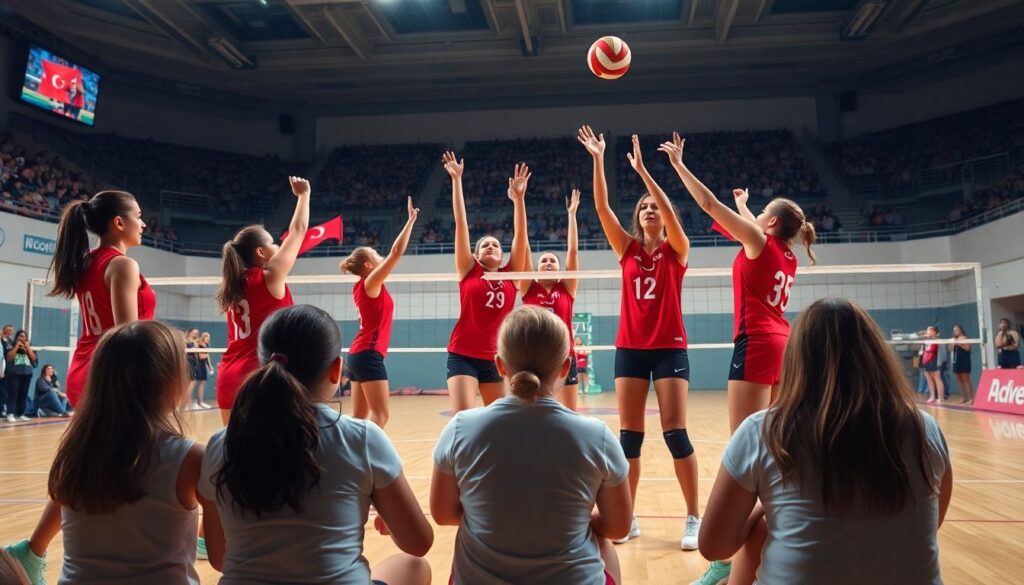
Turkey’s women’s program became a flagship not only for volleyball but for women’s sport in the country. High‑profile wins, TV coverage, and visible role models reshaped public perception and drew young girls into the game in large numbers, powering the current winning cycle.
Yet several myths and common errors still circulate around this success:
- Myth: It’s all about one “golden generation”. Reality: success stems from sustained club investment and coaching systems. Prevention: keep funding youth and coach education even when current stars are peaking.
- Error: Over‑centralising talent in a few mega clubs. This can discourage smaller clubs from investing. Prevention: incentives for regional academies and balanced transfer rules.
- Myth: Media pressure only helps. Excessive expectations around every big match-especially when many people bet on Turkish women’s volleyball team results-can create anxiety. Prevention: internal goals focused on process, not headlines or odds.
- Error: Neglecting life balance and education. Young female athletes sometimes face family or social pressure to prioritise school or work. Prevention: dual‑career programs and strong communication with parents about realistic pathways.
- Myth: Facilities matter more than coaching quality. Beautiful arenas help, but poor coaching wastes talent. Prevention: invest first in coach education, then in cosmetic upgrades.
- Error: Ignoring grassroots girls’ programs outside big cities. Concentrating only on major hubs narrows the talent base. Prevention: subsidise local leagues and outreach clinics in smaller regions.
Societal support is fragile if taken for granted. Continuous engagement-school visits, open training sessions, community events when the national team is in town-keeps the connection between fans and players, far beyond those who manage to secure Turkey volleyball national team tickets.
Tactical Trends, Analytics, and Match-Level Advantages
On the court, Turkey’s national teams win not only through talent but through constant micro‑adjustments. Opponent tendencies, serve zones, and blocking matchups are analysed in detail, then turned into simple cues players can execute under stress.
A simplified “match script” might look like this:
Pre-match:
  - Identify two weakest receivers; define primary serve targets.
  - Map top 3 opponent side-out patterns in rotations 1-6.
  - Assign blocking responsibilities vs. their key hitter.

During match:
  - If side-out < target, increase serving risk to zones 5/1.
  - If our middle is late vs. quick sets, switch to read-block.
  - Use time-outs only after 2-3 point swings, not single errors.
Common tactical mistakes include overreacting emotionally to short opponent runs, chasing low‑percentage serves to “change momentum”, or ignoring fresh data that staff collect in real time. Prevention methods are simple: pre‑defined decision rules, calm communication in huddles, and a trusted statistician feeding only the most relevant numbers.
For fans, these trends are increasingly visible: broadcasters explain serve zones, blocking schemes, and data‑driven substitutions during a Turkish women’s volleyball team live stream, making the sport more accessible to new viewers. This visibility feeds back into popularity, merchandise demand such as Turkey volleyball jersey for sale, and even interest from casual spectators checking the Turkey volleyball national team schedule to plan their next live experience.
In betting markets, analytical awareness can be double‑edged. While some supporters bet on Turkish women’s volleyball team matches based on momentum and rankings, professionals look at rotation efficiency, recent travel, and player workload. The underlying lesson on the court is the same: numbers help when they are focused, simple, and connected to clear tactical choices.
Quick Self-Check: Are You Applying Turkey’s Lessons Correctly?
- Have you prioritised building strong daily training environments over chasing short‑term national team results?
- Do your youth programs follow a clear technical progression instead of skipping steps for “talented” players?
- Are coaching roles, match routines, and mental tools defined and rehearsed long before big events?
- Is investment balanced between facilities, coach education, and regional development?
- Do you use data to simplify match decisions, not to overwhelm players with statistics?
Practical Questions on Why Turkey Keeps Producing Winning Teams
Why are Turkey’s women’s teams currently more successful than the men’s?
Women’s clubs received earlier and more concentrated investment from sponsors, and the women’s league became globally attractive faster. That created a stronger daily training environment and more depth, which the national team converted into consistent results.
Is Turkey’s success mainly due to natural height and genetics?
No. Height helps, but the key factors are systematic youth development, strong coaching, and competitive club environments. Many successful Turkish players are not uniquely tall for world level but are technically clean and tactically disciplined.
How can other countries copy Turkey’s volleyball model?
They can replicate the principles, not the exact structures: strengthen club competitions, standardise youth curricula, invest in coach education, and align club and national team calendars. Quick fixes like hiring one star coach without structural change rarely work.
Why does Turkey seem to improve in tight fifth sets?
Teams train for pressure with specific scenarios: reduced time‑outs, noise simulations, and “must‑win” drills. Mental routines-breathing, cue words, eye contact-are automatic by the time a fifth set arrives, which limits panic and unforced errors.
Does the popularity of the national team affect on-court performance?
Yes, indirectly. Big crowds, TV ratings, and demand for Turkey volleyball national team tickets create financial stability, which funds better staff and facilities. However, teams need strong internal culture to avoid being distracted by fame and expectations.
How often do national team players actually train together?
Most of the year, they are with their clubs; national team periods concentrate before major competitions. The key advantage is that club training is already at a high level, so the national coach can focus on coordination and tactics, not basic skills.
Where can fans follow upcoming matches and watch them live?
Schedules are usually published on federation and club websites as well as international competition pages. For viewing, local broadcasters and official streaming partners provide Turkish women’s volleyball team live stream options, especially for key qualifiers, tournaments, and friendlies.